How Many Watts in 1 Horsepower? (HP to Watts Explained Clearly)
- Horsepower to Watts Conversion (Complete Guide)
- What Does Horsepower Mean in Simple Terms?
- Why Converting HP to Watts Matters in Real Life
- HP vs. Watts: What’s the Difference in Practical Use?
- Common Real-World Applications of HP to Watts Conversion
- How to Choose the Right Power Capacity for Your Needs
- Conclusion
- FAQs
Your lawnmower, pool pump, and central AC unit are all measured in horsepower, HP, yet your light bulbs and electric bills are measured in Watts. It feels like trying to compare apples and oranges. But in the world of power, they are actually two sides of the same coin.
In this guide, we’re going to explain how to convert HP to Watts, and vice-versa. We’ll provide conversion factors and explain why the U.S. uses different standards for mechanical and electrical power. Then we show you how these numbers apply to your monthly utility bill.
Horsepower to Watts Conversion (Complete Guide)
If you’re trying to size up a backup generator for the home, you need a quick way to switch between HP and Watts. Performing a proper HP to Watts conversion is the first step in ensuring your backup system is neither underpowered nor dangerously overloaded. While the history of these terms comes from the industrial revolution, the conversion today is thankfully very straightforward.
1 HP = 746 Watts (Mechanical vs. Metric Explained)
In the United States, we primarily use Mechanical Horsepower (also known as Imperial Horsepower). The standard definition is 1 HP equals 745.7 watts. Most engineers and electricians round to 746W for simplicity.
However, if you’re looking at imported equipment, you might encounter Metric Horsepower, abbreviated as PS or CV. This is slightly lower at approximately 735.5 watts. For most residential applications in the U.S., sticking with the 746 factor is your safest bet.
Conversion Formula (HP × 746)
To find out how many watts a motor pulls, just use this simple equation:
Power (W) = Horsepower (HP) × 746
For example, if you have a 0.5 HP sump pump, it consumes roughly 373 watts of power.
Reverse Formula (Watts to HP)
If you know the wattage and want to find the horsepower equivalent, just flip the math.
Horsepower (HP) = Power (Watts) ÷ 746
Conversion Table (1–10 HP)
Here is a quick cheat sheet for common motor sizes you’ll find in a standard American home:
| Horsepower (HP) | Watts (W) | Kilowatts (kW) |
|---|---|---|
| 1 HP | 746 W | 0.746 kW |
| 2 HP | 1,492 W | 1.49 kW |
| 3 HP | 2,238 W | 2.24 kW |
| 5 HP | 3,730 W | 3.73 kW |
| 10 HP | 7,460 W | 7.46 kW |
What Does Horsepower Mean in Simple Terms?
Think of horsepower as the “muscle” of a machine. More horsepower means more muscle. It was originally developed by James Watt to compare the output of steam engines to the work capacity of actual horses. One horsepower is defined as the ability to lift 550 pounds one foot in one second. It’s not easy to envision this, but a 1 HP pump has a lot more power than you think.
Why Converting HP to Watts Matters in Real Life
Understanding this conversion is essential for managing your home’s electrical load. This is especially important when choosing a backup system such as a generator or a solar generator, where total wattage determines what appliances you can run safely.
Understanding Electric Motor Power Ratings
Most motors are rated by their output (HP). However, your home’s circuit breakers are rated by Amps, and are used in circuits of usually 120 or 240 volts. If you use too many amps or watts, the breaker will trip. We’ll explain this further.
In the U.S., the relationship is defined by the formula:
P = V × I (Watts = Volts × Amps)
On a standard American 120V household circuit with a 15-amp breaker, the maximum power limit is 1,800 watts. However, for safety and to comply with electrical codes (i.e. NEC), you should only utilize 80% of that capacity, or 1,440W, for any load running more than three hours. This is why higher HP devices can easily push a circuit to its breaking point.
For example, a 15 amp circuit, P (watts) = 120 volts × 15 amp = 1,800 watts maximum
Now, consider a 2 HP air compressor. While the basic conversion shows:
2 HP × 746 watts/HP = 1492 watts
But this figure only represents the running power.
The running load is about 1,492W, but the startup surge can exceed 3,000W, which may trip a standard 15-amp circuit. This is why flickering lights problems or breaker trips may occur the moment the compressor turns on.
Comparing Appliances (AC Units, Pumps, Compressors)
When shopping for a new HVAC system or a pool pump, you’ll see HP ratings. If you convert these to watts you can compare them directly to other household appliances like your 1,200W microwave or 1,500W space heater.
Estimating Energy Consumption and Electricity Costs
Utility companies charge you by the kilowatt-hour (kWh). When you convert a 1 HP pool pump to 0.746 kW, you can easily calculate that running it for 10 hours will cost you 7.46 kWh of energy.
When Power Calculation Turns Into Real Energy Demand
When we convert HP to watts and factor in run time, we move into the subject of energy management. In many households total power demand can easily exceed 5–10kW when the central AC, well pump, and EV charger are running simultaneously.
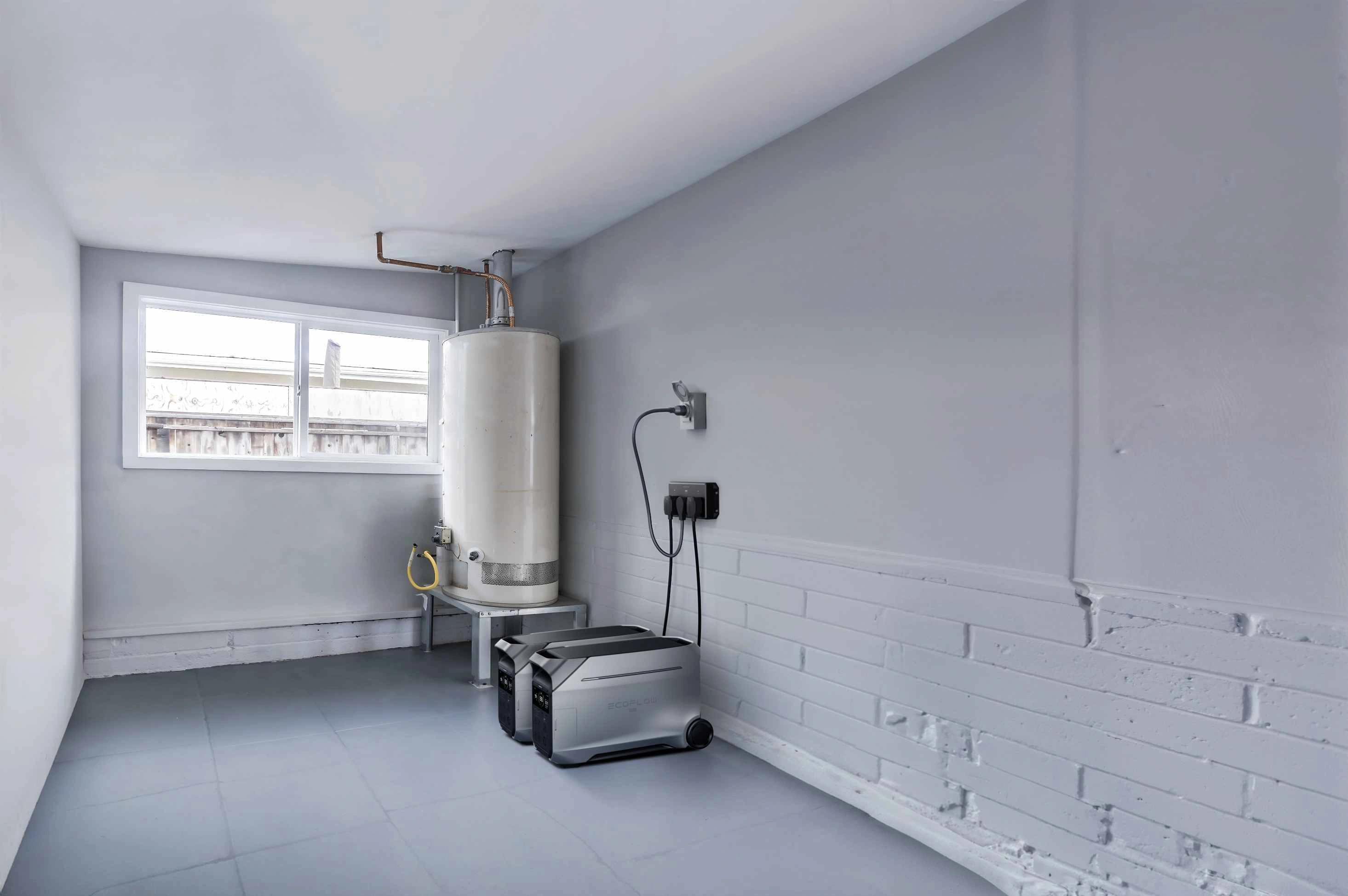
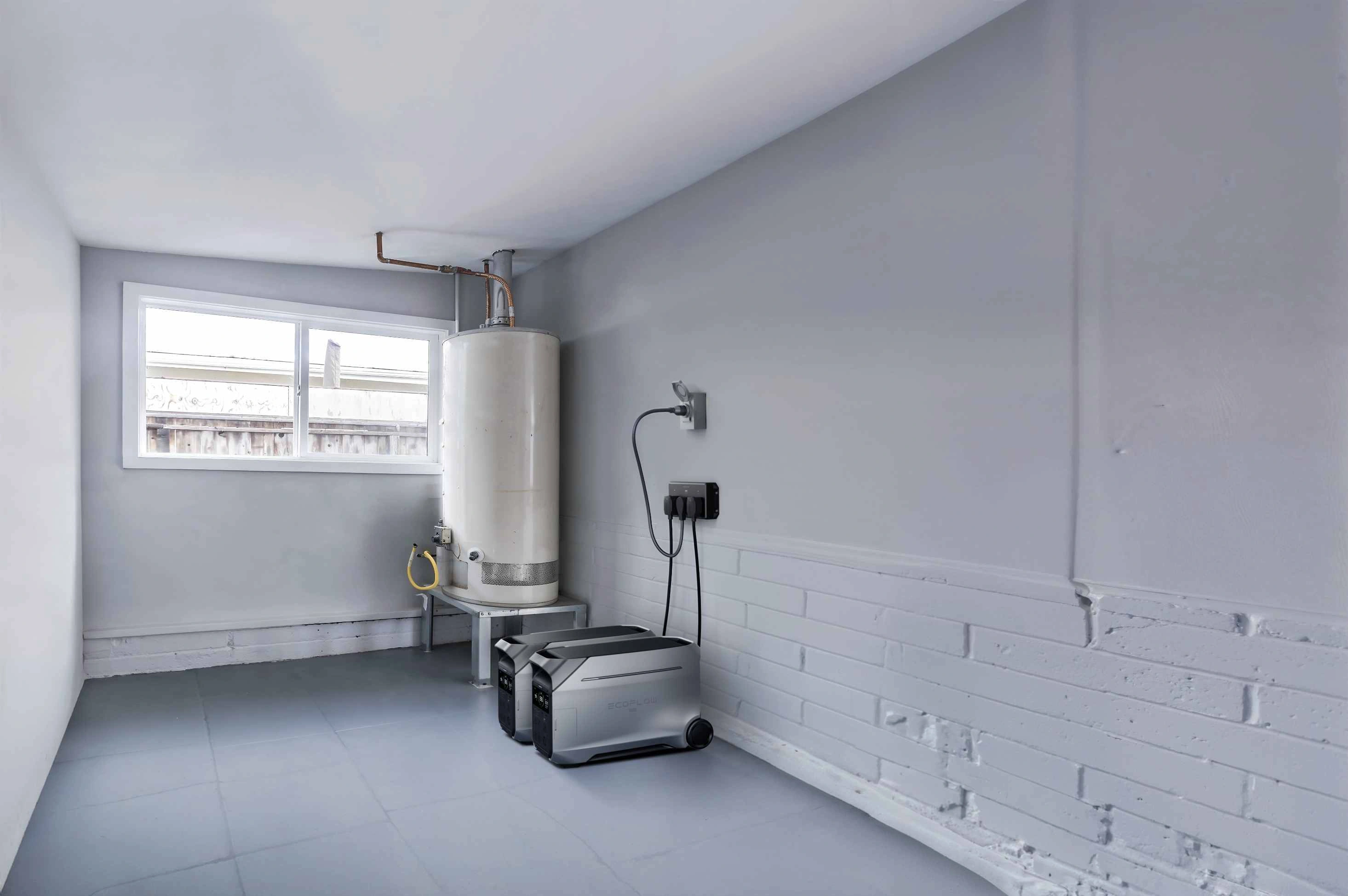
If you always use power straight from the grid, it can be expensive and risky. Think about extreme weather events like a sudden cold wave or wildfire-related blackouts. This is why many homeowners are turning to whole-home storage solutions like the EcoFlow DELTA Pro Ultra Whole-Home Backup Power. This system is a workhorse. It has ample power expansion ability and can run multiple high-HP appliances for extended periods. If you know your equipment’s HP-to-watt requirements, you can customize a DELTA Pro Ultra setup for your home. This will make sure your home stays powered, optimized, and safe regardless of what happens to the grid.
HP vs. Watts: What’s the Difference in Practical Use?
To understand the practical differences between Horsepower and Watts, it helps to see them as two sides of the same coin. HP describes what the machine produces, while Watts describes what it consumes. Here is a breakdown of the key differences in a practical, real-world context.
HP vs. Watts: Practical Comparison
| Feature | Horsepower (HP) | Watts (W) / Kilowatts (kW) |
|---|---|---|
| Primary Focus | Power Output: Measures the mechanical work a motor can perform (the "muscle"). | Power Consumption: Measures the electrical energy being pulled from the grid. |
| Common Use | Used for heavy-duty mechanical equipment, e.g. engines, pumps, lawnmowers, and compressors. | Used for electrical components and billing, e.g. light bulbs, heaters, and monthly utility bills. |
| Efficiency Gap | Represents the "rated" capacity. A 1 HP motor delivers 1 HP of work at the shaft. | Represents "electrical input." Because no motor is 100% efficient, a 1 HP motor pulls more than 746W to cover motor inefficiencies and heat loss. |
| Consumer Logic | A legacy unit used for visualization. It’s easier to imagine "horse strength" for a tractor. | A scientific unit. It is essential for sizing breakers, wiring, and battery storage capacity. |
| The "Peak" Trap | Often listed as Peak HP (startup burst), which can be misleading for long-term use. | Usually listed as Rated/Continuous Wattage, giving a more accurate view of energy costs. |
Why the Difference Matters for Your Home
When you are looking at your electrical panel or considering a backup power solution, Watts is the only number that truly matters. A pool pump might be sold as a 1.5 HP pump, but your home’s electrical panel is not concerned with HP, but with actual electrical load. If that pump is 80% efficient, it isn’t drawing 1,119W, it’s actually pulling closer to 1,400W (1.5 x 746 ÷ 0.8). Furthermore, because electric motors are inductive loads, they have what’s called a ‘Power Factor’. This can cause them to draw even more current (Amps) than the wattage suggests. That’s why you always need to use the Nameplate Amps when sizing a backup battery.
Key points to remember are, always use the Wattage rating when calculating if a portable power station or a home backup battery can handle the load. Use the wattage rating found on the motor’s nameplate. HP tells you if the tool is strong enough, i.e. enough muscle, for the job. Watts lets you determine whether your power system can actually run it.


Common Real-World Applications of HP to Watts Conversion
Let’s look at some typical equipment motors to give you a better idea of how to use these figures. Understanding ratings and how much power is used helps you plan your electrical load and avoid overloading your circuits.
HVAC Systems
In the U.S., residential central air conditioning is one of the biggest power draws. Most compressors range from 2 to 5 HP.
In reality, a 3 HP AC compressor motor doesn’t just pull 2,238W. You need to include the blower motor and efficiency losses. When you include these, you’re looking at a continuous draw of roughly 3,000 to 3,500 watts. This is why AC units require dedicated high-voltage circuits.
Water Pumps
For those living in rural areas or managing larger properties, well pumps and pool pumps are essential. These typically fall between 0.5 to 1.5 HP.
While a 1 HP pump runs at about 746W (output), it will draw much higher wattage when it starts. This startup surge can briefly hit 3,000+ watts. This is a very important detail when you’re trying to run your pump off a portable power station or a backup generator.
Power Tools
Heavy-duty shop tools like table saws, belt sanders, and air compressors are often around the 1 to 2 HP range.
Workshop Planning: A 1.5 HP table saw is a standard for many DIYers. Knowing this translates to roughly 1,100–1,300 watts helps you avoid a breaker trip. If you run a high-wattage shop vac on the same 15-amp circuit as the saw, this often causes the breaker to trip the moment the saw blade hits a knot in the wood.
EVs & E-Bikes
The world of electric transportation is where using HP and Watts can be confusing. In the EV industry, W and kWh are the norm. But for marketing, Tesla or Ford might brag about an EV having 450 HP. To a traditional car enthusiast, this puts it in the “muscle car” category, which it may or may not be.
No matter what the marketing says, the car’s battery capacity is measured in kWh and its charging speed is in kW. An e-bike might be rated at 750W (roughly 1 HP), and is strictly governed by its wattage to comply with U.S. federal safety classifications. When you’re charging these at home, you’ll be looking at your electrical panel in kilowatts, not horsepower. For electrical applications, always think Watts.
How to Choose the Right Power Capacity for Your Needs
Use the correct ratings and do the conversions to make sure you don’t overspend on equipment or underpower your lifestyle.
Matching HP/Watt Ratings to Your Usage Scenario
In the U.S., simply knowing the conversion isn’t enough; you have to plan for how you will be using your electrical equipment. If you’re running a 1 to 3 HP HVAC system alongside a fridge and a well pump, your power solution needs to handle high startup surges.
For those looking to optimize daily energy use and cost, or provide backup power during an outage, the EcoFlow DELTA Pro 3 Portable Power Station is a perfect solution. It offers impressive kilowatt output that comfortably covers typical household HP-rated appliances. Plus, it supports 240V output, which is standard for heavy-duty appliances like dryers and ranges. By doing conversions from HP to watts, you can see exactly how a DELTA Pro 3 Portable Power Station fits in. The right sized system will prevent overloads while keeping your high-wattage tools running smoothly.
Avoiding Underpowered or Overpowered Equipment
Don’t buy a 10,000W generator for a 1 HP pump, it’s overkill and inefficient. Conversely, don’t expect a small portable power station to run a 2 HP saw. Always be sure to calculate your Running Watts and Starting Watts to check the size of your system.
Tips for U.S. Homeowners
Check your Voltage: High HP motors (above 2 HP) often require 240V circuits.
Efficiency Matters: Look for NEMA premium efficiency motors to keep the input watts as close to 746 per HP as possible.
Conclusion
Whether you’re calculating the load for a workshop or planning for home backup power using an EcoFlow system, you can start knowing that 1 HP = 746 Watts. Use this simple conversion to know exactly how much total energy your home requires to stay powered and productive.
FAQs
1. Is 1 HP Always Equal to 746 Watts?
In the U.S. this is the standard for American mechanical and electrical equipment. While there are other units of measurements (like Boiler Horsepower used in industrial heating), the 746W standard is what you will encounter 99% of the time in residential applications.
2. Why Do Some Devices Show Different Values?
Devices show different values because of efficiency losses and varying standards. A motor might produce 1 HP of work output but require 900 watts of electrical input because some energy is lost as heat and friction within the motor.
3. How Many Watts Is a 2 HP Motor?
A 2 HP motor is approximately 1,492 watts. You calculate this by multiplying 2 by the standard 746-watt conversion factor.
4. Does Higher HP Mean Higher Electricity Bills?
Generally, yes, because higher horsepower indicates a greater capacity to do work, which requires more electrical energy. However, a high-HP motor that finishes a task quickly may use less total energy (kWh) than a low-HP motor that must run for a longer time.
5. Can I Convert HP to kW Easily?
Yes, just multiply the HP by 0.746 to get the kilowatt (kW) equivalent. For example, a 10 HP motor is a 7.46 kW motor. Remember, 1 kW = 1,000 W.
6. What’s the Difference Between kW and HP?
The main difference is due to how it’s used. HP is a traditional unit of mechanical power, i.e. doing work. KW (kilowatts) is the universal metric unit for electrical power, generally being consumed. One kW is equal to about 1.34 HP.
For press requests or interview opportunities, reach out to our media team
media.na@ecoflow.com