How Many Watts Does a Microwave Use? Complete Appliance Wattage Guide
- How Many Watts Does a Microwave Use?
- What Affects a Microwave's Power Draw?
- How Much Does It Cost to Run a Microwave?
- How Do Microwaves Compare to Other Kitchen Appliances?
- Can You Run a Microwave Using a Portable Power Station?
- How Do You Find the Exact Wattage of Your Microwave?
- Frequently Asked Questions
- Save Money, Cook Faster, And Use Energy Smarter
Whether you’re reheating leftovers or trying to keep your coffee warm, you probably use a microwave multiple times a day. But how much energy do these everyday appliances use, anyway?
The good news is that microwaves don’t consume a lot of electricity, but it’s still important to understand their wattage, especially if you’re running a microwave with a power station.
Learn how many watts they use, average costs, and how microwaves compare to other appliances.
How Many Watts Does a Microwave Use?
According to the U.S. Department of Energy, most household microwaves use 700 to 1,250 watts, with 1,000 watts being the most common. In general, higher wattage means more cooking power and features, but you’ll also pay more for higher-powered microwaves.
Lower-wattage microwaves in the 700-watt range work well for basic tasks like reheating refrigerated leftovers or warming a cup of coffee. They take a little longer to get the job done, though. If you've ever followed microwave instructions on a frozen meal and found it still cold in the middle, a lower-wattage microwave is often the reason. Because of that, microwaves in the 900–1,000-watt range are the sweet spot.
Some newer countertop and combination models use 1,200 watts or more and have features that go well beyond reheating. Depending on the model, you may get steaming, roasting, and air frying in one appliance. But at that point, you're getting something closer to a multi-purpose cooking appliance than a traditional microwave.
Wattage Range | Type of Microwave | Best For |
700W | Compact/small countertop | Basic tasks: reheating leftovers, warming drinks |
800–1,250W | Standard countertop | Sweet spot for most households; faster, more even cooking |
1,000-1,250W | Countertop and combination models | Multi-purpose cooking: steaming, roasting, air frying |
Still, if you're trying to estimate your home's overall energy usage, it helps to compare your microwave's consumption with other common household appliances. For example, a hair dryer can draw even more power than a microwave while it's running.
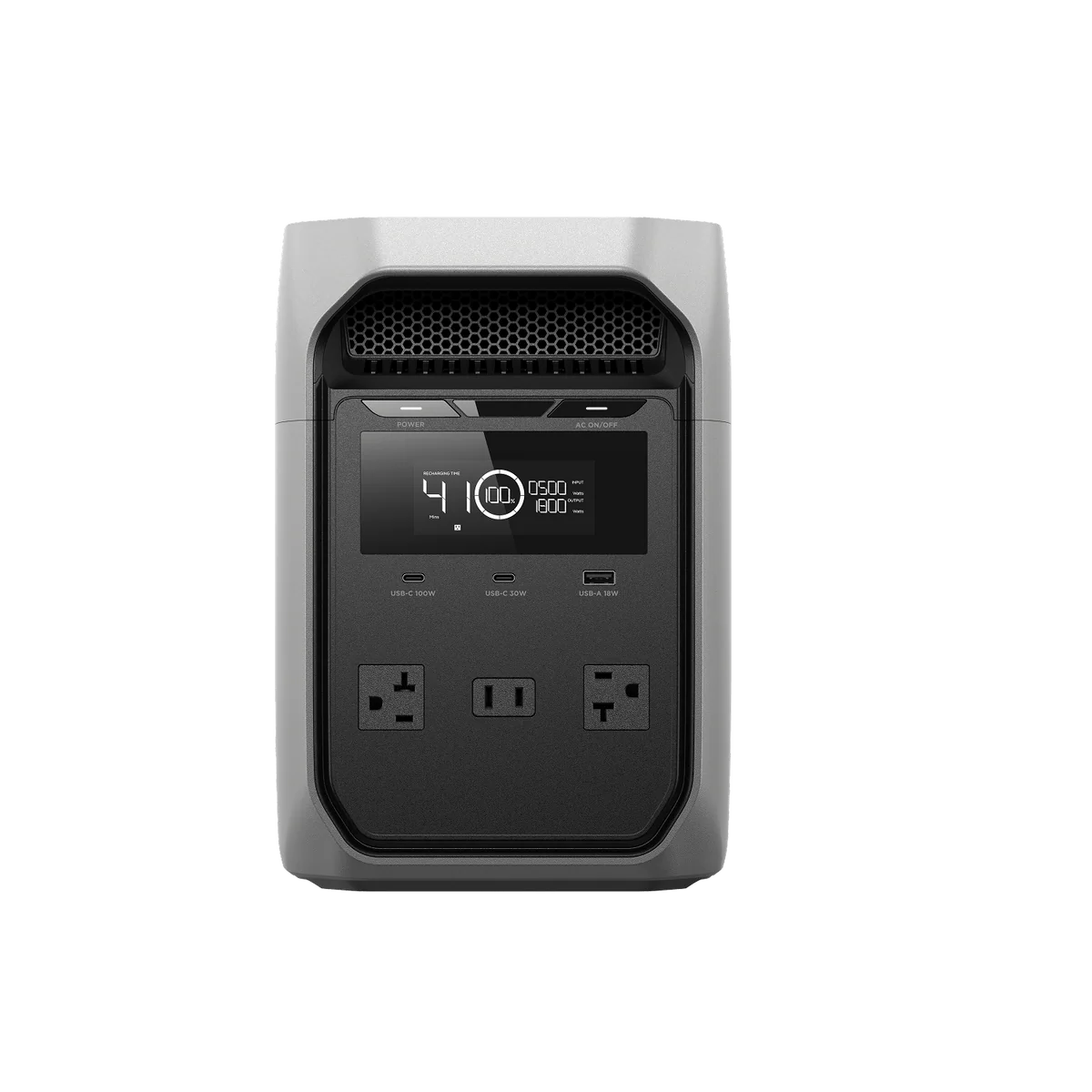
If you're planning to run a microwave off-grid or during a power outage, knowing your microwave's wattage is the first step to sizing a portable power station correctly. The EcoFlow DELTA 3 Classic Portable Power Station (1024Wh) delivers 800W of continuous output and can handle most household microwaves with X-Boost™ technology supporting appliances up to 2,600W.
What Affects a Microwave's Power Draw?
While the wattage rating gives you a good baseline, several factors affect how much power your microwave actually consumes:
Features: Basic microwaves only need power for heating food, but newer models sometimes have additional features that increase energy use.
Age and efficiency: Older microwaves are generally less energy efficient than newer ones.
Food type: What you're heating matters. A large casserole dish requires more energy than a single serving of leftovers.
Time: The longer the microwave runs, the more electricity it uses, so what you’re reheating and how long it takes will affect its power draw. If you need something to cook low and slow, use a crock pot instead.
Cleanliness: Food splatters and grease buildup reduce energy efficiency over time.
Standby power use: Even when you're not actively using your microwave, it still consumes a small amount of electricity. Most models draw between 2 and 7 watts in standby mode to power the clock and display.
How Much Does It Cost to Run a Microwave?
Even though microwaves have relatively high wattage compared to other kitchen devices, they don't have a major impact on your electricity bill because you use them for such a short amount of time.
To calculate how much it costs to run your microwave, you only need three figures: your microwave's wattage, how long you run it each day, and your electricity rate per kWh.
Step 1: Multiply wattage by daily run time to get watt-hours (Wh).
Wattage (W) × Daily run time (h) = Wh
Step 2: Convert Wh to kWh by dividing by 1,000.
Wh ÷ 1,000 = kWh
Step 3: Multiply your daily kWh by your electricity rate to get your daily cost.
kWh × electricity rate = daily cost
You can find your electricity rate on a recent utility bill, or use the U.S. Energy Information Administration to look up your state's average rate.
Understanding where your electricity goes can help you make smarter decisions about energy efficiency, especially if you’re installing a whole-home backup power solution.
How Do Microwaves Compare to Other Kitchen Appliances?
Microwaves are often assumed to be high-energy for consumers. They might draw 1,000 watts during operation, but they’re actually one of the most efficient kitchen appliances because they cook your food so quickly. Here’s how they compare to other household appliances.
Refrigerator
Your refrigerator likely uses between 300 and 800 watts. However, you have to account for the refrigerator's compressor, which cycles on and off. Because a fridge runs continuously, its total daily energy use adds up fast, far more than a microwave that runs for minutes at a time.
Since a fridge runs day and night, it uses significantly more electricity than a microwave. This makes it one of the biggest energy hogs in your home, second only to HVAC and electric furnaces.
Toaster Oven
Toaster ovens are a common alternative to microwaves, especially if you want to crisp your food. They use slightly more energy than a microwave, typically 600 to 1,800 watts. However, they can use a lot of energy if you use features like convection.
Coffee Maker
A standard drip coffee maker uses around 1,500 watts. Like with microwaves, the larger the coffee maker, the more energy it uses. If you drink your coffee pretty quickly, a coffee maker won’t use a lot of energy, but if you like to keep the pot hot for hours afterward, you’ll use much more electricity.
Can You Run a Microwave Using a Portable Power Station?
Yes, although you have to size the power station appropriately.
The first thing to check is your microwave's rated wattage. A small 700-watt microwave is much easier to power than a larger 1,200-watt model with convection or air-frying features. You'll also need to account for the brief power surge many microwaves require when they first start up.
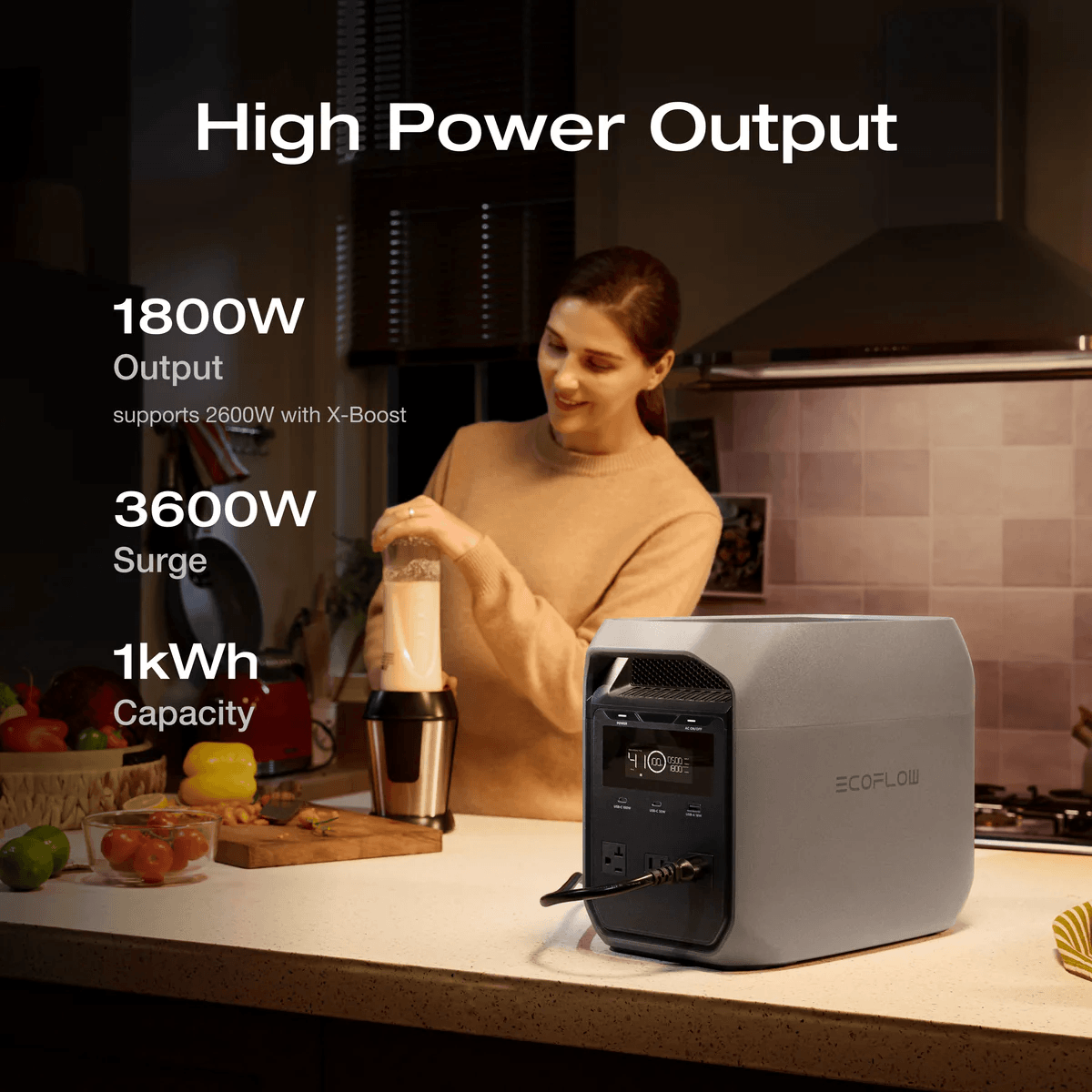
For example, the EcoFlow DELTA 3 Classic Portable Power Station (1024Wh) delivers 800W of continuous output, and with X-Boost™ technology, it can power high-demand appliances up to 2,600W, including most household microwaves.
Since most people only use a microwave for a few minutes at a time, a portable power station can be a practical solution for camping or keeping your kitchen functional during a power outage.
How Do You Find the Exact Wattage of Your Microwave?
You need to know your microwave’s exact wattage to estimate your energy needs. You can find this information in a few places, like:
The appliance label: Most microwaves include wattage information inside the door frame, on the back of the unit, on the side panel, or underneath the unit.
The owner’s manual: If the label is difficult to read, you can also find the microwave’s wattage in the owner’s manual. Most manuals are available online if you didn’t keep the paper one.
The model number: Can't find the manual? Search the microwave's model number on the manufacturer's website.
Frequently Asked Questions
How Much Power Does a Microwave Use on Standby?
Most microwaves use between 2 and 7 watts while in standby mode. This small amount of electricity powers features like the clock and digital display. While standby power won't dramatically increase your electric bill, it can add up over time. If you're running on a portable power station or backup battery during an outage, always unplug appliances when they aren’t in use.
What Size Inverter Do You Need to Run a Microwave?
The inverter should be rated higher than your microwave's running wattage and capable of handling its startup surge. For example, a 1,000-watt microwave needs an inverter rated for at least 1,200 to 1,500 watts. Always check both the microwave's power requirements and the inverter's continuous output rating before connecting appliances. Otherwise, you could overload the system.
Save Money, Cook Faster, And Use Energy Smarter
Most microwaves use between 700 and 1,250 watts, with 1,000 watts being the most common. While they draw a significant amount of power when running, their short cooking times make them one of the more energy-efficient kitchen appliances.
Explore how portable backup power can keep essential devices running when you need them most. Whether you're preparing for outages or cooking off-grid, the EcoFlow DELTA 3 Classic Portable Power Station (1024Wh) keeps essential appliances running.
For press requests or interview opportunities, reach out to our media team
media.na@ecoflow.com