How Home Battery Backup Can Lower Your Home Insurance Premiums in 2026
- Why Home Battery Backup Can Reduce Insurance Costs in 2026
- What Insurers Actually Evaluate When You Add Backup Power
- Battery Backup vs Gas Generators for Insurance Risk
- How to Qualify for Discounts and Document Your System
- How to Maximize Your Total Savings Beyond Insurance
- Frequently Asked Questions
- Lower Premium Risk and Protect Your Home Through the Next Outage Season
Homeowners insurance premiums have been rising sharply, driven by extreme weather, more non-renewals, and tighter underwriting across high-risk regions in the US.
One potential way to lower home insurance premiums is adding battery backup that can protect your house from outage-related loss events like burst pipes, water damage, and food spoilage, which are all common home insurance claims.
Beyond these savings, even more savings may be available through state rebates, bill savings, and the value of added resilience for your home.
Here’s a look at the many ways to save with home battery backup, starting with insurance.
Why Home Battery Backup Can Reduce Insurance Costs in 2026
Homeowners insurance national averages have increased by double digits annually over the past few years as extreme weather creates more claims, rising 10.4% in 2024 and 12.7% in 2023.
Adding battery backup can reduce the chance of outage-related loss events, like water damage from failed sump pumps or burst pipes from lost heat. All of these are common claim triggers, and by reducing your preventable claims and creating a stronger claims-free record, you may be eligible for loss-free homeowners insurance discounts.
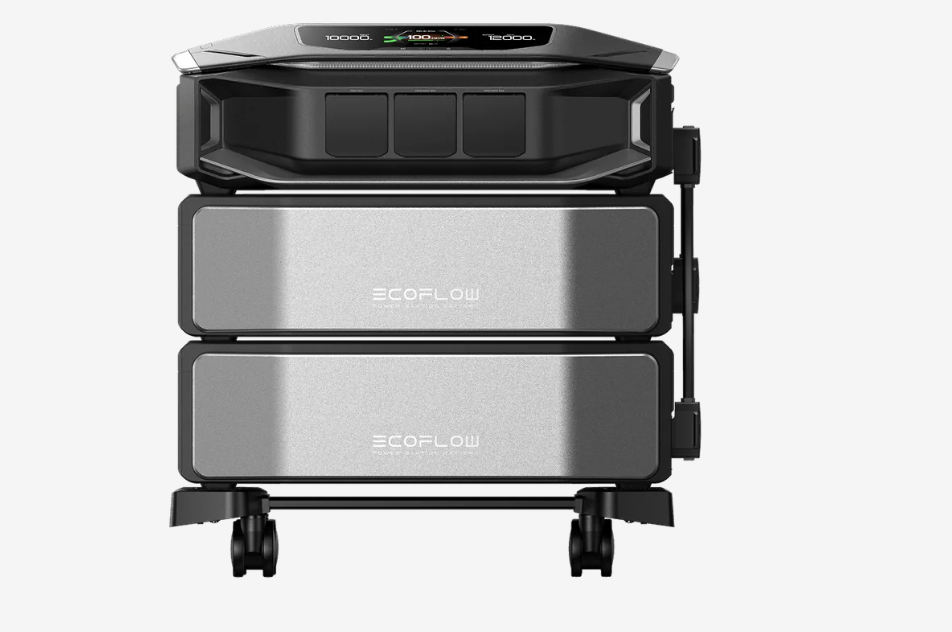
If you opt for a permanently installed system with automatic transfer, such as the EcoFlow DELTA Pro Ultra X Whole-Home Backup Power, you could also qualify for loss mitigation credits under backup system discount or protective device categories at select insurance carriers.
What Insurers Actually Evaluate When You Add Backup Power
When an insurance underwriter evaluates your eligibility, they assess three core areas: your property's condition, location risk, and your claims history as a policyholder. Backup power can improve all three of these points.
Your claims history is a top factor. When you have a system that can prevent even one water damage or freezing claim, that will protect your risk profile come renewal time. Some carriers also have protective device discounts for systems that keep leak sensors, sump pumps, and security online during outages.
One thing they'll look at is whether the installation is permanent and automatic or if it's portable. A permanently wired system with an automatic switchover will always be viewed more favorably.
Battery Backup vs Gas Generators for Insurance Risk
A gas generator is one form of electricity backup, but it carries elevated liability concerns, like:
Fire hazard from fuel storage
The risk of carbon monoxide poisoning
Backfeed risk if it's improperly installed
Battery systems, on the other hand, have no emissions, require no fuel storage, and operate silently. You can run them indoors with no combustion-related liability exposure.
Installing a gas generator permanently can raise the value of your insured dwelling, thus raising premiums, since they're treated as part of the structure. But a battery system is a loophole to avoid this. When you pair a whole home backup power solution with solar, you eliminate fuel dependency entirely, and enjoy everything that comes along with it, such as no delivery logistics, no storage liability, and no exhaust-related claims risk.
How to Qualify for Discounts and Document Your System
If you're ready to pull the trigger on a home battery backup system and see if you qualify for discounts, start by contacting your insurer before installation to check if loss mitigation, backup system, or protective device discounts apply in your state.
You'll need to provide them with core documentation, including:
Your electrician's invoice with a license number
Local permit and inspection sign-off
Photos of the labeled panel and automatic transfer switch
List of circuit coverage
If your system provides backup for your sump pump, you'll also need a circuit list showing pump assignment, plus a short runtime note for typical storm scenarios.
Hold on to proof of your home battery costs and installation expenses, with serial numbers and system specs, for your underwriting submission.
Other savings opportunities like state rebates and utility programs will vary significantly depending on your location. Check the DSIRE database to find current listings. For example, California, New York, Vermont, and Connecticut all currently have active programs.

How to Maximize Your Total Savings Beyond Insurance
The federal 30% investment tax credit for homeowner battery systems expired at the end of 2025, but some state-level programs are still active and stackable.
Once your EcoFlow DELTA Pro Ultra X Whole-Home Backup Power system is installed, you can also leverage it for time-of-use optimization, storing energy during off-peak hours to reduce your peak rate draw and generate ongoing bill savings beyond an insurance discount.
Frequently Asked Questions
Will installing home battery backup lower my homeowners insurance premium in 2026?
Adding home battery backup is not guaranteed to reduce your homeowner's insurance premium, because availability and discount amounts will vary by state and carrier. Your best chance is permanently installing a system with an automatic transfer that keeps any loss-related circuits operational during outages.
What documentation do insurers need to consider a home battery backup for savings?
Insurance companies need your electrician's invoice with license number and installation date, as well as a local permit and inspection sign-off. You may also need to provide photos of the automatic transfer switch, installed system, and labeled panel breakers. Some insurers ask for a circuit coverage list showing which circuits are backed up and why each is loss-relevant.
How much can home battery backup realistically save on insurance each year?
Insurance premium discounts for battery systems are not standardized, and the specific rates depend on your carrier. Even if your insurance company does not provide device discounts, if your battery backup helps you avoid even one damaged claim, it protects your claims-free record, which can be worth up to 15% and loss-free discounts over time.
Do rebates and tax incentives affect insurance discounts for home battery backup?
Tax incentives and rebates are completely separate from insurance discounts. They can help reduce installation costs, not your premium. You can pursue both savings streams simultaneously, since the insurance discount conversation and incentive applications are both independent processes.
Lower Premium Risk and Protect Your Home Through the Next Outage Season
Some insurance providers offer direct discounts for home battery backups. But even when these specific discounts aren't available, they still hold real insurance value. By keeping critical systems online during outages, you'll have fewer outage-related claims and a stronger claims-free history, which can help you save over time.
The key to unlocking insurance discounts is documentation. They can't verify a system that doesn't have proof.
Installing a permanent and reliable system like the EcoFlow DELTA Pro Ultra X Whole-Home Backup Power, will help you position your household for both insurer conversations and ongoing energy bill savings.
For press requests or interview opportunities, reach out to our media team
media.na@ecoflow.com