DIY Solar System Guide (2026): Components, Costs, and Installation Tips for U.S. Homeowners
By 2026, going solar stopped being a "someday" project for tech geeks or off-gridders hiding out in the Rockies. With utility bills jumping another 5-8% this year in places like California and Maine, this is a mainstream survival move for suburban homeowners. You’re locking in your own monthly overhead before the next rate hike hits. This guide digs into the actual nuts and bolts of building your own setup, from dodging the "pro installer" markup to surviving the city permit office without losing your mind.
What Is a DIY Solar System and Is It Right for You?
Before you haul a ladder out of the garage, let’s be real about what "DIY" looks like in 2026. We aren't talking about salvaged parts and a prayer. It’s a calculated, modular home improvement project.
What “DIY Solar” Means in 2026
In 2026, DIY solar usually means you’re the project manager using pre-engineered kits. The tech has gotten way more "plug-and-play" lately, with rapid-connect wiring that’s basically Lego for adults. You’re doing the physical labor, but the smart software handles the configuration that used to require a degree in electrical engineering.
Types of Systems: Grid-Tied, Off-Grid, and Hybrid
Most of us in the suburbs go Grid-Tied because it's the cheapest way to use the utility as a "free" battery, though you’re still toast if the power goes out. Off-Grid is for the cabin or the van life crowd; total freedom, but batteries will eat your budget alive. Many smart homeowners now prefer a hybrid solar system, which allows you to stay connected to the grid while keeping a battery as a safety net. It’s the "have your cake and eat it too" option, even if the upfront cost is a bit higher.
Then there’s the Hybrid system. This is the fastest-growing category in 2026. You stay connected to the grid but keep a battery as a safety net. It’s the "have your cake and eat it too" option, even if the upfront cost is a bit higher.
| System Type | Best For | Pros | Cons |
|---|---|---|---|
| Grid-Tied | Suburban homes | Cheapest entry point | No lights during a blackout |
| Off-Grid | Remote cabins/RVs | Zero bills, period | heavy battery costs |
| Hybrid | Smart homeowners | Smart Owners | More parts to manage |
Legal and Permit Requirements in the U.S.
Even if you’re doing the heavy lifting, you can’t dodge the paperwork. You’ll need a building permit from the city and a "handshake" agreement (Interconnection) from your utility. Here’s a tip: many states finally pushed through "Expedited Permitting" in 2026 for DIYers. It’s still a headache, but it’s a faster headache than it used to be.
Who Should (and Shouldn’t) Consider DIY Solar
If you’re comfortable with a drill, aren't terrified of a 2-story roof, and can actually read a wiring diagram, you’re in. But let’s be honest, if your roof has six different pitches or your electrical panel looks like it belongs in a museum, just call a pro. There’s no ROI in falling off your house or blowing a transformer.
Key Components of a DIY Solar System
To build a reliable solar setup, you need more than just glass in the sun. Think of these components as the "organs" of your home’s new energy body.
Solar Panels: Types, Efficiency, and Output
In 2026, N-type monocrystalline panels are the undisputed gold standard, with efficiency rates hitting as high as 25% from brands like Aiko and Maxeon. For a DIYer, this is a massive win because higher efficiency means you need fewer panels to hit your target wattage, saving you from hauling extra weight up a ladder. Look for panels with high shade tolerance or bypass diodes. This is essential if a stray neighborhood oak tree casts even a sliver of a shadow across your array in the late afternoon; without it, one shaded cell can tank your entire string’s output.
Inverter: Converting DC to Usable AC Power
Your panels produce DC power, but your blender and TV need AC. Whether you choose a single String Inverter (cheaper, but one failure point) or individual Microinverters under each panel (better for complex roofs), this is the brain that ensures your power is clean and safe. In 2026, many DIY kits come with "Smart Inverters" that talk directly to your phone, so you don't have to be an electrician to know if the system is humming correctly.
Battery Storage: Do You Really Need It?
While a massive, hard-wired battery bank is great, not every home needs a permanent, $15,000 lithium wall. For those who want backup power without the complex, invasive install that requires a city inspector's sign-off, a portable solution is often the smarter play.
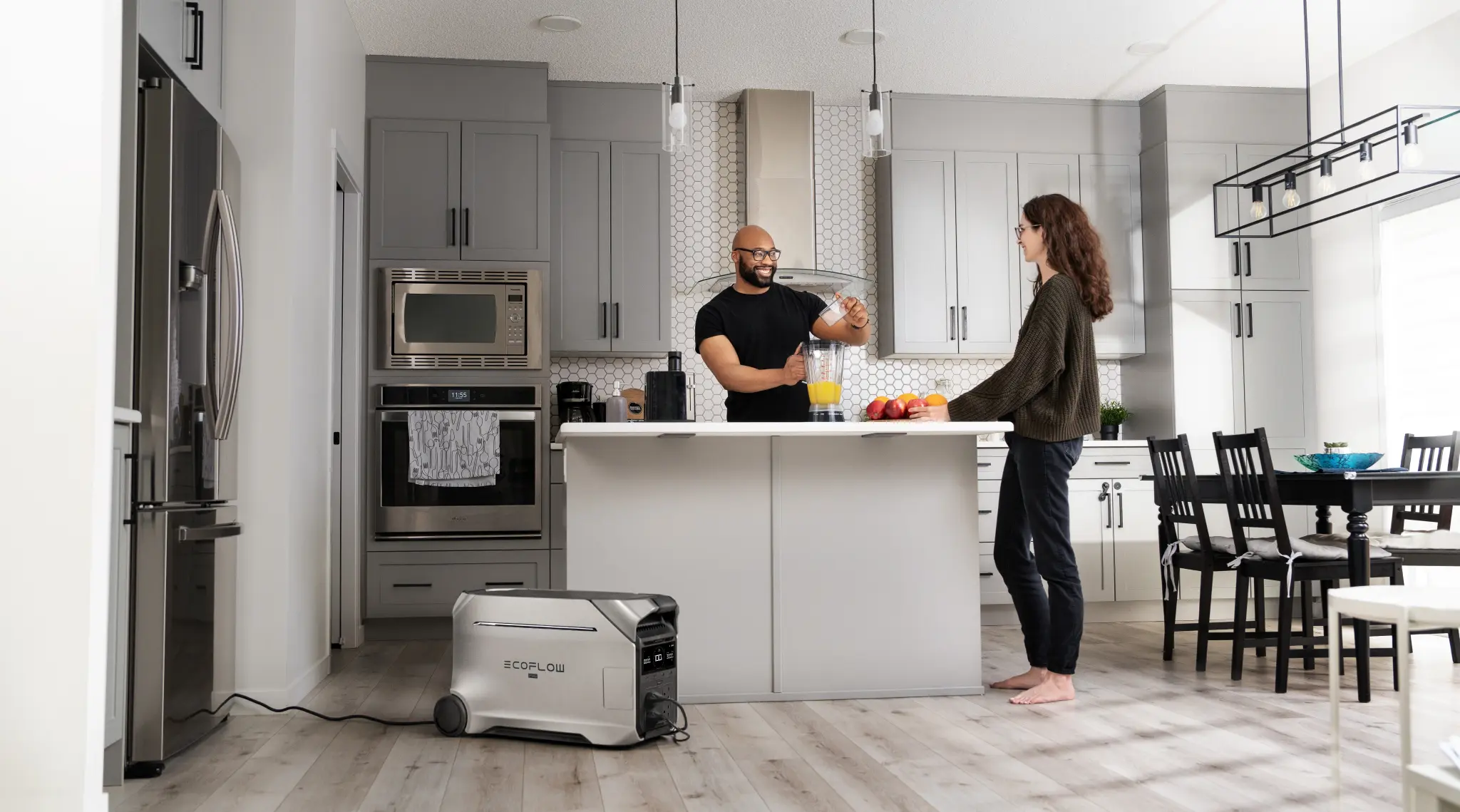
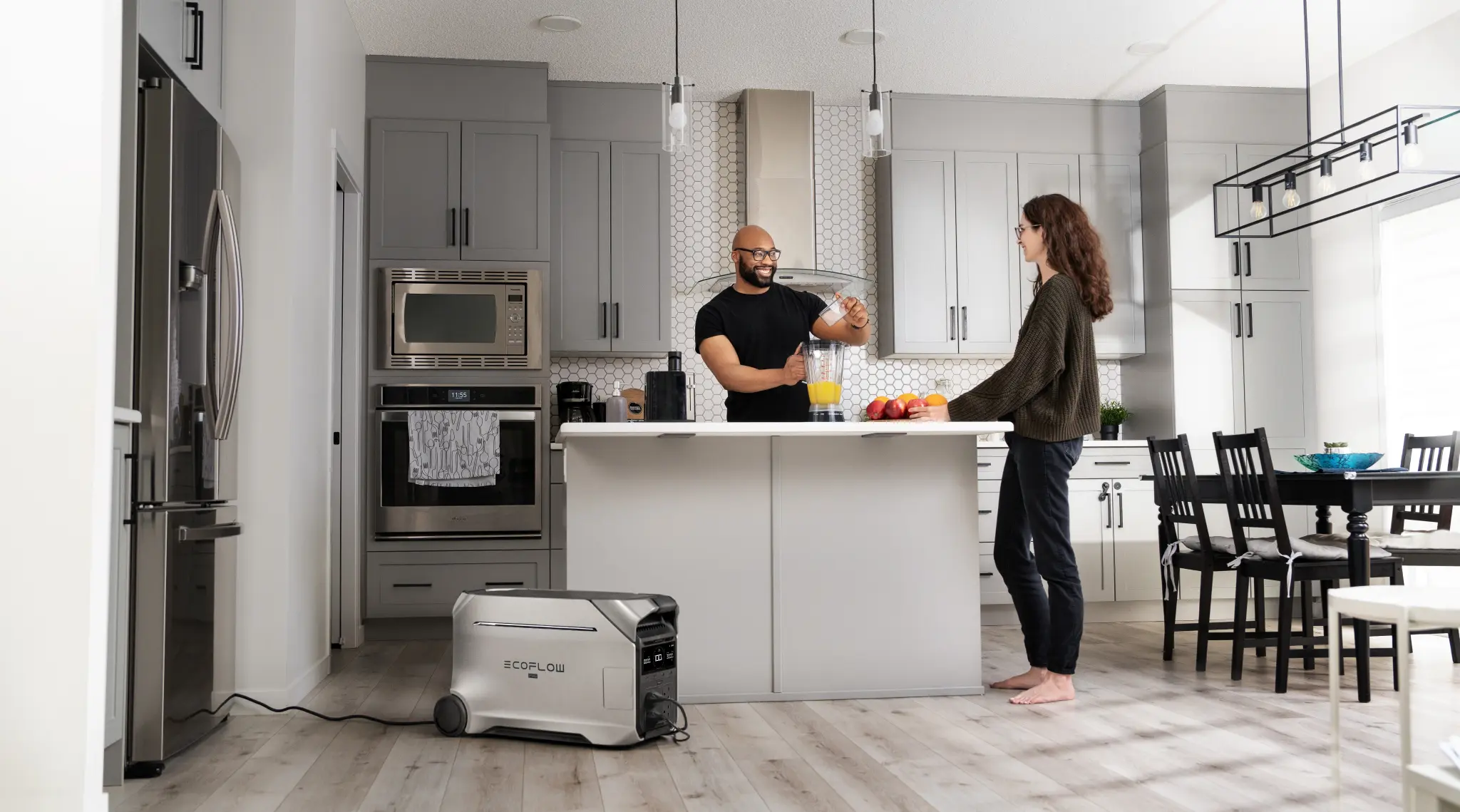
The EcoFlow DELTA Pro 3 Portable Power Station is a standout choice here. It features a 4,096Wh capacity and a beefy 4,000W output, which is enough to kickstart a 3-ton central AC or keep your fridge running for up to 27 hours. The beauty of this unit for a DIYer is the Dual-PV charging, it can take up to a combined 2,600W of solar input directly through its independent high and low voltage ports. You just plug your panels straight into the unit. It’s a flexible way to use your own solar power during the day and have a "safety net" for blackouts at night without touching your home's main electrical panel.
Mounting Systems and Racking Options
Racking is what keeps your panels from becoming high-velocity kites during a storm. Whether you’re using rail-based roof mounts or a simple ground mount in the backyard, ensure your hardware is rated for your local wind and snow loads, typically following ASCE 7 standards in the U.S. Integrating a reliable solar battery into this setup ensures that the energy you harvest isn't lost when the sun goes down.
Bottom Line: Don't cheap out on the lag bolts or flashing. A $200 savings on mounting hardware isn't worth a roof leak that costs $5,000 to fix three years from now.
Monitoring and Energy Management Tools
Most modern systems in 2026 are "app-first." You’ll want to see exactly how many kilowatt-hours you’re pulling in real-time. Smart management tools now use AI to look at the ℉ in your local forecast and suggest when to pre-chill your house using solar power before the sun goes down. It’s all about making sure that every bit of sunshine you harvest actually ends up lowering your bill.
How Much Does a DIY Solar System Cost in 2026?
Money talks, and in 2026, it’s shouting. While the initial "sticker shock" of buying pallets of glass is real, the long-term math is getting more aggressive. You’re looking at a much faster break-even point than people did even two years ago because grid prices just won't stop climbing.
Average Cost per Watt in the U.S.
Right now, expect to shell out roughly $1.20 to $1.80 per watt for DIY components. How much does a whole-house solar system cost is a common question, and you're basically cutting that bill in half by being the one on the ladder compared to the $2.50 to $3.30+ per watt professional installers charge.
Total System Cost by Home Size
| Home Size | System Size | Estimated DIY Cost |
|---|---|---|
| Small (1,200 sq ft) | 5kW | $6,000 - $8,500 |
| Medium (2,000 sq ft) | 8kW | $9,500 - $14,000 |
| Large (3,500 sq ft) | 12kW+ | $15,000+ |
Estimate Your Solar Savings
To see if this actually makes sense for your wallet, use this quick and easy formula:
Annual Savings ($) = Annual Solar Production (kWh) × Local Electricity Rate ($/kWh)
Here’s a practical example:
| Scenario | Value |
|---|---|
| System size | 8 kW |
| Annual solar production | 10,000 kWh |
| Average electricity rate | $0.18/kWh |
| Estimated annual savings | $1,800 |
Over 10 years, that’s $18,000 in savings, and even more as electricity prices continue to rise.
Solar Savings by State in the U.S. (2026 Estimates)
Geography is destiny when it comes to ROI. Here’s how a standard 8kW system stacks up across the country based on 2026 rates:
| State | Avg Electricity Rate | Estimated Annual Savings |
|---|---|---|
| California | $0.28/kWh | ~$2,800 |
| Texas | $0.15/kWh | ~$1,500 |
| New York | $0.25/kWh | ~$2,500 |
Hidden Costs (Permits, Tools, Wiring, Labor Help)
Don't forget the boring stuff. You’ll probably drop another $1,200-$2,500 on things that aren't panels. Think permit fees (usually $300-$1,000), specialized electrical tools like a torque wrench or MC4 crimpers, and a one-day consultation with a licensed electrician to sign off on your final connections. Most cities won't let you flip the switch without that pro signature for insurance reasons.
Federal Tax Credit (ITC) and State Incentives
The Residential Clean Energy Credit is still the MVP here. You can deduct 30% of your total cost, including the batteries, racking, and even the wiring, from your federal taxes.
The Bottom Line: After that 30% credit, most DIYers are hitting their break-even point in 5 to 8 years. Since these systems are rated to last 25+ years, your electricity is essentially free for nearly two decades after you pay off the equipment.
How to Install a DIY Solar System Step by Step
Ready to get your hands dirty? In 2026, the "average" U.S. home is burning through about 29 to 30 kWh per day, and with utility rates hitting an all-time high of nearly 19 cents per kWh, the pressure to DIY is real. Many homeowners are now integrating a whole house backup battery to ensure their household stays running during unexpected grid failures. Here is the general roadmap to getting those panels humming without a $10,000 contractor markup.
Step 1: Assess Your Energy Needs
Look at your last 12 months of utility bills to find your average daily kWh usage.
Step 2: Design Your Layout
Use online mapping tools to find the sunniest spots on your roof (usually South-facing).
Step 3: Purchase Equipment
Avoid the temptation to buy mismatched panels from a clearance site. Stick to a unified 2026 DIY kit that includes N-type monocrystalline panels (hit that 23%+ efficiency) and a compatible racking system. Make sure your racking is rated for local wind speeds, especially if you're in a "high velocity hurricane zone" or a heavy snow state like Minnesota.
Step 4: Install Mounting and Panels
This is the part most DIYers dread: drilling holes in the roof.
Find the Rafters: Use a high-quality stud finder or the "tap and listen" method from inside the attic.
Flash It Right: Every single penetration needs a code-compliant flashing plate. If you skip this to save $200, you'll be spending $5,000 on mold remediation in three years.
Mount Up: Bolt down your L-feet, click the rails into place, and ensure everything is level before you even think about lifting a panel.
Step 5: Wiring and Inverter Setup
Run your conduits and connect the panels to the inverter. Note: Check local regulations. Most states require a licensed electrician to perform the final connection to your home’s main service panel to ensure safety and insurance compliance."
Step 6: Inspection and Activation
Once the city inspector gives the "thumbs up," flick the switch and start harvesting sunshine.
Common DIY Solar Mistakes to Avoid
A little bit of foresight prevents a pricey call to an electrician six months down the road. In 2026, the stakes are higher because the tech is more complex and the "red tape" has teeth. Here is where most DIYers trip up:
Wrong System Sizing
Don’t guess your needs based on a mild April afternoon. Underestimating your summer AC load means you’ll be buying expensive "peak rate" power exactly when you thought you’d be saving. Conversely, overbuilding without a battery is a waste; you’re just handing over excess power to the utility for pennies on the dollar.
Ignoring Codes and Permits
Skipping permits is a total dealbreaker. Most U.S. utilities won't give you "Permission to Operate" without a city sign-off. More importantly, if a fire occurs, even one unrelated to your solar, an unpermitted 600V DC system on your roof gives your insurance company a legal reason to void your entire policy.
Poor Placement and Shading
Even a tiny sliver of shade from a chimney can tank your ROI. In 2026, high-efficiency N-type panels still hate shadows; one blocked cell can slash a whole string’s output by 50%. Use a 3D modeling app to see how shadows shift from the high sun in June to the low, long shadows of December before you drill.
Safety Risks
Solar panels are "always on" the moment light hits them. Unlike your home’s AC outlets, DC power is a constant, high-voltage flow that is incredibly dangerous if you get shocked. Never work in damp conditions, always wear a professional-grade harness on pitches steeper than 6/12, and pay an electrician for that final panel connection. It's the best $800 insurance policy you can buy.
How to Maximize Solar Savings with Smart Energy Management
Installing panels is only half the battle. In 2026, the real win comes from how you manage that juice once the sun starts hitting the glass.
Why Monitoring and Control Matter
If your panels are cranking out peak power at 1 PM while you’re at the office, that energy usually flows straight back to the grid. In most states, the utility only gives you a fraction of the cost in credits, sometimes as low as 3¢ to 5¢ per kWh. Smart management flips the script, ensuring your home "eats" that free power first or stores it for the expensive 6 PM to 9 PM window when rates can triple.
How Smart Systems Improve Energy Savings
Modern 2026 systems aren't just "on" or "off." They use predictive AI to look at the ℉ in tomorrow's forecast and cross-reference it with satellite cloud tracking.
The "Pre-Cool" Move: If the system sees a 95℉ heatwave coming tomorrow, it’ll use today's surplus solar to pre-chill your home or top off your batteries while the grid is cheap.
The Storm Prep: If a localized storm is 20 miles out, the AI can automatically switch your battery to "Backup Reserve" mode, ensuring you have 100% capacity before the first lightning strike.
Example: Integrated Home Energy Solution
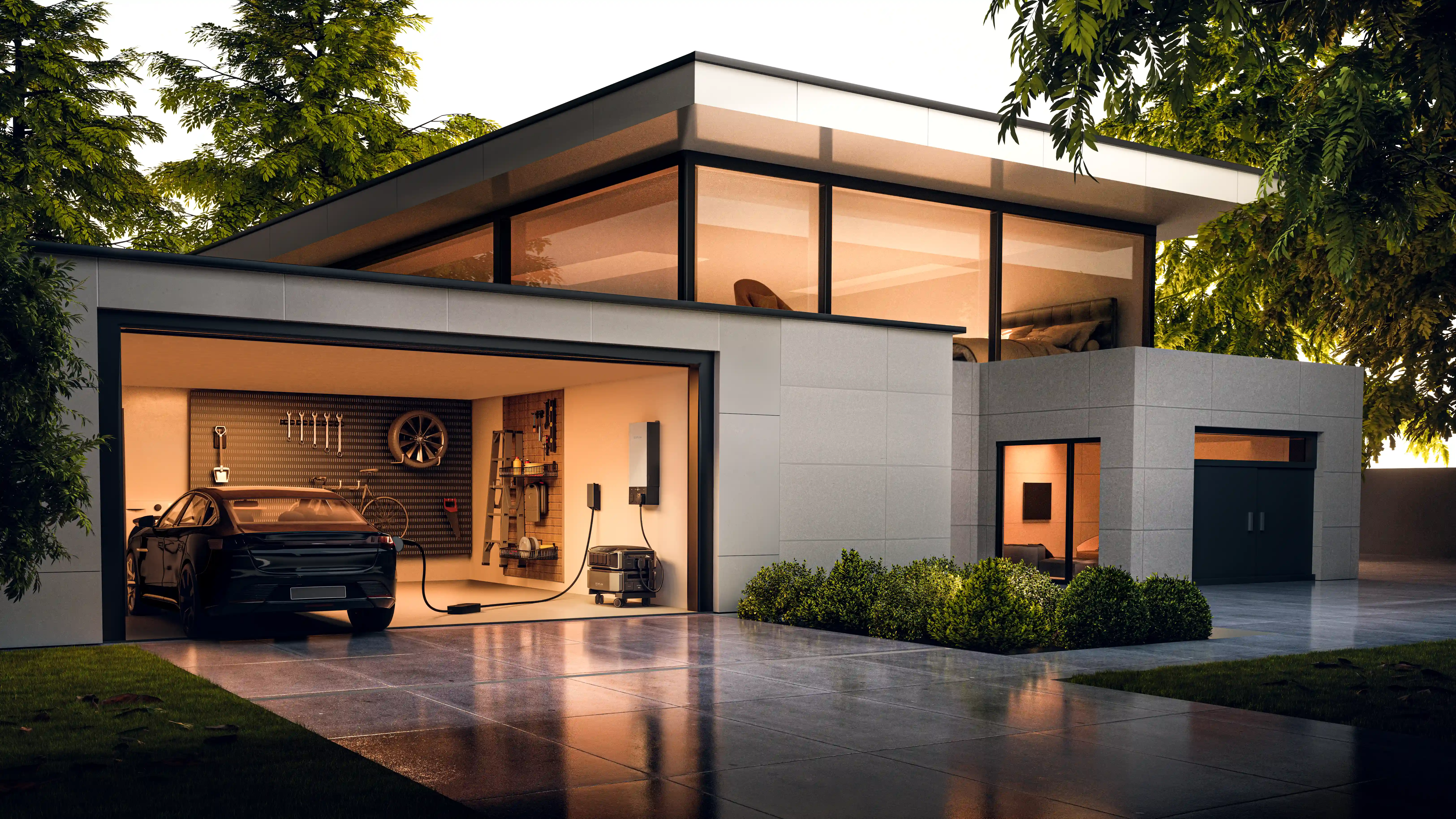
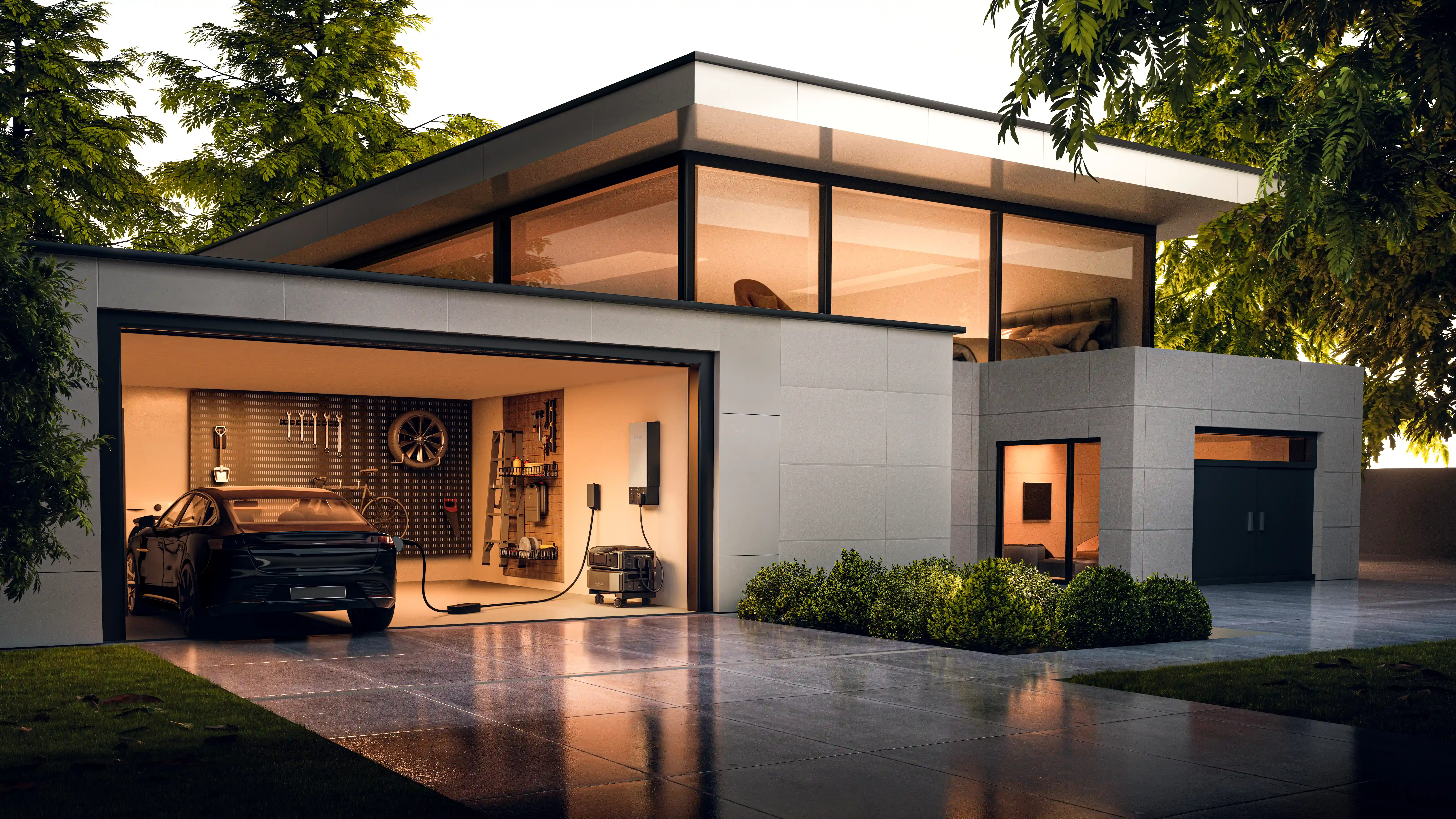
For power users who want a seamless experience without the messy wiring of a custom rack, the EcoFlow DELTA Pro Ultra Whole-Home Backup Power is the 2026 benchmark. It’s a modular, "Lego-style" system that delivers up to 7.2kW of continuous output—and with a 10.8kW peak surge and 120A LRA capacity, it can start most 4-ton central AC units with ease.
What makes it a DIY dream is the EcoFlow Smart Home Panel 2. It handles up to 12 circuits and uses an intelligent Energy Management System (EMS) to automatically juggle your solar, battery, and grid usage. It basically does the thinking for you, arbitrating time-of-use rates to shave an extra 15% to 20% off your annual bill compared to a "dumb" system. It offers the polish of a professional installation like a Tesla Powerwall, but with a setup process that a savvy homeowner can actually handle in a weekend.
DIY vs. Professional Solar: Which Option Is Better for You?
Choosing between doing it yourself and hiring a pro in 2026 comes down to how much you value your weekends versus your bank account balance. With professional labor and "soft costs" (like marketing and overhead) now making up nearly 50% to 60% of a typical $30,000 quote, the DIY path is basically a way to pay yourself a five-figure salary for a few days of hard work.
The Breakdown: DIY vs. Pro:
| Feature | DIY Solar Installation | Professional Installation |
|---|---|---|
| Upfront Cost | Lowest. Save 40%–60% on labor. | Higher. Includes labor, overhead, and markup. |
| Complexity | High. You manage permits and wiring. | Low. "Turnkey" service from start to finish. |
| Time Investment | Significant (several weekends). | Minimal (usually 1–2 days of labor). |
| Warranty | Component-only (panels/inverters). | Full workmanship and roof leak warranties. |
| Best For | Tech-savvy owners with simple roofs. | Multi-story homes or complex rooflines. |
The DIY Case: If you have a straightforward, single-story roof and a handle on basic electrical work, DIY is the clear winner. You can save $5,000–$10,000 in labor alone. It’s also the best route if you want total control over components, like choosing specific high-efficiency N-type panels or modular storage like EcoFlow.
The Professional Case: If your house is a three-story "architectural marvel" with steep pitches or a main electrical panel that looks like a museum piece, call the pros. They handle the grueling permit paperwork and, more importantly, they provide 25-year workmanship warranties. If your roof leaks in 2030, you want a company to call, not a mirror. In 2026, many high-end insurers actually require a pro sign-off just to maintain your policy, so check your fine print before you buy a ladder.
Is DIY Solar Worth It in 2026?
Absolutely. Even though some state-level "net metering" rules have tightened up, the real worth in 2026 comes from the plummeting cost of modular tech. The "payback period", the time it takes for your power bill savings to "buy" the system, has dropped to just 5 to 8 years for DIYers in states like Texas or Florida.
With the rise of "plug-and-play" ecosystems, the technical wall is finally crumbling. You don't need a PhD to build a system that wipes out your monthly bill and keeps your lights on during a grid failure. Bottom line: if you're willing to do the research and respect the high voltage safety rules, there is no faster way to increase your home's "hidden" ROI.
Conclusion
Taking control of your home’s future in 2026 is the real driver behind the DIY solar movement. Sure, saving a few hundred bucks a month on utilities is great, but the peace of mind you get from energy independence is the real kicker. Whether you’re starting small with a portable backup to keep the fridge humming during a storm or going all-in on a full roof array, the tools have never been this accessible.
FAQs
1. Can I install solar panels myself in the U.S.?
Yes, it is legally possible in almost every state, but "DIY" doesn't mean "unregulated." You’ll still need to navigate a mountain of paperwork, including city building permits and utility interconnection agreements. In 2026, some states, like Utah, have even started allowing small-scale plug-in systems (up to 1.2 kW) without full utility approval, but for a whole-home array, you'll still need that city inspector's "thumbs up" to stay insured.
2. How long does it take to install a DIY solar system?
While the actual physical labor, mounting the racking and clipping in panels, usually takes 2 to 5 days, the total project timeline is much longer. Between system design, equipment shipping, and waiting 4 to 8 weeks for city permit approvals, most 2026 DIYers should expect a 3 to 5-month journey from the first click to the first kilowatt.
3. Do I need permits for DIY solar installation?
Absolutely. You’ll typically need a structural permit to prove your roof can handle the weight and an electrical permit to ensure your wiring meets the 2026 National Electrical Code (NEC). Skipping these is a massive risk; if you have a fire or structural issue later, your insurance company can use the lack of permits as a reason to deny your claim entirely.
4. What happens if my system produces excess electricity?
In most states, that extra juice flows back to the grid through Net Metering, earning you credits on your bill. However, 2026 has seen a shift toward "Net Billing" (like California's NEM 3.0), where utilities pay you significantly less for exported power. This is why many DIYers are now pairing their panels with a battery backup like the EcoFlow DELTA Pro Ultra, it’s better to "self-consume" your free power at night than to sell it to the utility for pennies.
5. How long do DIY solar systems last?
You’re looking at a 25 to 35-year lifespan for high-quality N-type panels, which usually keep producing at 85%+ efficiency even after three decades. The "weak link" is typically the inverter; while modern microinverters often match the panel’s 25-year warranty, a standard string inverter will likely need a $1,500-$2,500 replacement around the 12 to 15-year mark.
For press requests or interview opportunities, reach out to our media team
media.na@ecoflow.com