How to Maintain Quality of Life During a DIY Home Renovation
- Common Lifestyle Challenges During Home Renovations DIY
- The Mobile Power Hub for Heavy-Duty DIY Home Renovation Projects
- Essential Comfort Zones Within a Home Renovation DIY Site
- Tool Efficiency and Modern Energy Management Strategies
- Digital Connectivity and Productivity Hacks
- Smart Logistics for a Stress-Free DIY Home Renovation
- Keep Life Running While You Build Something Better
- FAQs
A DIY home renovation saves money, but it also turns your home into a construction site for weeks or months at a time. Circuits go offline, dust spreads into every room, and daily routines fall apart fast. The good news is that none of this is inevitable. With a solid plan for energy management and living space separation, you can keep tools running at full power and still come home to a functional, comfortable household every evening.
Common Lifestyle Challenges During Home Renovations DIY
Living in the middle of a project often feels like camping in your own house, but the novelty wears off quickly when basic utilities disappear. Most families find that their biggest frustrations come from the loss of electricity and the invasion of fine grit into every corner.
Electrical Load Hazards
The electrical panels in old homes are often not strong enough to handle modern tools and cooking appliances at the same time. You could be in the middle of sanding a hardwood floor when the microwave trips a circuit breaker. This is a switch that automatically cuts off the electricity to a circuit that is too full to keep fires from starting. This constant interruption is more than just annoying. It can damage sensitive electronics and disrupt the flow of your work. Relying on a single shared circuit for both high-power tools and your home office risks data loss and household frustration. To handle these loads, you need more than just extension cords; you need a specific power plan.
Dust Migration Risks
Fine particles from drywall work or floor grinding can travel through the smallest gaps in your doors. This dust is not just a cleaning problem; it is a health risk for kids and pets who breathe it in all day. Standard fans often make the problem worse by blowing the grit into clean rooms instead of trapping it. Using a HEPA filter—a High-Efficiency Particulate Air filter that traps very small dust particles—is a necessary step for any indoor project. Maintaining a high quality of life during home renovations DIY means you must find a way to filter the air constantly to prevent it from settling on your clothes and bedding.
The Mobile Power Hub for Heavy-Duty DIY Home Renovation Projects
Modern technology has introduced the concept of a high-capacity power hub to solve the most difficult energy problems on a job site. Integrating these systems into DIY home renovation projects allows you to work anywhere without being tethered to an unreliable or overloaded wall outlet.
High-Wattage Tool Support
Heavy-duty tools like concrete grinders, floor sanders, and large wall saws demand sustained power that standard household circuits often can't deliver. Most home outlets supply 120 volts, but many professional-grade tools perform better on 240-volt output. A dedicated mobile power hub provides both without requiring any electrical rewiring. You plug your tools directly into the hub, and your home's breaker panel stays completely out of the equation.
Whole-House Energy Backup
Some renovation tasks require cutting main power to a section of the house for hours at a time. Without a backup, that means no lighting, no refrigeration, and no way to keep the rest of the household running normally.
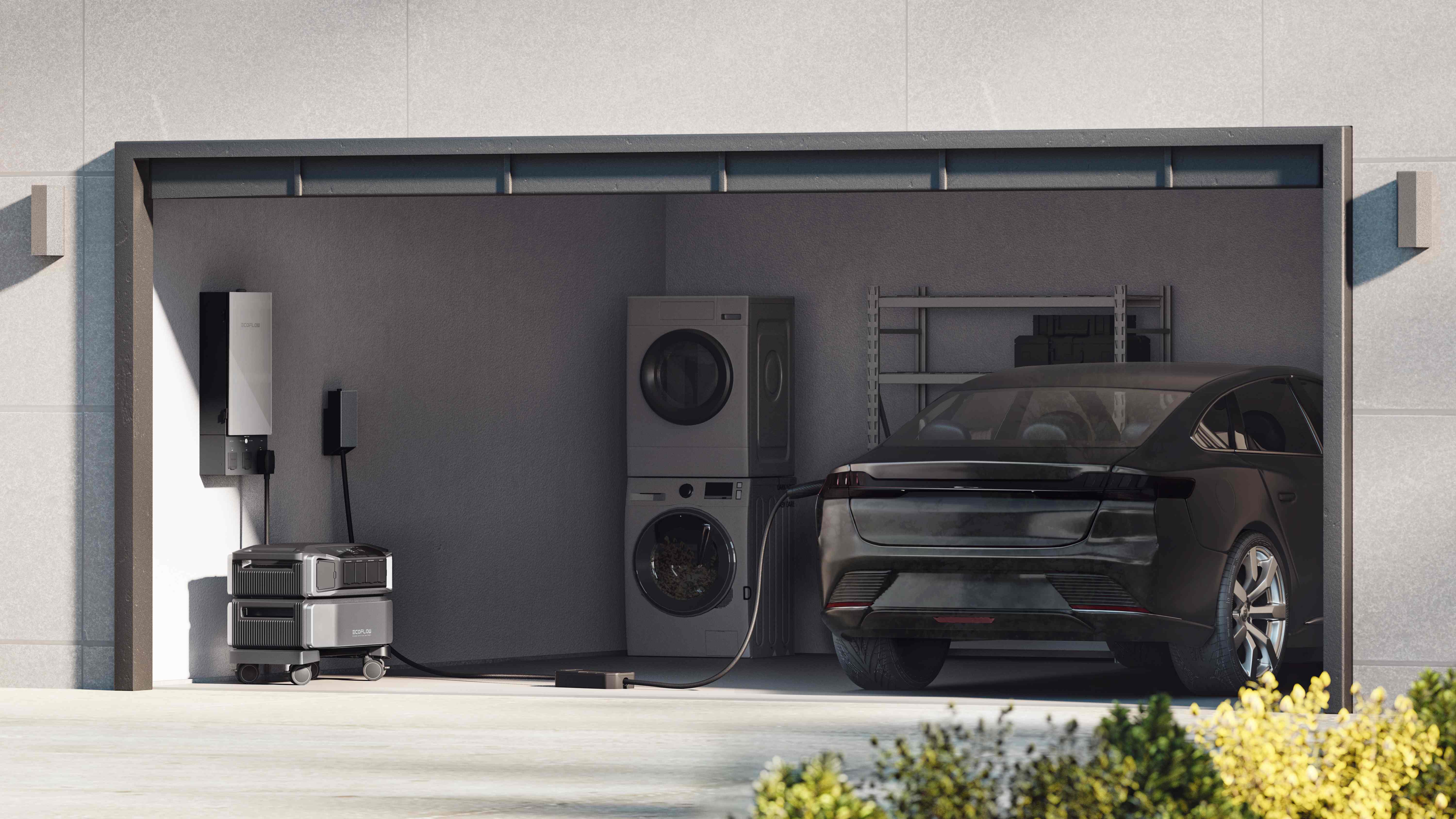
This is where a whole-home energy system makes a real difference. The EcoFlow DELTA Pro Ultra delivers 7,200W of continuous AC output with both 120V and 240V support, enough to run kitchen appliances, work lighting, and a home office simultaneously. Its base capacity of 6kWh is expandable up to 90kWh, covering an entire household for days. The automatic switchover feature means your appliances won't notice when the grid is interrupted during electrical work.
Essential Comfort Zones Within a Home Renovation DIY Site
You should not have to give up hot meals or a clean place to sit just because your kitchen is being rebuilt. Smart homeowners create a "Safe Zone" where construction does not reach, giving everyone in the house a mental and physical escape from the chaos.
Temporary Kitchen Logistics
Kitchen renovations are usually the most stressful because people lose the ability to cook healthy meals. Setting up a temporary kitchen in a garage or dining room is a lifesaver for long-term projects. You can plug a coffee maker, an electric griddle, and a microwave into a portable hub to maintain a normal meal schedule for the family. Avoiding a diet of expensive and unhealthy takeout food keeps everyone’s energy levels high and reduces the overall cost of the renovation. Because the DELTA Pro Ultra can even run a 3-ton central air conditioner, it has more than enough strength to power a full temporary kitchen setup.
Clean Zone Environment Control
Designate one room as a total "no-construction" area and seal it off with heavy plastic sheeting and professional tape. This room should have its own air purification system and comfortable seating to serve as a sanctuary. To keep this area perfect, use a portable power station to run a space heater or a small air conditioner if the main climate control system is turned off for repairs. Having a clean, temperature-controlled room allows you to forget about the sawdust for a few hours every evening. This separation is vital for your mental health and helps keep the project from feeling overwhelming.
Tool Efficiency and Modern Energy Management Strategies
Smart energy management can speed up your project and reduce daily friction. These practical strategies help you get more done with less interruption:
Set up a dedicated solar charging station outdoors. Photovoltaic (PV) panels, technology that converts sunlight directly into electricity, can keep your cordless tool batteries topped up throughout the day without occupying a single indoor outlet. This keeps your living space free of charger clutter and ensures your drills and saws are always ready.
Use portable work lights powered by your energy hub. Winter days are short, and many DIYers only get a few hours of natural light after work. High-intensity LED work lights plugged into a standalone power station can be positioned exactly where you need them, without running extension cords across the floor and creating trip hazards.
Charge in the background while you work. Rather than stopping to recharge your power station, use solar or grid input to refill capacity during active work hours. Most modern energy stations support simultaneous input and output, so your tools keep running while the battery recovers.
Plan your high-draw tasks around your charge level. Heavy cutting and grinding consume the most power. Schedule these tasks for when your station is fully charged and save lighter work, like sanding or painting prep, for when capacity is lower.
Digital Connectivity and Productivity Hacks
Many homeowners now work from home, which requires a stable internet connection and a quiet environment even during a major project. Keeping your professional life separate from the construction mess is one of the hardest parts of a modern house transformation.
Router Uptime Solutions
Renovations often require you to shut off the main power to certain rooms for safety reasons. If your internet router is plugged into a room that loses power, your entire house goes offline, which is a disaster for remote workers. Using an app to manage your energy allows you to reserve a portion of your battery specifically for backup during outages. Plugging your router and modem into a power station ensures that your Wi-Fi stays active regardless of the electrical work. This keeps your household connected to the outside world regardless of what the construction zone looks like that day.
Home Office Setup During Construction
Move your desk to the furthest point from the noise and use noise-canceling headphones to stay focused during work hours. If you need to work in a room without outlets, a Mobile Power Hub can keep your laptop, monitor, and phone charged for several days. This independence allows you to remain productive without having to leave your home to find a quiet coffee shop. Staying on top of your professional duties reduces the overall stress of the project and keeps your income stable while you spend money on materials.
Smart Logistics for a Stress-Free DIY Home Renovation
Planning your logistics before the first hammer swing prevents the most common renovation meltdowns. Organization is just as important as the construction itself when it comes to keeping your sanity throughout the process.
Phased Planning for Utilities: Never shut off the power or water to the entire house at once. Work in small sections so that you always have a "live" area with working lights and a functional bathroom.
Waste Removal Habits: Rent a dumpster before you start and clear the debris every single night to avoid dangerous clutter.
Temporary Living Space Adjustments: Move your bed to the quietest part of the house and use high-quality air mattresses if you need to move frequently.
Meal Prep Strategies: Use your temporary kitchen to prep meals in bulk over the weekend to save time during the work week.
Charging Diversity: Leverage multiple charging methods like solar or gas generators to ensure you never run out of juice mid-task.

Keep Life Running While You Build Something Better
Effective tools and a well-thought-out energy plan are essential for a successful renovation. Make sure your power supply can support both heavy tools and common appliances at the same time, keep your living area and work area separate, and safeguard the quality of your air. From the first day to the final coat of paint, that mix keeps the job going and your home operational. The best way to stay on time and reduce stress during a do-it-yourself home repair is to sort out your energy setup before demolition starts.
FAQs
Q1. What Is the Best Way to Power Heavy Tools During a DIY Home Renovation?
A high-capacity power station that can output both 120V and 240V is the safest way to do things. This keeps your heavy tools running independently from your home's main electrical panel, so a floor sander or concrete grinder won't trip a breaker or cut power to the rest of the house.
Q2. What Home Renovations Can I Do Myself?
Most cosmetic and non-structural work is well within DIY range. Painting, flooring installation, tile work, cabinet replacement, and fixture swaps are all common projects that homeowners handle without professional help.
Q3. How Can I Maintain Air Quality During Home Renovations DIY?
Use thick plastic sheets to block off work areas so that dust doesn't get into other parts of the house. In your clean zones, run an air purifier with a HEPA filter at all times. During construction, you should change your HVAC filters more often than normal to keep your family safe from long-term dust exposure.
Q4. What Is the Biggest Red Flag in a Home Inspection?
Water damage is consistently the most serious finding in any home inspection. Ceilings that are stained, floors that are too soft, mold growth, or efflorescence (white powdery layers on concrete walls from water seeping through) are all signs. If you don't fix these problems, moisture intrusion will keep causing structural damage, which will cost a lot more to fix.
For press requests or interview opportunities, reach out to our media team
media.na@ecoflow.com