Power Inverter for Your Car: Road Trip Charging Guide
- What Is a Power Inverter and How Does It Work?
- What Types of Car Power Inverters Are There?
- What Size Power Inverter Do You Need for Road Trip Devices?
- How Do You Connect a Power Inverter to Your Car?
- Will a Power Inverter Drain Your Car Battery?
- What Safety Precautions Should You Follow When Using a Car Inverter?
- How Do Portable Power Stations Compare to Car Inverters for Road Trips?
- Frequently Asked Questions
- The Right Power Setup Keeps Your Road Trip Devices Charged From Start to Finish
A car's outlets rarely keep pace with everything you bring along on a road trip, from phones and laptops to coolers and coffee makers. A power inverter turns your vehicle's battery into a usable AC source, but picking the right type and size makes the difference between reliable charging and a dead battery at a rest stop.
What Is a Power Inverter and How Does It Work?
A car power inverter converts the 12V DC power stored in your vehicle's battery into 120V AC power, the same electricity that comes out of a home wall outlet.
Most models plug into a 12V accessory outlet or connect directly to the battery, then output through one or more standard three-prong sockets.
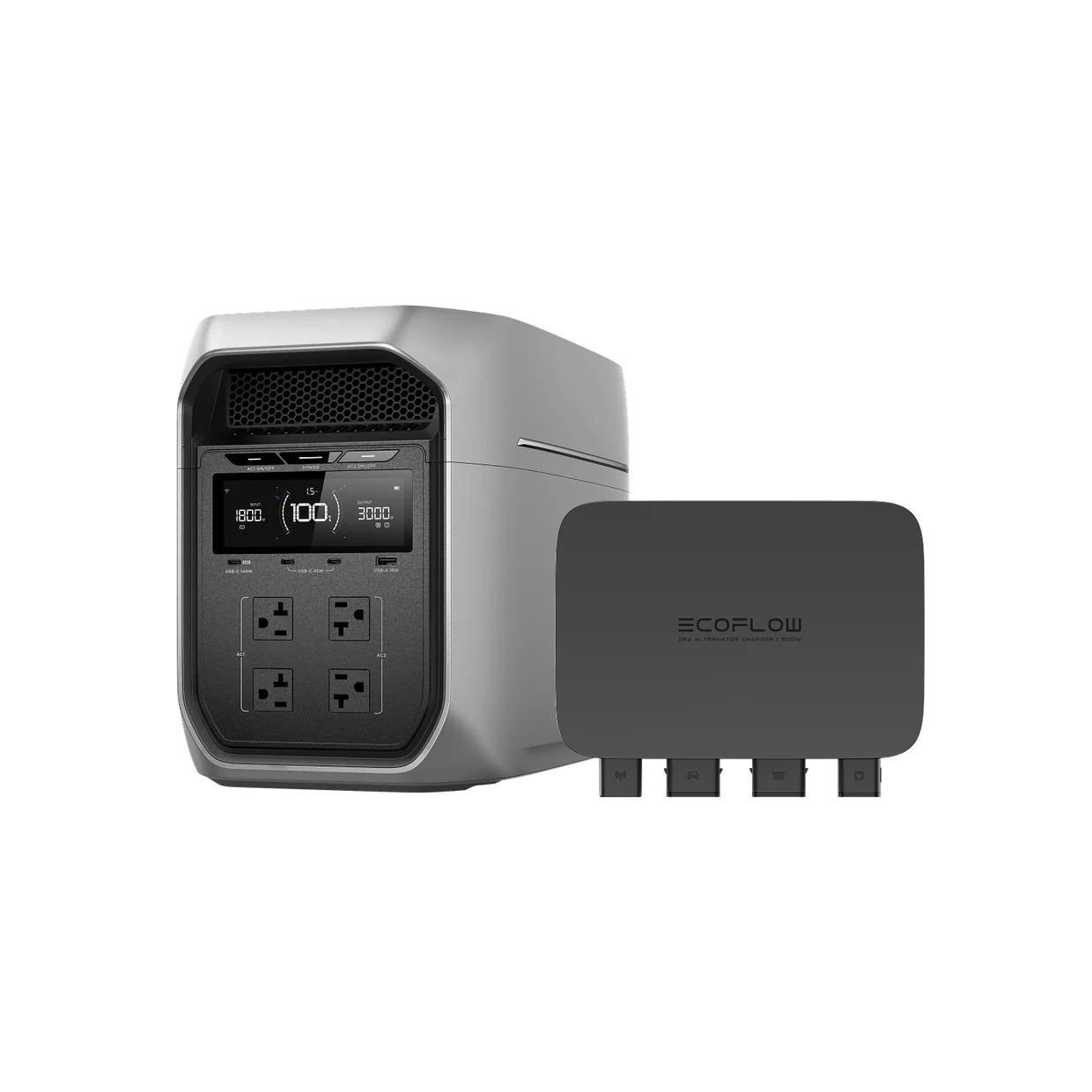
The EcoFlow DELTA 3 Max Plus + 800W Alternator Charger works differently. Instead of only converting power on demand, it pulls energy from the alternator while you drive and stores it in a battery, so you have AC power available even when the vehicle isn't running.
What Types of Car Power Inverters Are There?
Inverters fall into two categories based on the shape of the electrical wave they produce, and the difference affects which devices they can safely run.
Modified Sine Wave Inverters
A modified sine wave inverter produces a stepped, squared-off waveform rather than a smooth curve. It costs less and handles basic resistive loads like lights or fans without issue, but sensitive electronics can run less efficiently or hum when powered this way.
Pure Sine Wave Inverters
A pure sine wave inverter mimics the smooth waveform that comes from a wall outlet. Laptops, cameras, and anything with a motor or digital display run more reliably on pure sine wave power, which is why most modern road trip electronics call for this type over a cheaper modified sine wave unit.
What Size Power Inverter Do You Need for Road Trip Devices?
Matching inverter wattage to your devices prevents overloads and wasted money on capacity you won't use.
Phones, Tablets, and Small Electronics
Phones and tablets draw very little power, typically under 20 watts each, so even a compact 100 to 150-watt inverter easily covers a handful of small devices charging at once.
Laptops and Camera Gear
Laptops generally need between 60 and 100 watts, and camera battery chargers add another small load on top of that. A 300-watt inverter comfortably covers a laptop and a couple of accessories without tripping an overload.
Coolers, Mini Fridges, and Coffee Makers
Mini fridges and coolers often need 50 to 100 watts to run continuously, but their compressors draw a brief startup surge of two to three times that amount. Coffee makers pull considerably more, often 800 watts or higher, so these appliances call for a higher-capacity inverter than small electronics require.
Power Tools and Larger Appliances
Corded power tools and larger appliances can require 500 to over 1,500 watts depending on the tool, and motorized equipment carries the same startup surge as compressors. A dedicated portable power station with a higher continuous wattage rating is a more practical match here than a basic plug-in inverter.
How Do You Connect a Power Inverter to Your Car?
Smaller inverters plug directly into the 12V accessory outlet, which works fine for loads under roughly 150 watts. Larger loads need a direct connection to the battery terminals with clamps, since the accessory outlet's wiring can't handle sustained higher current.
You must route the cables away from any moving engine parts and confirm the fuse rating matches the manufacturer's specification before connecting anything.
Will a Power Inverter Drain Your Car Battery?
Running an inverter with the engine on draws power from the alternator, so it has little effect on your charge. With the engine off, the inverter pulls entirely from stored charge, and larger loads run it down within an hour or two.
Choosing between power inverters for cars and a dedicated power source comes down to whether you need AC power only while driving or all trip long.
What Safety Precautions Should You Follow When Using a Car Inverter?
Keep the inverter ventilated, since heat buildup during heavy use can trigger a shutoff or, rarely, a fire risk. Never exceed its rated wattage, and unplug it when the engine is off for extended periods.
Check the cables’ condition before each trip and keep the unit away from spilled liquids or direct sun. A few essential charging habits, like unplugging devices once they're full and saving heavier loads for when the engine is running, keep both the inverter and your battery in good shape over a multi-day trip.
How Do Portable Power Stations Compare to Car Inverters for Road Trips?
A basic inverter only converts power the moment you use it, so once the car shuts off, your charging stops too. A portable power station stores energy for later, which means devices can keep running at a campsite without the engine idling.
Pairing one with an alternator charger for your devices refills that stored capacity throughout the drive, so the stored-power approach outlasts a standard inverter once you're off the highway.
Frequently Asked Questions
Can a Power Inverter Run a Mini Fridge in Your Car?
Yes, as long as the inverter's continuous wattage rating covers the fridge's running load plus its startup surge, which can briefly spike to two or three times the normal draw. A pure sine wave inverter is the safer choice here, since compressor-driven appliances run more reliably on a clean waveform than a modified sine wave unit.
Is It Safe to Run a Power Inverter with the Engine Off?
For short periods, yes, but the inverter pulls directly from the battery with no alternator replenishing it. Limiting engine-off use to an hour or two and switching to a separate battery or power station for longer stretches protects your car's ability to start back up.
What Size Inverter Do You Need to Charge a Laptop?
Most laptops need between 60 and 100 watts to charge, so a 150 to 300-watt inverter provides enough headroom for the laptop plus a phone or small accessory charging alongside it. A pure sine wave model is the safer pick, since laptop chargers and other digital electronics run more reliably on that cleaner waveform than on a modified sine wave unit.
The Right Power Setup Keeps Your Road Trip Devices Charged From Start to Finish
Matching inverter type and wattage to what you're actually running, rather than grabbing the cheapest option, keeps a road trip's electronics working the way you expect. But once the load includes a compressor-driven cooler, a laptop running all day, or anything with a motor, a plug-in inverter starts working against you.
That's where the EcoFlow DELTA 3 Max Plus + 800W Alternator Charger takes over, storing power from the alternator so that your gear stays charged well past what an inverter can pull from a 12V outlet alone. Plan around your biggest loads instead of your smallest ones, and your devices stay powered from the first mile to the last.
For press requests or interview opportunities, reach out to our media team
media.na@ecoflow.com