Camping in Colorado 2026: Best Sites, Seasons, and Off-Grid Power Tips for the Rockies
- Colorado Camping in 2026: What to Know Before You Go
- Best Places to Camp in Colorado: Iconic Parks, Forests, and High-Country Favorites
- When to Camp in Colorado: Best Seasons by Elevation and Region
- Dispersed Camping in Colorado: Rules, Safety, and Low-Impact Setup
- Off-Grid Power for Colorado Camping: Quiet Energy for Comfort, Safety, and Devices
- Frequently Asked Questions
- Camp Longer and Worry Less: Build a Reliable Colorado Power Setup
Colorado offers a great variety of camping terrain, from red-rock canyons to alpine meadows. While the variety offers many experiences, it also requires plenty of planning. Altitude changes conditions and power equipment behavior, weather shifts rapidly, and land management rules vary by region.
This guide covers everything you need to know about camping in Colorado in 2026: the best sites, when to camp, and off-grid power setups.
Colorado Camping in 2026: What to Know Before You Go
Colorado camping is managed by four key agencies:
Colorado Parks & Wildlife (CPW)
Bureau of Land Management (BLM)
U.S. Forest Service (USFS)
National Park Service (NPS)
The CPW manages state parks, the BLM manages Colorado’s public land, the USFS manages national forests, and the NPS manages national parks. Each camping area has its own permit requirements, fee structures, and regulations.
Most visitors tend to underestimate altitude and its effects. At 10,000 feet, there are significantly lower oxygen levels, rapidly changing weather, and freezing nighttime temperatures. Campers coming from sea level are especially susceptible to altitude sickness. Other concerns include greater physical exertion, quicker dehydration, and stronger sun exposure.
Weather swings are another factor campers must account for. Temperatures can reach the upper 80s when the sun is at its peak, then drop into the 30s once the sun dips behind the mountain peaks. Bring multiple layers, including a moisture-wicking base, insulating fleece, and a waterproof shell.
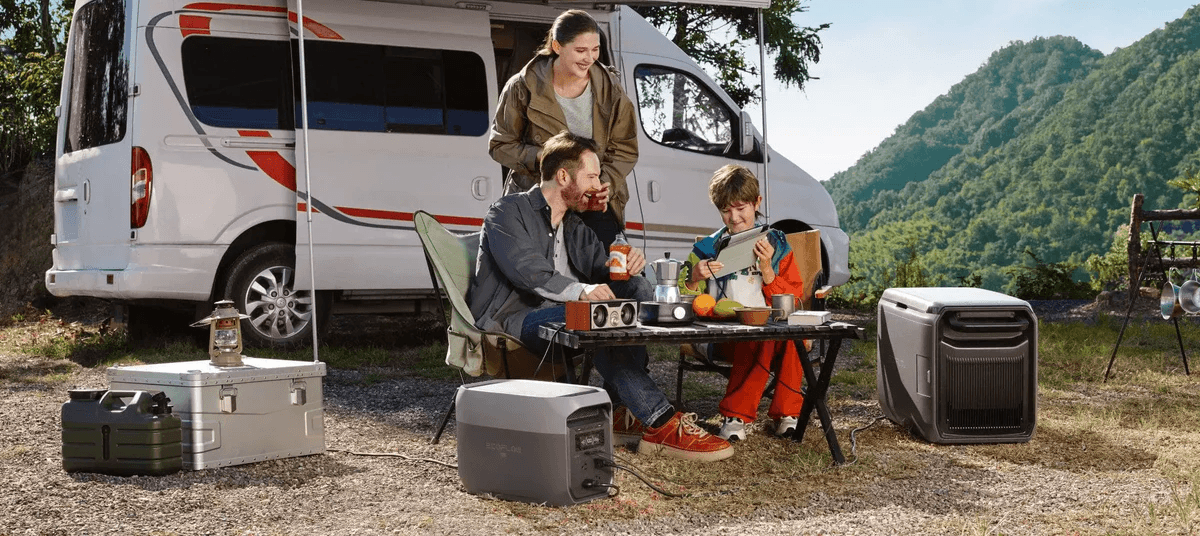
A portable power station, like the EcoFlow DELTA 3 Max, with LiFePO4 chemistry also handles cold-temperature performance better than standard lithium-ion, making it a practical addition to your Colorado kit.
Best Places to Camp in Colorado: Iconic Parks, Forests, and High-Country Favorites
Colorado boasts a range of camping options, from primitive tent setups to RV parks.
Rocky Mountain National Park offers multiple campgrounds and backcountry camping. The park is family-friendly, highly scenic, and full of hikeable trails. Amenities include flush toilets, fire rings, and potable water.
Gunnison National Forest is highly celebrated for its stunning scenery, including mountain vistas and alpine meadows. The forest offers campgrounds with basic amenities and dispersed camping for a more isolated experience.
Crested Butte is a high-elevation camping landscape with dense pine forests, alpine meadows, and stunning mountain views. It also has high-clearance 4WD roads.
When to Camp in Colorado: Best Seasons by Elevation and Region
Colorado’s camping season is heavily defined by elevation. The lower elevation areas (<7,000 feet) are accessible practically year-round, though spring and fall are the most popular times.
Mid-elevation areas (7,000–9,000 feet) are typically open from late April through October, with the summer months being the ideal time.
High elevation areas (>9,000 feet) are typically only accessible from late June to mid-September due to high-snow winters.
Summer (June–August) is peak season for Colorado camping. Expect warm days, full campgrounds, and afternoon storms above the treeline.
Fall (September–October) is often considered the ideal camping season in Colorado. Aspen groves turn golden, crowds thin out, and daytime temperatures remain comfortable. Expect nighttime temperatures to drop significantly.
Winter (November–March) is recommended only for experienced cold-weather campers. While many high-altitude campgrounds close, many state parks and backcountry zones remain open.
Spring (April–May) is an unpredictable time for camping. You can experience sunny days, unexpected snowstorms, and muddy trails all in the same trip.
Dispersed Camping in Colorado: Rules, Safety, and Low-Impact Setup
Colorado benefits from millions of acres of national forest and public land available for dispersed camping.
Free camping still comes with rules, however. Campsites must be at least 300 feet from water sources, trails, and roads, and campers are limited to 14 days at a single site within a 30-day period before needing to relocate at least 30 miles away.
Fire restrictions fluctuate dramatically, and Stage 1 or Stage 2 fire restrictions can be implemented with short notice. Depending on where you’re staying, you may need a campfire permit to start a fire. Check with the local USFS or BLM office for the site you’re visiting.
Vehicle access also varies by location. Many dispersed camping sites have designated roads, and some sites allow off-road vehicle use. Check road conditions before committing to a route to avoid any unexpected closures.
Campers are advised to follow “Leave No Trace” principles throughout their trip, too. Choose your site before you arrive, stick to established surfaces, and pack out everything you brought in. Leave natural features and wildlife undisturbed, keep campfires small and fully extinguished, and be considerate of other campers sharing the land.
Off-Grid Power for Colorado Camping: Quiet Energy for Comfort, Safety, and Devices
Colorado’s high-altitude campsites are perfect for solar-powered camping. The thinner atmosphere means more direct sunlight reaches your panels, improving efficiency.
The EcoFlow DELTA 3 Max + 400W Solar Panel bundle is ideal for multi-day trips with moderate loads.
It can keep your essentials charged, including lights, phones, fans, and speakers. The battery unit strikes a fine balance between capacity and portability. Paired with solar panels, it can recharge substantially during Colorado’s long summer days, offering a practically endless amount of power. Plus, its LiFePO4 chemistry withstands cold temperatures more effectively than traditional lithium-ion batteries.
The EcoFlow DELTA 3 Ultra (3072Wh) is ideal for larger setups and can support multiple devices for a couple of days due to its larger base capacity and output. It can support full camp kitchens, including stovetops, fridges, and more. Its expandability means you can start with a single unit and add capacity as your setup grows.
EcoFlow power stations operate silently and emit zero emissions, which is important in dispersed camping zones where peace and quiet are highly valued.
Frequently Asked Questions
What Are the Rules for Dispersed Camping in Colorado?
Dispersed camping is typically free and requires no permit, but has a few guidelines: set up at least 300 feet from water, roads, and trails, pack out all waste, and stay no more than 14 days within 30 days.
How Does Altitude Affect Solar Charging and Portable Power Station Performance?
Solar panels tend to perform better at higher altitudes because the thinner atmosphere allows them to absorb more sunlight. However, cold temperatures that often accompany high altitudes can slow lithium battery chemistry, reducing efficiency.
What Size Portable Power Station and Solar Panels Do I Need for a Multi-Day Colorado Camping Trip?
For a weeklong trip with moderate power needs, a 2,000 Wh power station paired with a 400W solar panel covers the basics, such as phone charging, lighting, a small fan, and occasional appliance use. For a full kitchen setup, upgrade to a 3,000 Wh power station.
Can a Portable Power Station Run a Heater, Kettle, or Other High-Watt Appliances While Camping in Colorado?
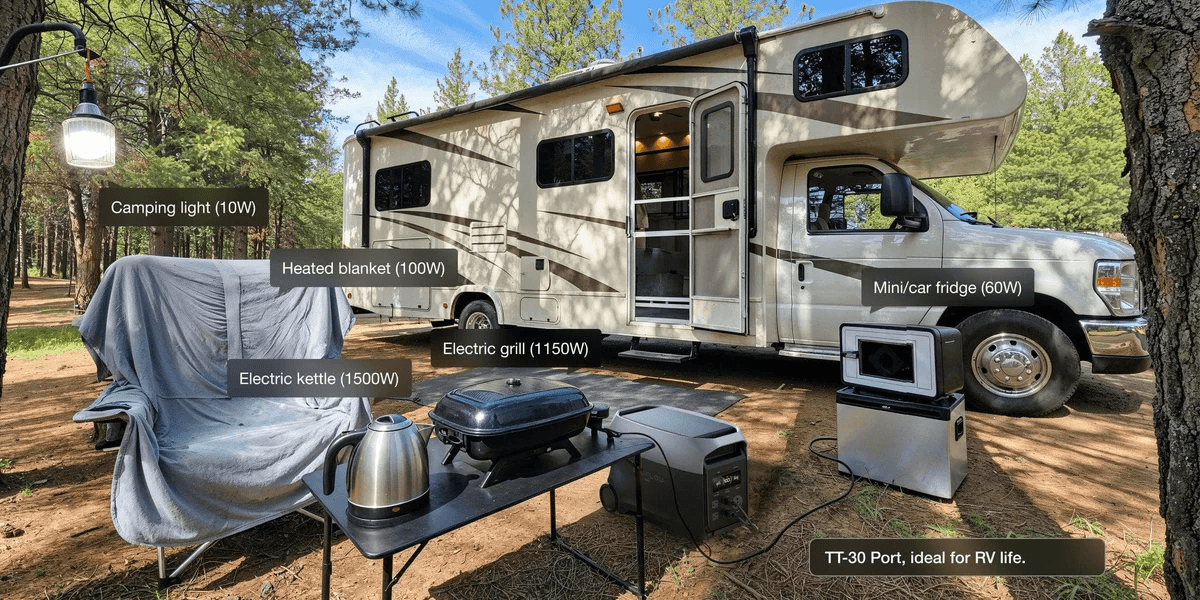
Yes, a power station can run several high-watt appliances, though the output power can limit how many devices are powered at once. High-drain appliances can discharge your battery rapidly, so use them sparingly.
Camp Longer and Worry Less: Build a Reliable Colorado Power Setup
Colorado camping is highly rewarding when planned properly. Altitude, weather variability, and land-use rules can make camping trips challenging. High altitude has the benefit of powering solar panels more effectively. Explore the EcoFlow DELTA 3 Max + 400W Solar Panel bundle and EcoFlow DELTA 3 Ultra to find the right fit for your trip.
For press requests or interview opportunities, reach out to our media team
media.na@ecoflow.com