California Camping Guide 2026: Best Campgrounds from the Sierra Nevada to the Coast
- Choosing the Right California Region for Your Trip
- How to Pick a Great Campground in California
- What Amenities Matter Most for Comfort and Safety?
- California Camping Styles: Tent, RV, Van Life, and Dispersed Camping
- Campground Power Planning for 2026 Trips
- Frequently Asked Questions
- Pack, Plan, Go: Comfort, Convenience, and Confidence
California covers just about any type of camping you’re looking for. From mountain ranges to desert landscapes, it offers plenty of variety. With variety, however, comes complexity. Different regions call for different seasons, and different sites adhere to different reservation systems, safety rules, and amenities.
Find out where to camp in California, what sites to look out for, and how to stay powered the entire trip.
Choosing the Right California Region for Your Trip
California covers more ground than most states can claim, and more camping variety, too. If you're used to South Carolina camping, a single-climate state, or you’ve recently been camping in Wisconsin, California will require a different kind of planning.
The Sierra Nevada is the backbone of California camping. Yosemite, Sequoia, and Kings Canyon sit within it, offering alpine lakes, granite peaks, and some of the most sought-after campsites in the country.
Access is largely limited to summer, as snow closes most high-elevation roads from October through May, and popular reservations open months in advance.
The coast stretches from the fog-draped redwoods of the far north down through Big Sur and into the sunnier beaches of Southern California. Conditions vary dramatically by latitude: the North Coast stays cool and green year-round, while the Central and Southern Coast offer warmer, drier summers better suited to beach camping.
Beyond these two, the Southern California deserts, including Joshua Tree and Death Valley, round out the main regions. They flip the Sierra's calendar entirely: fall through early spring is prime time, and summer temperatures can be life-threatening.
How to Pick a Great Campground in California
Most California campgrounds are booked through one of two systems: ReserveCalifornia for state parks and beaches and Recreation.gov for national parks, national forests, and BLM land.
Popular sites can fill within minutes of release, so preparing for the booking window (typically six months in advance) is essential.
Beyond availability, consider elevation as it heavily influences temperature swings. Look at the site’s proximity to activities you plan to do, and account for site-specific details, such as shade, privacy, and distance from amenities. Scan recent reviews to assess road conditions, noise from nearby highways, and any temporary closures or fire restrictions.
Also check whether the site has electrical hookups, as most don't. If power is a priority, factor that in early. A solar generator like the EcoFlow DELTA 3 Max Solar Generator + 400W Solar Panel bundle removes that dependency entirely.
What Amenities Matter Most for Comfort and Safety?
A few amenities can make or break a trip. Check each of these before you book:
Potable water. Many "developed" campgrounds have non-potable water only. Don't assume, verify before you go.
Food storage lockers. In bear country, these are required in many areas. They protect your food and local wildlife.
Restrooms. Quality varies widely, from vault toilets to flush toilets with showers. Know what to expect.
Trash service. Not universal as some sites require you to pack out all waste.
Cell signal. Unreliable across most wilderness areas. Don't count on it for navigation or emergencies.
Site spacing and shade. A shaded site can be the difference between a comfortable afternoon and an unbearable one. The California sun is intense, and privacy from neighboring campers improves the experience significantly.
Electrical hookups. Rare outside full-service RV parks. If power matters, factor this into your site selection early; it significantly narrows your options.
California Camping Styles: Tent, RV, Van Life, and Dispersed Camping
Tent camping is the most common and widely available option, from drive-up sites to backcountry spots. It’s also typically the cheapest and easiest to book.
RV camping requires quite a bit more planning. Not every campground offers electric or water hookups, and generator use is often restricted to certain hours or banned altogether. Many campsites have length restrictions that can rule out larger rigs.
Van life campers typically split time between paid campgrounds and dispersed sites on national forest or BLM land, where stays are capped at 14 days within a 28-day period. These sites offer no amenities at all, no water, toilets, or waste services, and require full self-sufficiency.
Dispersed camping follows Leave No Trace principles: pack up everything, use existing sites rather than create new ones, and understand that campfires at these sites almost always require a fire permit.
Campground Power Planning for 2026 Trips
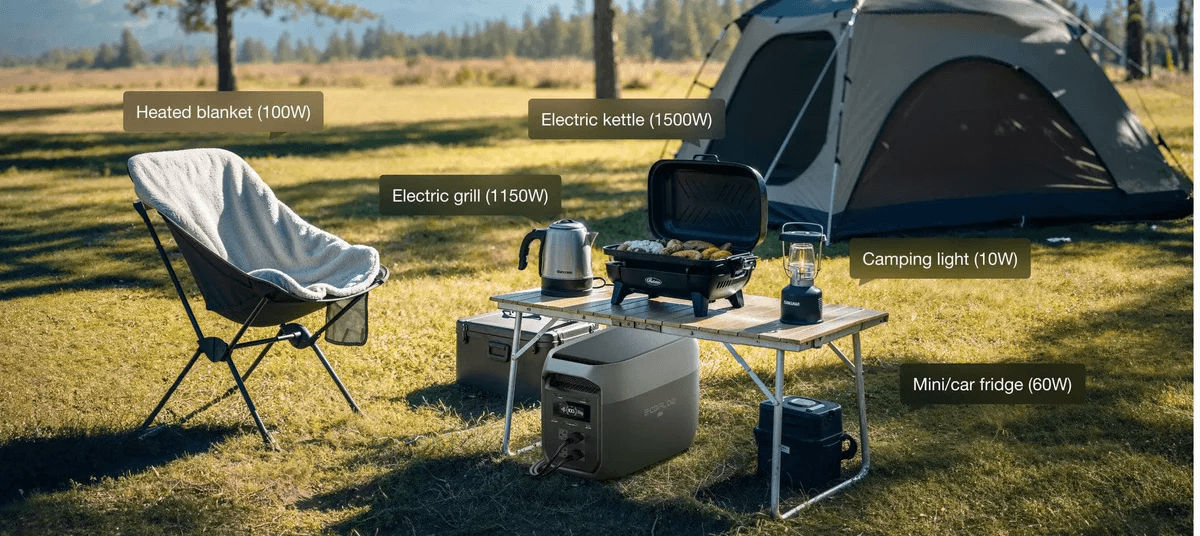
Power is an often overlooked, yet essential aspect of California camping trips. Outside of full-service RV parks, most developed campgrounds don’t have electrical hookups. Generators are allowed at some grounds, but typically only during certain daytime hours, and many areas prohibit them entirely.
Portable power stations provide reliable power without noise or fumes. They are useful for keeping phones charged for navigation and emergencies, running a mini fridge to keep food safe in hot weather, and powering fans for comfort. When planning a camping trip, take into account all your devices to calculate how much power is needed for the entire trip.
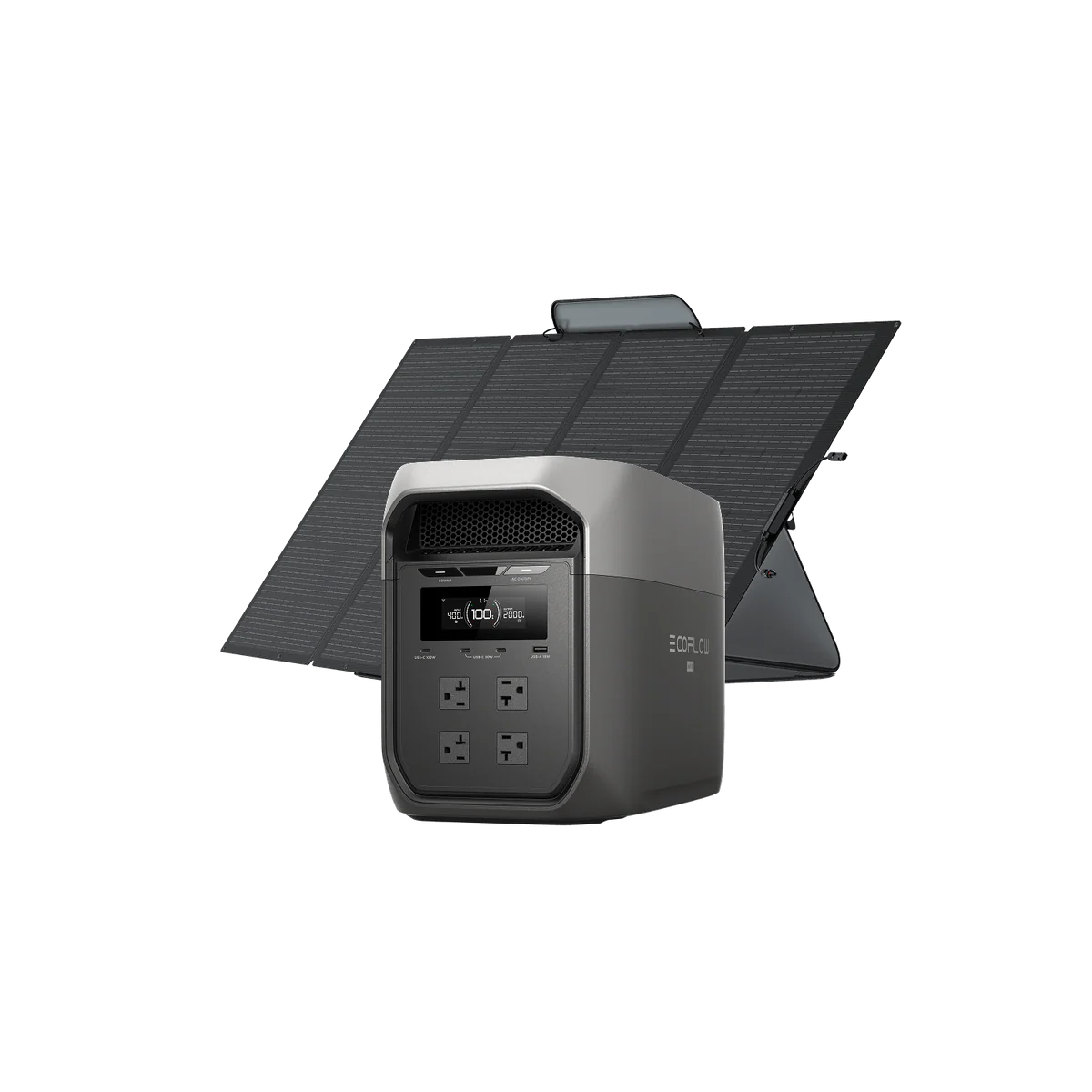
The EcoFlow DELTA 3 Max Solar Generator + 400W Solar Panel covers the full range of camping power needs, from keeping your phone charged to running a mini fridge or fan through a hot California night. With 2048Wh of capacity and solar recharging built in, you're not dependent on generator windows or hookups wherever you set up.
Frequently Asked Questions
What Are the Best Months to Camp in California?
The best camping months in California depend on the region. High-elevation Sierra campgrounds are generally best during summer after the snow melts and before fall storms. The coast is mild enough year-round, though summer brings the most sun and the least fog. Desert regions are best in winter since summer daytime temperatures can be dangerous.
How Do I Find Campgrounds with RV Hookups or Potable Water?
Both ReserveCalifornia and Recreation.gov allow you to filter search results by amenities, including electric, water, and sewer hookups. It’s always a good idea to double-check on the individual park or forest’s own website before booking.
Are Pets Allowed at Most Campgrounds in California?
Pets are allowed at most developed campgrounds in California, though they are typically required to be leashed and within the campsite. Bigger restrictions exist on trails, as national parks typically restrict pet access on nearly all trails and backcountry areas.
What Are the Fire Rules and Wildfire Safety Tips for California Campers?
A free California Campfire Permit is generally required for any open fire used outside a developed campground. Check for fire restrictions before starting one. Clear flammable material from around a fire site and fully extinguish coals until they’re cool to the touch.
Pack, Plan, Go: Comfort, Convenience, and Confidence
A successful California camping trip starts with matching your destination to its season: high-elevation sites in summer, desert regions in fall and winter.
From there, check what the site provides and pack what it doesn't, especially water, food storage, and a reliable power source.
Most California campgrounds don't have electrical hookups, so plan for that gap before you arrive. The EcoFlow DELTA 3 Max Solar Generator + 400W Solar Panel gives you 2048Wh of capacity and recharges via solar, so you're not dependent on hookups or generator windows wherever you set up camp.
For press requests or interview opportunities, reach out to our media team
media.na@ecoflow.com