Stay Warm This Winter Without Breaking the Bank
- $0 Budget: No-Cost Methods for Staying Warm
- $10–$100: Affordable Methods for Home Heating
- $100–$450: Fairly Priced Ways to Heat Your Home Efficiently
- Comparison: Which Way of Heating Is Best?
- Comparing the Costs: Zone Heating vs. Whole-House Heating
- Energy Audit Checklist to Find Heat Loss Points in Your Home
- Stay Warm, Save Money
- FAQs
Winter is here. As the temperature drops, electricity bills seem to be doing the exact opposite—heating up fast. Is there a way to stay warm without breaking the bank? Does a tight budget mean you just have to curl up in a ball and shiver? Absolutely not. From completely free tricks to affordable, convenient gadgets, there are plenty of ways of budget heating to beat the chill without emptying your wallet.
$0 Budget: No-Cost Methods for Staying Warm
You can make your home cozier right away by changing how you spend time in it before buying new things.
Make Use of Sunlight
Your windows can gather a lot of sun energy and create a mini "greenhouse effect". Keep the curtains and blinds on windows that face south all the way open during the day. This will let the sun in to warm your furniture and floors.
Shut them as soon as the sun sets. This creates an important shield against the cool glass. It traps the heat that has built up inside and keeps the free warmth you collected during the day.
Layer Up Your Clothing
It costs a lot less to heat a person's body than to heat the air in a house. Use a smart layering system: begin with a moisture-wicking base layer to keep your skin dry, then add an insulating middle layer like fleece or wool.
Finally, wear thick socks and slippers. A shocking amount of body heat is lost when you stand on a cold floor. Insulating your feet can help your whole body feel warmer.
Ceiling Fans in Reverse
A lot of people who own a home don't make this easy change. Heat rises naturally and gets trapped at the roof, so the living area stays cold. If you change the direction of your fan to clockwise and run it on the slowest speed, you will make a soft updraft.
This pushes out the warm air that has been collecting at the ceiling, pushing it down the walls and back into the living area. It recycles the heat you've already paid for without making the space feel cold.
Seal Rooms That Aren't Used
Your furnace shouldn't have to work so hard to heat unused storage rooms. Shut the doors of any guest rooms, extra bathrooms, or storage spaces tightly if you have them.
If you have a central forced-air system, close the vents in those specific rooms (but don't forget to leave enough vents open to keep system pressure). This "micro-zoning" sends the warm air into the rooms you actually use, warming them more quickly and more effectively.
$10–$100: Affordable Methods for Home Heating
If the free ways don't work, a few small buys can give you a huge return on investment. These are useful, low-cost methods for warming your house.
Humidifiers ($30–$60)
There’s a scientific reason why humidity matters. Dry winter air evaporates moisture from your skin rapidly, creating a cooling effect similar to sweating. By maintaining indoor humidity between 40% and 50% with a humidifier, 68°F can actually feel like 72°F. This "real feel" difference lets you save energy by lowering your temperature setting without giving up on comfort.
Block Drafts ($10–$20)
Air leaks are the enemy of efficiency; over the course of a day, a small gap under a door can let in and out as much air as an open window. To stop air from moving, put a simple draft stopper or "door snake" against the bottom of outside doors.
Use a shrink-wrap window insulation kit on older windows that only have one pane of glass. The film creates an area of air that is dead and trapped, working like a second pane of glass and making it much harder for heat to move in or out.
Electric Blankets ($40–$80)
When it comes to wattage, focused heating is always better. A regular space heater uses 1,500 watts to warm up a room, but an electric blanket usually only uses 100 to 150 watts to warm up a person.
If you are inactive, like when you sleep or watch TV, you should lower the heat in the room and use the electric blanket instead. You'll be much warmer for a lot less money.
$100–$450: Fairly Priced Ways to Heat Your Home Efficiently
If you are ready to pay a little more at the beginning in order to save money in the long run, these upgrades will fix the root causes of energy waste and give you an answer to the question of how to heat your home cheaply over the course of many winters.
Smart Thermostat ($100–$250)
A lot of the time, we forget to lower the heat when we leave for work or go to bed. A smart thermostat learns your routine and uses geofencing to know when you leave, which fixes the problem.
When no one is home, it instantly cools the house and warms it up before you get back. This means you won't pay to heat a home that no one is living in, which could save you 10% to 12% on your heating bills every year.
Portable Power Station (~$400)
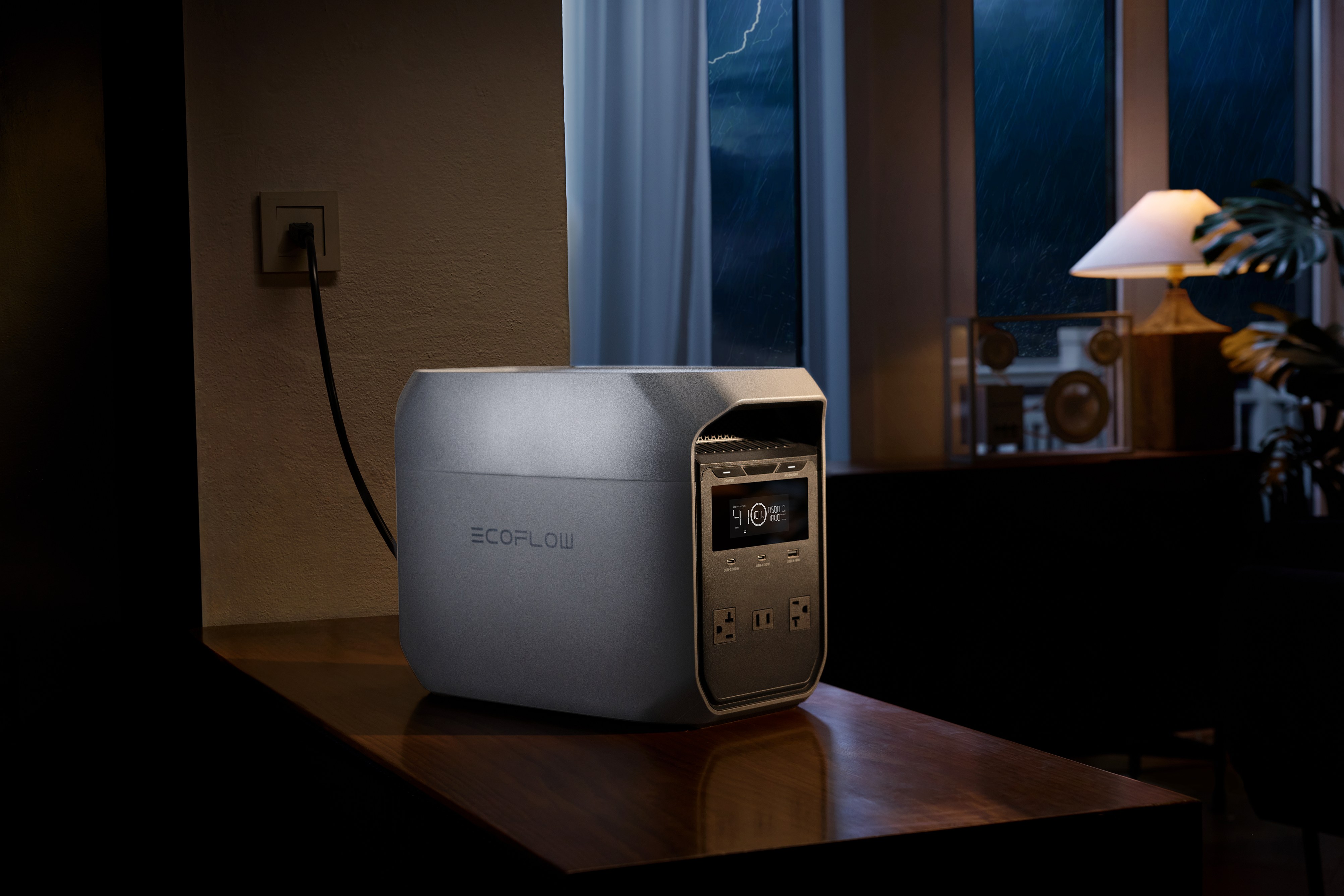
During "peak hours," which are in the evening, electricity rates often go up at the same time that you need heat the most. Using a portable power station like the EcoFlow DELTA 3 Classic can help you avoid these high rates.
When you charge something during the day when electricity is cheap (or free because of solar panels) and then use that power to run your heater or electric blanket at night, you are doing "energy arbitrage." The DELTA 3 Classic is perfect for this because it can handle the surge of space heaters that smaller batteries can't with its powerful 1,800W output (with X-Boost) and runs at a whisper-quiet 30dB, which is great for bedrooms. It's a clever way to keep things comfortable without paying a lot for grid space.
Thermal Curtains ($40–$100 per window)
Cold air can easily get through standard blinds, which are only meant to look nice. Swap them out for heavy thermal curtains that have insulating foam or thick cloth on the inside.
A "dead air" space is made between the room and the window by these curtains. You keep a lot of heat in, especially at night, if you don't let warm air from the room touch the cold glass.
Cover Uncarpeted Floors ($50–$200)
Hardwood or tile floors that don't have insulation will draw heat out of the room and send it into the ground or any place underneath the floor.
Thick, high-pile area rugs can insulate the places where a lot of people walk. This stops heat from escaping through the floor and keeps your feet warmer, which makes you more comfortable.
Comparison: Which Way of Heating Is Best?
Here is a side-by-side review of the most popular heating methods. It will help you figure out which one works with your budget and way of life.
| Heating Method | Estimated Initial Cost | Running Cost (Peak Hours) | Best Scenario for Use | Main Advantage |
| Centralized Heating System | High (Built-in) | Very High | The whole family is home and moving from room to room | Convenience; it warms the entire house |
| Space Heater | Low ($30–$80) | High | Extra heat for one room (zone heating) | Low upfront cost; instant heat |
| EcoFlow DELTA 3 Classic + Heater | Medium (~$400) | Low/Free* | Zone heating during extended peak-rate periods | Avoids peak rates; works during blackouts; portable |
| Electric Blanket | Low ($40–$80) | Very Low | Stationary use (sleeping, relaxing) | Most affordable personal heating |
*The running cost is zero if charged by solar power, or very low if charged by the grid during off-peak hours.
Comparing the Costs: Zone Heating vs. Whole-House Heating
"Zone Heating" is the most important plan for budget heating. This means heating only the area you are in instead of the whole building.
Option A: Heating the Whole House
You set 72°F on the thermostat in the middle of the house.
If you live in a 2,000-square-foot home, you are paying to heat the kitchen, halls, and bedrooms that are not occupied while you are in one room. You are paying to heat 1,850 square feet of space that isn't being used.
Option B: Heating by Zone
You lower the central temperature to 60°F, which is safe for pipes, and use a space heater to keep your current room at 72°F.
You only heat the 150 square feet of space where you're sitting right now. You lower more than 90% of the amount that is heated.
The Verdict: Zone Heating Is Best
The math is clear. Research shows that every degree you lower your primary thermostat saves you 1% to 3% on your heating bill.
Energy Audit Checklist to Find Heat Loss Points in Your Home
You cannot fix what you cannot find. Before winter fully sets in, use this checklist to conduct a DIY energy audit to find invisible money leaks.
The "Candle Test" for Windows
On a windy day, light a candle and carefully hold it near the frames of your windows. If the flame flickers, bends, or smokes, you have a draft. This visual cue tells you exactly where the seal has failed and where you need to apply fresh caulk or weatherstripping.
Inspect Electrical Outlets
Place your hand over electrical outlets and switch plates on exterior walls. You will often feel a distinct cold breeze because insulation behind the drywall is often cut away for the electrical box. Installing simple foam gaskets behind the faceplates is an easy fix to stop this leak.
Check the Attic Hatch
Heat rises, creating positive pressure against your ceiling. If your attic hatch or pull-down stairs aren't insulated, they act like a chimney, sucking warm air right out of your house. Ensure the hatch has weatherstripping and a rigid foam insulation cover.
Examine Exterior Door Frames
Close your exterior doors and look at the edges from the inside. If you can see any daylight coming through, your money is flying out the door. You may need to adjust the threshold plate or replace the worn-out weatherstripping on the frame.
Seal Baseboards
In many homes, especially older ones, there is a gap between the floor and the drywall behind the baseboard. This allows cold air from the foundation or basement to seep in. Run a bead of clear silicone caulk along the top and bottom of the baseboards on exterior walls to seal this gap permanently.
Stay Warm, Save Money
You can greatly reduce your need for central heating by using free methods like sunlight, low-cost fixes like closing drafts, and smart purchases like the EcoFlow DELTA 3 Classic. Winter is coming, but you don't have to pay a lot for it. Take charge of your home's energy today and enjoy a warm, affordable season.
FAQs
Q1: What is the best way to keep a room warm?
The best way to save money is to make the most of passive sun heating. During the day, open the curtains on windows that face south so that the sun can warm your floors and furniture. To keep the heat in, close them right when the sun sets. Add this to what you wear so you don't have to pay for power to stay warm.
Q2: Do space heaters really cost less than central heating?
You can only save money if you use "zone heating." You will save money if you lower your primary furnace's temperature a lot (for example, to 60°F) and only use a space heater in the room you are in. You are just raising your bill if you keep the central heat on high while using a space heater.
Q3: Should you keep the heat on all day or turn it off?
A lot of people believe that it takes more energy to warm a house than to keep it at the same temperature, but that's not true. When you're not home, it's better for your wallet to turn down the heat a lot. You save more energy when heat loss is slower, which happens when the inside temperature is closer to the outside temperature.
Q4: In what way does a portable power station help with heating?
It lets you "load shift." You can charge the station when electricity is cheaper (or free from solar) and use that stored energy to power heating devices during peak hours when grid rates are greatest. This way, you don't have to pay for expensive utility costs.
Q5: Is the EcoFlow DELTA 3 Classic able to run a heater that uses 1,500 watts?
Yes. With an output of 1,800W and X-Boost technology, the DELTA 3 Classic can easily power a regular 1,500W space heater or several electric blankets at the same time. It can handle high-wattage machines without tripping, so you can use them safely.
For press requests or interview opportunities, reach out to our media team
media.na@ecoflow.com