Battery Storage for Solar Panels: A Complete Guide to Solar Energy Storage
Solar panels are great for generating energy when the sun shines. They can make so much energy that your excess daytime energy goes straight back to the grid. That is, unless you have battery storage. This guide explains how solar battery storage works, what affects system payback, and how to evaluate ROI in 2026. The guide will also show how to choose the right system for your home and how to deal with rising utility rates and unpredictable blackouts.
What Is Solar Battery Storage and How It Works
To get the most benefit from residential solar, you need to combine it with battery storage. When the sun goes down, a solar battery storage system acts as your own energy reserve while ensuring excess daytime solar generation is stored instead of wasted.
How Solar Battery Storage Works in a Home System
Solar panels capture sunlight and convert it into Direct Current (DC) electricity. An inverter then converts it into Alternating Current (AC) to power household appliances.
When your solar panels produce more electricity than your home needs, the excess energy is stored in the solar battery. Without a battery, excess energy is typically exported back to the grid, where compensation rates may be lower than the retail electricity price depending on local utility policies. In the evening, especially during peak-rate periods, your home can automatically draw stored energy from the battery. With backup-capable configurations, the system can continue powering essential circuits during a grid outage.
Main Components of a Solar Battery Storage System
A reliable home energy storage setup relies on four primary components all working together.
The Battery Pack: The actual battery cells (typically Lithium-iron phosphate) that store the solar energy. The energy is stored as DC electricity.
The Inverter (Storage or Hybrid): Converts DC power from the panels into usable AC power for your home, and manages the bidirectional flow of electricity into and out of the battery.
The Battery Management System (BMS): The internal brain that monitors the condition of the battery cells, protects against overcharging, and optimizes temperature control.
The Smart Energy Meter / Automation Switch: This tracks solar power generation and home consumption. It tells the system exactly when to charge from solar or discharge to your home.
Grid-Tied vs. Off-Grid Solar Battery Systems
Your system's configuration determines how you interact with the local utility. Grid-tied systems with battery storage (often called hybrid systems) keep you connected to the local utility grid. Off-grid systems are completely separate from the utility company.
Below summarizes how they compare against key features.
| Feature | Grid-Tied with Battery (Hybrid) | Off-Grid Solar System |
|---|---|---|
| Grid Connection | Connected to the local utility grid | 100% disconnected and self-sufficient |
| Power Reliability | High (uses grid as a backup if battery drains) | Dependent entirely on weather & battery size |
| Required System Size | Moderate (sized for daily use or short outages) | Massive (must size for worst-case winter weather) |
| Utility Perks | Eligible for net metering & VPP rebates | No perks or utility credits, but potentially no utility bills. |
| Best For | Suburban homes, urban areas, beating TOU rates | Remote cabins, rural homesteads, off-grid living |
Is A Solar Battery Worth It? (Benefits, Risks & 2026 Actual ROI)
Utility rates are rising almost everywhere and the power grid can be unstable. Thus, many American families are now asking if solar storage is worth the upfront investment in 2026. To answer this, homeowners need to weigh the pros and cons of solar energy storage based on local utility rules, geography, and disaster preparedness goals.
Key Benefits & Potential Drawbacks
The Pros: You get true energy independence, protection against spiking peak rates, and reliable backup power during blackouts. Plus, you reduce your carbon footprint.
The Cons: High initial upfront hardware costs, space requirements for installation, and gradual battery capacity degradation over a 10 to 15-year lifespan.
Who Benefits Most From Solar Batteries?
Homeowners will benefit most if they’re subject to strict Time-of-Use (TOU) rates. They can avoid using the grid during expensive evening windows with peak rates (typically 4 PM to 9 PM). If you live in California, the Net Metering 3.0 (NEM 3.0) provides utility bill credits for exporting solar power. However, NEM 3.0 only gives you pennies back for your excess energy. That is why storing excess solar energy for later use often delivers a better financial return.
Real-World Use Cases: Extreme Weather, Wildfires & Grid Instability
The U.S. power grid faces increasing reliability challenges. California increasingly implements Public Safety Power Shutoffs (PSPS) during wildfire seasons. Texas winter storms routinely freeze the isolated ERCOT grid. Hurricanes continue to threaten the Gulf and East Coast. In each of these scenarios, standard grid-tied solar panels automatically disconnect from the grid for safety. This leaves you in the dark unless you have a dedicated battery system.
Matching the Right System to Your Disaster Preparedness Plan
Your specific regional risks and the type of property you have determine the size of the backup system you need.
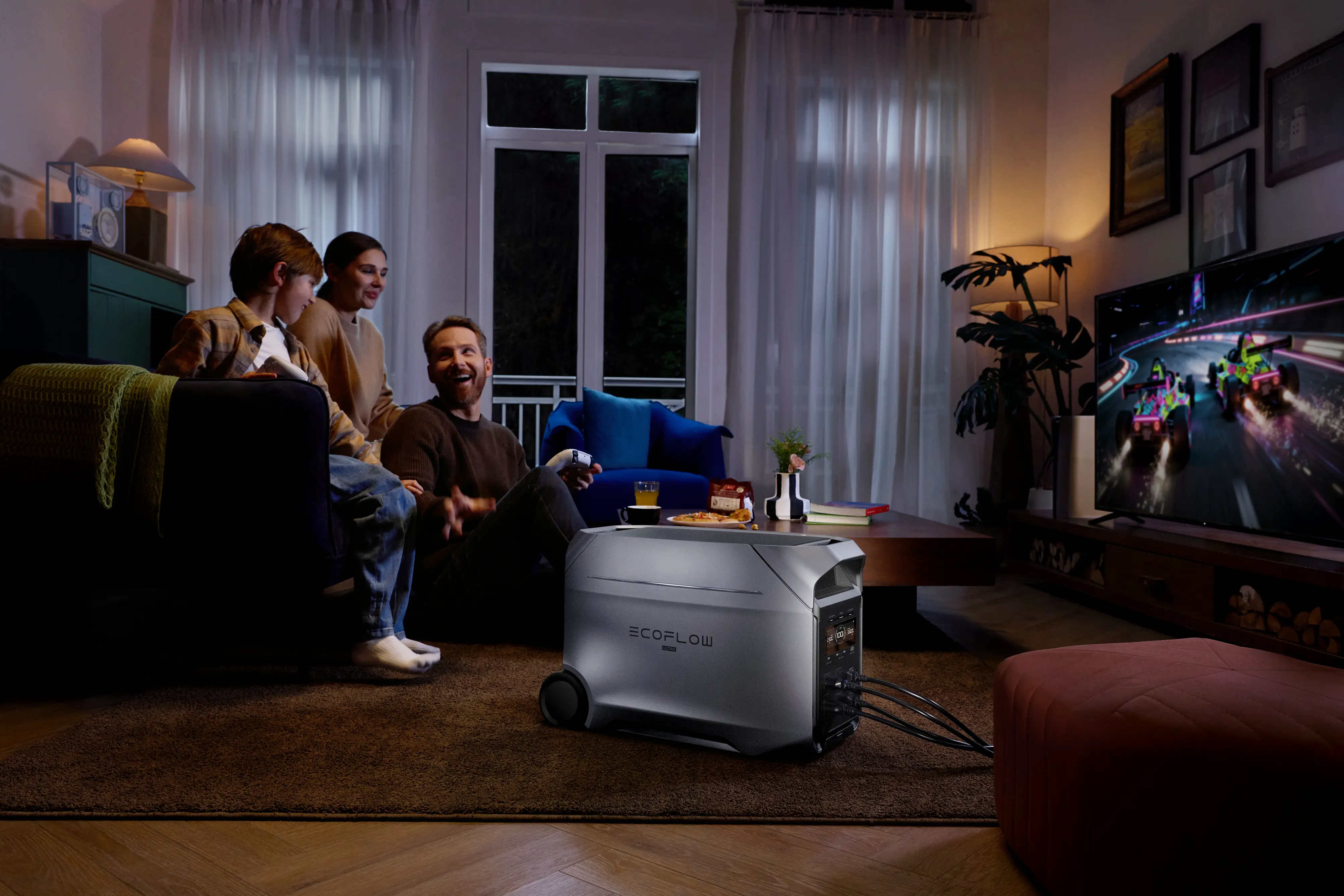
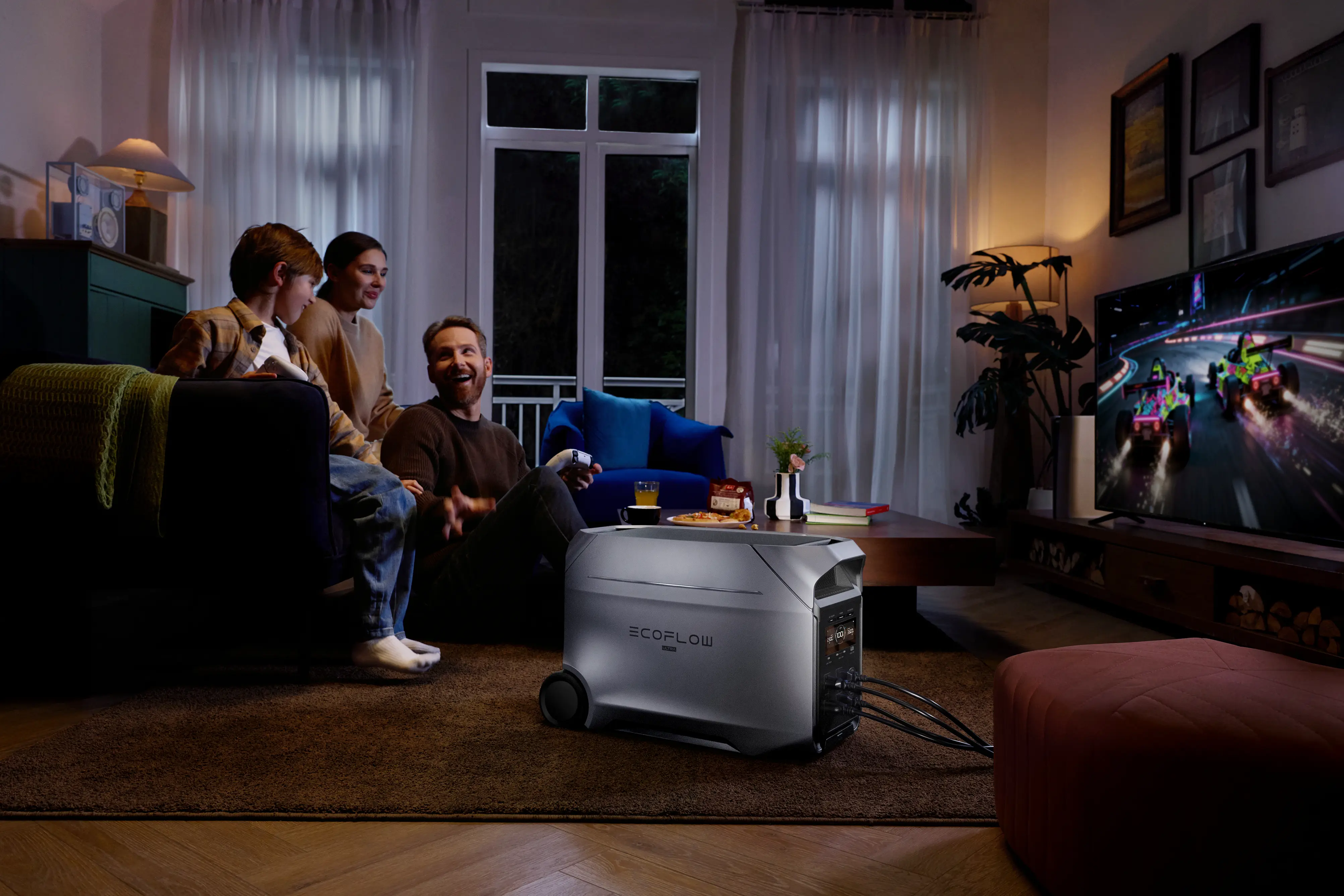
Whole-Home Backup Solution: EcoFlow DELTA 3 Ultra Plus with a 500W Solar Panel
For households facing severe weather threats or grid interruptions, a heavy-duty, high-capacity system is necessary to maintain normal life. The EcoFlow DELTA 3 Ultra Plus + 500W Solar Panel serves as a premier solar energy storage solution for the entire home. Unlike basic portable power banks, this top-rated energy system has extra large and expandable storage capacity and high-output capabilities. It can easily handle critical appliances like your refrigerator, home router, critical medical equipment, and even central HVAC units during prolonged outages. Combining it with high-efficiency 500W solar panels lets you recharge quickly in sun-drenched states like California, Arizona, or Texas. This combined system can help reduce grid dependence during outages and high-rate periods. It is an exceptional investment for large families, high-consumption households, or off-grid cabins requiring absolute energy security.
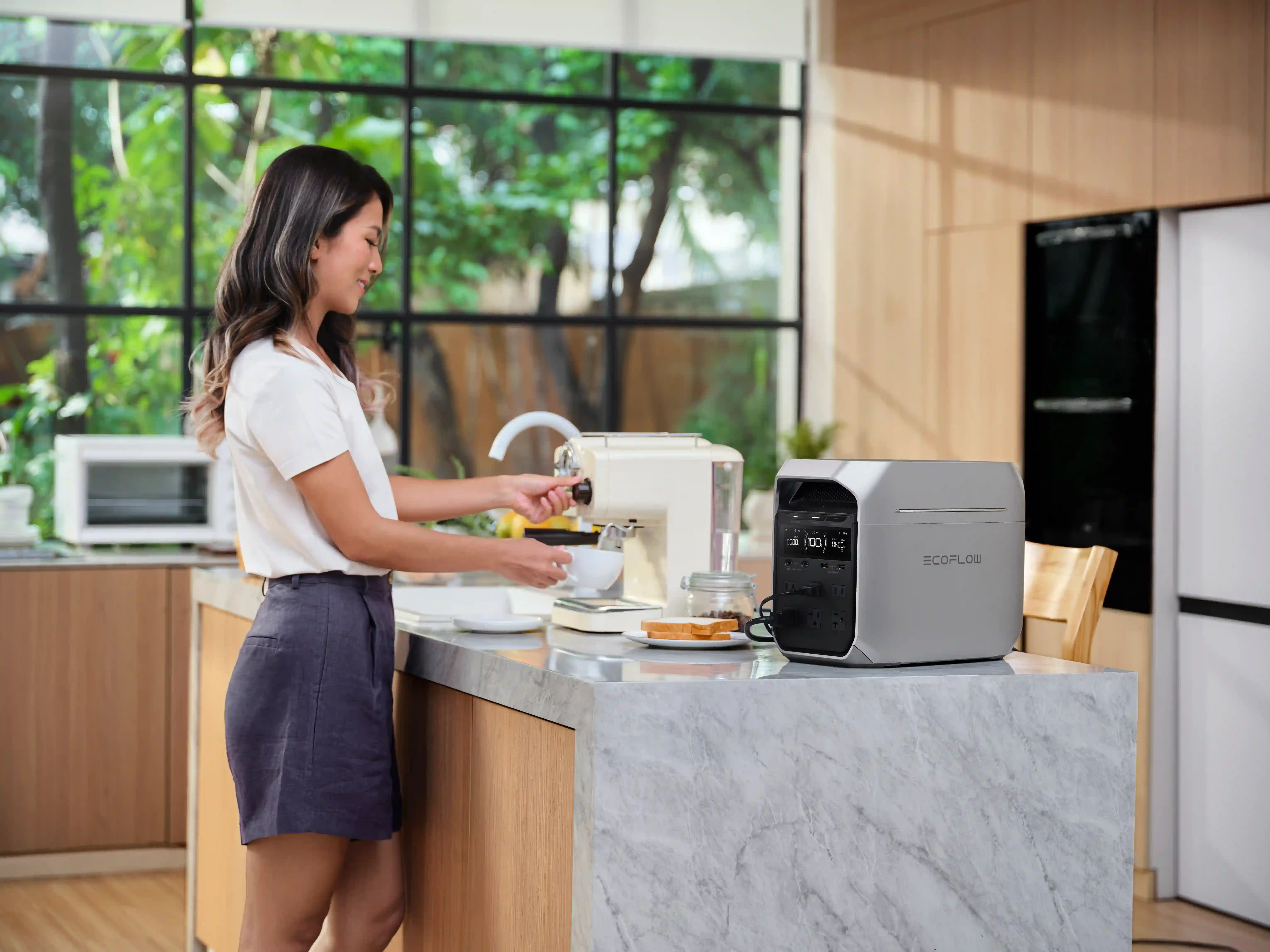
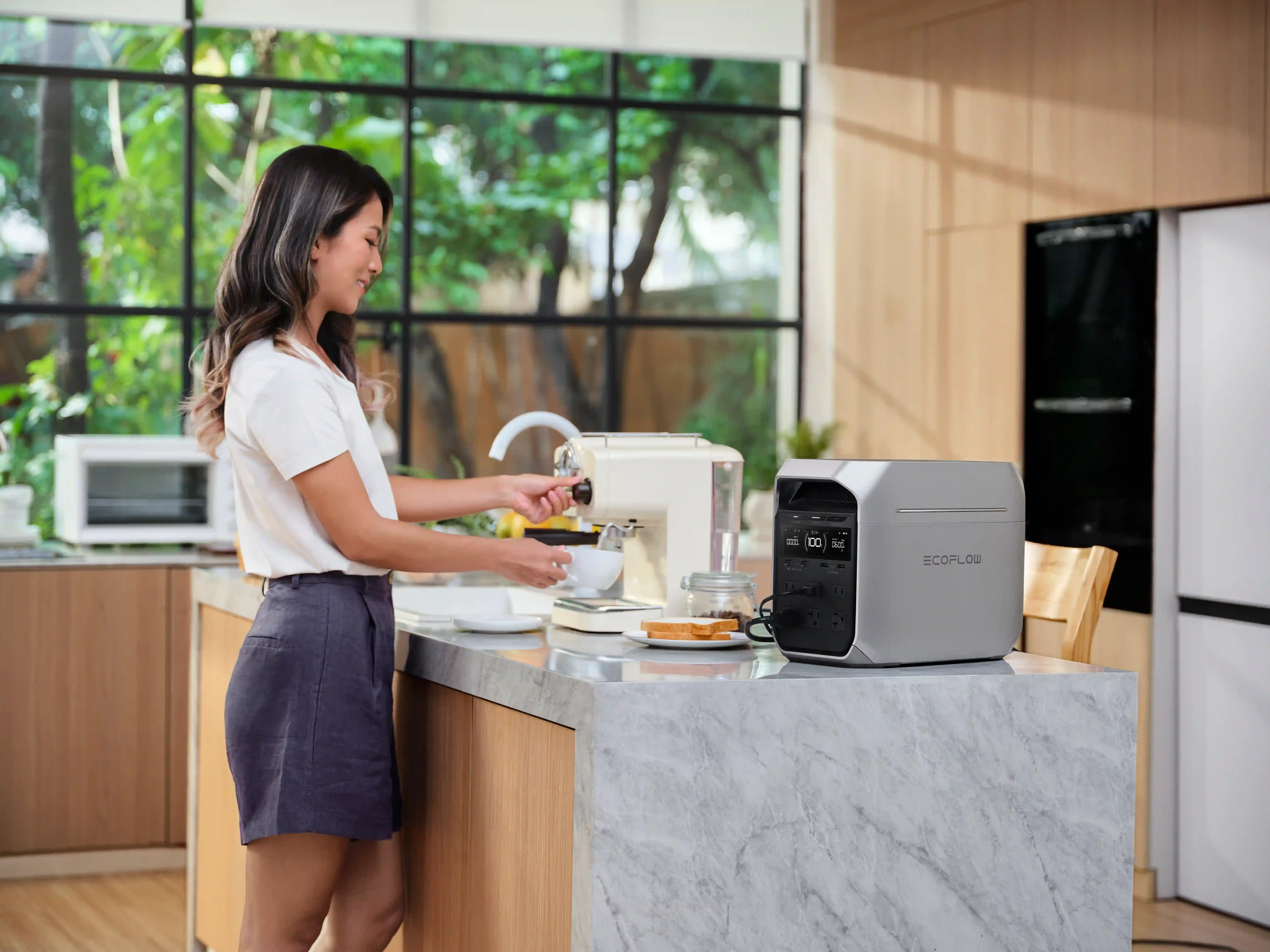
Essential Backup & Portable Use: EcoFlow DELTA 3 Plus + 220W Solar Panel
Not every household or emergency preparedness plan requires a massive, whole-home system. For suburban townhomes, urban apartments, or those looking for a starter emergency system, the EcoFlow DELTA 3 Plus + 220W Solar Panel is a good match. This configuration is both portable and easy to operate. The 220W solar panel provides a reasonable and highly efficient way to store clean solar energy. It is capable of powering essential electronics like smartphones, laptops, Wi-Fi routers, CPAP machines, and small mini-fridges during a blackout. Outside the home, this setup doubles as a reliable power supply for weekend camping trips, tailgating, or RV travel.
Types of Solar Batteries Explained
Before you invest in energy storage, you should understand the different types of solar batteries available. The core battery chemistry affects lifespan, safety, weight, and overall performance.
Lithium-Ion (LiFePO4 vs. NMC)
| Feature | LiFePO4 (LFP) | NMC |
|---|---|---|
| Lifespan | 3,000 - 6,000+ cycles (10–15+ years) | 1,000 - 2,000 cycles (5–8 years) |
| Safety | Highest (Exceptional thermal stability) | Moderate (Higher risk of overheating) |
| Density | Lower (Heavier, slightly larger footprint) | Higher (Lighter, more compact) |
| Discharge (DoD) | 90% - 100% | 80% - 90% |
| Best For | Long-term home backup (EcoFlow DELTA 3) | Lightweight portable gear |
Lead-Acid Solar Batteries
Lead-acid batteries are the traditional option for solar storage. While they feature a very low upfront cost, they have some serious drawbacks. They have a short lifespan (typically 3 to 5 years), can only be discharged to about 50% of their capacity without suffering permanent damage, and require regular ventilation and maintenance. Today, they are mostly only used for budget-conscious, remote off-grid cabins.
Sodium-Ion and Emerging Battery Technologies
The industry is continuing its innovation, and alternative technologies are breaking into the market. Sodium-ion batteries are a prime example, utilizing non-toxic, lower-cost, and globally abundant materials that offer excellent thermal stability and improved safety characteristics. Solid-state batteries and flow batteries are also being introduced for residential applications. These promise even greater lifespans and safety, though they remain expensive and are not yet widely available commercially.
Comparing Solar Battery Types
| Battery Type | Lifespan (Cycles) | Depth of Discharge (DoD) | Energy Density | Best For |
|---|---|---|---|---|
| LiFePO4 (LFP) | 3,000 - 6,000+ | 90% - 100% | Medium-High | Long-term home backup, maximum safety & durability |
| NMC Lithium | 1,000 - 2,000 | 80% - 90% | High | Compact spaces, lightweight portable use |
| Lead-Acid | 500 - 1,000 | 50% | Low | Budget-conscious, occasional off-grid use |
| Sodium-Ion | 2,000 - 4,000 | 90% | Medium-Low | Eco-friendly installations, extreme temperatures |
How to Size a Solar Battery System for Your Home
An incorrectly sized battery system will either leave you in the dark or waste thousands of dollars on unnecessary hardware. The best size balances your daily power consumption with your emergency backup goals.
Understanding Battery Capacity (kWh)
Solar battery capacity is measured in kilowatt-hours (kWh), which tells you the total amount of electricity the battery can hold. For instance, a 10 kWh battery can theoretically deliver 1 kW of continuous power to your home for 10 hours, or 2 kW of power for 5 hours.
Factors That Affect Battery Size
Several factors affect the battery capacity required for a home solar system, including household energy usage, backup goals, and solar generation capacity.
Daily Energy Consumption: Look at your electric bill to find your average daily kWh usage.
Backup Goals: Are you looking to back up just the essentials (lights, internet, fridge) or run high-power appliances like central AC and clothes dryers?
Outage Duration: Do you need to survive a 4-hour rolling blackout or an extended 4-day winter storm outage?
Solar Array Output: Your solar panels must be large enough to reliably recharge the battery capacity you install and use.
How to Calculate Solar Battery Size
To estimate the right battery size, first calculate how much energy your essential appliances consume during an outage. Multiply each appliance’s wattage by the number of hours you expect to use it, then add the totals together.
Total Watt-Hours = ∑(Appliance Watts × Hours of Run Time)
Convert the result to kilowatt-hours (kWh) by dividing by 1,000, then add a 20% safety buffer to account for inverter losses and unexpected usage spikes. For example, if your essential backup load totals 8 kWh, choosing a battery system with at least 10 kWh of usable capacity provides a more reliable reserve.
Example Solar Battery Sizing Scenarios
Scenario A (The Minimalist Apartment/Camping Setup): Running a router (20W), smartphone charging (15W), laptop (60W), and a high-efficiency mini-fridge (80W) for 10 hours requires roughly 1.75 kWh. A highly portable, fast-charging option like the EcoFlow DELTA 3 Plus easily covers this with room to spare.
Scenario B (The Emergency Home Backup): Running a full-size refrigerator, home security, lighting, a microwave, and occasional water pump usage during a 24-hour blackout requires roughly 10–15 kWh. This demands an expandable, high-output setup like the EcoFlow DELTA 3 Ultra Plus ecosystem. This system can be expanded to higher capacity to keep heavy loads running longer.
Simple ROI Estimate for Solar Battery Storage (2026)
To understand whether a solar battery is financially worthwhile, homeowners can use a simplified payback model based on three key factors:
Annual Electricity Savings from Peak Shaving
Most savings come from avoiding peak-time electricity rates (especially where you’re subject to Time-of-Use utility pricing).
Typical U.S. TOU difference:
Off-peak rate: $0.12–$0.18/kWh
Peak rate: $0.28–$0.45/kWh
If a household shifts 10 kWh per day from peak to stored solar energy:
Daily savings: ~ $1.5 – $3.0
Annual savings: $550 – $1,100
Conclusion
Investing in a solar battery is no longer just for environmental enthusiasts. It has become a valuable asset for power reliability and managing higher utility rates. You can use battery storage to bypass strict net-metering laws, reduce your peak evening bills, or survive a power outage. Battery storage helps ensure backup power is available when grid conditions become unstable. Match your needs to the heavy-duty EcoFlow DELTA 3 Ultra Plus or the versatile DELTA 3 Plus for long-term backup reliability and greater energy flexibility.
FAQs
Can Solar Batteries Power an Entire House?
Yes, solar batteries can power an entire house, provided the system’s total continuous power output and kilowatt-hour capacity are sized correctly to handle heavy-load appliances. To run high-consumption items like central air conditioning, electric water heaters, and clothes dryers simultaneously, you will need a high-output, expandable setup like the EcoFlow DELTA 3 Ultra Plus rather than a basic portable power station.
How Long Can a Solar Battery Last During an Outage?
A solar battery typically lasts between 8 to 24 hours during an outage under normal usage, but this timeline can extend indefinitely if you have an active solar array refilling the cells during daylight hours. By managing your power consumption consciously—turning off non-essential lights and avoiding high-wattage appliances—a well-sized system can easily sustain critical home infrastructure for multiple days.
Do Solar Batteries Work Without Solar Panels?
Yes, solar batteries work perfectly without solar panels by charging directly from a standard wall outlet using standard grid electricity. Homeowners frequently use standalone batteries as an emergency backup power supply, keeping them fully topped off from the grid so they are ready to instantly deliver power the moment a storm knocks down local power lines.
Can You Add Battery Storage to an Existing Solar System?
Yes, you can easily add battery storage to an existing solar array using either an AC-coupled configuration or a flexible, standalone plug-and-play storage system. You do not need to replace your existing panels. Modern energy storage solutions are engineered to work side-by-side with your pre-existing solar infrastructure to capture and preserve your daily excess generation.
What Happens to Solar Power When the Battery Is Full?
When your solar battery reaches 100% capacity, your system automatically diverts any additional solar electricity generated by your panels to power your immediate home loads or exports it back to the local utility grid. If your home is completely off-grid, the solar charge controller will simply scale back the power intake from the panels to prevent overcharging and protect cell health.
Are Solar Batteries Safe for Residential Use?
Yes, modern solar batteries are incredibly safe for indoor and outdoor residential use, especially systems built using Lithium Iron Phosphate (LiFePO4) chemistry. LFP technology is globally recognized for its exceptional thermal stability and chemical resilience, virtually eliminating the risks of overheating or thermal runaway associated with older battery types.
For press requests or interview opportunities, reach out to our media team
media.na@ecoflow.com