Battery-Powered Portable AC: Cooling When the Power’s Out
- What Is a Battery-Powered Portable AC?
- Why Does Losing AC During a Power Outage Matter?
- How Much Power Does a Portable AC Use?
- How Long Can a Battery-Powered Portable AC Run During an Outage?
- What Should You Look for in a Battery-Powered Portable AC?
- How Do Portable Power Stations Extend Your Cooling Time?
- Frequently Asked Questions
- Battery-Powered Portable AC Units Keep Your Home Cool During Unexpected Outages
There’s nothing worse than the power going out during a summer heatwave. With no electricity to use your air conditioning, things can get uncomfortable, and even dangerous, very quickly.
That’s where a battery-powered portable AC unit can come in handy, so read on to find out everything you need to know.
What Is a Battery-Powered Portable AC?
A battery-powered portable air conditioner is a self-contained climate control system for use off-grid or as an emergency backup.
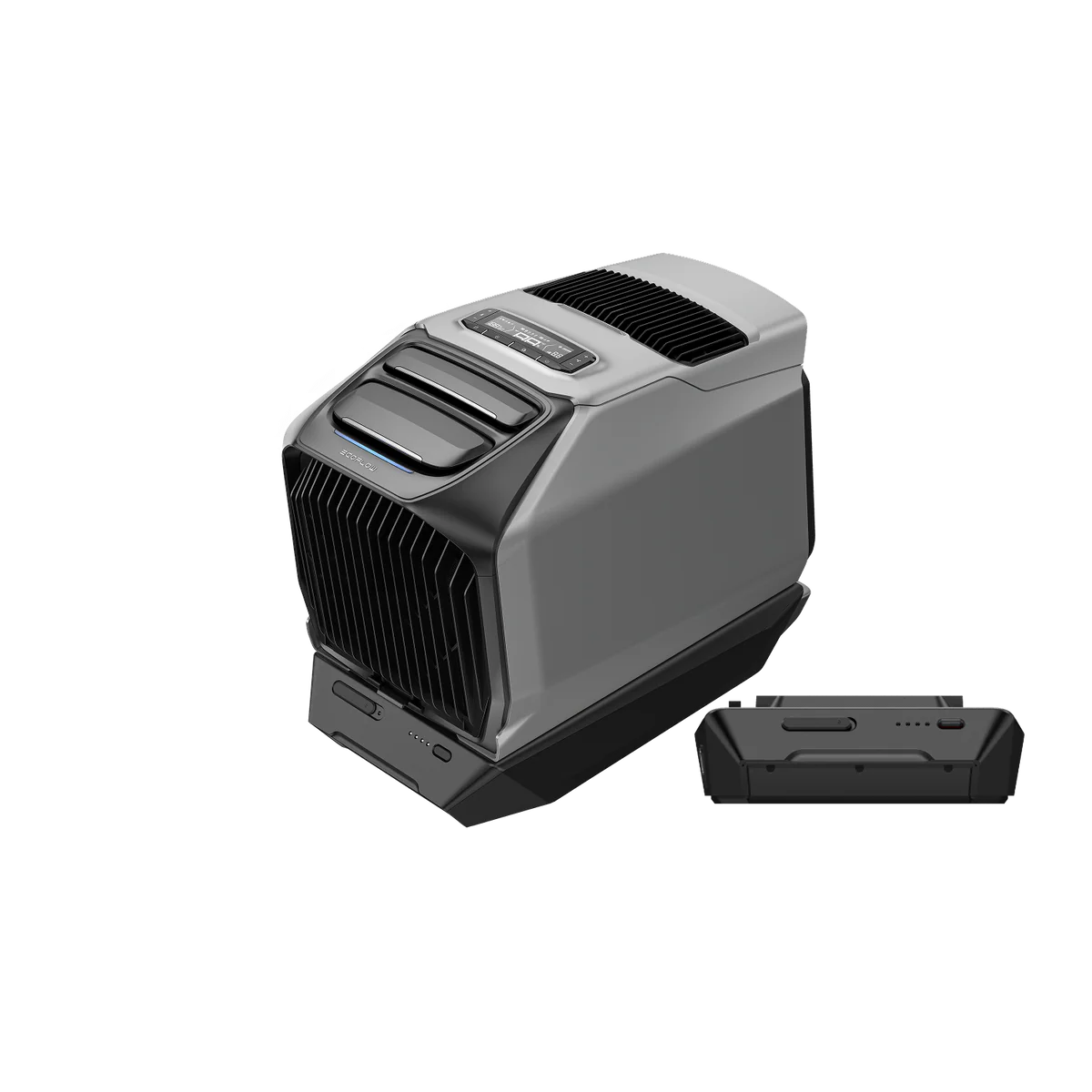
These can often operate using direct current (DC) rather than alternating current (AC), like the EcoFlow WAVE 3 Portable Air Conditioner. This device also uses a specialized inverter compressor so it can scale energy consumption based on the temperature.
Portable AC units typically include a compressor, evaporator coils, condenser coils, and fans all in one compact device for plug-and-play use that you can set up in minutes.
Why Does Losing AC During a Power Outage Matter?
When the power fails during the summer, indoor temperatures rocket, and having air conditioning is a great way to beat the summer heat. But the heat isn’t only uncomfortable: it can also present a health and safety risk.
Without air conditioning, there’s a real risk of dehydration, heat exhaustion, and even heatstroke, especially for the very young and old.
How Much Power Does a Portable AC Use?
Standard air conditioners are usually sized to a room in BTUs, not watts. According to ENERGY STAR, a room needing 5,000 BTUs of cooling capacity is roughly 100–150 square feet, while a 700–1,000 square foot space needs about 18,000 BTUs. The bigger the BTU rating, the more power the unit typically draws to run it.
A battery-powered portable AC unit is built to keep that draw as low as possible so it can run on a battery at all. The EcoFlow WAVE 3 Portable Air Conditioner, for example, delivers 6,100 BTUs of cooling but is rated at just 690W (AC) or 640W (DC) for its cooling power.
This is a fraction of what’s needed to run comparable capacity through a standard wall outlet setup, thanks in part to its inverter compressor, which scales output up or down instead of cycling fully on and off.
How Long Can a Battery-Powered Portable AC Run During an Outage?
The battery capacity is the biggest factor, along with the unit and operational mode you choose. For example, a 1,024Wh LFP add-on battery will deliver about two hours of cooling on maximum settings. However, if you turn the AC to Eco Mode or Sleep Mode, it can provide cooling up to eight hours, lasting throughout the night.
When integrated with a larger power station, like the EcoFlow DELTA 3 Max (2048Wh), you can increase the runtime considerably.
What Should You Look for in a Battery-Powered Portable AC?
When you’re choosing a portable AC for camping and outdoor activities or because you want to be prepared for emergencies, there are several factors to consider:
Cooling Efficiency – Look for its BTU output. A rating of about 5,000 BTUs or more is ideal and is enough power to cool a room.
Dual-Function – A unit that offers both cooling and heating can be very useful. You can then use it during power cuts in the winter or when you go on a winter excursion.
No-Drain Maintenance – Traditional air conditioners generate lots of condensation that needs to be drained. Premium portable units feature no-drain systems when in cooling mode, vaporizing any excess moisture and venting it out the exhaust hose.
Quiet Operation – You don’t want to be sleeping next to a noisy generator or a loud fan. A unit with a sleep profile is ideal, which can run as low as 44 decibels to avoid disturbances.
Eco-Friendly – Refrigerants like R290 are more eco-friendly and deliver faster heat exchange, reducing the environmental footprint.
Power Options – Check what the unit can pair with beyond its own battery, such as a portable power station or solar panels, for extra runtime.
How Do Portable Power Stations Extend Your Cooling Time?
A portable power station can help run air conditioning units far longer than the add-on battery that comes with the portable AC, thanks to its larger capacity and support for multiple batteries. This turns your emergency cooling setup into one you can rely on for as long as the outage lasts, not just for one night, especially if you pair the station with solar panels to keep it charged.
Alternatively, a whole home generator provides a much larger reserve of backup power to keep everything running when an outage hits.
Frequently Asked Questions
Can a Battery-Powered Portable AC Run All Night During an Outage?
Yes, a good battery-powered AC unit will provide eight hours of cooling to last the night. You may need to switch it to a dedicated Sleep Mode, but it’s definitely possible. Pairing it with an add-on battery or portable power station can extend that runtime even further for longer outages.
How Many BTUs Do You Need To Cool a Room During an Outage?
About 5,000 BTUs is the minimum, but higher is even better, especially for a larger room. You don’t need to cool the whole house in an emergency, just one room. 5,000 BTUs is enough to lower the temperature in minutes. Sunny or more crowded rooms may need a bit more.
Do Battery-Powered Portable ACs Need a Generator?
No, battery-powered portable ACs are designed to run without needing another power source. They use clean, stored energy from lithium battery cells. However, you can often pair yours with a portable power station to provide additional power and keep it running longer through extended, multi-day power outages.
How Do You Recharge a Portable AC Battery During a Long Outage?
If the outage lasts for days or weeks, you’ll need off-grid charging options, like portable solar panels. Some device batteries can be recharged directly with solar panels in a few hours, or you can charge a portable power station with solar panels instead to keep the cooling running steadily.
Battery-Powered Portable AC Units Keep Your Home Cool During Unexpected Outages
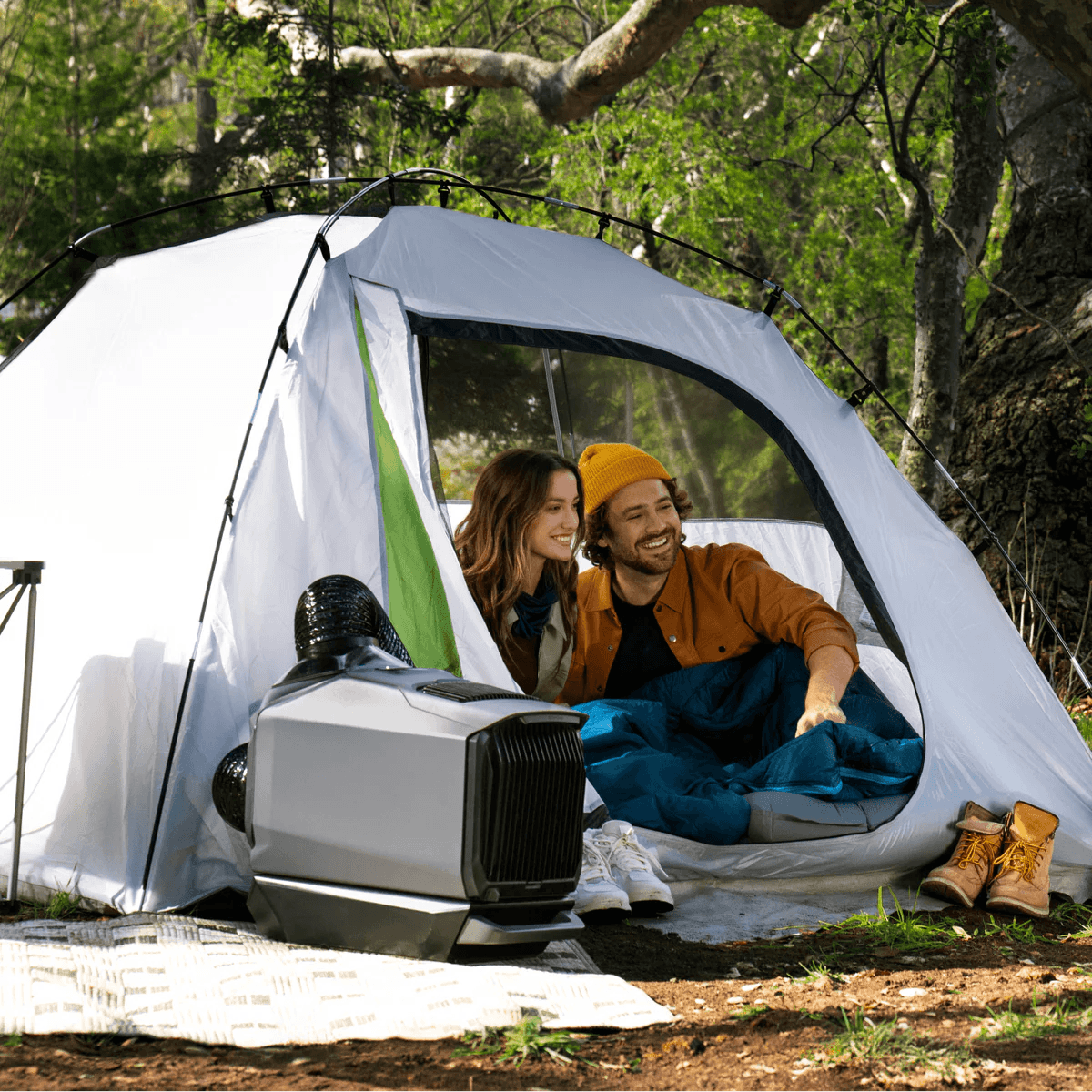
Having a working AC unit during a summer power outage can help to keep you and your family safe. Choose a unit that provides adequate cooling power and lasts at least one night, and consider a unit that can be charged using solar panels so you can use it for longer.
EcoFlow has a range of off-grid power solutions, including a battery-powered AC unit and several portable power stations. Explore the devices and find what you need to prepare for outages.
For press requests or interview opportunities, reach out to our media team
media.na@ecoflow.com