How to Build the Perfect Backyard Ice Skating Rink: A Practical DIY Ice Rink Guide for Families
- What Makes a Good Spot and Size for a Backyard Ice Rink?
- What Materials Do You Need for a DIY Ice Rink?
- How to Build a Backyard Ice Skating Rink Step by Step
- When Should You Flood a Backyard Ice Rink for Smooth, Strong Ice?
- Practical Tips for Maintaining Backyard Ice Rinks in Changing Weather
- Smart Ways to Light or Power a Backyard Ice Rink
- Build a Backyard Ice Rink Your Family Will Want to Use All Winter
- FAQs
A backyard ice rink can turn a quiet winter yard into the part of the house everyone uses. That idea is appealing, but the usual concerns show up fast: uneven ground, wasted water, rough ice, and a build that demands too much upkeep. Those problems are avoidable. A well-sized rink, a clean first freeze, and a realistic maintenance routine make the project feel doable, even for families building their first backyard ice skating rink.

What Makes a Good Spot and Size for a Backyard Ice Rink?
The right location solves problems before they begin. A useful cold-climate benchmark recommends a flat, level area, access to a winter water source, available lighting for evening use, and some protection from direct sun. Those points matter in a home setting too, because slope increases water depth at the low end, long hose runs add work, and full sun shortens your skating window.
Size deserves the same kind of restraint. Regulation hockey dimensions make it clear that a family rink is never trying to mirror a full-size sheet. A home setup works best when it fits the yard, the people using it, and the time you can spare for maintenance after a snowfall.
Choose for Daily Use
For casual skating and family play, a compact or mid-size layout usually delivers the best return. Kids have room to move, adults can skate comfortably, and snow removal stays manageable. Backyard ice rinks become frustrating when the footprint looks impressive on paper and exhausting in real life. A slightly smaller rink that stays smooth will get used far more often.
What Materials Do You Need for a DIY Ice Rink?
Materials matter less than control. You need a perimeter that holds water, a surface that can freeze evenly, and a simple way to add thin layers without tearing up the base.
Core Materials
Layout tools: stakes, string, tape measure
Ground prep tools: shovel, rake, snow pusher
Perimeter materials: packed snow, 2 by 4 lumber, or large-diameter PVC
Water retention: a plastic liner if the yard needs extra help staying level
Flooding tools: hose and brass or plastic nozzle
Basic winter gear: waterproof gloves and boots for repeated flooding sessions
A practical setup often includes packed snow borders for simpler builds, while plastic liners, 2 by 4 lumber, and PVC are common choices for more control. One detail that makes a bigger difference than many homeowners expect is the nozzle. A controlled spray lays water down more evenly and does less damage to the forming ice than an open hose.
A DIY ice rink on sloped ground often needs the liner, even if you hoped to skip it. On flatter yards, packed snow and a basic border may be enough. That is why the material list should follow the yard, not the other way around.
How to Build a Backyard Ice Skating Rink Step by Step
Building goes better when each phase has one job. First, create a stable base. Then hold the water. After that, build ice in thin, patient layers.
Mark the Area and Prepare the Ground
Clear branches, stones, and any sharp debris. If there is already snow on the ground, pack 1 to 2 inches of snow into a smooth base. That layer helps separate the ice from the ground and can reduce early melting caused by sun exposure. Flooding over deep, unpacked snow usually creates a soft, uneven surface that is harder to maintain later.
Build the Border and Seal Leaks Early
Install your perimeter, then check every edge before you put real water down. Even a small gap can send water out of the rink and pull your level off by morning. If you are using a liner, pull it smooth and keep wrinkles from bunching near corners. Packed snow can seal minor leaks during the first few flooding sessions.
Lay the First Coat With a Light Hand
The base coat needs restraint. Apply a very thin first coat, let it freeze fully, and continue gradually so low spots fill without soaking the ground. Use a gentle fan-like spray instead of a forceful stream, which can cut into the surface.
A backyard ice rink usually looks unimpressive after that first night, and that is normal. The base layer is doing structural work. Smooth, strong ice comes later.
When Should You Flood a Backyard Ice Rink for Smooth, Strong Ice?
Timing changes the result as much as technique. A practical cold-climate benchmark is frozen ground plus air temperatures of 25°F or colder for at least five consecutive days before the initial build. Night, late evening, or early morning usually works best for flooding because surface temperatures stay more stable. That benchmark is best treated as a useful rule of thumb, since every yard and local weather pattern behaves a little differently.
Keep the Layers Thin
After the first coat freezes, continue with thin layers once a day. Each layer should freeze fully before the next one goes on. If water is still taking 15 to 20 minutes to freeze, too much has likely been applied. Extremely cold nights can create their own problems as well, since warm water on a deeply frozen surface may lead to cracking.
A backyard ice rink gets smoother when flooding stays boring. Quick, heavy flooding feels efficient in the moment, then leads to rough spots, trapped water, and repair work you did not need.
Practical Tips for Maintaining Backyard Ice Rinks in Changing Weather
Maintenance is where many family rinks either settle into a rhythm or slide into frustration. The good news is that routine care is straightforward when you keep it small and consistent.
After Snowfall
Clear snow promptly, especially before it gets compacted by footsteps. A clean surface gives every new layer of water a better chance to freeze smoothly. Snow and debris trapped under fresh water create bumps that get harder to fix later.
After Heavy Use or a Warm Spell
Skates chip ice. Mild daytime temperatures soften edges and expose low spots. Small chips and cracks can be patched with a water-snow slush mix, then leveled and left to freeze before a light re-flood. If the weather has been above freezing, wait until the surface firms up again before trying any major resurfacing.
For most backyard ice rinks, the winning routine looks simple:
Shovel early
Patch small damage before it spreads
Re-flood lightly
Skip major repairs during unstable weather
That pattern keeps the rink usable without turning every cold night into a project.
Smart Ways to Light or Power a Backyard Ice Rink
Power matters most in three situations: the rink is far from the house, evening skating is part of the plan, or winter outages are common in your area. In those cases, a clean temporary power option can make the space easier to use and safer to navigate.
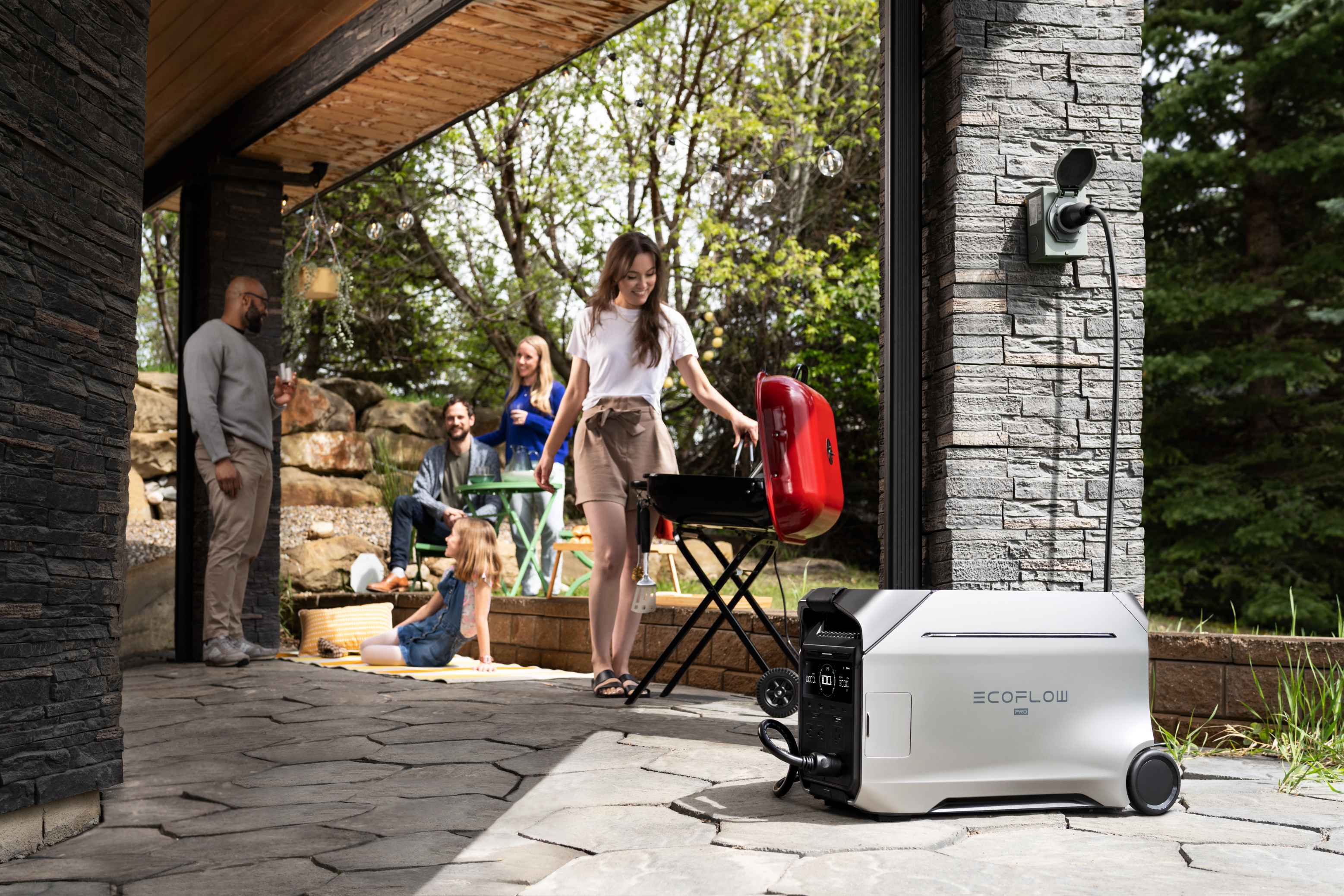
For larger temporary loads, the EcoFlow DELTA Pro 3 Portable Power Station offers 4000W output and dual 120V/240V capability. That is far beyond what simple rink lighting needs, but it shows the range available if the yard setup extends beyond a few lights.
Keep Lighting Simple and Safe
Basic lighting usually draws very little power. A practical LED setup can stay modest while still giving the rink enough visibility for evening skating or a short hockey session. Safety matters just as much as convenience, so outdoor-rated cords and GFCI-protected outdoor power remain important in snowy, wet conditions.
A backyard ice rink does not need a dedicated power solution in every yard. Still, if you want short winter evenings to feel usable without dragging long cords across snow, a portable power setup is a sensible addition.
Build a Backyard Ice Rink Your Family Will Want to Use All Winter
A rink earns its place in the yard when it stays easy to maintain and fun to step onto after dinner. Keep the location level, keep the size realistic, build ice in thin layers, and handle snow before it hardens into a problem. Those basics hold up across cold-climate rink guidance and everyday family use. If your setup also needs flexible lighting or temporary backyard power, Delta Pro 3 fits naturally into that part of the plan while the rink itself stays the main event.
FAQs
Q1. Can you build a backyard ice rink without damaging your lawn?
Yes, usually you can, as long as the rink is removed promptly at the end of the season and water is not left sitting on the grass for too long into warmer weather. The biggest risk comes from late-season thaw and poor drainage. Once the rink comes down, let the lawn dry out naturally before doing any spring cleanup or reseeding.
Q2. Do you need a permit for a backyard ice skating rink?
Usually no, but it depends on local rules and how elaborate the setup is. A simple seasonal rink in a private yard is often treated like a temporary recreational feature. Still, it is smart to check local ordinances or HOA guidelines if you plan to add fencing, strong lighting, or anything that could affect neighbors or visibility.
Q3. Is a backyard ice rink safe for young kids and beginners?
Yes, it can be, if the rink is used with the same common-sense precautions you would expect at any casual skating area. Clear supervision matters, and so does keeping the surface free of deep ruts, exposed edges, or gear left on the ice. Younger skaters also do better on smaller, less crowded rinks where they can build confidence without feeling rushed.
Q4. Can one backyard ice rink work for both skating and casual hockey?
Yes, it can, if you set expectations early. A family rink often works best as a shared space rather than a dedicated hockey setup. Open skating, passing drills, and light shooting are all realistic. Full-speed play is a different story, especially in tighter yards. Keeping the layout flexible usually makes the rink more enjoyable for everyone in the household.
Q5. What should you do with your rink materials when winter ends?
Store them carefully, because good off-season storage makes next winter much easier. Let liners dry completely before folding them, and keep boards or PVC pieces stacked in a dry, shaded area. Label small hardware so nothing disappears over the summer. A clean, organized breakdown also helps you spot damage early instead of discovering it during the first freeze.
For press requests or interview opportunities, reach out to our media team
media.na@ecoflow.com