National Grid vs Con Edison: Costs, Reliability, and Backup Power Alternatives
- What Is the Difference Between National Grid and Con Edison?
- Where Does Each Utility Operate?
- Why Are Con Edison Rates Typically Higher?
- How Do Reliability and Outage Response Compare?
- Why Do Power Outages Still Happen with Both Utilities?
- What Backup Power Options Can Reduce Grid Dependence?
- Frequently Asked Questions
- Understand Your Utility, Protect Your Home
National Grid and Con Edison are two power utilities that serve New York, but they operate in different territories, charge different rates, and have different infrastructure. As a customer, you don't have a choice between the two providers. Your service area will determine who delivers your power.
If you're dealing with grid disruptions, start by understanding your utility provider to better know where your vulnerabilities lie and how you can prepare with backup power.
What Is the Difference Between National Grid and Con Edison?
Both National Grid and Con Edison are regulated electric and gas utilities that operate under the New York State Public Service Commission's oversight.
Con Edison, formerly known as Consolidated Edison Company of New York, is an investor-owned utility that has a dense urban footprint.
National Grid, on the other hand, is a multinational energy company with US operations that span New York, Rhode Island, and Massachusetts.
The key structural difference between them is that Con Edison operates an underground infrastructure, whereas National Grid serves a much broader geographic mix of urban, suburban, and rural areas.
Within their regulated zones, both are monopolies because customers cannot switch between them due to preference.
Where Does Each Utility Operate?
Con Edison serves New York City, including Manhattan, the Bronx, and most of Queens, as well as Westchester County, with an electricity customer base of around 3.6 million.
National Grid handles electricity in Upstate New York, covering more than 680 cities and towns across 25,000 square miles, with 1.7 million electric customers. It also delivers gas and electricity in Rhode Island and Massachusetts.
The broader National Grid territory also means more exposure to overhead line infrastructure and storm-related outages (a factor worth accounting for when considering a whole-home backup system like the EcoFlow DELTA Pro Ultra X).

Why Are Con Edison Rates Typically Higher?
Con Edison rates are some of the highest in the state due to the cost of maintaining and expanding its infrastructure in one of the densest urban environments in the world.
National Grid's rates upstate are generally lower, though they still increase incrementally over time, like most electricity rates in the country.
The rate drivers for Con Edison are the dense underground infrastructure they have to maintain, local property taxes, and a new clean energy build-out.
How Do Reliability and Outage Response Compare?
Con Edison reported a reliability of 99.997% in 2024, or nine times better than the national average. Because approximately 72% of Con Edison's distribution and transmission system is underground, it's less susceptible to storm damage than overhead networks.
Because the National Grid covers a much larger and more geographically diverse territory, including rural upstate areas where overhead lines are standard, these residents have greater exposure to storm-related outages.
Customers of both companies could still experience outages, as sometimes they're unavoidable. However, neither one has a large enough reach to create a nationwide power outage.
Why Do Power Outages Still Happen with Both Utilities?
Power outages will still happen regardless of who your utility provider is. Largely because of increasingly frequent extreme weather events, like wind and heavy precipitation, across New York State, specifically, roughly 40% of all outages reported between 2017 and 2020 followed severe weather within eight hours.
National Grid outages may also be linked to the above-ground lines, which are vulnerable to ice storms, wind, and tree contact, especially in Upstate areas.
As for Con Edison, its primary failure points are the underground equipment issues and manholes during winter, and cable burnouts during summer heat peaks. Your best buffer against outage risks is a home battery storage system that you can rely on even when the grid fails.
What Backup Power Options Can Reduce Grid Dependence?
If your house is tied to the grid, you will always be exposed to outages, regardless of who your utility company is. Backup power is the only way to address the gap between outage events and utility restoration.
A portable power station is a quiet and fuel-free option for essential circuits like refrigeration, phone charging, lighting, internet connectivity, or medical devices.
If you need something more robust, a whole-home generator can cover larger loads, including HVAC, water pumps, and multiple appliances simultaneously.
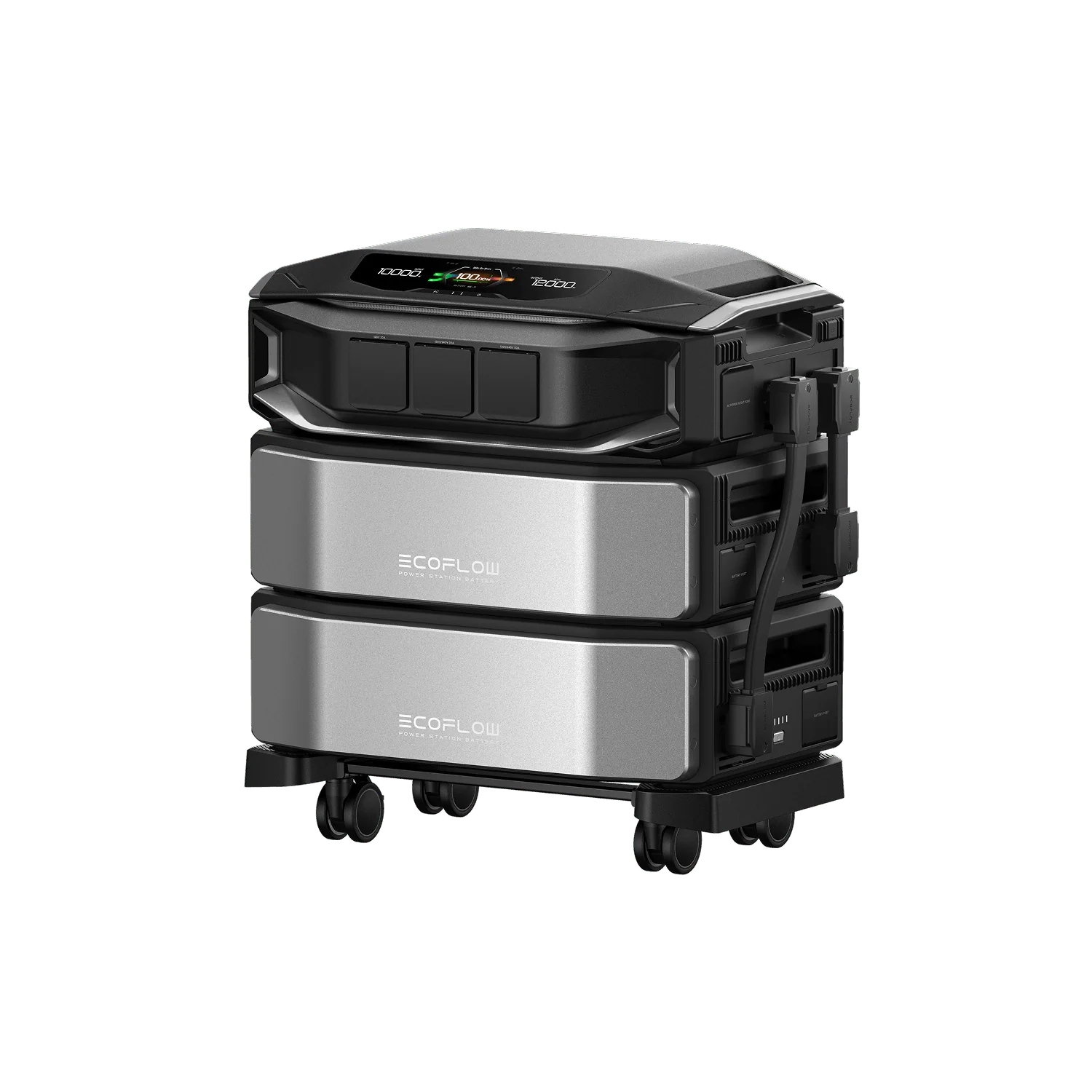
For high-consumption households or those in outage-prone areas, something like the EcoFlow DELTA Pro Ultra X provides significant capacity with expandability options, and solar input for even greater resilience.
Frequently Asked Questions
Can You Choose Between National Grid and Con Edison?
No, you cannot choose between National Grid and Con Edison because your service territory will determine your utility. There's no option to switch. Whichever regulated utility holds the franchise for your address determines your service, so you have no say in the matter. A third-party energy supplier can provide the commodity, but your utility still owns the delivery infrastructure and handles outages.
Is Con Edison More Expensive Than National Grid?
Generally, Con Edison is more expensive than National Grid because its rates reflect the cost of maintaining the dense urban infrastructure. Con Edison rates are consistently among the highest in New York State. Both Con Edison and National Grid customers have seen rate increases in recent years, but Con Edison residential customers still pay more than Upstate National Grid customers.
Understand Your Utility, Protect Your Home
National Grid and Con Edison are two utilities that serve different territories within New York and beyond. They each have different cost structures, infrastructure types, and reliability profiles. Understanding who your provider is and what the realities are will set realistic expectations for your energy bills and your outage risk.
Neither provider can guarantee fully uninterrupted service, particularly as extreme weather becomes more frequent, triggering outages.
Find a household-level backup power solution that can close the gap between an outage and restoration. A system like the EcoFlow DELTA Pro Ultra X delivers 12kW of continuous output with storage that scales to 180kWh — enough to run every circuit in your home, including HVAC and major appliances, regardless of how long the outage lasts.
For press requests or interview opportunities, reach out to our media team
media.na@ecoflow.com