How Many Solar Panels Do You Need for Your Canadian Home? [2026 Sizing Guide]
- Start Here: The Fastest Way to Estimate Your Solar Panel Count
- What Changes Your Panel Count in Canada?
- Step-by-Step Sizing Method You Can Do at Home
- Design Choices That Affect Cost, Payback, and Reliability
- Choosing a Practical Setup for Your Goals
- Frequently Asked Questions
- Save on electricity, add backup protection, and plan for what’s next
The exact solar panel count that a Canadian home needs to offset 100% of electricity use varies significantly by province, home size, and energy consumption.
This guide will help you size the correct number of solar panels for your home using annual kWh consumption and local solar potential, the two inputs that drive an accurate sizing estimate.
Start Here: The Fastest Way to Estimate Your Solar Panel Count
According to Statistics Canada, the average Canadian household uses approximately 10,000 kWh per year. While it’s better to use an exact figure to estimate how much solar you need, if you don't know your home's individual annual kWh, use this average as a starting point.
The core formulas are:
Annual kWh / local specific yield (kWh/kW/year) = system size in kW
System kW / panel wattage = panel count
Using this formula, a typical residential size system in Canada falls between 5 kW and 12 kW, covering a range from modest partial offset to full annual coverage. That means most Canadians would do well pairing the EcoFlow DELTA 3 Ultra Plus Portable Power Station (3072Wh) with rooftop solar. The PPS is expandable from 3kWh to 11kWh as needs grow and can store excess production for later use.
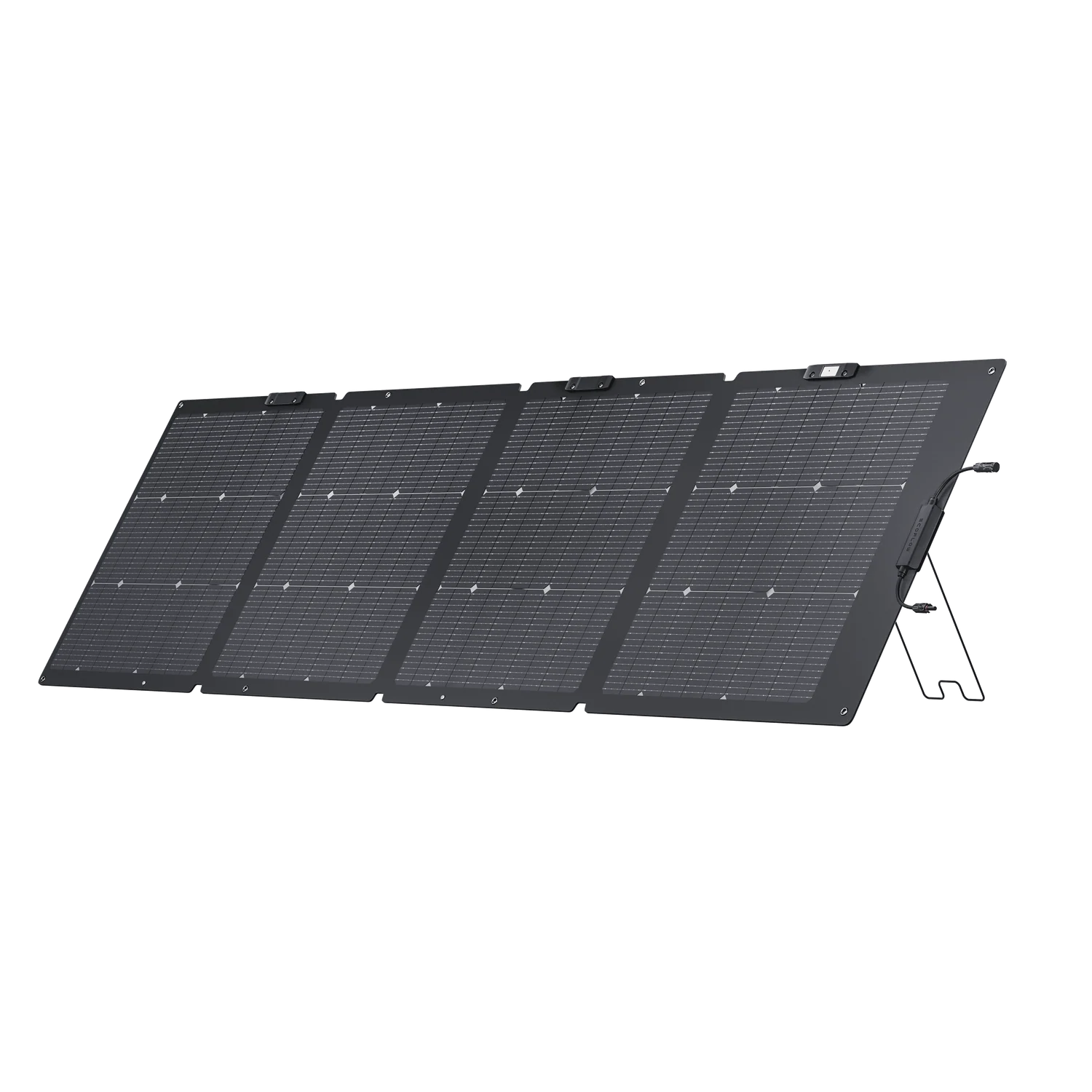
Pair it with a EcoFlow NextGen 220W Bifacial Portable Solar Panel to create a solar generator for lasting renewable energy.
What Changes Your Panel Count in Canada?
Roof Direction: South-facing arrays at an optimal tilt produce the most energy. If your roof is east-west facing, you'll lose roughly 18% of annual output compared to true south orientation.
Pitch: Your roof pitch impacts panel tilt, and panel tilt affects winter snow shedding. If your array is pitched between 27º and 45º, it will experience less than 5% annual energy loss from snow coverage. This is the ideal range to maximize output.
Shading: Partial shading from trees around your home or neighbouring structures can also reduce output.
Wattage: Modern panels have a higher wattage than older panels. 420W panels are now common, and these options reduce your total panel count, especially if roof space is limited.
Temperatures: While it might be counterintuitive at first, cold temperatures can marginally improve panel efficiency. The shortfall of production in the winter comes from the reduced daylight hours and lower sun angles, rather than the cold weather itself.
Step-by-Step Sizing Method You Can Do at Home
We've already shared the core formula for how to size solar panels for your roof, but here are the exact steps to complete the formula.
Step 1
Pull a year's worth of hydro bills and add up your total annual kWh. Using an annual figure rather than a single month can account for seasonal swings and make your measurement more comprehensive.
Step 2
Then find your location's specific yield using NRCan’s Photovoltaic Potential and Solar Resources Map, which maps out the kWh output per kW of installed capacity for different municipalities in Canada.
Step 3
Divide your annual kWh by your specific yield to get the required system size in kW. Then, you can multiply that figure by 1,000 and divide it by your chosen panel wattage to get a total panel count.
Step 4
Convert the kW to the roof area. Each kW of 420W panels will require roughly five to six square meters of south-facing, unshaded roof. For example, an 8 kW system would need approximately 40–48 m².
Design Choices That Affect Cost, Payback, and Reliability
Net Metering: If you plan to participate in a net metering program, size your system to match your annual consumption so you don't over-export and fall victim to diminishing returns when export-credit rates fall below retail. Increasing your size for an appropriate net metered system can also increase cost and slow the payback period.
Battery Backup: Battery storage is an excellent idea if your utility provider uses time-of-use rates, which creates large gaps in the prices you pay for energy during peak and off-peak hours. Adding battery storage can create a whole home generator and means you can draw energy when it's more affordable and tap into your reserves during peak times. Batteries tack on an additional cost up front but shorten the ROI period.
Future Energy Needs: If you expect to have larger future loads, consider sizing up your system at install time. While you may not use the entire output right now, you can export it back to the grid using net metering, or pair it with battery backup to store the excess power and use it.
Choosing a Practical Setup for Your Goals
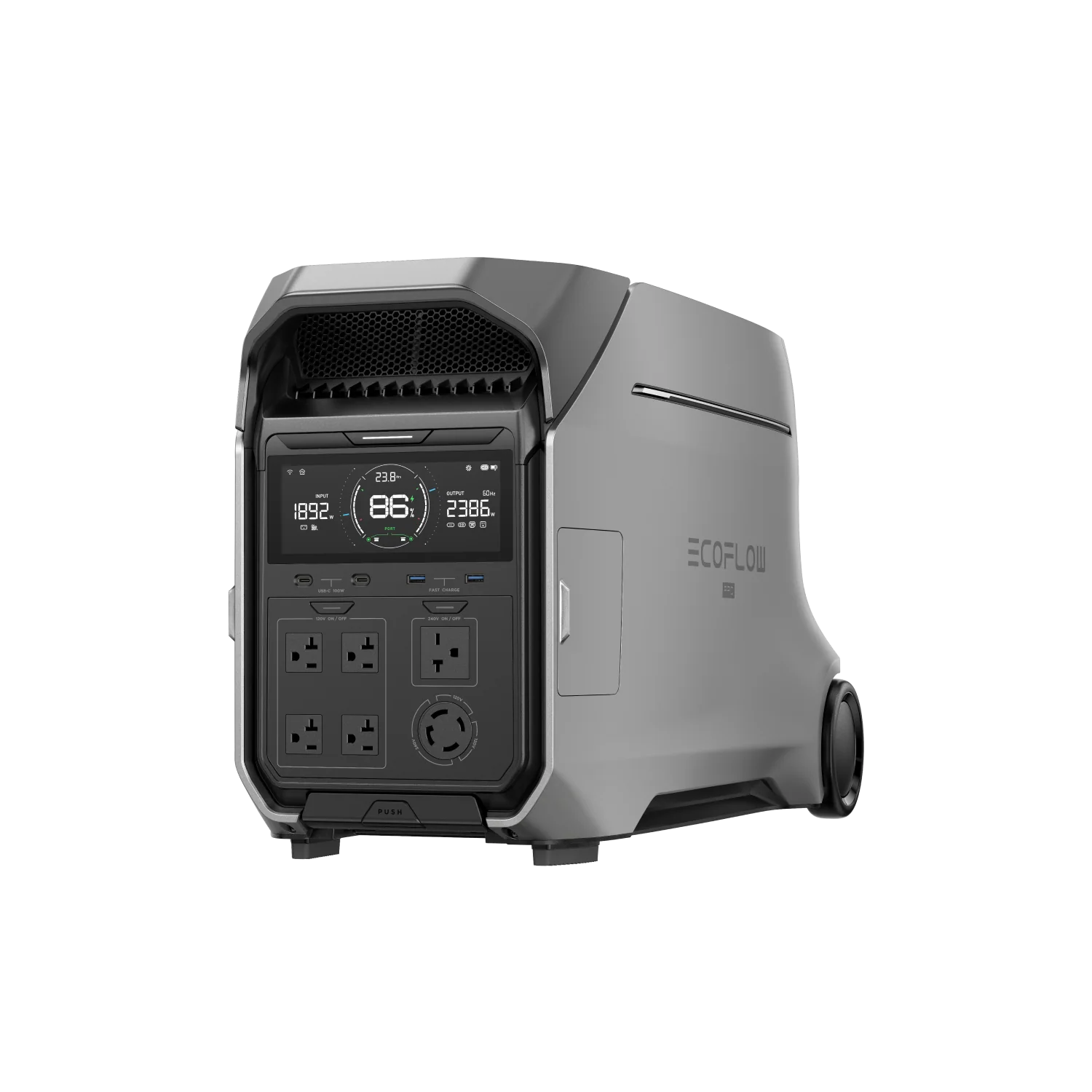
Aim to match your target coverage to the right EcoFlow power station and backup approach. So if you want power for the whole house, that means choosing a large enough panel array and connected battery backup like the EcoFlow DELTA Pro 3 Portable Power Station, which is expandable up to 48kWh for all your storage needs.
Frequently Asked Questions
How many solar panels do I need to offset my annual electricity use?
Divide your annual kWh by your local specific yield to get the required system kW. Then divide that total by panel wattage for panel count. For most Canadian homes, the range is 15 to 25 panels for full offset, or eight to 12 panels for partial offset.
Can solar panels power a whole Canadian home year-round?
Yes, if the array is properly sized, solar panels can power a whole Canadian home all year. Just note that winter production is around 25–40% of summer peak generation. You may need a backup battery or grid connection to cover winter shortfalls.
How do I estimate peak sun hours where I live in Canada?
Peak sun hours are the number of hours per day when irradiance equals 1,000 W/m². You can use NRCan's photovoltaic potential dataset and map to find municipality-level peak sun hour data.
How much roof space do I need for around 20 panels?
Twenty 400W or 420W panels would require roughly 100 to 115 m² of usable, unshaded, and south-facing roof space. Steeper pitched roofs and true south orientations will maximize output per panel and reduce snow that accumulates in the winter.
Save on electricity, add backup protection, and plan for what’s next
Sizing your solar array correctly from the start avoids paying for unused extra capacity or falling short on power during peak demand months. Adding battery backup alongside your rooftop solar can further protect you against outages and maximize your self-consumption of solar generation.
The EcoFlow DELTA Pro 3 Portable Power Station is a scalable entry point with 4kWh of storage expandable to 12 kWh, making it a practical pairing for rooftop solar.