Mini Fridge for Bedroom: Size, Noise, and Energy Use
Bedroom fridges get bought for one moment: 11 p.m., the kitchen is two rooms away and dark, and you want something cold without flipping on lights or negotiating a roommate’s shelf. What gets unplugged or resold within a month usually traces back to a noise problem nobody checked or a size problem nobody measured. Capacity, decibels, and annual kWh decide which story you end up with, and all three are easy to read before you buy.
What Size Mini Fridge Fits Best in Your Bedroom?
Most sizing mistakes when buying a mini fridge happen because the tape measure stayed in the drawer. Measure the spot first: width, depth, and the arc the door needs when it swings open, then decide how much you actually want to keep cold. Once you have those two numbers, the right capacity range picks itself.
Small Cube Fridges (1.6–2.5 Cu. Ft.)
Picture the gap between a nightstand and the wall, or the dead space under a desk. A 1.6 to 2.5 cu. ft. cube is built for exactly those gaps. Small as it is, it still swallows a six-pack, a few snacks, skincare items, and one or two small containers. For those with extremely limited space who only need to chill a few cans or cosmetics, even a compact 6-L mini fridge for bedroom nightstands can fit the bill, though a standard cube offers far more practical versatility. What a cube will not do is travel; it lives wherever you first plug it in.
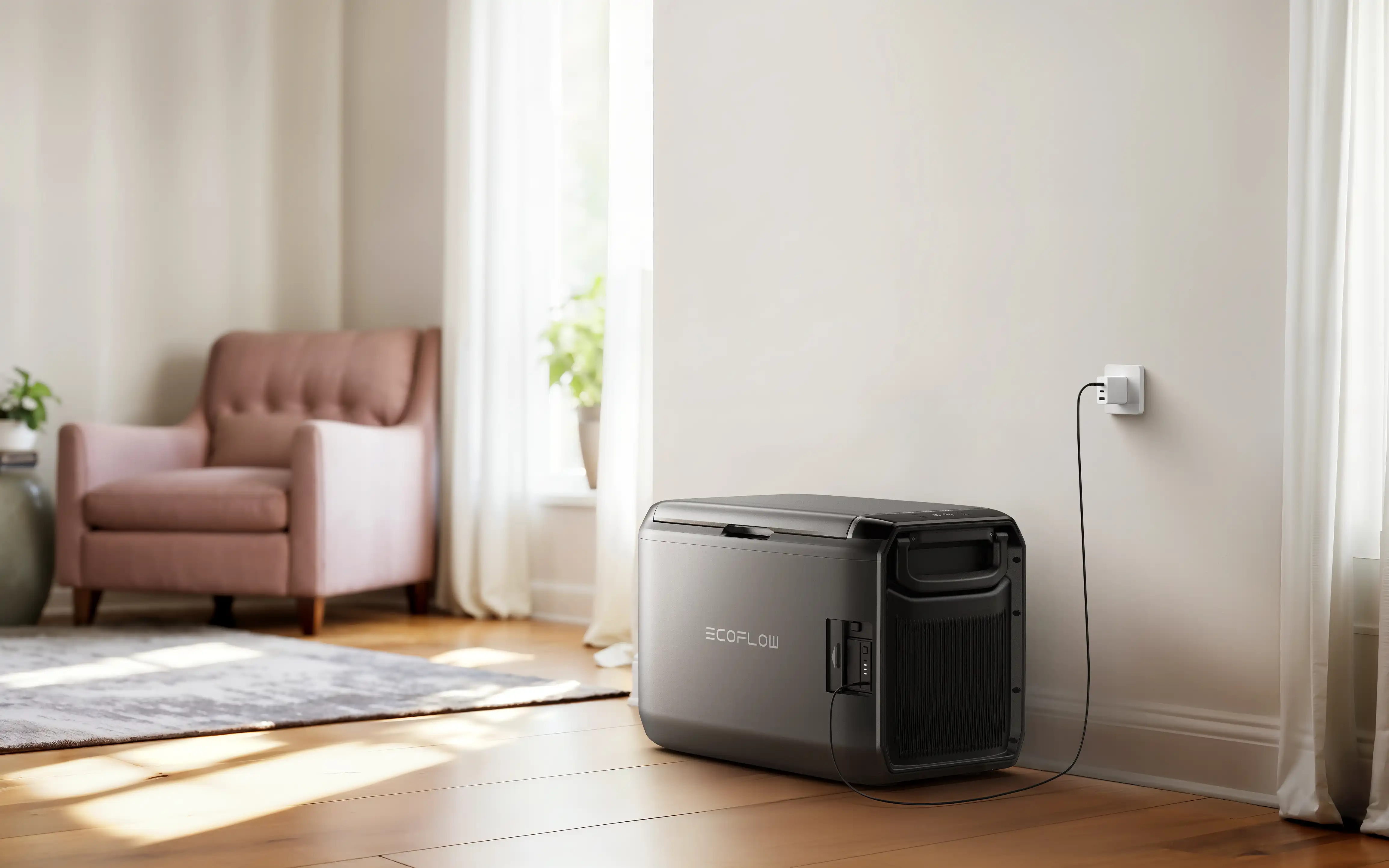
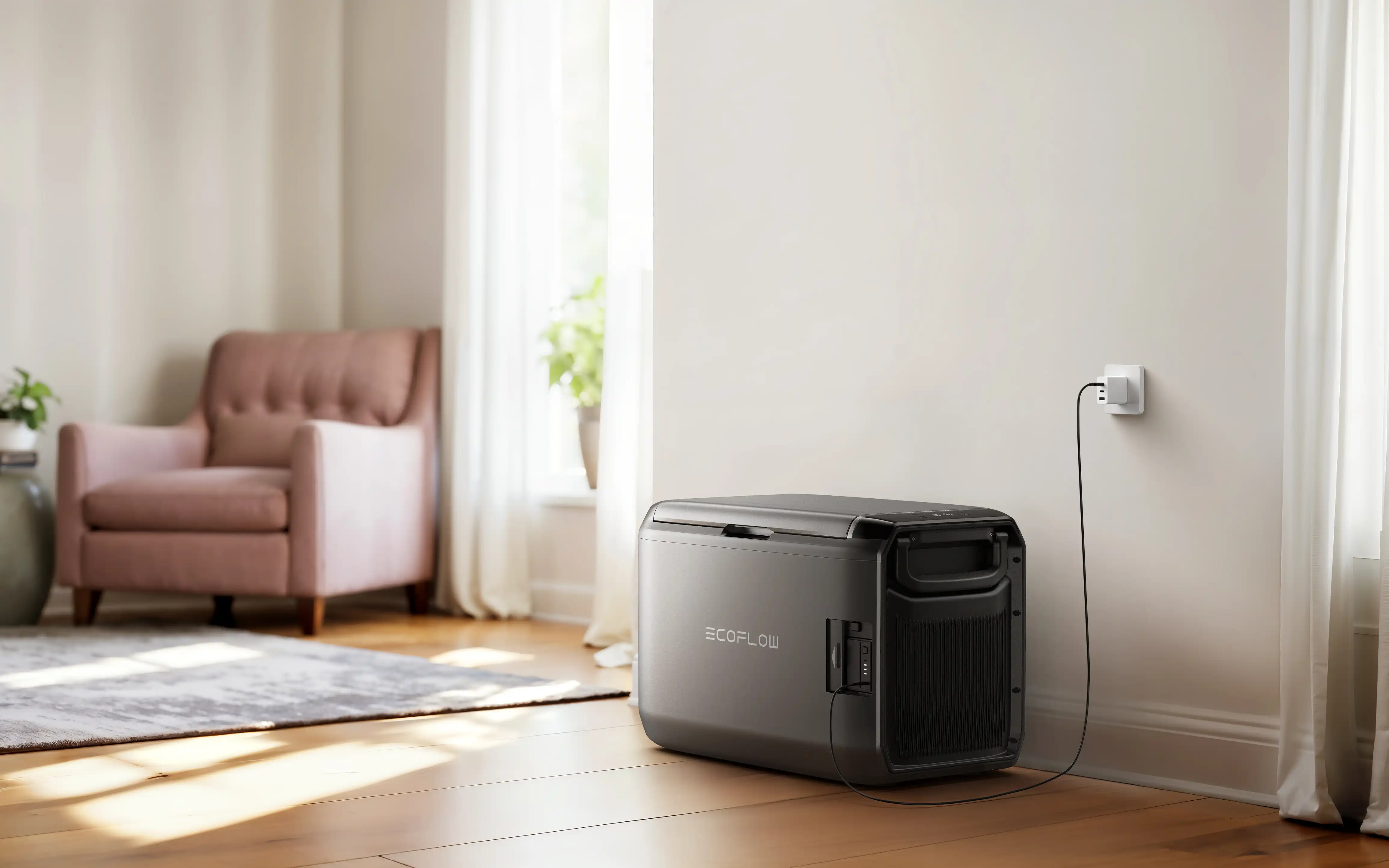
If you need refrigeration that can move between the bedroom, car, and campsite, a portable model such as the EcoFlow GLACIER Classic offers more flexibility than a conventional mini fridge. Its dual-zone cooling, integrated ice maker, and battery-powered operation make it useful for temporary spaces or situations where a nearby outlet is not always available.
Mid-Size Fridges (2.6–3.3 Cu. Ft.)
People come to this size because the kitchen is shared. For students in residence and remote workers shopping for the best mini fridge, 2.6 to 3.3 cu. ft. units hit the sweet spot for one reason: groceries stay in the room, and the communal kitchen stops being a daily commute. Most of these fridges stand roughly hip-high. Expect adjustable glass shelves, door bins sized for 2-litre milk or almond-milk cartons, and often a little enclosed freezer for ice trays.
Larger Mini Fridges (3.4–4.5 Cu. Ft.)
Two doors, a real 0°F (−18°C) freezer in its own compartment, and shelf room for tall juice bottles, meal prep containers, and frozen dinners: at 3.4 to 4.5 cu. ft., the appliance is less a fridge than a small kitchen in one corner of the room. The trade-off is floor space: units this size need their own open corner and clearance for the door’s wide swing, so measure before the box arrives, not after.
Mini Fridge Size Comparison
| Fridge Category | Capacity Range | Typical Dimensions (H × W × D) | Best Suited For | Can Capacity (approx.) |
|---|---|---|---|---|
| Small Cube | 1.6 – 2.5 cu. ft. | 48 × 44 × 47 cm (19" × 17" × 18.5") | Nightstands, under desks, skincare & drinks | 20–30 cans |
| Mid-Size | 2.6 – 3.3 cu. ft. | 65–85 × 48 × 50 cm (26–33" × 19" × 20") | Student bedrooms, home offices, weekly snacks | 40–60 cans |
| Two-Door / Large | 3.4 – 4.5 cu. ft. | 85–95 × 48–53 × 50–56 cm (33.5–37.5" × 19–21" × 20–22") | Basement suites, studio living, meal preppers | 70–100+ cans |
How to Choose a Mini Fridge That Won't Disrupt Your Sleep?
A showroom proves nothing about noise. Most fridges sound acceptable on a busy retail floor; the same cabinet at 2 a.m., two metres from your pillow, is a very different story. Two specs decide that story: the decibel rating on the sheet and the cooling technology inside. Light sleepers should add a third check, for anti-vibration hardware.
Check Noise Levels in Decibels
Start with a practical reference point: a quiet library sits around 40 dB. When selecting a mini fridge for a bedroom, the spec sheet should read 40 dB or lower, and the closer the unit stands to the bed, the lower that number should be. The number hides one wrinkle. Compressor fridges cycle on and off, and a model that seems silent in the evening can still wake a light sleeper when it kicks on overnight.
Compare Compressor and Thermoelectric Cooling
The two systems do not just cool differently; they disturb your sleep in different ways. A compressor fridge cools more powerfully and holds steadier temperatures, and it announces itself each time the motor cycles: a faint hum, a relay click, then silence again. With no compressor at all, a thermoelectric model’s only sound is a steady fan, and many sleepers tune that kind of constancy out more easily than an on-off rhythm. The catch is heat: in a warm room during a July heat wave, a thermoelectric unit may struggle to keep food at a safe temperature.
Check Anti-Vibration Features
Cabinets rarely make the noise people hear; floors do. When a compressor’s hum vibrates into hardwood or laminate, the whole surface turns into a speaker. Rubber feet or similar vibration-dampening mounts break that path. Where they fall short, a rubber mat made for appliances, or a set of anti-vibration pads, absorbs most of what remains. For ultra-sensitive sleepers running compact setups, pairing low-decibel fridges with a quiet portable power station can also eliminate electrical hums and grid fluctuations.
How Much Energy Does a Bedroom Mini Fridge Consume in Canada?
Two fridges of identical size can post very different annual kWh figures. The same fridge can also cost noticeably more to run in one province than in another. You can check both the efficiency rating and the electricity rate before you buy.
Average Annual Energy Consumption by Size
When reviewing average mini fridge power consumption, you will quickly notice that today's compact refrigerators use a fraction of the power the older and inefficient models did. Rough guideposts by size:
Small Cube (1.6–2.5 cu. ft.): 150 – 220 kWh/year
Mid-Size (2.6–3.3 cu. ft.): 200 – 270 kWh/year
Large / Two-Door (3.4–4.5 cu. ft.): 250 – 360 kWh/year
Monthly Electricity Costs Across Canada
One line of arithmetic is all it takes. Read the annual kWh (kilowatt-hour) rating off the appliance tag, divide by 12, multiply by your local electricity rate:
Monthly Cost = (Annual kWh ÷ 12) × Electricity Rate ($/kWh)
What moves the answer is geography. Quebec's grid is hydro-rich; Alberta's is fossil-fuel-heavy. An identical fridge lands differently on the bill depending on where it gets plugged in.
Sample Calculation (Typical 250 kWh/year Mid-Size Fridge):
Note: Effective residential rates below reflect total delivered costs, combining base commodity charges with typical delivery, regulatory fees, and local taxes.
Quebec (Hydro-Québec Rate D): At an effective delivered rate of ~8.5¢/kWh, running the fridge costs roughly $1.77 per month (250 ÷ 12 × $0.085).
Ontario (Blended TOU / ULO with Delivery & HST): With transmission and regulatory fees factored in, an effective rate of ~16.5¢/kWh brings the monthly cost to about $3.44 (250 ÷ 12 × $0.165).
Alberta (Retail Energy + Transmission/Distribution): At an estimated total effective rate of ~21.0¢/kWh, including local wire charges, running the fridge costs about $4.38 per month (250 ÷ 12 × $0.210).
Winter Storm Outages and Power Backup
Some bedroom fridges hold more than snacks. When the contents are insulin, specialty medications, or pumped breast milk, an outage stops being about warm pop and becomes a genuine health risk. The May 2022 derecho alone cut power to more than a million homes and businesses across Ontario and Quebec; nearly 50,000 were still dark a week later. Against that record, backup power looks less like overkill.
For continuous peace of mind, pair your setup with the EcoFlow DELTA 3 Classic Portable Power Station. With its 10ms UPS auto-switchover, your fridge maintains uninterrupted cooling when the municipal grid drops out. Best of all for bedroom environments, the unit operates at whisper-quiet sound levels as low as 30 dB under 600W loads, keeping critical supplies protected without disrupting your night.
Compare EnerGuide and ENERGY STAR Ratings
Every fridge sold in Canada carries the same black-and-white EnerGuide label, which keeps comparison shopping honest: estimated yearly consumption in kWh, plus a scale showing where that unit ranks against comparable models. For a second filter, look for the blue ENERGY STAR® mark. Natural Resources Canada (NRCan) requires a certified compact fridge to use at least 10% less energy than the federal minimum efficiency standard. Because their baseline wattage is so manageable, efficient compact fridges are also easy to keep running off-grid using a standalone solar generator. Worth knowing before you treat the logo as a dealbreaker: it shows up mostly on larger 3.0+ cu. ft. models, while plenty of basic, manual-defrost cube fridges in the 1.6–2.5 cu. ft. range skip certification because their baseline power draw is already low.


How Should You Place and Maintain a Mini Fridge in Your Bedroom?
Where a fridge stands decides how it ages. Airflow around the cabinet and a steady, level footing do most of the work; a little cleaning handles the rest.
Leave Space for Proper Ventilation
Every fridge has to dump the heat it pulls out of the cabinet. One that can’t runs longer, sounds louder, and wears out sooner. Bedroom units shed that heat passively, through condenser coils on the rear or side walls, not through fans venting out the front. Behind the unit, leave at least 5 to 8 cm (2 to 3 inches) of open space; on each side and above it, 2 to 5 cm (1 to 2 inches). And tempting as it is in a tight room, never tuck a freestanding fridge into a wardrobe or closet.
Keep the Fridge Away From Heat
A fridge parked beside a heat source spends the night fighting it. Keep the unit clear of baseboard heaters, hot-water radiators, furnace ducts, and south-facing windows that catch direct sun: each one forces the compressor to cycle more often, and you pay for that twice, once in sleep and once on the hydro bill.
Clean the Fridge and Defrost as Needed
Frost more than a few millimetres thick makes the freezer work harder. Defrost once it builds up, and never chip at the ice with a knife or anything sharp. Twice a year or so, clear pet hair and dust off the condenser coils; a wipe of the interior with warm water and baking soda keeps odours in check. None of it takes more than ten minutes, and it keeps a fridge cool, quiet, and cheap to run.
Conclusion
Three choices decide whether a bedroom fridge works out: the size, matched to what you actually store; the noise rating, around 40 dB or lower; and enough open space around the cabinet for it to breathe. The EnerGuide label shows what a unit costs to run over a year, and in most of Canada that comes to a few dollars a month. If a winter outage would spoil more than your snacks, backup power comes in handy: it keeps the fridge, and whatever you count on it for, running until the grid is back.
Disclaimer
Because provincial utility rates, energy efficiency standards, and manufacturer specifications are subject to change, all calculations are provided for illustrative purposes. Always verify current electricity rates with your local utility provider and confirm specific decibel levels and energy ratings directly on a product's EnerGuide label before making a purchase.
FAQ
Is it worth having a mini fridge in your room?
That depends on where your kitchen is. In a shared house, a student residence, or a basement suite, the main fridge is often far away or crowded, and cold storage a few steps from the bed changes daily life. If the kitchen is already next door, the extra electricity and floor space don’t buy you much.
Are mini fridges safe for bedrooms?
Yes, if it’s installed sensibly. Plug the unit straight into a grounded three-prong outlet. Leave the rear clearance the manufacturer specifies, and keep the cord from getting trapped behind the cabinet. Two last checks: no space heater sharing the circuit, and a recognized Canadian safety mark (CSA, cUL, or ETL) on the rating plate.
Can a mini fridge cause a room to be hot?
Barely. A fridge only moves heat: what leaves the cabinet exits through the condenser coils into the room, and a mini fridge moves so little that the effect is comparable to a resting adult’s body heat. With decent airflow, you won’t notice it. The exception is a cramped room with poor ventilation, or an attic bedroom without air conditioning in peak summer, where even small heat sources stack up.
What to put under a mini fridge in a bedroom?
The answer is something rigid and waterproof: a plastic drip tray, an appliance mat, or a thick silicone runner. All three protect hardwood and carpet from condensation drips during defrosting. A firm, level mat has a second job too, stopping vibration from passing into the floor.
What are the chances of a mini fridge catching fire?
Very low, provided the unit is certified and well maintained. When fridge fires do happen, the cause usually traces back to external electrical problems: an undersized extension cord, a worn power cord, or dust packed around the compressor vents. Clear vents, no extension cord, and a cord in good shape remove nearly all of that risk.