Farmers’ Almanac Winter Forecast for Canada 2026–2027: Snow, Cold & Regional Predictions
- What Does the Farmers’ Almanac Predict for Canada’s Winter 2026–2027?
- What Does the Farmers’ Almanac Forecast for Canadian Regions?
- What Could the Farmers’ Almanac Winter Forecast Mean for Canadian Households?
- How Can Canadians Prepare for Winter Power Outages?
- How Should Canadians Use the Farmers’ Almanac Winter Forecast?
- Conclusion
- FAQ
The Farmers’ Almanac’s 2026–2027 winter outlook points to a season of sharp regional contrasts across Canada. The Prairies can expect spells of Arctic chill and blizzard conditions, while B.C.’s coast trends wetter and stormier than average. Ontario and Quebec should get plenty of snow with icy stretches, and eastern Canada can expect mixed precipitation in places. No seasonal outlook can pinpoint the timing of individual storms months ahead, and this one is no exception; its value is in planning. Below you’ll find the outlook region by region, the stretches of winter most worth watching, and the steps worth taking now to get your home ready for cold snaps and power outages.
What Does the Farmers’ Almanac Predict for Canada’s Winter 2026–2027?
According to the Almanac, colder-than-usual weather takes hold across several parts of the country, with the sharpest cold reserved for the Prairies, while parts of Ontario, Quebec, and Atlantic Canada pick up additional snow and bouts of mixed precipitation.
Overall Winter Weather Outlook
Central and northern Canada could see colder conditions, while coastal regions face more variable precipitation. The national picture is anything but uniform, so preparation has to account for wide regional gaps in temperature, snowfall, and ice. The Almanac has nicknamed the 2026–2027 season “Snow, Sleet, and Surprises,” a nod to the fact that no single nationwide deep freeze is coming. Part of this comes from broader atmospheric drivers such as El Niño. Expect a season of quick reversals: freeze-thaw cycles arriving in succession, storm tracks shifting with little warning, and mild spells cut short by fast, intense Arctic outbreaks.
When Could Winter Weather Intensify?
The season's most challenging conditions should peak between January and mid-February. The exact timing and severity of any individual storm, though, won't come into focus until the shorter-range forecasts land. Central Canada may see its first frost and early lake-effect snow by late November, and from there the season unfolds roughly like this:
Early to Mid-January: Prolonged deep freezes could settle over the Prairies and northern Ontario, pushing household heating and energy demand sharply higher.
Late January into Early February: As cold air meets incoming moisture, Ontario, Quebec, and the Maritimes are in line for spells of mixed precipitation, from snow to freezing rain.
Late February: Occasional thaws become possible across southern Canada, while Atlantic Canada stays exposed to snow and late-season coastal storms.
What Does the Farmers’ Almanac Forecast for Canadian Regions?
Conditions differ widely from one region to the next, so analyzing the detailed winter forecast from Farmers’ Almanac matters for local planning. The table below sums up expected temperatures, snowfall, and the main winter hazards across the country.
| Region | Expected Temperatures | Precipitation & Snowfall | Primary Winter Risks |
|---|---|---|---|
| B.C. Coast & Interior | Near normal coast; below normal interior | Rain and slush along the coast; heavy snow in the interior | Mountain pass blockages, localized urban flooding |
| Prairies (AB, SK, MB) | Large temperature swings; periodic severe Arctic plunges | Moderate to above average; dry, drifting powder | Sudden, dangerous wind chills, blizzard-forced road closures, grid strain, pipe freezing |
| Ontario & Quebec | Below normal north; volatile freeze-thaw south | Above normal; frequent mixed precipitation, significant ice buildup | Heavy ice accumulation on power lines, transit delays |
| Atlantic Canada & Labrador | Milder along the coast; frigid inland Labrador | Above normal; wet snow, sleet, coastal nor'easters | High winds, freezing spray, widespread utility outages |
| Northern Canada | Severely cold; wide temperature swings | Dry interior snowpack, blowing snow hazards | Remote supply line delays, extended deep freezes |
British Columbia Coast and Interior
Pacific moisture looks set to stay a defining feature along the B.C. coast, with colder air more likely to settle inland. Vancouver and Victoria can expect stretches of rain interrupted by the odd snowfall, while the Okanagan and Kootenays are due for colder temperatures and deeper snow. Anyone travelling through the mountain passes during peak winter should check road conditions before setting out.
Alberta, Saskatchewan and Manitoba
The Prairie provinces can expect some of the country’s widest temperature swings this winter. Alberta, Saskatchewan, and Manitoba face repeated waves of bitter Arctic air and blizzard conditions broken up by milder interludes, not one unbroken deep freeze. When a wave hits, Calgary, Edmonton, Saskatoon, and Winnipeg can see temperatures fall sharply within 24 to 48 hours and wind chills turn dangerous, the kind of cold that has Prairie drivers reaching for the block-heater cord. The snow itself may stay light and dry, but strong winds will whip it into ground blizzards and drifting powder, leaving rural highways treacherous.
Ontario and Quebec
Across Ontario and Quebec, the season should keep cycling through snow, rain, and freezing rain while temperatures hover around the freezing mark. Southern Ontario, including the Greater Toronto Area, can expect repeated freeze-thaw cycles. Quebec, meanwhile, picks up heavier snow in places. Each of these patterns makes slippery roads, transit delays, and unexpected grid failures more likely, prompting many households to keep a backup power station charged and ready.
Labrador and Atlantic Canada
Nova Scotia, New Brunswick, Prince Edward Island, and Newfoundland sit in the path of coastal nor’easters, and conditions can swing rapidly when one comes through. Heavy, wet snow can turn to freezing rain as milder maritime air lifts temperatures a degree or two above freezing, leaving an icy glaze on pavement and power lines. Labrador plays by different rules. Winter there sets in early, lingers late, and brings punishing winds, deep drifts, and weeks of unrelenting cold.
Northern Canada
The season’s deepest, most persistent cold is expected in the North. Communities around Whitehorse and Yellowknife, and across Nunavut, can expect long runs of extreme cold, blowing snow, and treacherous travel. In remote settlements, severe conditions also squeeze the supply lines that carry fuel, groceries, and other essentials into town. When the roads close, resupply waits.
What Could the Farmers’ Almanac Winter Forecast Mean for Canadian Households?
A colder season affects a household in stages. It shows up on the hydro bill first; ice storms and long cold snaps then raise the odds of losing power altogether; and in a severe storm, closed roads can cut off the help a household would normally fall back on.
Higher Heating and Electricity Demand
When deep cold settles in for days, heat pumps, furnaces, and baseboard heaters run nearly nonstop. Winter peak rates for power and natural gas in provinces like Alberta and Ontario can hit household budgets hard. Homes heated solely by electric heat pumps face an added wrinkle: once outdoor temperatures drop below the units’ efficient operating range, many systems switch over to electric-resistance backup heat, which costs considerably more to run.
Service Disruptions During Outages
It doesn’t take much ice to drag tree branches down across overhead hydro lines. Once crews have to battle drifted snow and unploughed side streets, restoration is measured in days, not hours, making it essential for households to prepare for a winter power outage before the first storm hits. In the meantime, furnace blowers sit idle, internet routers drop offline, well pumps on rural properties stop drawing water, and sump pumps quit just when a sudden thaw sends meltwater toward the basement. Eastern Ontario and southern Quebec still measure every ice storm against January 1998, when several days of freezing rain left millions without power, some for weeks.
Limited Energy Access During Severe Storms
A severe blizzard can close the roads you’d normally rely on, leaving no way to reach a warming centre or refuel a conventional gas generator. During extended freezes, standard outdoor portable generators can also suffer carburetor freezing or oil-viscosity issues, which renders an indoor-safe portable power station a far more reliable alternative. When external help is out of reach, a household’s safety relies heavily on its immediate indoor energy reserves.


How Can Canadians Prepare for Winter Power Outages?
When taking proactive steps for winter blackout preparedness mid-storm, priorities narrow to three: hold heat in the house, keep food safely cold, and keep essential electronics charged. Everything else waits until the storm breaks.
Identify Essential Household Power Needs
Before choosing any equipment, list the systems your household genuinely can't go without when the grid goes down; no two households have the same list. The common starting points:
Primary Communication: Phones, tablets, radios, and the home Wi-Fi setup.
Basic Comfort & Safety: Bright LED lamps, heated throw blankets, and medical gear that can't go a night without power (CPAP machines).
Furnace & Fireplace Circuits: The ignition and blower-fan circuits that high-efficiency gas furnaces and fireplaces rely on.
Food & Water Preservation: The refrigerator compressor and, on acreages, 120V/240V well pumps.
Prepare Portable Power for Essentials
When the power fails during a brief winter squall, an indoor-safe battery system provides basic electricity without needing extension cords run through open windows or doors.
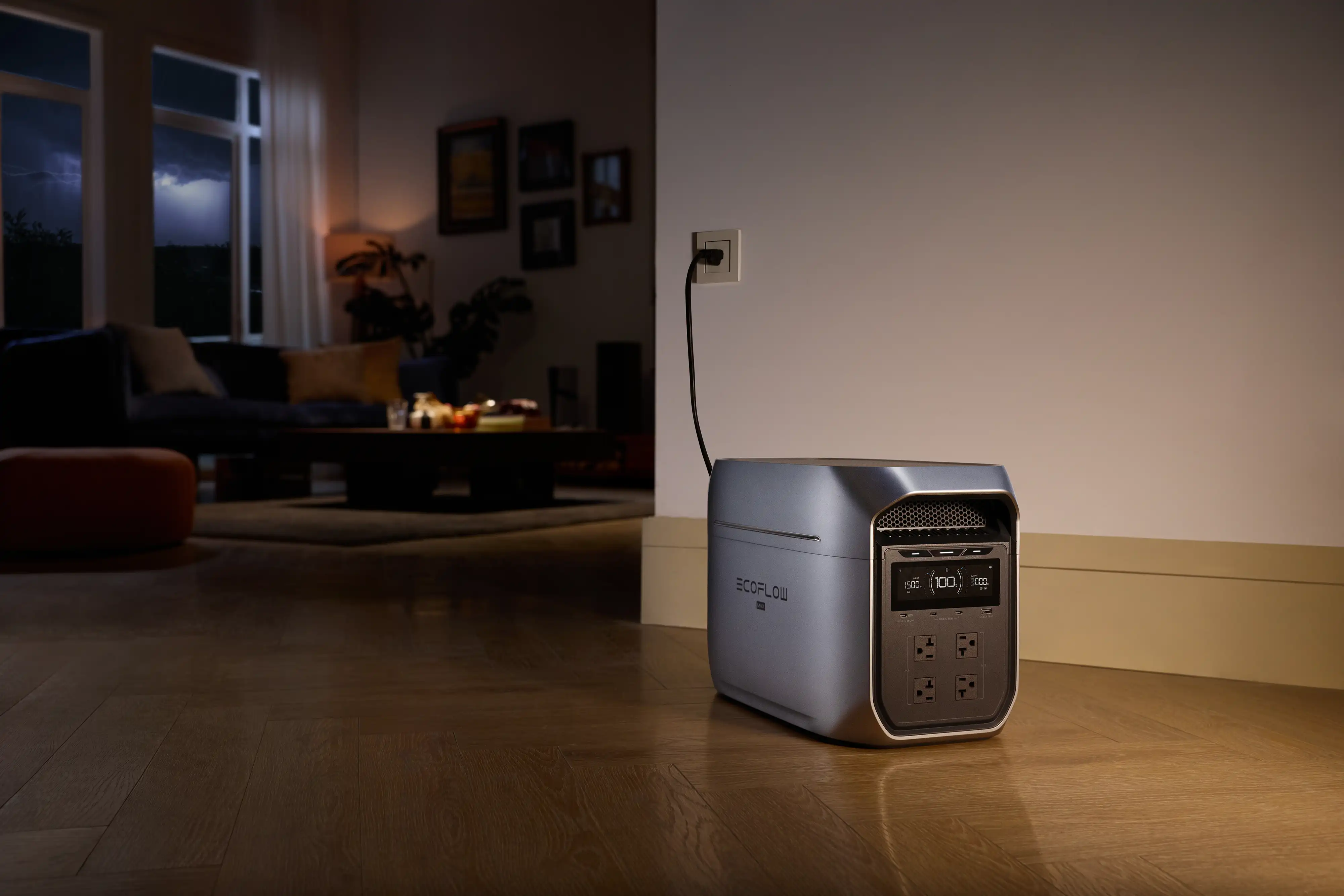
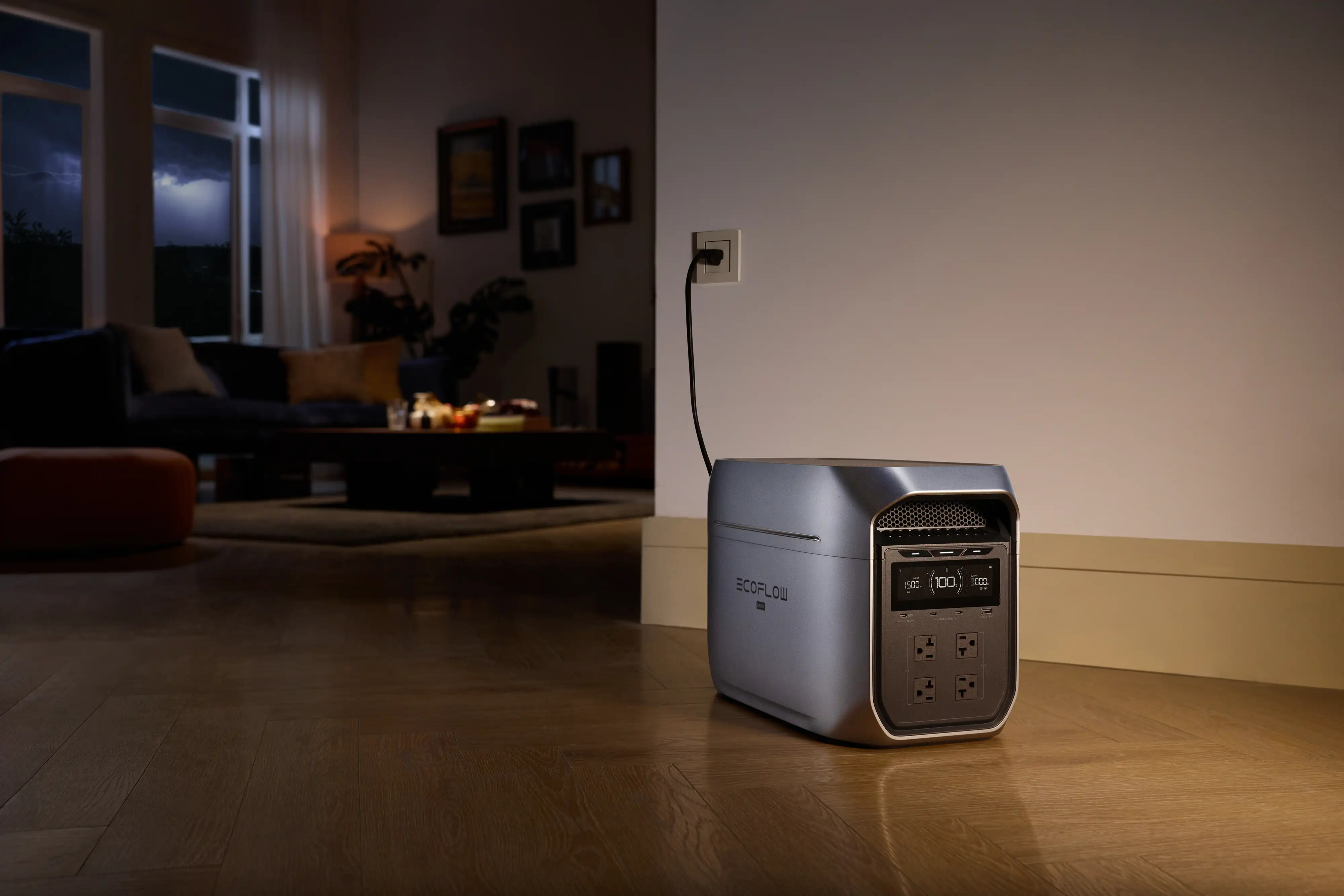
The EcoFlow DELTA 3 Max Plus Portable Power Station (2048Wh) addresses these essential power requirements by combining high AC output with a moveable form factor. It can operate continuous loads, such as laptops, phones, and Wi-Fi routers, or high-draw resistive appliances like electric kettles and heated blankets. Because battery-powered units produce zero carbon monoxide fumes, the system can be operated inside living spaces, reducing operational noise and eliminating the cold-weather constraints typical of gas generators.
Plan for Extended Winter Outages
Severe ice storms and multi-day blizzards can interrupt grid power for extended periods. During prolonged outages, total power demand increases as full-sized refrigerators, sump pumps, and furnace control circuits frequently join the list of essential loads.
Designed for extended home backup, the EcoFlow DELTA Pro Ultra Whole-Home Backup Power features a modular architecture that lets you scale battery capacity to match your energy needs and expected blackout length. By connecting directly to an essential circuit panel or manual transfer switch, it reliably powers high-draw loads like major appliances, well pumps, and heating equipment during grid disruptions.
How Should Canadians Use the Farmers’ Almanac Winter Forecast?
A seasonal outlook is a planning tool, not a substitute for the short-term forecast; once winter arrives, conditions can turn quickly. The three habits below keep the long-range view and the day-to-day forecast working together.
Monitor Seasonal Forecast Updates
The jet stream meanders through the fall, and the atmosphere’s large-scale patterns move with it, so a seasonal outlook ages quickly. Use the Almanac’s long-range call as your planning baseline, then check the rolling 30-day outlooks issued by regional forecasters to keep the plan honest.
Compare Forecasts With Local Weather
A lake-effect band off Lake Huron might bury Barrie under 40 cm while downtown Toronto sits under clear, frosty skies; Canada’s microclimates can serve up wildly different conditions just fifty kilometres apart. At that scale, a broad-strokes forecast needs local confirmation: when a storm system takes shape, check the Almanac’s call against Environment Canada alerts and local radar.
Adjust Plans for Expected Weather Patterns
Seasonal projections also work as a scheduling tool, letting you finish preventive maintenance before the rush:
Check attic insulation levels and seal up exterior doors ahead of the season's first freezing winds.
Have chimney flues cleaned and tested, replace furnace filters, and make sure the safety shutoff valves move freely.
Check the charge status and cycle health of your home backup batteries.
Stock up on non-perishable food and emergency drinking water.
Conclusion
Treat the 2026–2027 Farmers’ Almanac outlook as a guide for planning, not a prophecy. Whatever the next few months bring, winter rarely goes easy on Canada, and the seasonal forecast calls for stretches of serious cold, heavy snowfall, and rounds of mixed precipitation in several regions. What blunts the impact is preparation: a weather-sealed home, a serviced heating system, backup power charged and ready, and an eye on local alerts. While preparation cannot prevent severe winter weather, it significantly reduces its disruption and severity.
Disclaimer
This article is provided for general informational purposes only. Weather forecasts are subject to change. Readers are encouraged to consult official local authorities, such as Environment and Climate Change Canada (ECCC), for real-time weather updates and professional safety guidance during severe weather events.
FAQ
What Does the Farmers’ Almanac Say About Fall 2026?
The Almanac expects autumn 2026 to shift quickly from mild weather into early frosts across the Prairies and the central provinces, while coastal British Columbia and Atlantic Canada see above-average rainfall.
How Often Are the Farmers’ Almanac Predictions Correct?
The Farmers’ Almanac is actually accurate only about half the time, despite both publications claiming a high rate of accuracy. While the Farmers’ Almanac remains a fun seasonal tradition and a useful tool for general preparation, professional meteorologists from agencies like ECCC and NOAA advise using it as a rough guide rather than a precise forecast.
Which Is More Accurate, Farmers’ Almanac or Old Farmer’s Almanac?
They’re about equally accurate. Independent weather studies covering multiple decades have found little statistical daylight between the two publications’ long-range accuracy.
What’s the Difference Between the Farmers’ Almanac and the Old Farmer’s Almanac?
The Old Farmer’s Almanac dates to 1792 and is now headquartered in New Hampshire; the Farmers’ Almanac followed in 1818 and is now based in Maine. Each relies on its own proprietary formula, built on mathematics and astronomy, and each publishes a dedicated Canadian edition annually.