How Long Does a Home Backup Battery Last During Outages?
- What Determines How Long a Home Backup Battery Lasts in an Outage?
- Calculating the True Runtime for Essential Household Appliances
- Will a Standard Backup Unit Power a Central Air Conditioner?
- How Many kWh Do You Need for 12, 24, or 72 Hours of Backup?
- How Can I Accurately Calculate My Total Household Power Needs?
- How Many Years Will the Internal Battery Cells Last?
- Build a Home Backup Plan That Matches Your Home
- FAQs
A home backup battery can last from a few hours to several days during an outage. The result depends on usable battery capacity, the appliances you keep running, startup surge, room temperature, and how long each device actually runs during the day. In practice, runtime is driven more by load planning than by the label on the battery.
Safety Note: The estimates below are for planning only. They are not installation instructions. If your setup involves 240V circuits, panel connection, transfer equipment, central air conditioning, well pumps, or any permanent electrical work, have the design reviewed and installed by a qualified electrician under local permit and code requirements.
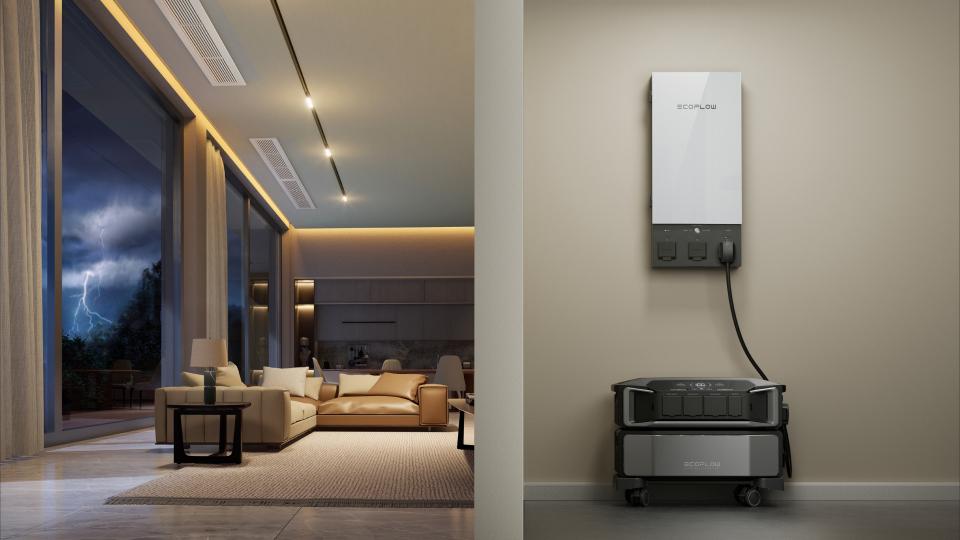
What Determines How Long a Home Backup Battery Lasts in an Outage?
Before looking at appliance runtimes, it helps to separate three things that homeowners often combine: energy capacity, power output, and surge capability. A battery may have enough stored energy for a full day, yet still fail to start a compressor or pump if its inverter cannot handle the startup event. That is why a home backup battery should always be sized in both kWh and kW.
The main factors are:
Usable capacity in kWh This is the energy you can actually draw after reserve settings and conversion losses.
Continuous load in watts Fridge, lights, router, and furnace blower are usually manageable. Add electric heat or large cooling loads, and the runtime drops quickly.
Startup surge Refrigerators, sump pumps, well pumps, and central AC units can pull a brief but very high current when the motor starts.
Duty cycle Many appliances do not run nonstop. A fridge cycles. A sump pump may sit idle for hours, then run hard during heavy rain.
Temperature and battery care Cold weather can reduce charging performance, and sustained heat can shorten battery life over time.
In many homes, a 10 kWh system can cover basic essentials for about a day if large heating and cooling loads stay off. That does not mean every 10 kWh battery will do the same job in every home. It means the planning conversation should start with essential circuits, not with the total monthly bill.
For homeowners who want a whole-home market reference, EcoFlow DELTA Pro Ultra shows how the category scales. It is positioned at 6 to 90 kWh and 7.2 to 21.6 kW, with extended backup and support for heavy household loads. That reinforces the same point: capacity, output, and appliance mix have to be matched together.
Calculating the True Runtime for Essential Household Appliances
Once the sizing logic is clear, the next step is to estimate how long a battery can run the appliances that matter most during an outage. In most homes, that includes the refrigerator, internet equipment, lighting, and in some cases a sump pump or well pump.
Planning Estimates for Common Outage Loads
Planning note: The table below is for rough sizing only. Actual demand varies by model, season, age, thermostat setting, and duty cycle. Verify the appliance label, manual, or plug-in meter before buying a battery backup for home use.
Appliance | Typical Planning Input | Daily Energy Planning Note |
|---|---|---|
Refrigerator | 100 to 250W average while cycling | About 1 to 3.5 kWh/day in many homes |
Wi-Fi router + modem | 15 to 25W | About 0.4 to 0.6 kWh/day |
LED lighting, 6 to 10 bulbs | 50 to 100W while on | About 0.3 to 0.8 kWh/day |
Gas furnace blower | 400 to 800W while running | Strongly weather-dependent |
Sump pump, 1/3 HP class | often 600 to 900W running | Daily energy depends on rain and cycling |
Well pump | often 700 to 1200W running | Daily energy depends on pump duration |
Window AC | often 500 to 1500W running | High daily draw in hot weather |
A refrigerator is a good example of why runtime cannot be predicted from nameplate watts alone. It cycles, so real daily consumption is often far lower than “running watts × 24.” Community feedback often reflects that pattern. Users report better-than-expected fridge runtime on battery because the compressor turns off for long stretches. Those reports are useful as field feedback, but they are still anecdotal and should never replace label data or meter readings.
Pumps are less forgiving. A sump pump or well pump may look modest on paper, then fail a home battery backup plan because of startup surge. Community reports repeatedly flag surge as the reason many portable systems trip when a pump starts. Treat those reports as a warning sign, then verify the pump’s electrical data with the nameplate and installation paperwork.
Will a Standard Backup Unit Power a Central Air Conditioner?
The direct answer is yes, some systems can, but many standard units cannot. A central AC system often needs 240V service, solid continuous output, and enough surge capability to cover compressor startup. Locked-rotor amps can be far above the normal running load. A soft starter can reduce that initial spike and make the system easier for a battery inverter to handle.
Three Checks Before Counting on Central AC
Check running load Review condenser and air-handler power draw.
Check startup demand Compressor startup may exceed the inverter’s short-duration surge limit.
Check connection requirements Many central AC systems involve 240V circuits and permanent electrical work. That moves the project into code, permit, and inspection territory.
This is also where compliance matters most. Large-load projects should be checked by a licensed professional before purchase, not after delivery. That helps confirm compatibility, installation method, and local approval requirements before the system is locked in.
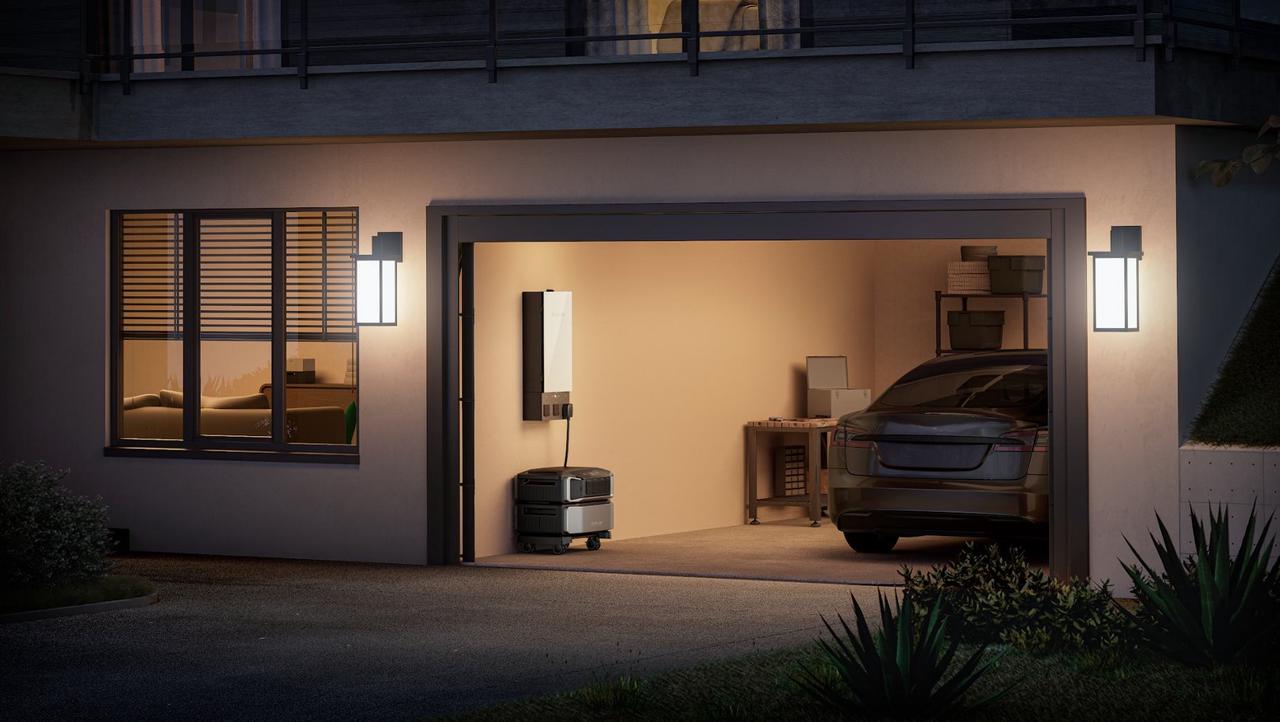
How Many kWh Do You Need for 12, 24, or 72 Hours of Backup?
After the load list is drafted, the next job is matching the battery to the outage duration you actually want to cover. A battery sized for one night is very different from a battery sized for a three-day weather event. In Canada, this distinction matters because many homes use a mix of natural gas and electricity, so the right battery size depends on the circuits you need alive during the outage, not on total annual household energy use.
A practical planning range looks like this:
12 hours: around 4 to 8 kWh for lighter essentials in a smaller home
24 hours: around 8 to 15 kWh for a fridge, internet, lighting, and a few additional essentials
72 hours: often 20 to 40 kWh or a recharge source if you want multi-day support for essential circuits through a long outage
These are still planning ranges, not guarantees. A rural home with a well pump and furnace blower can need more battery than an urban condo with gas cooking and no drainage pump. A basement home with an active sump pit during spring storms can also need much more than the monthly bill suggests. That is why whole-house battery backup estimates should be built from circuit lists and daily use assumptions.
How Can I Accurately Calculate My Total Household Power Needs?
A battery backup for a house should be sized from a list of actual loads, real running hours, and a clear reserve margin. The core formula is simple: power × time = energy.
Quick Formula
Daily kWh needed = Σ (Running Watts × Hours Used) ÷ 1000
Then add:
Conversion and wiring losses
Reserve margin
Separate surge check for motors and compressors
Example 1: Small Urban Essentials Setup
Assumptions
Load | Running Watts | Hours Used | Daily Energy |
Refrigerator | 120W average | 24h | 2.88 kWh |
Router + modem | 20W | 24h | 0.48 kWh |
LED lighting | 60W | 6h | 0.36 kWh |
Phone + laptop charging | 100W | 4h | 0.40 kWh |
Subtotal: 4.12 kWh/day
Add 10% system loss: 4.53 kWh/day
Add 15% reserve: 5.21 kWh/day target
Example assumption: No air conditioning, no electric heating, no pump loads, normal indoor temperature, and refrigerator energy expressed as average daily use. This is a realistic starting point for a modest home battery backup plan.
Example 2: Rural Home with Water and Drainage Loads
Assumptions
Load | Running Watts | Hours Used | Daily Energy |
Refrigerator | 150W average | 24h | 3.60 kWh |
Well pump | 800W | 1h total/day | 0.80 kWh |
Sump pump | 700W | 0.5h total/day | 0.35 kWh |
Furnace blower | 600W | 6h | 3.60 kWh |
Router + lights | 100W | 8h | 0.80 kWh |
Subtotal: 9.15 kWh/day
Add 10% system loss: 10.07 kWh/day
Add 15% reserve: 11.58 kWh/day target
Example assumption: Pump energy is based on total daily run time, but surge must be checked separately. If the well pump or sump pump has a high startup current, inverter headroom can be the limiting factor even if the kWh total looks acceptable.
These examples show why two homes with similar square footage can need very different battery sizes. The most reliable input sources are the appliance label, the manual, a plug-in meter, or a panel monitor. Online calculators are helpful for first-pass screening, but they should not be treated as installation approval.
How Many Years Will the Internal Battery Cells Last?
Runtime during one outage and battery life over many years are different questions, so they should be evaluated separately. For home energy storage, long-term value depends on chemistry, temperature, cycling depth, charge behavior, and the quality of system design and thermal management.
A practical answer is this: many residential batteries are sold with multi-year warranties, often around 10 years, but real service life depends on the use pattern. A backup system used only for outages typically ages differently from a system cycled every day for self-consumption or time-of-use savings. High heat and repeated deep discharge are harder on the cells over time.
For planning, it is better to think in terms of capacity retention and expected operating pattern than in terms of one universal “years” number. If your goal is outage protection, a correctly sized system that avoids chronic deep discharge will generally hold value longer than an undersized one pushed hard every week.
Build a Home Backup Plan That Matches Your Home
A home backup battery lasts longer during outages when the load plan is disciplined, the surge loads are checked early, and the system is sized around the circuits that truly matter. For most homes, the best process is simple: list essentials, calculate daily kWh, verify startup loads, then confirm code and installation requirements before purchase. That gives homeowners a much safer path to a reliable home battery backup system.
Important Compliance Reminder: Local rules vary by province, municipality, utility, and installation type. Permanent wiring, panel work, transfer equipment, interconnection, and 240V loads should be reviewed under the applicable electrical code and permit process before installation.
FAQs
Q1. Do I need a permit for a home battery backup in Canada?
Yes, often you do for permanent electrical work. Panel connections, transfer equipment, new circuits, and many 240V installations usually fall under permit and inspection rules. Requirements vary by province and municipality, so confirm the scope before buying equipment. That step prevents expensive redesigns and helps keep warranty, approval, and inspection issues under control.
Q2. Can I install a battery system in a basement utility room or closet?
Sometimes, but not automatically. Placement depends on the product listing, local code, working clearances, separation requirements, and the room itself. Some jurisdictions have specific residential occupancy rules for battery energy storage. Always confirm allowed locations before purchase, especially for below-grade spaces, closets, and rooms connected to living areas.
Q3. Should I size my system from the utility bill or from the circuit list?
Use the circuit list first. Your bill shows total consumption, but outage planning is about the loads you must keep alive. A battery sized from the bill alone often ends up either too small for critical circuits or larger than necessary. Start with the outage loads, then compare the result with your broader household usage pattern.
Q4. Will solar panels recharge the battery fast enough during a winter outage?
Sometimes, but do not count on full recovery every day. Winter output depends on snow cover, daylight hours, roof angle, cloud cover, and temperature. Size the battery to survive overnight and poor-weather periods first. Treat winter solar as helpful recharge support, not as a guaranteed daily replacement for all outage consumption.
Q5. What certification marks or approvals should I check before buying?
Look for equipment that is approved for the intended application and accepted in your jurisdiction. Your installer or inspector should confirm that the exact product and connection method are acceptable for your local project.