Cold Weather Battery Performance: How to Maximize Power Station Runtime on the Ice
Whether you're ice fishing, winter camping, or simply trying to ride out a power outage during freezing temperatures, you may find your gear is pushed to the limit, with batteries being no exception.
Cold temperatures can create measurable drops in your power station's output and runtime, but knowing why this happens and how you can fight back will keep your setup running all day.
Here are some practical tips to get the most out of your portable power station (PPS) when it's freezing out.
How Cold Weather Affects Battery Performance
Portable power stations and storage batteries rely on a chemical reaction to generate and deliver power. Unfortunately, cold weather can significantly slow down these reactions.
Lithium-ion cells, which most portable batteries use, lose useful capacity when the temperature drops.
The colder it gets, the more pronounced the loss becomes.
Once you pass freezing, the internal resistance increases as the battery works harder to push out the same amount of power.
Capacity can also be impacted; however, it's usually temporary. If you can warm the battery back up, you'll recover much of its rated output.
If you're using your PPS in sub-zero conditions, performance can fall well below the manufacturer-rated specs. So plan ahead to avoid issues.
Why Portable Power Stations Are Valuable in Winter
Benefits of portable power stations in winter:
Provides a reliable backup power source if a power outage occurs
Can be taken with you on your trips in cold conditions
Easy to pack into your truck or sled
Minimal nuisance with low noise
Very versatile with multiple charging ports
A whole home generator can keep your household running smoothly if the power goes out during winter, but a portable power station has the unique ability to travel with you to the ice hut, the campsite, or the trail head. You can easily fit it in a truck bed or sled without sacrificing too much space.
It produces no fumes, requires no fuel cans, and interferes with no noise restrictions. It's safe and easy to run indoors or in enclosed shelters (following precautions). With so many output ports, you can charge a wide range of devices simultaneously, from heaters and augers to fish finders, lighting, and phones.
It also doubles as an extra layer of emergency backup power at home if the winter storms knock out your grid.
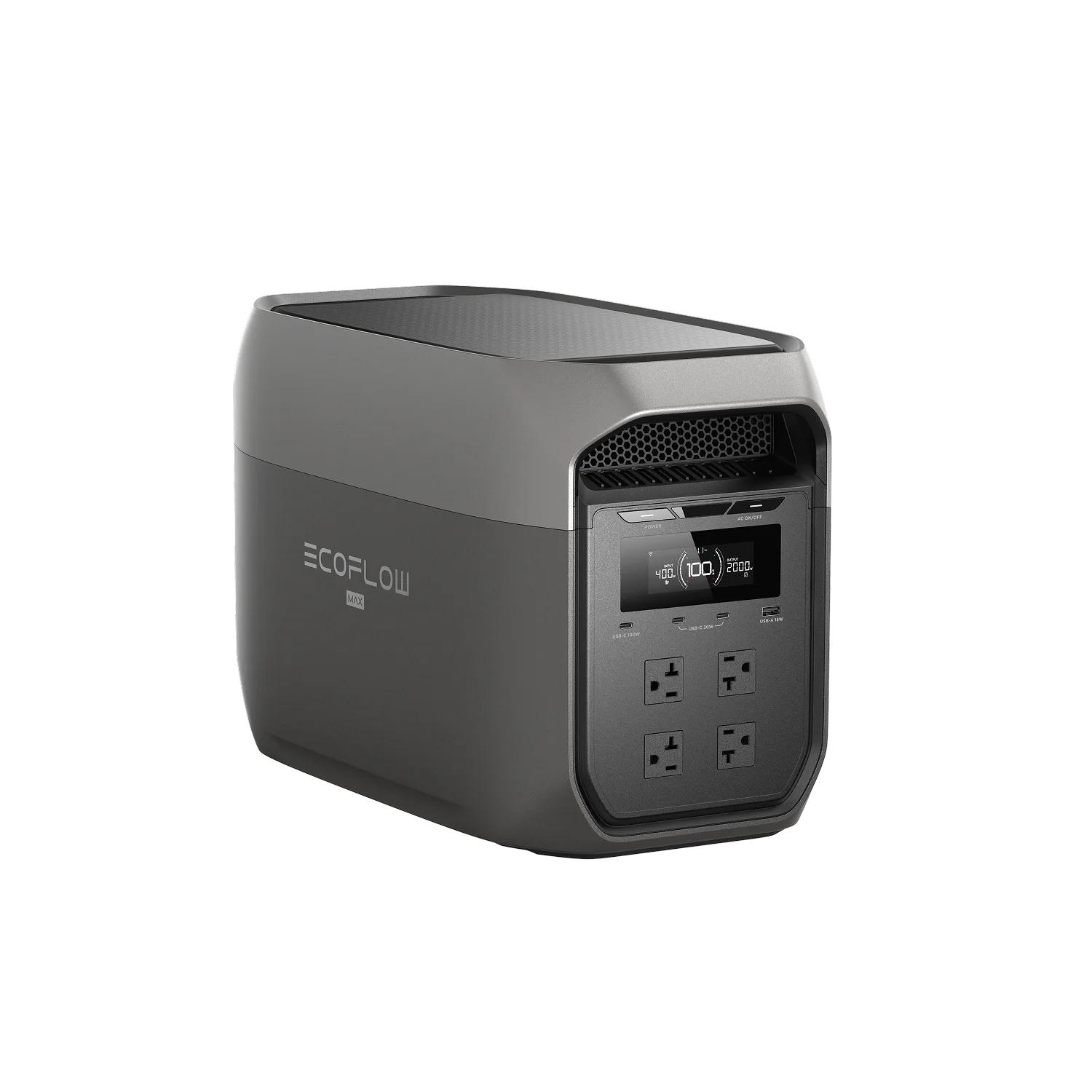
The EcoFlow DELTA 3 Max Series PPS can be enhanced with Storm Guard Mode in the EcoFlow app; when activated, it monitors severe weather alerts and automatically triggers AC charging to ensure your unit is fully prepared ahead of an outage.
Common Devices Powered During Winter Activities
One power station can handle both winter storm backup scenarios and recreational activities.
Portable heaters: Propane-assist or electric heaters are essential for ice huts and tent shelters.
Communication device charging: Keep your phone, tablet, GPS device, and two-way radios charged for safety and communication.
Portable camp supplies: Power up your mini kettle, coffee maker, or induction plates for warmth and morale in winter camping.
Ice augers: Electric ice augers draw high power on startup, but they're much faster and cleaner than gas alternatives.
Fishing gear: Bring your fish finders, underwater cameras, and sonar units, knowing you'll have the power to recharge them if needed.
4 Tips to Maximize Power Station Runtime in Cold Weather
Tired of letting cold weather cut your days short on the ice? Use these habits to stretch out your runtime…
Tip 1) Use Solar to Recharge
Cold temperatures actually make panels work more efficiently, since photovoltaic output improves when conditions are cool and clear.
When your power station's battery is starting to run out, connect it to solar panels to recharge. Angle them toward the low winter sun, brushing off any accumulated snow to maximize efficiency.
Tip 2) Keep the Power Station Warm
Keep your portable power station inside your vehicle or ice hut overnight. Don't leave it out in sub-zero temperatures.
Using an insulating carry bag or wrapping the unit in a blanket can also reduce heat loss during use.
Don't start the day with a cold, depleted battery – start with a fully charged, room temperature battery before heading out.
Tip 3) Reduce Your Power Load
Prioritize which devices need to run simultaneously versus which ones can cycle on and off.
By minimizing high-draw items (like augers or electric heaters), you can save power load while running lower-wattage alternatives (like heated blankets) with extended runtime.
Other small tweaks, like dimming lighting and charging devices during peak solar hours or when driving to the lake, can keep you out longer.
Tip 4) Charge Before You Go and Top Off as Needed
Head out the door with a 100% charge. It's the most effective way to maximize your available run time in cold conditions. Pre-charging at room temperature will give you full rated capacity.
If your power station also supports car charging, pop it off during the drive out and back, minimizing the time it has to charge in the cold.
Don’t wait until the battery is completely dead to recharge. Topping it off little by little throughout the day can help.
Frequently Asked Questions
Why Do Batteries Lose Power in Cold Weather?
Cold weather causes the electrochemical reactions inside lithium-ion cells to slow down. Those slowed reactions increase internal resistance and reduce how much current the battery can deliver.
Fortunately, capacity loss in the cold is usually reversible. The battery will return to near-normal performance once warmed up. Avoid consistent exposure to extreme cold over time to avoid long-term degradation.
How Can You Extend Battery Runtime During Winter Activities?
Extend your battery's runtime by: pre-warming it before heading out, minimizing the load by staggering hydro devices, using low-power alternatives where possible, and using solar panels to offset your consumption throughout the day.
The single most important factor, however, is starting every trip at a full charge.
Final Thoughts
Cold weather is hard on batteries, but you can still manage battery performance with the right approach. Keep it stored where it's warm, manage your load thoughtfully, recharge with solar, and fully pre-charge it before you head out to make the biggest difference.
If you need a high-capacity unit that's built for demanding conditions like outdoor winter activities, the EcoFlow DELTA 3 Max Plus offers 2,048Wh capacity and up to 3,000W output.
It's ready to handle a full day on the ice, and with a little bit of preparation and the right portable power station, you'll enjoy interruption-free winter fun.