The Best Portable Power Stations in Canada for 2026
- What Should You Look for in a Portable Power Station?
- Which EcoFlow Power Station Is Best for Camping and Outdoor Adventures?
- Which EcoFlow Power Station Is Best for Everyday Backup and Versatility?
- Which EcoFlow Power Station Is Best for Whole-Home Backup?
- How Does EcoFlow's LFP Battery Technology Handle Canadian Winters?
- Frequently Asked Questions
- The Right EcoFlow Power Station Keeps You Ready for Anything, Anywhere in Canada
If you’re looking for a portable power station, you might be overwhelmed by the number of choices available. With so many specifications to peruse, deciding which power station is best for your needs and budget can be difficult.
This guide outlines the key factors you need to consider when browsing portable power stations. It also covers the best models in 2026 for camping, backup power versatility, and whole-home recovery.
What Should You Look for in a Portable Power Station?
With so many portable power stations available in Canada, narrowing your options down can be challenging.
Keep these factors in mind as you narrow down the right one for your needs:
Power Output (W)
Power output, measured in watts (W), tells you what a station can run at once. A 1000W unit comfortably handles phones and laptops, while small appliances and portable heaters need closer to 2000W.
Surge capacity matters too: it's the maximum spike a unit can sustain without tripping. A refrigerator might need up to 2200W to start, even though it only draws 700W to run.
Battery Capacity (Wh)
Battery capacity determines a power station’s maximum runtime. Lightweight models offer 200–500 watt-hours (Wh), enough to recharge a phone two or three times, while 1000–1500Wh units can run laptops and multiple camping appliances.
Heavy appliances and power tools call for 1500–5000Wh, and anything above that can often power an entire home during an outage.
Charging Options
Charging flexibility is another key factor when choosing a portable power station. Some units only recharge via a wall outlet or generator, while others add car charging and solar panel integration.
Durability and Weather Resistance
For outdoor use, choose a unit tested against dust, moisture, and heavy impacts so it can withstand Canada’s fluctuating conditions. An LFP battery is also worth prioritizing, since it holds up through temperature and weather extremes like winter storms.
Port Variety
Finally, match the port selection to your devices, such as 12V carports, USB-C, USB-A, and AC outlets, so you can power what you actually need on the move.
Which EcoFlow Power Station Is Best for Camping and Outdoor Adventures?
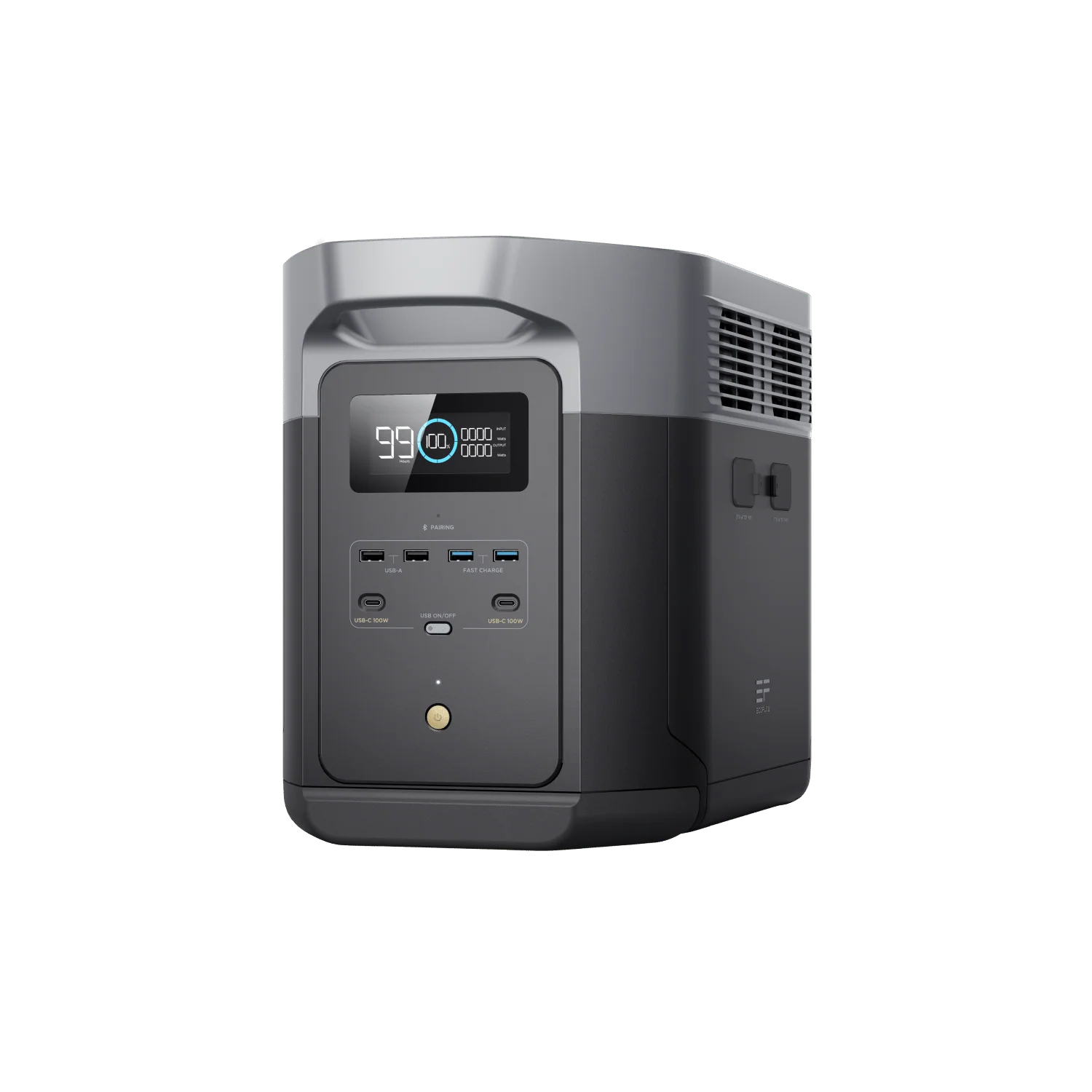
The best power station for car camping really depends on your adventure style, but the EcoFlow DELTA 2 Max Portable Power Station suits most outdoor setups.
It delivers 2400W of continuous output with a 4800W surge, enough for laptops, phones, and small appliances like mini fridges and electric grills. Its 2048Wh battery expands to 6144Wh for days or weeks of camping power.
Recharge to 80% in just over an hour via an AC outlet, and add solar panels up to 1000W for charging on the go.
At a quiet 30dB, it's also fire and moisture resistant, dust-proof, and built with a stable LFP battery that handles hot and cold climates.
Key Features:
2400W continuous output with 4800W surge capacity
Battery capacity of 2048Wh expandable to 6144Wh
Noise levels under 30 dB
Fast car charging
Durable LFP battery with over 3000 cycles
15 output ports, including 6 AC outlets
Which EcoFlow Power Station Is Best for Everyday Backup and Versatility?
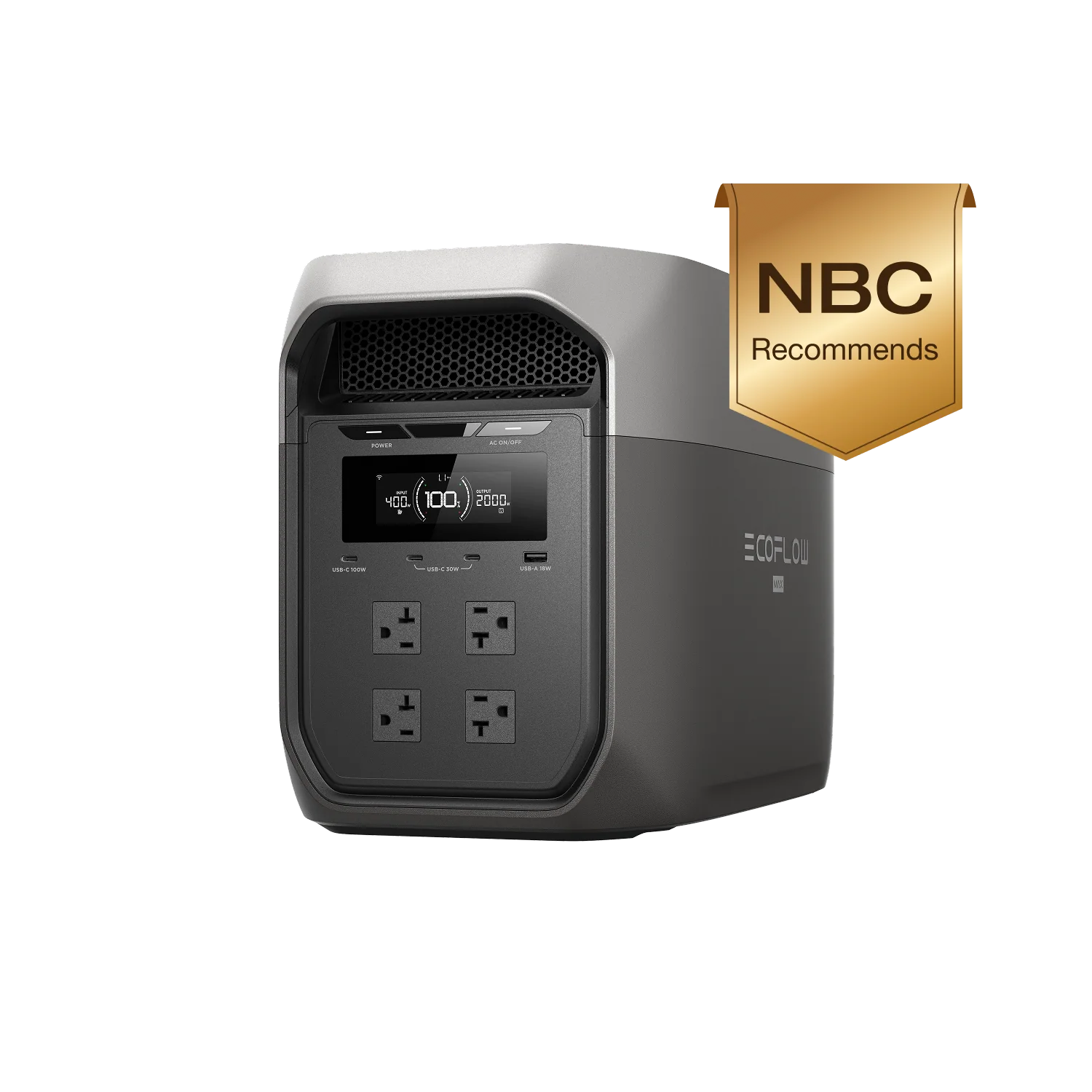
If you’re looking for a versatile backup power solution that can run essential devices and equipment during a power outage, the EcoFlow DELTA 3 Max is a solid choice.
This portable unit weighs 44.8lbs (20.3kg), light enough to move from room to room or outside with ease. It delivers 2400W of continuous output (4800W surge), sufficient for most household appliances, and it supports devices up to 3400W with X-Boost mode for heavier loads like refrigerators and washers.
With a battery capacity of 2048Wh, the EcoFlow DELTA 3 Max keeps routers, kitchen appliances, medical equipment, and office hardware running for several hours during a blackout. You can scale this capacity up to 10kWh with an EcoFlow Smart Generator, ideal if your region is prone to grid issues or severe weather events.
Key Features:
2400W continuous output with 4800W surge capacity, up to 3400W with X-Boost
Battery capacity of 2048Wh, scalable up to 10kWh
Recharges to 80% in 68 minutes via AC outlet
Can be integrated with solar panels up to 500W
10ms UPS auto-switch keeps sensitive electronics running during outages
Durable LFP battery with a 5-year warranty
Which EcoFlow Power Station Is Best for Whole-Home Backup?
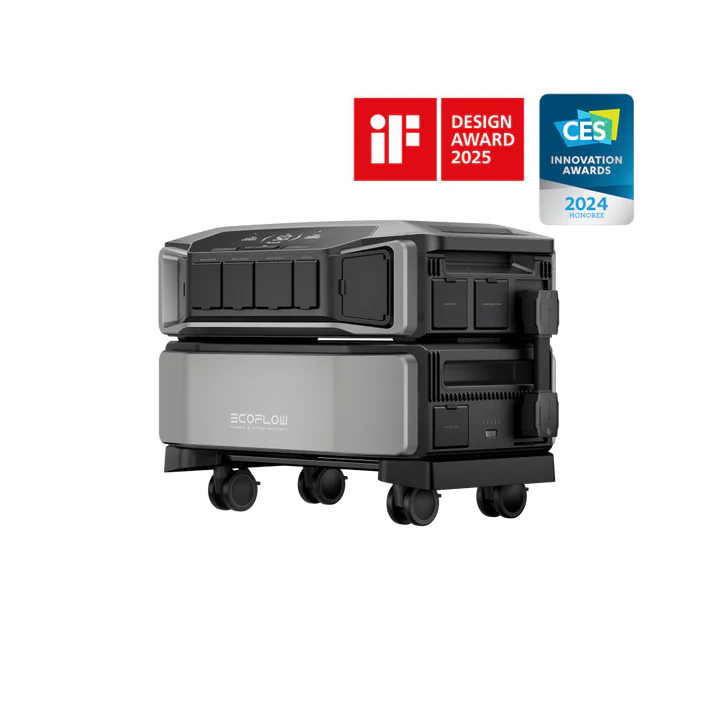
The EcoFlow DELTA Pro Ultra is a strong fit for a whole-home backup power solution, running at a baseline output of 7.2kW that expands to 21.6kW, enough for your entire home, heavy appliances, and a centralized HVAC system.
Its 6kWh battery sustains your home through an extended blackout, and capacity expands to 90kWh for weeks of runtime.
Pair it with solar panels rated 5.6kW–16.8kW to cut your reliance on the grid over time.
Key Features:
7.2kW–21.6kW output with up to 3 inverters
Battery capacity of 6kWh expandable to 90kWh
Rechargeable via AC outlet, generator, or vehicle charging
Can be integrated with solar panels up to 16.8kW
Durable LFP battery
How Does EcoFlow's LFP Battery Technology Handle Canadian Winters?
Lithium Iron Phosphate (LFP) batteries are among the safest and most effective battery technologies when it comes to managing the harsh Canadian winter climate. Because LFP can handle extreme temperature fluctuations without becoming unstable, LFP batteries remain operational even in sub-zero conditions.
EcoFlow's LFP batteries are rated to discharge in temperatures as low as -10°C (14°F), though available capacity and output can be reduced in extreme cold.
However, it's worth noting that you shouldn't recharge the battery itself in temperatures below freezing. Instead, you should recharge your portable power station in a heated environment.
Frequently Asked Questions
Can You Bring a Portable Power Station on a Plane in Canada?
You may face some restrictions on the battery size when travelling on a plane with a portable power station in Canada. If the unit is under 100Wh, it must travel in your carry-on. Units with 100–160Wh require prior approval from the airline, and anything larger than 160Wh must be shipped as cargo.
Can You Charge an EcoFlow Power Station With Solar Panels in Canada?
You can integrate most of EcoFlow’s portable power stations with solar panels that enhance their versatility and make charging on the go possible. For example, the EcoFlow DELTA 2 Max integrates with solar panels up to 1000W, while the more robust EcoFlow DELTA Pro Ultra integrates with panels up to 16.8kW.
The Right EcoFlow Power Station Keeps You Ready for Anything, Anywhere in Canada
With a portable power station, you can embark on outdoor adventures in Canada’s wilderness without sacrificing essential home comforts.
EcoFlow has portable power stations to suit all needs, adventure styles, and budgets, whether you just need a small unit to recharge your phone or a larger solution to operate cooking appliances, laptops, and entertainment devices.