Battery-Only Backup Without Solar: When It Makes Sense and What to Expect
A home battery backup without solar provides reliable power during outages and helps cut electricity bills through smart charging, all without needing solar panels. This standalone approach works great for many homeowners who want energy security but aren't ready for solar. Let's look at when battery backup for the home makes sense on its own and what you can realistically expect from these systems.

When Does Home Battery Backup Without Solar Make Sense?
You do not need solar panels in order to benefit from a battery system. There are a number of situations in which a battery backup system alone would be the better choice than installing solar panels and a battery system together.
Frequent Power Outages in Your Area
If you live in a neighborhood where outages occur regularly—whether it's due to natural disasters like hurricanes or wildfires, or because of aged grid infrastructure—having a home battery backup system means you can rest easy. Many battery backup systems can switch over automatically with minimal interruption, depending on the model and integration setup.
In many setups, the switchover is fast enough that disruption is minimal, and for those of you living in areas where outages occur with regularity (for example, parts of Atlantic Canada, Ontario, Quebec, British Columbia, and Alberta, depending on storm season and local grid conditions), you can also sidestep typical problems like food going bad or missed work days.
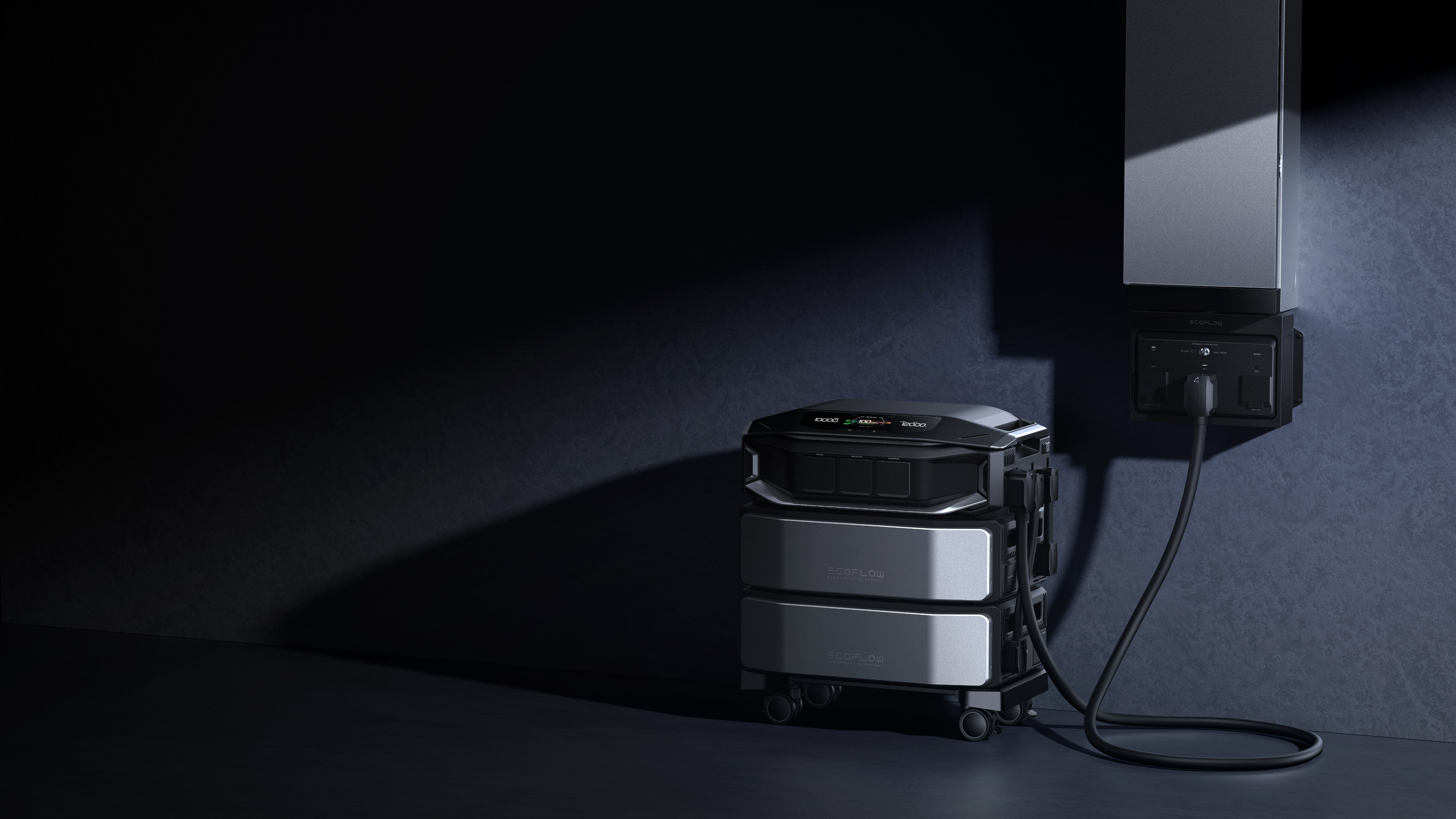
And if you’re trying to keep larger loads running during outages (like central AC or a heat pump), a higher-output system such as the EcoFlow DELTA Pro Ultra X is designed to support split-phase 120V/240V backup and can scale up to whole-home operation when paired with the right home integration setup.
High Electricity Costs with Time-of-Use Rates
Under Ontario’s Regulated Price Plan (RPP) Ultra-Low Overnight (ULO) pricing, the ultra-low overnight period runs every day from 11 p.m. to 7 a.m., while on-peak pricing applies on weekdays from 4 p.m. to 9 p.m. ULO also includes mid-peak and weekend off-peak periods, and rates may be updated by the Ontario Energy Board over time.
A home battery backup solution without solar energy allows you to charge during low-cost periods and use energy from the battery during peak periods when energy is expensive. Sometimes, the peak rate is considerably higher than the rate for off-peak periods.
Roof Space or Lack of Suitable Sun Conditions
A whole-house battery backup with solar panels may not be feasible if your roof is facing the wrong direction, is too shaded, or doesn’t have enough space for panels, or if you live in a condo or homeowners association where there are restrictions on solar panels. In such a case, a whole-house battery backup without solar is the best solution.
Temporary Solution Before Solar Installation
Homeowners may have the intent to install solar power at a later date, but require a power backup solution. Beginning with a battery installation is a good starting point, and this is especially true if one is waiting on permits, saving money, or spreading payments over time. Many battery setups can be designed to add solar later, but compatibility depends on the system architecture and installation plan.
Complementing Existing Backup Power Solutions
Do you already have a generator? A battery bank can complement it to handle short power outages on its own, while your generator is poised to handle larger situations. With a battery bank to supplement a generator, you are not wasting fuel for a short power outage, but have plenty of power availability during a longer outage.
Some battery systems (including the EcoFlow DELTA Pro Ultra X) can also accept generator charging, which makes “battery + generator” a practical path for long-duration outages without running fuel nonstop.
If you have frequent power outages, are dealing with time-of-use rates, or have other reasons that make solar power not feasible for you, then a battery system is a valuable solution for today.
What Are the Benefits of Whole House Battery Backup Systems Without Solar Power?
If you’re considering a battery-only setup, here is what you can expect.
Contemporary Grid Independence & Reliability
The large benefit is that you have the essentials functioning while the power is out. Your fridge will remain cold, you will have access to the internet for your job, and your healthcare equipment will function. You will not be completely without power since you will not have to think about fuel when the power is out or conserve gas.
Energy Savings through Load Shifting
As more time-of-use rates emerge, the savings from shifting the load add up. The battery charges during the off-peak hours, and the house runs on that energy during the peak hours, reducing the difference in the rates. How much you save depends on your rate plan and how often you cycle the battery.
Less Upfront Investment Compared to Solar and Storage Combined
Solar + storage can be a significant upfront investment, often much higher than a battery-only backup setup. A battery backup solution alone can be a relatively more affordable means of having a power backup solution without having to install solar panels.
Smoother Installation
With solar power, there’s roof work, permitting, interconnection, and perhaps HOA approval. That’s not required for a battery system. Many battery-only installs can be completed quickly once permits and equipment are in place, but timelines vary, especially if panel upgrades are needed. That’s faster than solar power, and it avoids roof penetrations, which can simplify installation compared to solar. That’s why it’s a good choice if solar power doesn’t interest you.
How Much Does Home Battery Backup Without Solar Cost?
But now, let’s get real with numbers so that you can plan confidently.
Average Costs per System Size
Costs vary by brand, capacity, whether you need a gateway/sub-panel, permit fees, labor rates, and any electrical upgrades. In Canada, a battery-only system can range from several thousand dollars for smaller “essential loads” setups to tens of thousands for higher-capacity or more integrated configurations, depending on the home.
Cost of Installation and Labor
Labor will depend upon the electrical panel you have, as well as how complicated the installation is going to be. Older houses may require electrical panel upgrades, which will help increase costs depending on the rates within your area. It is helpful to get three different quotes from certified experts.
Incentives & Tax Credits Available
Canada Greener Homes Loan: NRCan describes the loan as interest-free up to $40,000 with a 10-year term, but program availability can change, and the application portal has been subject to closures. Verify current status before planning your budget.
BC Hydro rebates: BC Hydro offers up to $5,000 for eligible battery installations when enrolled in Peak Saver, and eligibility rules vary by installation type—confirm details before purchase.
Long-Term ROI and Payback Period
But without solar value, payback is contingent upon usage of the battery. If it is for backup purposes such as insurance, it is less about ROI and more about comfort.
For people who use load shifting regularly and have large rate differentials, payback can vary widely—from relatively quick savings in high price-spread areas to a much longer timeline in regions with smaller rate differences.
What You Can Expect from Battery Backup Home Performance
This assists in creating real expectations so that no surprises are involved, and it describes how the system functions.
Backup Time & Power Rating
Battery runtime depends on two things:
Battery capacity (kWh)
Your average load (kW)
A simple estimate is:
Runtime (hours) ≈ Battery capacity (kWh) ÷ Average load (kW)
For example, a mid-sized battery system can keep essential circuits running for a meaningful period, but heavy loads can shorten runtime quickly. Your installer can help decide what goes on the “critical loads” panel so you don’t overbuy—or end up disappointed. Real-world runtime can also be shorter if the system reserves capacity or if you add high-wattage loads unexpectedly.
Time to Charge from the Grid
When the power is restored, it may take a number of hours to recharge the system completely. This depends on the charging rate of the battery as well as the requirements of the house. The charging system will consume several kilowatts during the charging process. It is advisable to recharge during off-peak hours.
How Many Appliances Can You Support
A standard residential backup system will allow you to power essential circuits without the solar power input, such as the refrigerator, freezer, Internet modem, some lights, the TV, and some outlets. Air conditioning can draw significant power and may shorten runtime considerably unless the system is sized for larger loads. Most installers can assist you in identifying the most critical circuits you should power.
System Lifetime & Warranty
Many modern lithium battery systems are designed for long service life, and warranties vary by manufacturer and usage terms. Always check the brand’s warranty period, cycle limits, and temperature requirements. However, you can expect some retention of capacity after the warranty period, depending upon how you treat the battery as well as the temperatures you are using it in.

Take Control of Your Home’s Power
A whole-home battery backup without solar makes perfect sense when you face regular outages, deal with time-of-use rates, or can't install solar panels. Ready to explore your options? Check out EcoFlow's battery backup offerings to fit your needs and budget best.
FAQs
Q1: Can I Install a Home Electric Battery Backup System by Myself to Save Money?
Normally, the process of installing a battery backup system is way more complicated than replacing a circuit breaker or installing a smart switch. You’re working with high-voltage materials, heavy-duty equipment, and components that have to be compatible with your main panel, inverter, and regulations in your area. Chances are you will have to hire a licensed electrician, go through inspection, and approval from your local building department to turn it on. But with the EcoFlow DELTA Pro Ultra X, things are different. Because it boasts a hours-long installation within 7 days.
Q2. What Will Happen to My Home Battery Backup System in Winter?
For lithium-ion batteries, cold temperatures can decrease the capacity, and charging and discharging can be more difficult. If it is below freezing, the Battery Management System will typically reduce the power to protect the batteries, so even though the charge level appears to be normal, you might not be able to use as much of it. Charging batteries when they are cold can cause charging to slow down or stop.
Q3. Will Installing Home Battery Backups Without Solar Panels Increase the Resale Value of My Home?
Yes, but not necessarily and by itself. It depends on the frequency of power outages in your region, the price of electricity in your area, and the requirements of the buyer in the market. For those homes where power outages occur regularly due to weather conditions, forest fires, and an unstable power distribution system in the region, the availability of power for essential appliances such as the refrigerator, lighting, telephones, and medical equipment could be an attractive feature for potential customers.