Whole House Battery Backup 2026: How to Power Your Entire Home During Any Outage
- What Is a Whole House Battery Backup System?
- How Much Power Does a Whole House Battery Backup Need?
- What Can You Run on a Whole House Battery Backup?
- How Long Can a Whole House Battery Backup Power Your Home?
- How Do You Size a Whole House Battery Backup System?
- Does a Whole House Battery Backup Work with Solar?
- Frequently Asked Questions
- Keep Your Home Safe, Save Money, and Gain Energy Independence
Power outages are on the rise across the United States, and so are your electrical bills. However, you can increase your home’s resilience and energy independence with a whole-house battery backup.
Learn what these systems are, what you can run with them, and how to correctly size one for your home.
What Is a Whole House Battery Backup System?
A whole-house battery backup uses large-capacity batteries to store energy from the grid or solar panels so you can use it to run your home during power outages, for off-grid living, or during peak electricity rates to save money.
Because they’re typically tied into your home’s electrical circuits, they keep your entire home running when the grid goes down.
Unlike traditional gas generators that start up noisily after the power goes out, a battery-operated whole-home backup power system can be set up to switch over almost instantaneously, fast enough to protect sensitive electronics.
How Much Power Does a Whole House Battery Backup Need?
The average American household uses about 10,500 kilowatt-hours of electricity per year. But what you need depends on your daily energy load and backup goals.
First, here’s a quick primer on terms:
Power is measured in watts (W) or kilowatts (kW, 1000W = 1kW), which, on battery backup, is how much continuous output it has to run appliances.
Batteries are also measured in watt-hours (Wh) or kilowatt-hours (kWh), which is the energy storage capacity, or how long they last.
To run high-output things like an electric range or central air conditioning, a large system like the EcoFlow DELTA Pro Ultra X Whole-Home Backup Power is best. It starts at 12kW of output, expandable up to 36kW, which will run multiple heavy-duty appliances with ease. It also offers 12kWh to 180kWh of expandable capacity to run large homes during extended outages.

What Can You Run on a Whole House Battery Backup?
Essential Circuits
Your essential circuits include things like lights, routers, home security, and standard wall plugs. A whole home battery or a portable power station will easily handle these.
Heating and Cooling
HVAC systems draw significant power, often needing between 2000W and 5000W when running, with a temporary surge of 3000W to 8000W just to get started. Traditional generators often can't handle the load.
However, a properly sized battery-operated whole-home generator can keep your electric heat going during winter storms and the AC running during heat waves.
Kitchen and Refrigeration
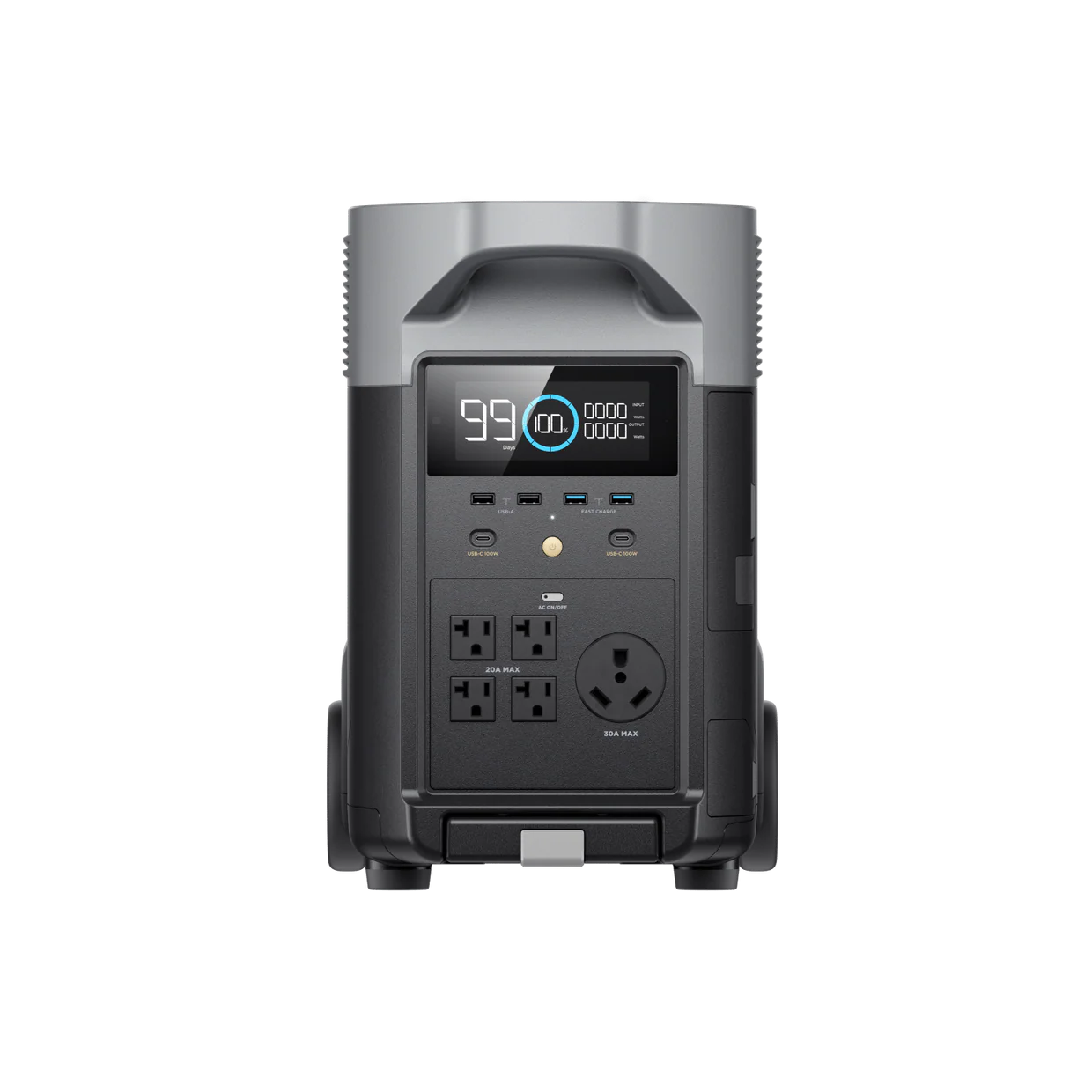
Spoiled food is frustrating, but fortunately, these fridges need less energy than your HVAC, giving you options. You can use a whole-home backup or a portable system like the EcoFlow DELTA Pro Portable Power Station to keep your fridge or other kitchen appliances running.
Medical Devices
For homes relying on oxygen concentrators, CPAP machines, or home dialysis equipment, uninterrupted power is critical. You can also use a smaller dedicated power station or a whole-home backup system.
Home Office
Remote workers need electricity to keep their laptops, monitors, and internet running. Battery backups, either whole-home or portable units, are best for home offices because they avoid the dangerous surges, dips, and dirty power you get from most traditional gas generators.
How Long Can a Whole House Battery Backup Power Your Home?
How long your backup lasts depends on your capacity and energy use.
Generally speaking, a 10kWh battery lasts ~24 hours if you avoid running heavy-duty appliances. If you expand your capacity to 30–50kWh, you could last through a multi-day blackout and occasionally run heavy-duty appliances like AC.
To last through extended outages, consider solar with battery, which allows you to recharge daily.
How Do You Size a Whole House Battery Backup System?
Correctly sizing a whole home battery starts with an energy audit. List every appliance, light, and device that you’ll run during outages, along with its running wattage next to it.
Then, multiply the device’s running wattage by the number of hours it runs each day to get its energy needs in watt-hours.
Next, add up all those watt-hours to get your total daily needs. If you want your backup to last 3 days, multiply your daily needs by 3 to get your minimum capacity.
Finally, choose a capacity at least 20% larger than your calculated total needs and opt for a scalable solution in case your energy needs increase.
Does a Whole House Battery Backup Work with Solar?
Yes, most modern battery backups are designed to store solar energy, even though you can use them without it.
Your solar panels won't power your home during outages because grid-tied solar shuts down during blackouts.
But a whole-home solar generator lets you use solar at night and during outages, and you can recharge it daily, which dramatically increases your runtime.
Frequently Asked Questions
How Much Does a Whole House Battery Backup System Cost?
The cost of a whole-house battery backup system depends on factors including your home's size, energy load, and how much capacity you need. As an example, EcoFlow's whole-home systems range from around $1,899 for an entry-level setup to over $24,000 for a fully configured system like the EcoFlow DELTA Pro Ultra X with multiple inverters, batteries, and Smart Home Panel 3. Federal tax credits and state-level utility incentives can reduce your out-of-pocket cost further.
What Is the Difference Between a Whole-House Battery Backup and a Generator?
Traditional generators rely on fossil fuels and regular maintenance and can’t be used indoors due to toxic emissions and noise. Battery backups are indoor-safe, produce almost no noise, require little maintenance, and can be set to turn on almost instantly during outages.
Keep Your Home Safe, Save Money, and Gain Energy Independence
If you’re tired of absorbing rising energy costs and unpredictable power outages, you can keep your home safe and gain energy independence with a whole-home backup system.
The EcoFlow DELTA Pro Ultra X Whole-Home Backup Power is a scalable solution that scales to fit most home sizes and load requirements, and when you use it during peak rates or recharge it with solar, you can save significant money on your monthly bills.
For press requests or interview opportunities, reach out to our media team
media.na@ecoflow.com