What Is Summer Blend Gas, and Why Does It Cost More Every Spring?
- What Is Summer Blend Gas?
- Why Do Refineries Switch to Summer Blend Fuel?
- Why Does Summer Blend Gas Cost More?
- When Does the Seasonal Gas Switch Happen?
- How Does Summer Blend Gas Affect Fuel Prices?
- Does Summer Blend Gas Improve Performance or Emissions?
- Can EVs Help Avoid Seasonal Fuel Price Changes?
- Frequently Asked Questions
- Lower Fuel Cost Surprises, Improve Home Resilience, Regain Energy Control
If you notice that every spring, the gas prices are higher at the pump, it may be due to the seasonal switch to summer blend fuel. Summer blend gas is a reformulated fuel produced under an EPA mandate to reduce smog emissions during the warmer months.
Learn more about what this summer blend of gasoline is, why oil refineries make the switch, when it happens, and what options are out there to sidestep fuel price volatility entirely.
What Is Summer Blend Gas?
Summer blend gas is formulated specifically to evaporate less in warm weather by changing how readily the fuel vaporizes.
Summer blend gas is not the only seasonal gas product. Winter blend gas has a higher vapor pressure (RVP), which helps cold engine starts, whereas the summer blend lowers the RVP to protect the fuel in hot conditions.
Winter blend gas is generally cheaper than summer blend, which is why some people may switch to using gas generators in the winter and stick with their solar generators in the summer.
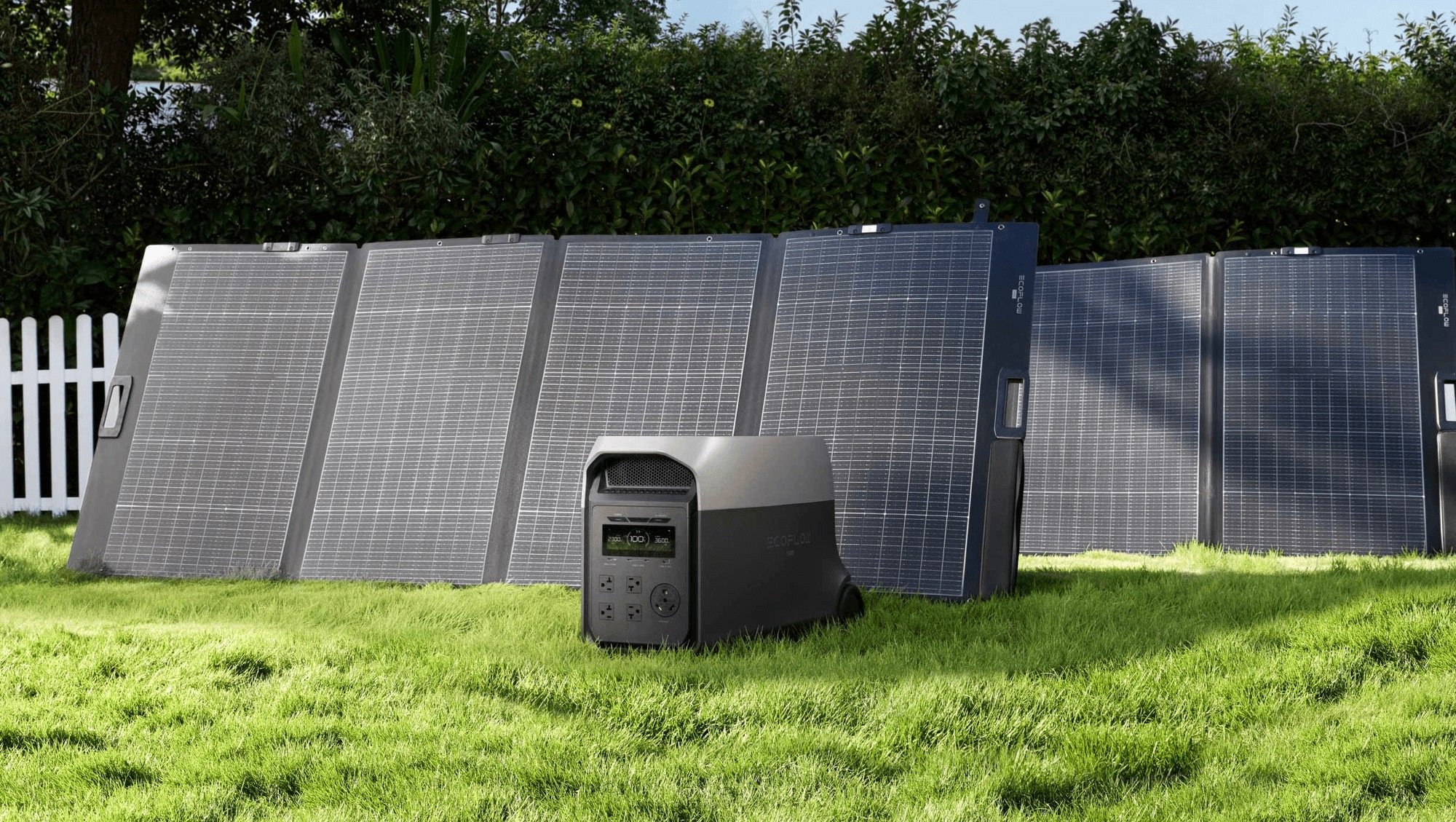
The EcoFlow DELTA 3 Ultra + 2×220W Solar Panels is one example of a solar-powered alternative that removes gas dependence entirely, keeping your home powered year-round without exposure to seasonal fuel costs.
The evaporative emissions from high-RVP gasoline are a precursor to ground-level ozone, which can impair lung function and worsen lung conditions like asthma. When temperatures exceed 100ºF, regular gasoline can vaporize quickly. Summer blend reduces the butane content and replaces it with alternatives to slow down vaporization.
Why Do Refineries Switch to Summer Blend Fuel?
The EPA's Clean Air Act of 1990 mandates cleaner burning of summer fuels in metro areas that already have poor air quality. It caps the RVP at 9 PSI in most areas, but limits can drop to as low as 7.8 PSI, with states allowed to be as strict as 7 PSI.
The primary reason behind the switch is the air quality concern. The EPA estimates that the reformulated gas can reduce local source VOC emissions by 27% and nitrogen oxide emissions by 7%, compared to gasoline.
Why Does Summer Blend Gas Cost More?
Summer blend gas costs more because of several stacked cost layers:
Pricier blending components that drive a higher oil price per barrel.
Lower per-barrel yield.
A more complex refining process.
Increased summer driving demand.
When the butane is removed, refiners must substitute it with costlier components, and the refinery switchover itself temporarily tightens supply, which adds upward price pressure before demand even enters the equation.
Brent crude oil price, which is the global standard benchmark, also plays a foundational role.
If you live in a state with stricter boutique fuel requirements, such as Arizona or California, you'll typically see even steeper price spikes during the transition.
To get an idea of the price difference, in the 20-year period from 2004 to 2023, the average US retail regular gas price in August was about 40 cents per gallon higher than in January.
When Does the Seasonal Gas Switch Happen?
A seasonal gas switch happens over several spring months, rather than a single-day event, to allow the fuel that's already in the pipeline to go through the supply chain.
The federally mandated summer season runs from May 1st to September 15th for refiners and bulk terminals. Whereas for retailers, the compliance window runs from June 1st to September 15th.
Consumers tend to notice pump prices going up as early as February or March, well before the official compliance dates.
How Does Summer Blend Gas Affect Fuel Prices?
The switch to summer blend is one cost input among several, and when it also coincides with rising oil prices, disruptions in refineries, or geopolitical tensions, the price spikes can become even more pronounced.
In addition to the blend switch, the supply side squeeze creates a temporary supply tightness due to a lower refinery output during maintenance and the logistical time needed to transition the inventory.
The demand side pressure comes from spring break and summer travel, which increases the demand for fuel just as the supply is at its most constrained.
The reformulation itself costs more to refine than the winter blend, and it burns less efficiently, so drivers are using more of it to cover the same distance.
Higher fuel prices can have an impact beyond just gas vehicles, too. Those who run a gas generator have further exposure to fuel cost fluctuations, creating an opportunity for savings by switching to solar whole-home generators.
Does Summer Blend Gas Improve Performance or Emissions?
The fuel economy decreases slightly with the summer blend due to the reduced energy content compared with the winter blend formulations.
However, the performance difference at the consumer level is generally imperceptible. The switch to summer blend is primarily environmental, as it reduces emissions.
Can EVs Help Avoid Seasonal Fuel Price Changes?
Because EVs run on electricity, they're not impacted by seasonal gasoline reformulation costs. EV owners can save $4,700 or more in fuel savings alone over the first 7 years of EV ownership compared to equivalent gas vehicles, according to Consumer Reports.
Solar charging extends the savings even further. Pairing an EV with home solar panels reduces your exposure to utility rate fluctuations as well. One great option is the EcoFlow DELTA 3 Ultra + 2×220W Solar Panels, which can provide supplemental EV charging via the unit's output ports, supporting a more energy-independent transportation approach.

Frequently Asked Questions
Why Does Summer Gas Cost More Every Year?
Oil refineries are seasonally mandated to produce lower RVP gas by May 1st. This fuel costs more to refine, yields less per barrel, and takes more time to produce. That, combined with rising driving demand and compressed supply, creates noticeably higher prices.
How Long Does the Transition to Summer Blend Take?
Refineries must begin switching their production before the May 1st federal deadline, while retailers have until June 1st to switch their inventory. The full market transition spans several months because the fuel takes time to move through the distribution chain.
Can I Notice a Difference In Fuel Performance?
Most drivers won't notice a difference in how their vehicle runs. The summer blend may deliver slightly lower fuel economy due to reduced energy content. The reformulation is designed for air quality rather than engine output.
Lower Fuel Cost Surprises, Improve Home Resilience, Regain Energy Control
Summer blend gasoline comes to the pump every year with a clear goal of reducing emissions, although it temporarily increases prices.
If you're looking to reduce your exposure to fuel price cycles, you have options, including more efficient driving habits, timing fill-ups before the peak switchover period, or reducing your gas dependence by switching to an electric vehicle.
To cut costs even more, consider charging your EV with the EcoFlow DELTA 3 Ultra + 2× 220W Solar Panel bundle, which allows you to avoid both fuel and electricity price fluctuations entirely.
For press requests or interview opportunities, reach out to our media team
media.na@ecoflow.com