Types of Generators in 2026: Portable, Inverter, Standby, and Solar Generators Explained
- Quick Overview: The 4 Main Types of Generators
- Portable Generators Explained (Most Affordable Emergency Power Option)
- Inverter Generators Explained (Clean, Quiet, and Efficient Power)
- Standby Generators Explained (Whole-Home Automatic Backup Power)
- Modern Alternative: Battery Generators and Solar Backup Systems
- Portable vs. Inverter vs. Standby vs. Solar: Side-by-Side Comparison
- How to Choose the Right Generator for Your Home or Lifestyle
- Cost Breakdown: How Much Do Different Generators Cost in 2026?
- Safety Tips and Maintenance Guide
- Conclusion
- FAQ
In 2026, power reliability has become a growing concern for many American households. Between the Texas grid hitting its limit every time the temperature drops below 30℉ and California’s recurring rolling blackout events, backup power is no longer limited to emergency preparedness enthusiasts. Also, it has become a practical solution for households that want to avoid food spoilage during outages or maintain internet access for remote work. But when researching backup power solutions, you’re immediately faced with a large amount of technical marketing terminology that easily overwhelms first-time buyers.
This guide is going to simplify the key differences and show the four main ways Americans are actually keeping essential devices and appliances running this year. We’ll break down the traditional fuel-powered generators, quieter inverter-based systems, and modern solar backup systems that are finally reducing reliance on fuel storage. By the end, you’ll know exactly which setup fits your home and practical needs.
Quick Overview: The 4 Main Types of Generators
Generators can generally be grouped into four categories. The right one for you mostly depends on two things: how much you’re willing to spend and how much manual setup and maintenance you’re comfortable with doing in the middle of a storm.
Portable Generators: The classic, traditional fuel-powered portable generators. They typically produce high operating noise levels.
Inverter Generators: A quieter and more fuel-efficient alternative. They automatically reduce engine speed when you aren’t using much power, making them perfect for camping or just keeping your laptop and refrigerator powered.
Standby Generators: These are permanent high-capacity backup systems installed outdoors on a concrete pad. They start automatically during an outage, but involve high installation and permitting costs.
Solar & Battery Storage: A rapidly growing category in 2026. These solar generators produce no fumes or noise and can be safely used indoors. When the grid fails, they provide immediate backup power without fuel combustion.
2026 Generator Comparison at a Glance
| Generator Type | Average Power Output | Fuel Source | Noise Level | Best For |
|---|---|---|---|---|
| Portable | 3,000W – 10,000W | Gasoline, Propane | Loud (70-80 dB) | Budget emergency power & construction |
| Inverter | 2,000W – 4,000W | Gasoline, Propane | Quiet (50-60 dB) | Tailgating, camping, and basic home essentials |
| Standby | 10,000W – 25,000W | Natural Gas, Liquid Propane | Moderate (65-70 dB) | Hands-free, whole-house continuous backup |
| Battery/Solar | 2,000W – 12,000W+ | Solar Panels, AC Outlets | Silent (0-30 dB) | Indoor use, zero-maintenance, eco-friendly backup |
Portable Generators Explained (Most Affordable Emergency Power Option)
If you’ve ever been through a hurricane or a major Nor’easter, you know exactly what these sound like. They are typically very loud during operation and usually show up in driveways as soon as the first branch hits a power line. For most Americans, this is the emergency backup solution tucked away in the back of the garage.
What Is a Portable Generator?
A portable generator is an open-frame, engine-driven machine that burns fuel (typically gasoline or liquid propane) to spin an alternator, creating electricity. They are entirely manual, meaning you have to wheel them out of the garage, pull-start them (or hit an electric start button), and physically run heavy-duty extension cords from the unit into your house.
Best Use Cases
These are for when you need high-output electrical power and don’t want to pay five figures for it. If your main goal is keeping a sump pump running during spring flash floods or powering a high-load portable air conditioner during an early summer heatwave, choosing the right home generator for power outages will help ensure you get the best value for your needs. They are commonly used for construction sites or that DIY deck project that’s too far from the house outlet.
Pros and Cons
The Pros: They’re the cheapest way to get massive wattage. You can find parts for them at any local repair shop, and as long as you’ve got gas cans, you’ve got power.
The Cons: They are incredibly loud, and high noise levels may be disruptive in residential areas. They also produce toxic exhaust, and if you let gas sit in the tank for six months, the engine probably won’t start when you actually need it.
Who Should Choose a Portable Generator?
If you are looking for an affordable emergency-only backup option, this is one of the most practical choices. It’s for the homeowner who just wants a reliable way to keep the essentials running, like the fridge and a couple of space heaters, when the temperature hits 25℉ and the local power infrastructure fails. Users should also consider the additional manual setup and fuel handling requirements. You should be prepared for the noise of an engine running in your driveway and the responsibility of safely storing fuel with a stabilizer added in your garage.
Note: If you live in an apartment, have zero interest in hauling 40-pound fuel cans through the mud, or just prefer to avoid fuel exhaust and fuel handling, this option may not be ideal. Solar and battery systems may be more suitable. Those stay inside; these generators must remain outdoors during operation.


Inverter Generators Explained (Clean, Quiet, and Efficient Power)
If the thought of a roaring engine outside your bedroom window for ten hours makes you wince, you should probably look at an inverter generator. These models are designed for quieter and more efficient operation. They trade high-output conventional designs for efficiency and a much more neighborhood-friendly volume.
What Makes Inverter Generators Different?
A standard generator is a less precise power delivery system, it runs at a constant, loud 3,600 RPM whether you’re just charging a phone or trying to start a microwave. An inverter is different. It uses a digital process to create “clean” power (a smooth sine wave), which is critical if you don’t want to damage sensitive electronic components in your MacBook, iPhone, or that expensive OLED TV. One key advantage is that the engine automatically adjusts its speed based on the load. If you aren’t drawing much power, the motor gets quieter and consumes less fuel rather than operating continuously at full speed. You’re essentially getting a custom power flow based on what’s actually plugged in.
Best Use Cases
Because they’re compact and surprisingly quiet, often operating at significantly lower noise levels than traditional generators, they are a popular option for RV trips and tailgating, especially when comparing different RV generator types. At home, they are suitable for running sensitive electronics such as home office equipment or a refrigerator without disturbing the surrounding neighborhood during a nighttime power outage.
Pros and Cons
The Pros: They are incredibly quiet and significantly more fuel-efficient. Most are lightweight enough for one person to lift into a truck bed without requiring excessive lifting effort.
The Cons: These systems typically cost more per watt. Per watt, these are pricier than those bulky open-frame portables. They generally top out at around 4,000 to 5,000 watts, which is typically not enough to run a central air conditioner and a dryer at the same time.
Who Should Choose an Inverter Generator?
If you live in a suburban neighborhood where the homes are located close together, an inverter is basically more suitable for noise-sensitive residential areas. It’s also the go-to for anyone who values portability and wants to keep their high-end electronics safe from unstable power output. It’s the “middle ground” for people who want gas-powered reliability without the high operating noise levels.
Standby Generators Explained (Whole-Home Automatic Backup Power)
For anyone who treats a power outage like a personal emergency, standby generators are the highest-capacity backup option. These systems are suitable for households where even short outages are unacceptable. It’s the closest thing to maintaining near-continuous household power.
What Is a Standby Generator?
Think of this as a permanent outdoor appliance, about the size of a central AC condenser, bolted to a concrete pad in your yard. Unlike the portable units you have to drag out of the garage, these are hardwired into your home’s electrical panel through an Automatic Transfer Switch (ATS). It’s continuously monitoring grid power status. The second it detects a drop in voltage, the system automatically starts the generator and transfers the home to backup power. It happens within seconds of detecting an outage.
Best Use Cases
These are built for big suburban homes or properties where losing power goes beyond a simple inconvenience and becomes a genuine safety risk. If you have essential medical equipment running 24/7, or if you live in hurricane-prone regions where outages may last for several days, this is the heavy duty solution.
Pros and Cons
The Pros: It’s completely hands-free. Since it’s hooked up to your natural gas or large propane line, it’ll run indefinitely without you ever touching a gas can. It handles high-demand appliances, electric dryers, ovens, and central HVAC, without exceeding operating capacity.
The Cons: Installation costs can be substantial. The hardware alone is a massive investment, but then you have to pay certified electricians and plumbers for the install. You’ll also likely be obtaining local building permits or complying with HOA requirements over where the unit sits.
Who Should Choose a Standby Generator?
For homeowners who prioritize zero downtime and have the budget to support it, this is a strong option. It is suitable for maintaining central air conditioning at 72°F and keeping an electric oven preheated while the surrounding neighborhood experiences extended outages. This approach provides continuous power reliability during grid disruptions.
Note: If multi-thousand-dollar installation fees, municipal permitting requirements, or annual engine oil maintenance appear overly complex, alternative solutions may be more suitable. Modern plug-and-play battery systems provide similar backup performance without the need for complex installation or permitting processes.
Modern Alternative: Battery Generators and Solar Backup Systems
While many people still refer to these as “generators,” they are in fact large-capacity battery backup systems. When you pair them with a few solar panels, they turn into a self-sustaining power plant that doesn’t need a drop of gasoline to maintain essential household power. As we get deeper into 2026, adoption trends indicate that more American families are moving away from fuel-powered generators in favor of quiet, emission-free battery storage systems. It’s a way to reduce dependence on grid instability without smelling like exhaust for three days straight.
For Mid-Range & Flexible Backup: EcoFlow DELTA 3 Max + 400W Solar Panel
For a typical suburban house dealing with those short-duration rolling blackouts, a massive gas rig is usually unnecessary for many households. That’s where a setup like the EcoFlow DELTA 3 Max (2048Wh) + 400W Solar Panel really hits the balanced solution.
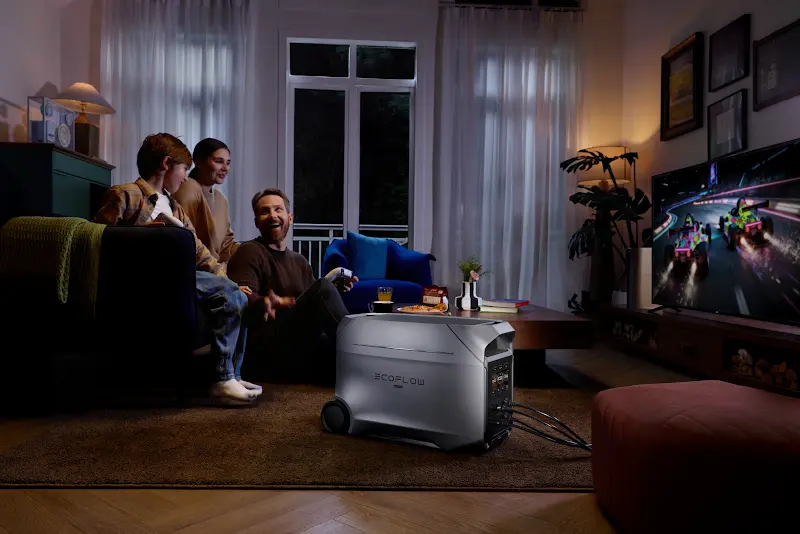
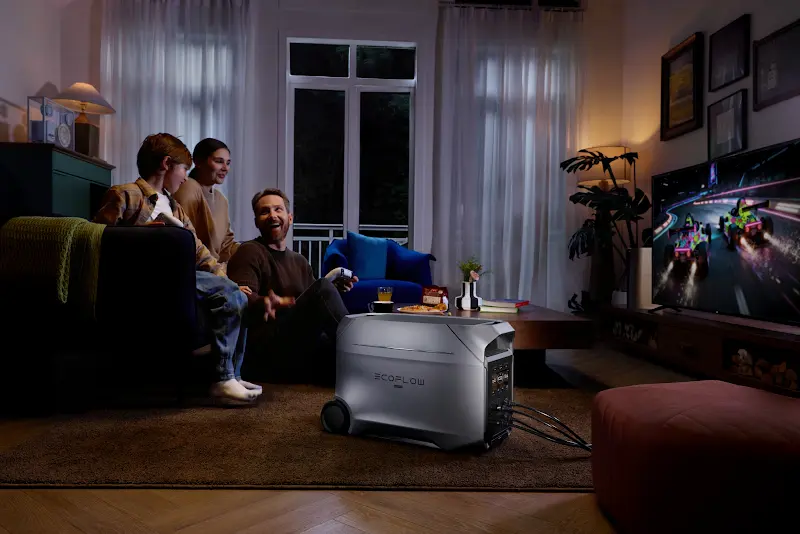
Traditional portable generators force you to stand out in the rain or snow, handling fuel refills outdoors while a storm rages. This solar-powered setup is different. It sits safely right in your living room or kitchen, running in total silence without any sketchy fumes. When a local outage occurs and the house goes dark, you just plug your fridge, Wi-Fi router, and laptops directly into the DELTA 3 Max. It helps maintain essential daily activities without the manual startup procedures.
Once the clouds break, that 400W solar panel becomes your renewable charging source. It’s a straightforward way to harvest electricity from solar energy. If you’re looking to reduce dependence on fossil fuels and keep your long-term emergency costs at exactly zero, this is a smart way to do it.
For High-Load & Whole-Home Preparedness: EcoFlow DELTA 3 Ultra Plus
When managing heavy electrical loads such as central air conditioning, deep freezers, or essential medical equipment that cannot be interrupted, most gas portables may not provide sufficient capacity. They require more frequent monitoring and refueling. For users who require standby-level power output without high noise levels, fuel storage requirements, or complex installation and permitting processes, the EcoFlow DELTA 3 Ultra Plus(3072Wh) + 500W Solar Panel offers a high-capacity backup solution for 2026.
The DELTA 3 Ultra Plus is intended for high-capacity residential backup applications. It’s designed to support multiple high-demand household appliances simultaneously. You can have the microwave going while the central AC kicks on and the well pump is running, all at the same time, without worrying about overload conditions and hoping the breaker doesn’t trip.
One major advantage for extended outages is solar charging capability. The DELTA 3 Ultra Plus can pull in a massive amount of solar energy, so you can link up high efficiency panels on your roof or across the lawn. When a major regional storm knocks out the grid for days, this setup recharges fast from daylight alone. This creates a renewable backup cycle that can continue operating as long as sufficient solar input is available.
Portable vs. Inverter vs. Standby vs. Solar: Side-by-Side Comparison
Choosing the right rig usually comes down to balancing budget, power requirements, and lifestyle needs. Here is how they stack up during power outages:
Power Output Range: Standby units and heavy solar setups (like the DELTA 3 Ultra Plus) are the only ones that comfortably cross the 10,000-watt line for whole home use. Inverters and standard portables usually max out around 7,000W, so you’ll have to pick which appliances stay on.
Noise Level: Gas portables are very loud, often hitting 75+ decibels. Inverters drop that to a lower operating noise level, but solar battery systems are the only ones that offer a silent operation.
Fuel Type: Old school options depend on fuel availability or propane lines. Solar systems generate renewable electricity from solar energy, though you can still top them off from a wall outlet before a storm hits.
Installation Requirements: Portables and inverters are highly versatile and require zero professional installation. Standby units require professional installation teams. Advanced solar backups sit in the middle, offering plug-and-play whole-house power without major installation work.
Cost: Gas portables win on the initial box price. Standby systems are the priciest once you add labor. Solar requires more upfront, but pays off through zero maintenance and 2026 green energy tax credits.
How to Choose the Right Generator for Your Home or Lifestyle
Don’t let the mountain of options paralyze you. You can narrow this down pretty quickly by walking through these four practical steps.
Step 1. Define Your Power Needs
Consider essentials during outages. Check the wattage labels on the back of your appliances. If you just need the fridge, your Wi-Fi, and a few lights, a mid-range setup is plenty. But if you’re trying to keep the central HVAC operating in 95℉ heat, you need to be looking at heavy-duty whole-home solutions.
Step 2. Consider Outage Frequency
How often do outages occur in your area? If it’s just a couple of 2-hour rolling blackouts a year, a portable inverter or a compact battery station is a practical option. But if you live in a hurricane-prone region or a spot where winter blizzards knock out power for days at a time, look into high-capacity solar arrays or permanent standby units.
Step 3. Budget Planning
Don’t just look at the price tag on the shelf. A cheap gas generator may appear inexpensive initially until you factor in the lifetime costs: stabilized fuel, oil changes, spark plugs, and the inevitable carburetor clean-out. Solar systems require a higher upfront investment, but ongoing operating and maintenance costs are typically much lower over time. Another thing: while the federal residential tax credit expired at the end of 2025, many states like California (SGIP) and New York still offer massive rebates that can significantly reduce costs by thousands.
Step 4. Fuel Type and Maintenance
How much work do you actually want to do? Think about whether you’re comfortable changing engine oil or driving to a gas station with empty cans in the middle of a torrential downpour. If you want zero maintenance and a system that can sit in a closet for six months and still remain ready for immediate use, a battery based system is your best path forward.
Cost Breakdown: How Much Do Different Generators Cost in 2026?
Prices vary depending on the brand and how much “juice” you need, but here is a realistic look at the 2026 market for hardware and setup:
| Generator Type | Hardware Cost | Installation & Extra Fees | Total Estimated Investment | Notes |
|---|---|---|---|---|
| Traditional Portable | $400 – $1,200 | $0 (DIY Setup) | $400 – $1,200 | Requires purchasing heavy-duty extension cords, fuel stabilizers, and gas cans. |
| Inverter | $600 – $2,500 | $0 (DIY Setup) | $600 – $2,500 | Price depends heavily on wattage; plug-and-play with no installation needed. |
| Standby (Whole-Home) | $4,000 – $10,000+ | $3,000 – $7,000 | $7,000 – $17,000+ | Requires professional electrical wiring, gas line plumbing, and local building permits. |
| Solar / Battery Backup | $1,500 – $15,000+ | $0 – $1,500 (Optional) | $1,500 – $15,000+ | Mid-size kits ($1.5k–$3.5k) require zero setup. Whole-home systems often qualify for the 30% Residential Clean Energy Tax Credit, significantly lowering net costs. |
Note: While you can’t claim the federal credit on your personal taxes anymore, you can still save big through state programs. In addition, states such as Connecticut offer utility-backed energy storage incentive programs, with eligibility and funding levels varying by system size and household conditions. In some cases, third-party solar leasing structures may also reflect federal tax incentives through reduced monthly payments.
Safety Tips and Maintenance Guide
Regardless of the system selected, running a home power system is not a “set it and forget it” deal. It is necessary to follow a few non-negotiable rules to maintain safe operation and keep your family safe.
Never run a gas generator indoors: This is critical. Traditional portables and inverters emit carbon monoxide, which is odorless, invisible, and deadly. They must be operated outdoors, at least 20 feet away from any window, door, or vent. Garages are also unsafe for generator operation, even with doors open.
Keep your fuel fresh: Untreated gasoline is the common cause of generator failure. It starts to break down and clog carburetors in as little as 30 days. When using fuel-powered systems, either add a fuel stabilizer or fully drain the tank before long-term storage.
Watch out for backfeeding: Never attempt to power a home by connecting a generator directly to a standard wall outlet. It’s a dangerous move called “backfeeding.” It can send high-voltage juice back up the utility lines, which creates serious safety risks for utility workers trying to fix the neighborhood grid. Use a proper transfer switch or just plug your stuff directly into the unit.
Keep battery systems conditioned: If you’ve gone the solar route, treat that battery station like a piece of high-end tech. Keep it in a temperature-controlled spot indoors. Most people forget this, but you should also top up the charge every three to six months. It keeps the cells healthy and ensures the system operates properly when the next storm hits.
Conclusion
Ultimately, picking the right generator is really about matching your personal comfort level with your actual power requirements. If you just want an affordable short-term backup solution for emergencies and don’t mind a little noise in the driveway, a traditional portable or an inverter will provide short-term backup power. If money is no object and you want a totally hands-off, automated experience, a standby unit is still a long-established option for big suburban properties.
But for modern American households, solar backup systems are becoming increasingly popular. It’s silent, requires zero engine maintenance, and lets you run power safely right inside your living room or home office without harmful exhaust emissions. Take a look at your must-have appliances, map out a realistic budget, and pick the system that’s going to keep your family safe and connected when the next major outage occurs.
FAQ
What Size Generator Do I Need for a House?
For most American homes, 5,000 to 7,500 watts is the common capacity range. That is usually sufficient to power refrigerators, internet equipment, lighting, and well pumps during outages.
How Big of a Generator to Run AC and Refrigerator?
Running both a central AC system and a refrigerator typically requires higher starting wattage capacity. Aim for a unit with at least 5,000 to 8,000 “starting” watts. While fridges are easy on power once they’re running, a central AC compressor takes a high startup current during startup. If your AC has a “soft starter” installed, you can often operate with a much smaller generator.
What Type of Generator Is the Most Quiet?
Solar and battery generators are generally the quietest option. They operate in total silence. Since there’s no internal combustion engine or moving parts to worry about, you can keep them right next to your desk or bed and operate with minimal noise.
How Long Can You Run a Generator Without Stopping?
Gas units usually get you 8 to 12 hours on a tank at half-load, however, you have to shut them down and let the engine cool off before refilling. Pouring gas onto hot generators creates significant fire hazards during refueling. Solar and battery systems, however, can run continuously as long as the sun is hitting your panels during the day.
Can You Plug a Generator into a House Outlet?
Absolutely not. It’s a dangerous move called “backfeeding” that can send high voltage electricity back into the neighborhood grid, which creates serious safety risks for utility workers. Always use a properly installed transfer switch or just run heavy duty extension cords directly from the generator to your appliances.
For press requests or interview opportunities, reach out to our media team
media.na@ecoflow.com