RV Inverter Explained: What Size Do You Need for Your Camper
- What Is an RV Inverter and Why Does It Matter for Camper Power
- How Your RV Inverter Works Inside Your Camper Electrical System
- What Size RV Inverter Do You Need? (Sizing Guide + Real Calculation)
- When a Regular RV Inverter Falls Short
- Choosing the Right Inverter for Different Camping Scenarios
- Conclusion
- FAQ
Planning a getaway to Yosemite or cruising along Route 66 requires reliable mobile power. Whether you need to charge your laptop for remote work, run a morning coffee maker, or stream a movie after a long hike, understanding your power setup is key.
Your ultimate RV inverter guide is here. In this guide, we provide details on how it works, how it differs from other components, and how to accurately calculate the perfect size for your rig, so you never run out of juice off-grid.
What Is an RV Inverter and Why Does It Matter for Camper Power
RV electrical systems can be complex. However, for boondocking, the inverter is an essential component of your power system. It’s the reason you can still enjoy modern comforts when there’s no shore power in sight. In recent years, many campers have also started using all-in-one solar generators to simplify off-grid power setups and reduce the need for complex vehicle wiring.
What an RV Inverter Does in Simple Terms
An RV inverter functions as a power conversion device. It grabs the 12-volt DC power sitting in your house batteries and flips it into the 120-volt AC power that your household appliances crave. Without an inverter, most household appliances cannot operate once shore power is disconnected.
Difference Between Inverter, Converter, and Charger
These three components perform completely opposite roles in your camper’s electrical loop. Understanding the difference between an inverter and a converter for camper power helps owners diagnose charging bottlenecks and power distribution issues correctly.
| Component | What It Does | Direction of Power Flow | Main Use in RV |
|---|---|---|---|
| Inverter | Converts 12V DC battery power into 120V AC power | DC → AC | Runs household appliances like laptops, microwaves, TVs |
| Converter | Converts 120V AC shore power into 12V DC power | AC → DC | Powers RV lights, fans, and 12V systems when plugged in |
| Charger | Recharges the RV house battery bank | AC → DC (battery charging) | Keeps batteries charged when connected to shore power or generator |
Why Campers Need AC Power from DC Batteries
RV batteries hold plenty of power, yet they output steady low-voltage DC electricity that most daily appliances can’t use. Regular home devices are built to run on standard AC power from household wall outlets. That’s where an inverter comes in—it safely boosts and reshapes battery power to meet high-voltage AC demands.
Common RV Appliances That Require an Inverter
When you’re far away from power hookups, an inverter lets you use any device with a standard three-prong residential plug. You can easily run kitchen gear such as microwaves, coffee makers and blenders, plus daily gadgets including laptops, TVs, game consoles and medical CPAP machines.
How Your RV Inverter Works Inside Your Camper Electrical System
To better understand your mobile electrical system, it is useful to examine how the components interact. The way your inverter interacts with your battery bank and shore power dictates your electronic runtime and system health. Here is a quick look at how it manages your power flow behind the scenes.
DC (battery) to AC Power Conversion
Inside the inverter housing, high-speed electronic switches rapidly flip the direction of the incoming 12V DC battery current back and forth. This fast-paced switching creates an artificial oscillating wave pattern, instantly raising the voltage to the 120V AC standard required by your gear.
Role of the RV Battery Bank and Shore Power
Your house battery bank acts as your local fuel tank, storing raw DC energy for the inverter to pull from while boondocking. Shore power is the external grid utility you plug into at an RV park; when connected, your inverter rests because the campground grid directly powers your AC outlets.
Pure Sine Wave vs. Modified Sine Wave
Inverters come in two distinct wave designs that directly affect your electronics. Pure sine wave inverters deliver perfectly smooth curves that match residential wall power, making them mandatory for laptops, TVs, and sensitive appliances. Modified sine wave units are cheaper but deliver a choppy, stair-step current that can cause clocks to run fast, motors to hum, or sensitive microprocessors to overheat.
| Feature | Pure Sine Wave Inverter | Modified Sine Wave Inverter |
|---|---|---|
| Power Output | Smooth, grid-quality AC power | Stepped, choppy waveform |
| Compatibility | Works with all appliances | May not support sensitive electronics |
| Best For | Laptops, TVs, CPAP machines, microwaves | Basic tools, simple devices |
| Motor Performance | Quiet, efficient operation | Can cause humming or reduced efficiency |
| Risk to Electronics | Safe for long-term use | May cause overheating or malfunction |
| Cost | More expensive | More affordable |
How Inverter Efficiency Affects Runtime
No electrical device converts energy with perfect efficiency, as some power is always lost as heat. Most modern RV inverters operate at 85% to 95% efficiency, meaning a notable portion of your battery capacity is consumed just to run the conversion process itself—even under light electronic loads.
What Size RV Inverter Do You Need? (Sizing Guide + Real Calculation)
Choosing the right inverter size isn’t about buying the biggest box on the shelf; it’s about matching your actual daily power habits. Finding the ideal inverter size for RV setups requires a bit of planning to avoid frustrating overloads or wasted battery capacity. The following section reviews standard size brackets and a real-world calculation.
Watt Ratings
Inverters are rated by continuous watts and surge (peak) watts. Continuous wattage is the total power the unit can safely deliver hour after hour. Surge wattage is the brief, high-energy boost—often double the continuous rating—that the unit can supply for a few seconds to kick-start motorized appliances like fridges or blenders.
RV Inverter Size Categories
Most camper electrical systems can be categorized into three size ranges:
Small (600W – 1,000W): Suitable for compact teardrop trailers and truck campers, great for powering laptops, tablets, small TVs and daily phone chargers.
Medium (1,500W – 2,000W): The most popular pick for camper vans and travel trailers. It supports one main kitchen appliance, such as a microwave, plus regular daily electronics.
Large (3,000W and above): Built for spacious fifth wheels and luxury motorhomes, able to run multiple high-power devices or rooftop air conditioners all at once.
Step-by-Step Calculation
To calculate your specific needs, list everything you want to run at the exact same time and their total wattages:
Identify regular running watts and startup surge watts for your devices (e.g., a 60W laptop, a 100W TV, and a 600W blender).
Add up all the running watts for your continuous total: 60W + 100W + 600W = 760W.
Take your single highest surge item (the blender, which peaks at 1,200W) and add it to the running watts of the rest: 1,200W + 60W + 100W = 1,360W peak ceiling. This is your peak power demand.
Add an extra 20% power buffer for safe use, pointing you to an ideal inverter size of roughly 1,000W continuous / 2,000W surge.
Common Mistakes
Many RV owners make the same power setup errors. The top one is overlooking startup surge power, which often makes inverters cut out instantly when you turn on appliances. People also tend to ignore hidden standby power draw (phantom loads), or match a high-wattage inverter with too small a battery bank that can’t supply power quickly enough.
When a Regular RV Inverter Falls Short
As you use more electric gear, standard RV power setups easily hit their limits. Sticking with basic factory power gear for heavy use often causes overload issues, hassle and unnecessary upgrade costs.
Power Limits for High-Demand Appliances
Roof air conditioner units, induction stoves and space heaters all need steady high wattage. Pulling 1,500W to 2,500W through a regular inverter will either trigger overload protection or drain your 12V batteries in no time.
Why Full-Time RV Living Needs Energy Storage Systems
Living full-time in an RV means running all household essentials on the road. With heavier daily power use and unstable solar power supply, a simple inverter is never enough. You will end up constantly managing power use just to save energy.
Off-Grid Travel vs. Inverter-Only Setups
Reliable off-grid power needs power generation, battery storage, and power conversion working as a whole. An ordinary inverter is just one single part. Once your power demand exceeds 3,000W and you face complicated rewiring and battery upgrades, an all-in-one portable power station becomes an easier choice with no tricky installation work.
Choosing the Right Inverter for Different Camping Scenarios
Every traveler hits the road with a unique style, meaning power needs to shift depending on where you park and how many creature comforts you bring. Let’s look at standard real-world camping scenarios to see which setup aligns best with your lifestyle.
Weekend Camping (Light Power Needs)
If you’re just heading out for a quick weekend at a state park with electrical hookups, you don’t need much. A modest 600W to 1,000W pure sine wave inverter is all you need. It’ll quietly handle your phone chargers, your laptop, and that late-night movie on the camper TV.
Family RV Trips (Medium Usage: Fridge, Devices, Lights)
Family trips are a bit more demanding. You’ve got multiple phones, tablets, maybe a camera, and definitely the need for kitchen appliances. This is where a solid 2,000W inverter becomes most suitable. It’s the sweet spot that lets you run the microwave for breakfast and keep the hybrid fridge cold, all while making sure everyone’s device stays charged. This configuration helps ensure reliable operation of common appliances during family trips.
Full-Time RV Living (High-Demand Systems)
Those who live full-time in an RV need steady power for heavy-use appliances, especially through hot summers or long off-grid stays in national parks. Stock low-wattage factory inverters usually can’t handle multiple heavy loads, like fridges, microwaves, and air conditioners, all at once.
Once your power usage exceeds 3,000 watts and you’re faced with complicated wiring work and costly system upgrades, portable power stations like the EcoFlow DELTA Pro Portable Power Station make a far easier solution. It works as an all-in-one mobile power center, delivering strong AC output, smart built-in power management and expandable battery capacity. It’s a great alternative to noisy traditional generators, runs quietly and requires no major changes to your RV’s original electrical setup.
Off-Grid Boondocking with Solar Integration
Off-grid boondocking allows extended travel without relying on external power sources. Built-in fixed solar and inverter systems often cost a lot and call for tricky wiring work, so most modern RV campers now favor easy-to-move standalone power solutions.
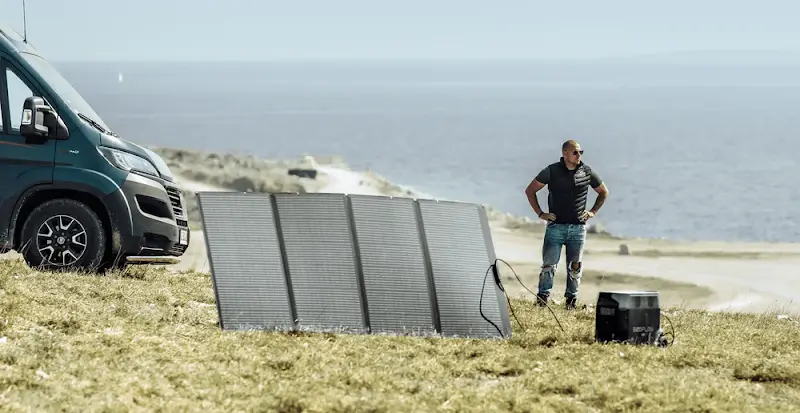
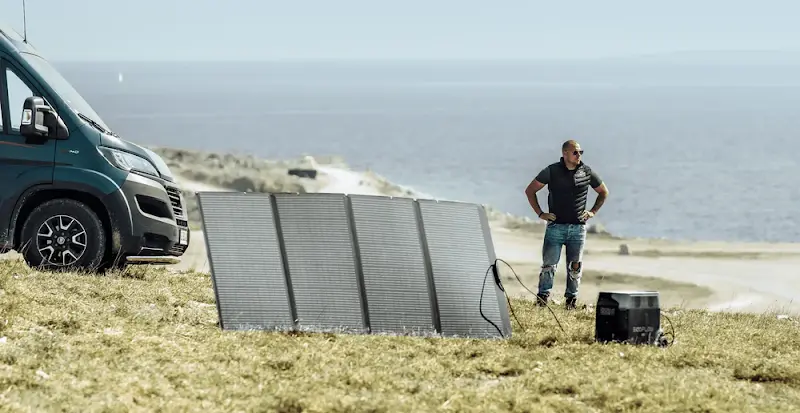
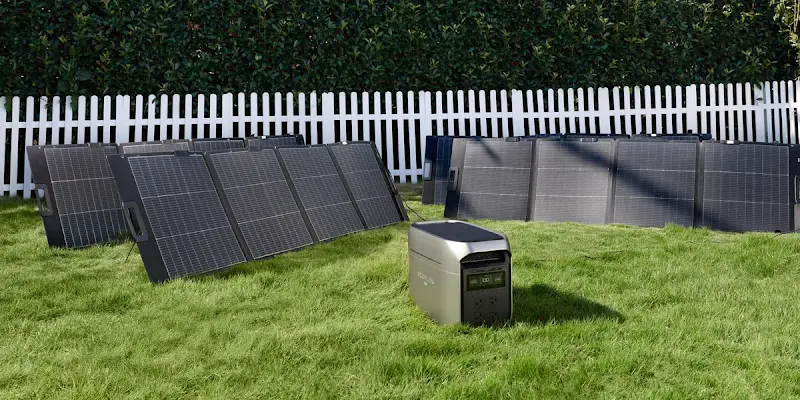
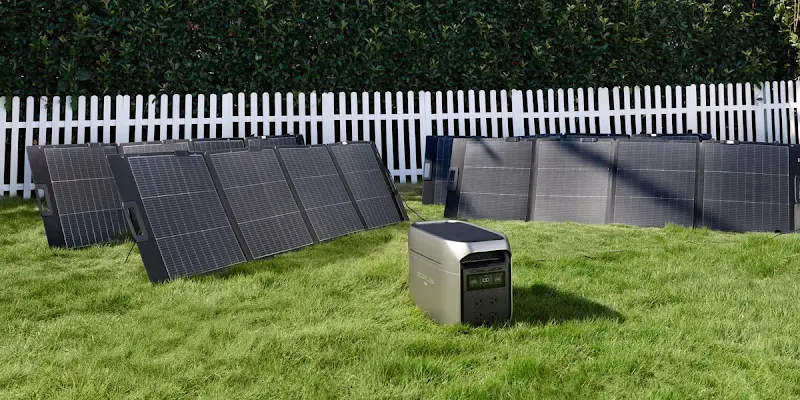
You can go fully off-grid easily by pairing portable power stations like the EcoFlow DELTA 3 Max Plus + 2 × 220W Solar Panel. These panels soak up both direct sunlight and ambient reflected light all day long to top up the power station steadily. After dark, its built-in inverter turns stored power into usable electricity to run lights, phones and other daily small gear.
This system design requires no permanent installation, cuts down fuel generator use, and stays light and flexible for long-distance off-grid journeys.
Generator + Inverter Hybrid Setups
If you want a solid backup power option, matching a standard generator with a quality inverter lets you enjoy the best of both setups. You can stick to quiet inverter power during campsite quiet hours to keep the outdoors peaceful, and start up the generator in daytime for heavy maintenance tasks or quickly refilling your main battery bank.
Conclusion
A solid mobile power system is essential for cozy, hassle-free RV travels across America. No matter if you go with a classic pure sine wave inverter or an easy plug-and-play power solution, the core rule is always picking a gear that fits your actual camping habits and road trip plans.
For frequent remote stays across Western public lands, or running rooftop AC units through scorching summer days out in Arizona, Utah, and California backcountry, portable power stations work far better than complicated hardwired inverter systems. Popular picks like the EcoFlow DELTA Pro, or a combination of the EcoFlow DELTA 3 Max Plus with solar panels, deliver flexible, silent, and low-fuss power that suits most US campground and boondocking routines perfectly.
In summary, the ideal power setup is one that matches your actual usage requirements and operating conditions. It lets you enjoy scenic routes and outdoor adventures all around the country, instead of constantly worrying about power shortages and electrical troubles.
FAQ
Can I Run an Air Conditioner with an RV Inverter?
Yes, but it’s a power hog. You’ll need at least a 3,000W inverter and a beefy lithium battery bank to handle the high continuous loads. Even then, most RV setups can only run an AC for a short time. For real off-grid comfort, a generator or a portable power station is your best bet.
What Happens if My Inverter Is Too Small?
The inverter will not be damaged; it will typically shut down automatically when overloaded. A small inverter will shut down automatically when the load exceeds its rating. You’ll probably hear a beep or see a warning light. Just unplug the appliance that’s causing the trouble, and reset the unit before continuing with lighter loads.
Is a Bigger Inverter Always Better?
Nope. Bigger isn’t always smarter. Large inverters suck up power just sitting there, which can drain your batteries faster even when usage is low. It’s way more efficient to size it to your actual daily needs rather than going overboard.
Do I Need a Pure Sine Wave Inverter for My RV?
Absolutely, yes. Especially for modern gadgets like your laptop, TV, or CPAP machine. A pure sine wave inverter provides clean, stable power. Cheaper “modified” sine wave inverters may cause noise, display issues, or potential damage to sensitive devices. It’s worth the upgrade for peace of mind.
For press requests or interview opportunities, reach out to our media team
media.na@ecoflow.com