Power Outages in Michigan: Summer Storm Updates, Restoration Times & Safety Tips
Summer storms in Michigan can sometimes lead to power outages. High winds, heavy rain, and lightning can leave you in the dark for hours or even days.
This comprehensive guide breaks down why the Great Lakes State faces frequent storm-related blackouts, how utility companies like DTE and Consumers Energy figure out restoration times, and offers practical ways to keep your household safe and comfortable.
Why Do Summer Storms Cause Power Outages in Michigan?
Summers in the Great Lakes State can be genuinely beautiful — warm days, cool breezes off the lake, long evenings. But that same geography comes with a catch. Fast-moving severe storms roll through with surprising regularity, and when they do, Michigan’s electrical grid can be affected by severe storms. Knowing how to prepare for power outages in Michigan is essential for safeguarding your property before these seasonal systems arrive.
Direct Equipment Damage
High winds, localized tornadoes, and lightning are hard on utility infrastructure. Lightning can damage transformers, sometimes blowing them out in a single strike. Severe wind gusts can snap utility poles or yank down high-voltage lines within seconds.
Tree and Vegetation Interference
Michigan’s tree canopy is lovely, but in a bad storm it’s a liability. Heavy rain saturates the soil, and when the wind kicks up, branches and sometimes whole mature trees come down directly onto power lines. According to the Michigan Public Service Commission (MPSC) Reliability Report, tree contact and overgrown vegetation are consistently identified as a major contributing factor for power outages across the state.
Aging Overhead Grid
A large portion of Michigan’s power infrastructure still runs on older, overhead lines rather than underground cables. That means it’s exposed to whatever weather comes through. A single major storm can set off cascading failures across multiple regional substations, turning a localized incident into a much wider problem.
Unique Regional Geography
Being surrounded by the Great Lakes means Michigan generates its own weather patterns — storm systems that might be mild elsewhere can intensify into severe squall lines by the time they reach inland areas. In rural and coastal counties especially, longer distances between substations mean one failure point can knock out a surprisingly large area.
How Long Do Power Outages Usually Last After a Michigan Storm?
Once the storm clears, the first question on everyone’s mind is the same for affected Michiganders: When will power be restored? A precise estimate is difficult to provide. But understanding the main factors behind restoration can help set realistic expectations. Here is what typically influences blackout duration.
Restoration Hierarchy
Utilities prioritize repairs based on safety and critical infrastructure. That means clearing live downed wires, then prioritizing critical infrastructure like hospitals and water treatment plants — before crews ever reach residential areas.
Typical Durations (Minor vs. Major Storms)
For minor storms with localized wind damage, power usually comes back within a few hours to a day. Major storms are a different story. Snapped poles, tangled lines across a wide area, crews stretched thin — that combination can push timelines out to several days. Securing a reliable power station beforehand helps bridge the gap during these prolonged multi-day grid restorations.
Why Estimates Keep Changing
Why an Estimated Time of Restoration (ETR) keeps shifting is one of the biggest sources of confusion during major grid failures. This often happens because early digital assessments don’t capture the full picture. When crews actually arrive on the ground, they find complications that weren’t visible remotely: a pole snapped and is buried under debris, and transformer damage that’s worse than expected. Each new issue may add time.
How Can You Track Outage Updates and Restoration Progress?
A power outage can be stressful, especially when it’s unclear when power will be restored. Fortunately, Michigan’s primary investor-owned utilities deploy comprehensive digital monitoring networks, allowing homeowners to track power restorations in Michigan via smartphones.
Utility Outage Maps Show Real-Time Outage Status
Outage maps are generally the fastest way to check what’s happening in real-time. The DTE Energy Outage Map and Consumers Energy Outage Center both update frequently, letting you see affected areas by ZIP code, check whether repair crews have been assigned, and view estimated restoration times (ETR). It is recommended to save this page before storm season.
Utility Notifications Deliver Service Restoration Information
Utility notifications offer a more convenient option than manually checking maps. Text, email, or app notifications through your provider do the same job automatically. You’ll get updates when crews are dispatched or when restoration timelines shift. It’s a bit more passive, which some people prefer.
Emergency Alerts Provide Storm and Outage Updates
Emergency alerts add another layer of safety. Wireless Emergency Alerts (WEA) push location-based warnings directly to your phone from the National Weather Service and local authorities. These cover severe weather updates, safety instructions, and public notices. During a bad storm, they’re one of the faster ways to get ground-truth information rather than waiting on a neighbor’s text.
How Can You Stay Powered During a Power Outage?
A little preparation goes a long way. Having a backup power plan in place before a storm hits helps reduce operational stress during outages.
Prioritizing Essential Devices and Appliances
When the grid goes down, your first step should be identifying which devices are absolutely vital for safety, comfort, and communication. Keeping phones fully charged and your Wi-Fi router active tops most lists to ensure access to critical weather updates and emergency alerts. Beyond communication, maintaining temporary power to medical equipment, cooling fans, and the refrigerator forms the baseline of a practical household emergency plan.
Backup Solutions for Short-Term Outages
Routine localized outages are often resolved within a few hours. For these short-term disruptions, managing immediate electronic essentials does not require complex setup, making portable battery systems more practical than a gas generator. The EcoFlow DELTA 3 Max Plus + 4 x 125W Solar Panel bundle is designed to provide reliable bridge power during temporary outages. It can help power essential household devices, while portable solar panels provide an option for recharging during daylight hours. Best of all, because the system requires no liquid fuel, it operates in complete silence with zero emissions — making it suitable for indoor or residential use.
Whole-Home Backup Options for Extended Outages
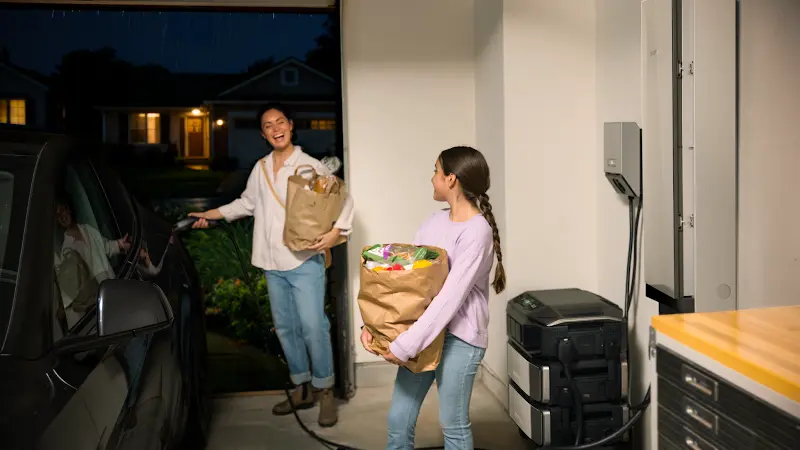
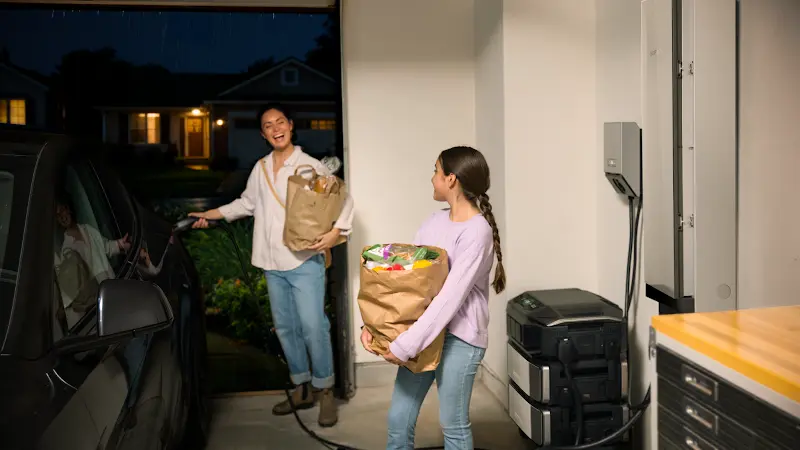
When a major storm causes widespread damage across the grid, blackouts can stretch into multiple days. At that point, households may face more than inconvenience: food spoilage, no central air in summer heat, and disrupted routines. Maintaining phone power may no longer be sufficient for extended outages.
For extended multi-day blackouts, a more robust emergency power system is required. The EcoFlow DELTA Pro Ultra X Whole-Home Backup Power is designed for prolonged outages and heavier residential demands. It offers the capacity to support multiple critical circuits or larger home loads, depending on configuration. For regions regularly affected by unpredictable summer weather, investing in this tier of backup protection can improve home energy resilience, helping reduce reliance on the grid during extended outages.
Enhanced Local Safety & Emergency Guidance for Michigan Outages
Michigan sits in a somewhat unusual position: residents face both summer storm outages and serious winter ice events. Outage safety planning needs to account for both extremes. Understanding local emergency resources and utility-specific tools can significantly improve your response time during a blackout.
Cooling Centers & Emergency Shelter Options
In summer, heat and humidity can make indoor conditions unsafe surprisingly quickly during a prolonged blackout. Many Michigan counties open public cooling centers when outages coincide with heat advisories. These typically include public libraries, community recreation centers, city halls, municipal buildings, and designated emergency shelters managed by county emergency offices. In the Detroit area and surrounding counties, cooling center information usually gets posted to local government websites and pushed through emergency alert systems when temperatures climb.
Tip: check your county’s emergency management page for a “Cooling Center Locations” list before you need it.
For households that are unable to reach a cooling center, a backup power system such as a solar generator can help run essential devices like fans, lighting, and communication equipment during outages.
Local Emergency Contacts & Utility Reporting Tools
Michigan’s outage reporting and emergency updates run primarily through utility providers and state emergency systems:
DTE Energy Outage Center – report outages and track restoration status
Consumers Energy Outage Map – live updates and estimated restoration times
Michigan State Police (MSP), Emergency Management and Homeland Security Division (EMHSD) / MI Ready program – statewide emergency preparedness resources and public safety information
Emergency alerts are also delivered through:
Wireless Emergency Alerts (WEA) on mobile phones
Utility mobile apps (DTE Energy App / Consumers Energy App)
Local county alert systems (text/email notifications)
Important: Always report your outage directly through your utility app rather than waiting to see if your neighbors do it first. It helps restoration crews prioritize more accurately.
Michigan Summer vs. Winter Outage Risks
Unlike many regions, Michigan has two distinct outage seasons — and they’re genuinely different in character.
| Category | Summer Storm Outages | Winter Ice & Snow Outages |
|---|---|---|
| Main Causes | Thunderstorms, lightning, high winds | Heavy snow, ice buildup on power lines |
| Primary Damage Source | Falling trees and branches | Ice weight causing line and pole failure |
| Grid Impact | Localized or regional outages | Wider-area and longer-lasting outages |
| Main Risks | Food spoilage, heat exposure, humidity discomfort | Freezing indoor temperatures, heating system failure |
| Typical Duration | A few hours to 2–3 days (storm-dependent) | Several hours to multiple days (access delays common) |
| Restoration Challenges | Damage assessment + tree clearance | Dangerous road conditions slow repair crews |
| Overall Risk Type | Comfort and convenience disruption | Potential life-safety risk (hypothermia, heating loss) |
Key difference:
Summer outages are usually comfort-related disruptions, while winter outages in Michigan can escalate into serious life-safety emergencies due to prolonged exposure to cold temperatures.


Conclusion
Summer storms in Michigan are an inevitable part of life, but experiencing a power outage doesn’t have to throw your life into chaos. By understanding how our regional grid works, knowing how to leverage utility tracking tools in real time, and practicing smart household safety, you can navigate any blackout with confidence. Equipping your home with a reliable backup energy solution such as the EcoFlow DELTA series can help maintain access to essential lighting, communication, and basic household functions during outages caused by severe weather.
FAQ
Are Michigan Storm Outages Becoming More Common Today?
Yes, severe weather patterns and an aging electrical infrastructure may have contributed to more frequent regional power outages in recent years. Data from local utility commissions suggest that erratic summer storm patterns, combined with dense vegetation growth near overhead lines, are associated with increased strain on the grid.
What Is the First Thing You Do When the Power Goes Out?
The very first thing you should do is check your circuit breaker to confirm the issue isn’t a blown fuse, and then report the outage to your local utility provider. Once you verify it is a neighborhood-wide blackout, unplug your sensitive electronics to protect them from future power surges, and check your utility’s digital map for live updates.
How Much Backup Power Does Your Home Need?
A typical household requires roughly 2,000W to 3,000W of continuous power to run basic essentials like a refrigerator, Wi-Fi, and lights during an emergency. If your goal is to power heavy-load appliances like a central air conditioner, sump pump, or medical equipment, you will need a larger whole-home backup system with expandable capacity.
Is Battery Backup Better Than Generator?
Battery backups are generally better for residential use because they operate silently, emit zero fumes, require no fuel storage, and are safe to use indoors. While traditional gas generators provide high raw wattage, they require constant fueling, produce loud noise, and pose significant carbon monoxide risks if not managed properly.
For press requests or interview opportunities, reach out to our media team
media.na@ecoflow.com