Best Portable AC for Camping: Tent Sizing Guide & Power Station Compatibility (2026)
- What Makes a Portable AC Suitable for Camping?
- What Size Portable AC Do You Need for Your Tent?
- How Do Dual-Hose and Single-Hose Units Compare for Tent Use?
- How Much Power Does a Portable AC Draw?
- What Size Power Station Do You Need to Run a Portable AC?
- How Do You Match AC Output to Power Station Wattage and Capacity?
- What Else Should You Consider Before Buying a Portable AC for Camping?
- Frequently Asked Questions
- Matching the Right Portable AC and Power Station Keeps Your Campsite Cool All Night
Summer camping trips lose their appeal fast once your tent turns into a sauna. A portable air conditioner solves that, but only if you pick a unit sized to your tent and pair it with a power source that can run it overnight. Here's how to size both correctly, from tent dimensions to hose type to wattage.
What Makes a Portable AC Suitable for Camping?
Camping conditions call for an AC that runs on battery power and cools a small, poorly insulated space fast, not a unit built for a bedroom or office.
Heat isn't just uncomfortable outdoors. There are over 700 fatalaties due to extreme heat every year in the United States, and campers outdoors for long stretches face a real risk if they can't cool down at night.
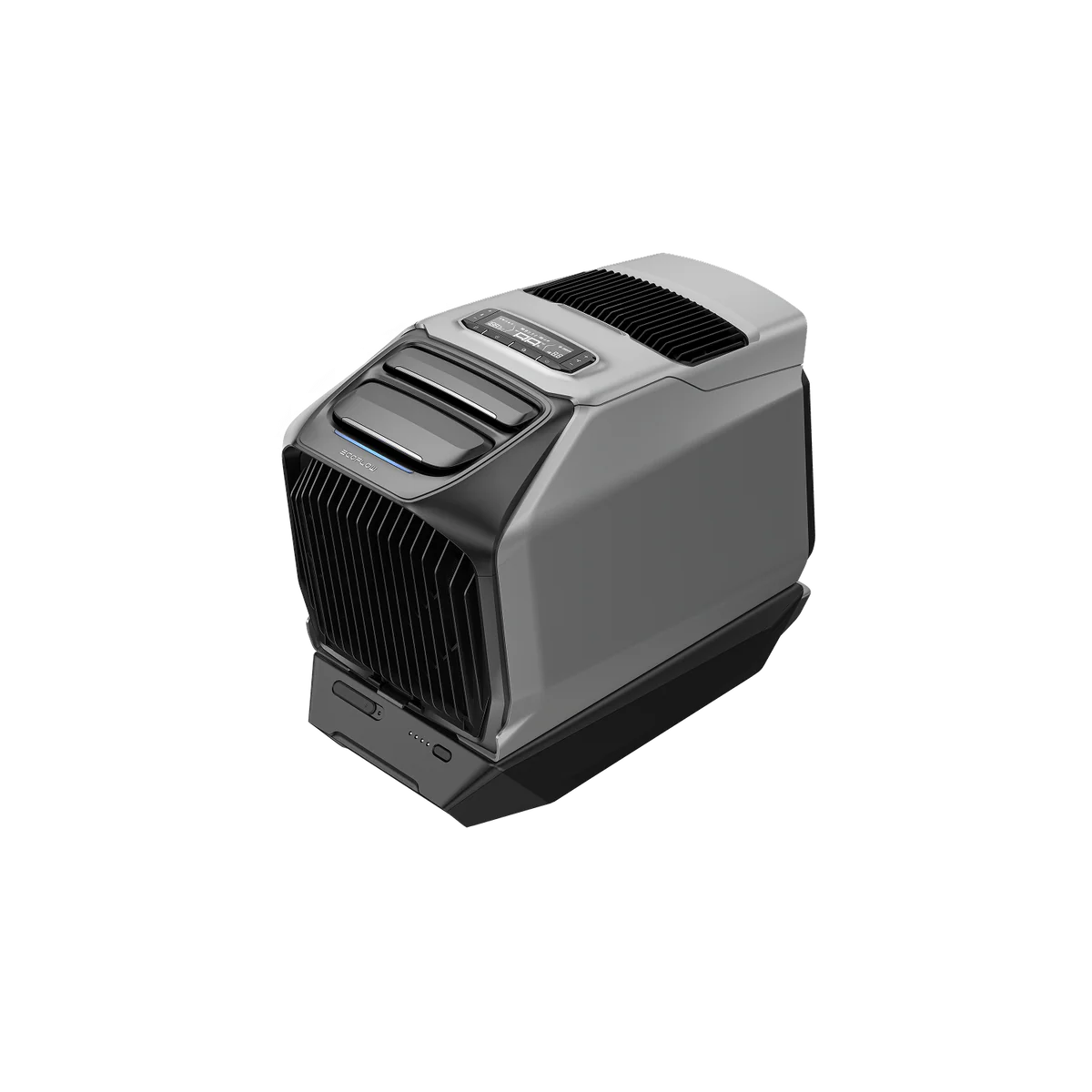
The EcoFlow WAVE 3 Portable Air Conditioner runs on AC power, a car outlet, solar input, or a compatible battery, with a dual-hose design that pulls heat out faster than single-hose units common in home window kits. At 33.7 lb (15.3 kg), it fits in a tent corner without crowding it.
What Size Portable AC Do You Need for Your Tent?
Tent size is the biggest factor in sizing a portable AC, since BTU output needs to match the volume of air you're cooling.
Small Tents (1–2 Person)
A 1- to 2-person tent typically runs 20 to 35 sq ft (1.9 to 3.3 sq m) of floor space, which a compact 4,000 to 6,000 BTU unit handles easily. Shorter hose runs mean even a modest output AC cools the space quickly.
Mid-Size Tents (3–4 Person)
A 3- to 4-person tent typically runs 40 to 70 sq ft (3.7 to 6.5 sq m), where a 6,000 to 8,000 BTU unit fits better. The EcoFlow WAVE 3 Portable Air Conditioner, rated at 6,100 BTU cooling, sits comfortably within that range.
Large Family Tents (5+ Person)
Large family tents often exceed 100 sq ft (9.3 sq m), pushing you toward an 8,000 BTU or larger unit, or two smaller units in separate rooms. A bigger space takes longer to cool and works the compressor harder overnight.
How Do Dual-Hose and Single-Hose Units Compare for Tent Use?
Single-hose portable ACs pull air from inside the tent, cool it, and exhaust heat through one hose. That creates negative pressure, pulling hot, humid air back in through every gap and zipper. A tent's thin walls make this worse than it would be in a sealed room.
Dual-hose units draw intake air from outside for the condenser instead, so they're not constantly displacing cooled air with fresh heat. Working through camping AC units side by side makes it easier to weigh hose type against your tent size before you buy.
How Much Power Does a Portable AC Draw?
Portable ACs draw power two ways: a rated running wattage while the compressor cycles, and a brief startup surge. The EcoFlow WAVE 3 Portable Air Conditioner draws roughly 690W (AC) or 640W (DC) at rated cooling; heating draws slightly less, at 645W (AC) or 606W (DC). That's moderate next to a home window unit, but it adds up fast overnight alongside a phone charger, string lights, or a cooler on the same battery.
What Size Power Station Do You Need to Run a Portable AC?
Your power station needs continuous output covering the AC's running watts plus its surge, and 2,000Wh or more of capacity to get closer to a full night's runtime.
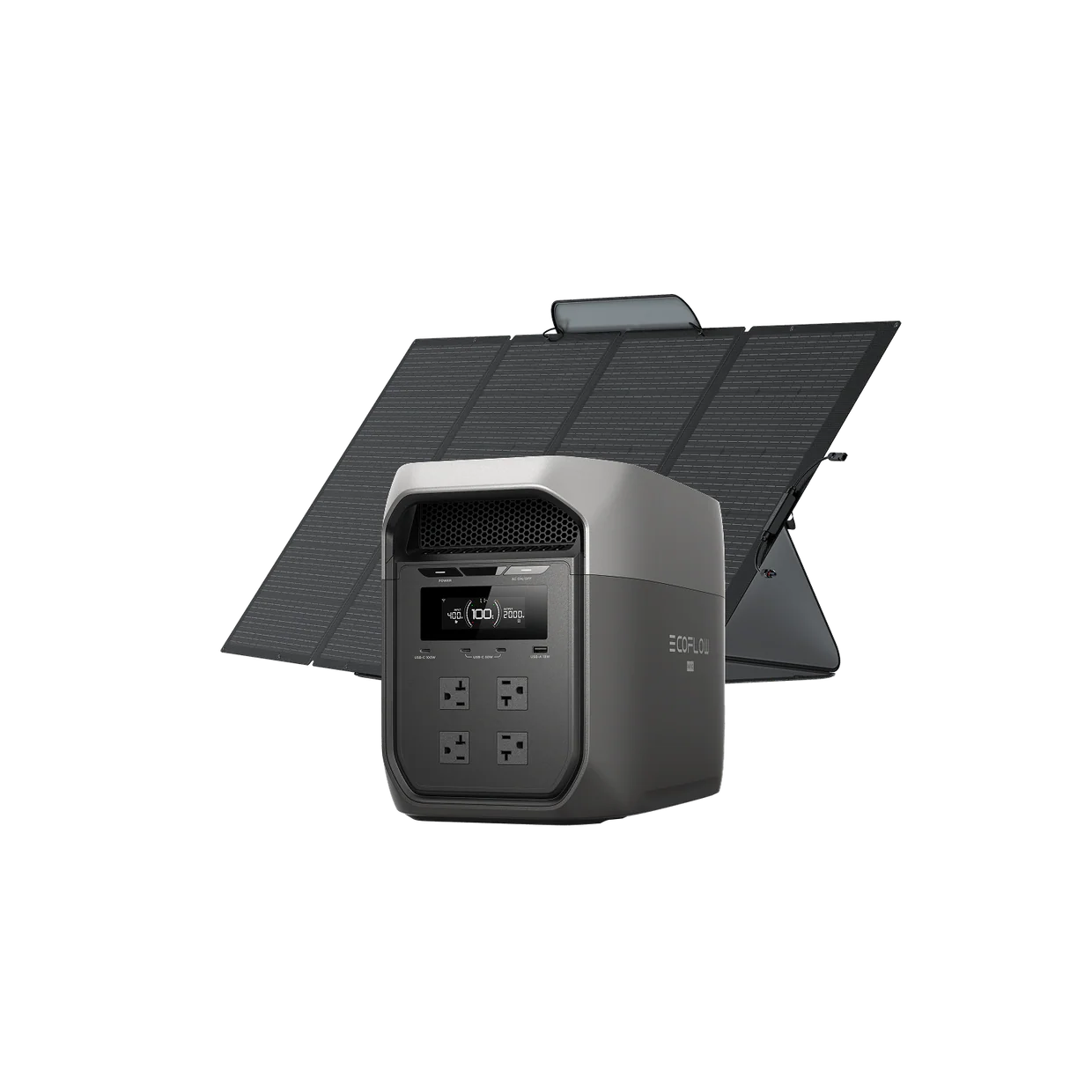
The EcoFlow DELTA 3 Max + 400W Solar Panel pairs a 2,048Wh battery with 2,400W of continuous output, comfortably covering the WAVE 3's draw with room for other gear, and its solar panel tops up capacity by day so you're not running dry by dinner. Sizing a power station for camping around wattage first avoids buying too little output for too much runtime.
How Do You Match AC Output to Power Station Wattage and Capacity?
Start with the AC's rated running watts and surge watts from the spec sheet. Your power station's continuous output needs to exceed the running watts with margin for the surge.
Capacity is the other half. Divide watt-hours by running watts for a rough runtime, then subtract 10 to 15 percent for inverter losses. A 2,000Wh battery running a 700W load gives you a little under 2.5 hours of continuous cooling, though a cycling compressor stretches that considerably. Running the math on powering an AC unit before you buy tells you whether your battery is enough.
What Else Should You Consider Before Buying a Portable AC for Camping?
Noise matters more at a campsite than at home, since a compressor running all night can bother neighbors as much as it bothers you. Water drainage varies too: some units need manual draining, others handle condensation automatically.
Weight and setup time matter if you're carrying gear any distance to your site, and if you're pairing your AC with solar, check that panel output and connector type actually match.
Frequently Asked Questions
What Size Portable AC Do You Need for a 4-Person Tent?
A 4-person tent typically runs 40 to 70 sq ft (3.7 to 6.5 sq m), calling for a unit in the 6,000 to 8,000 BTU range. Going smaller means the compressor runs constantly without fully cooling the space, while going larger adds weight and power draw you don't need. Match BTU rating to your tent's actual floor space, since footprints vary more than person-count labels suggest.
Can a Portable Power Station Run a Camping AC All Night?
Yes, with the right capacity. Most portable ACs draw 600 to 900W while actively cooling, so a power station with 2,000Wh or more generally covers a full 8-hour night, especially since the compressor cycles on and off rather than running continuously. Smaller power stations get you a few hours before needing a recharge, which works fine paired with solar during the day.
Is a Dual-Hose or Single-Hose AC Better for Tent Camping?
Dual-hose units are generally the better fit. They draw intake air from outside for the condenser instead of pulling it from inside the tent, so they don't create the negative pressure that drags hot, humid air back in through seams and zippers. Single-hose units cost less and work fine in sealed spaces, but a tent's thin walls make that efficiency loss more noticeable overnight.
Matching the Right Portable AC and Power Station Keeps Your Campsite Cool All Night
A comfortable night in a hot tent comes down to two numbers: the BTU rating that matches your floor space, and the watt-hours that get your AC through until sunrise. Skip either calculation and you'll either be sweating through the night or hauling a power station that dies at 2 a.m.
For a mid-size tent, pairing the EcoFlow WAVE 3 Portable Air Conditioner with the EcoFlow DELTA 3 Max + 400W Solar Panel covers both the wattage and the runtime, with solar keeping the battery topped up for the next night too.
For press requests or interview opportunities, reach out to our media team
media.na@ecoflow.com