Outdoor Event Season Is Back—Here’s How to Stay Powered Anywhere
- Why Outdoor Events Lose Power (and What That Really Costs)
- Build a Simple Event Power Plan: Devices, Watts, and Hours
- Choose Your Power Source: Grid, Battery Power Stations, Solar, or Gas
- Run Power Safely Outdoors: Cords, GFCI, and Smart Layout
- EcoFlow Setups That Scale From Small Gatherings to Event-Size Power
- Frequently Asked Questions
- Stay Powered, Keep the Schedule, and Make the Event Feel Effortless
The time for outdoor events is back, from weddings and graduations to food truck rallies and music festivals. While there are several reasons to be excited for the outdoor event season, event planners must ensure there’s enough power for the whole night — lose power mid-event and everything stops.
Discover why outdoor events lose power and how to ensure yours goes off without a hitch.
Why Outdoor Events Lose Power (and What That Really Costs)
Power failures at outdoor events typically occur without warning. Understanding common failure points helps you design around them to secure reliable power throughout the event.
Overloaded Circuits
Overloaded circuits are the main culprit in power failures. A standard 15-amp circuit can theoretically support up to 1800W at 120V, but outdoor events require a wide range of devices and appliances, from sound systems to food warmers.
Running all your equipment through the same circuit can easily trip the breaker, requiring someone to run inside and reset it, only for it to trip again.
Long Cable Runs
Long cable runs introduce voltage drops that starve your equipment of necessary energy. Stretching an extension cord 100 feet from the house significantly drops the amount of voltage delivered to your devices. Equipment receiving less energy than it needs affects its performance or causes it to shut down entirely.
Weather
Weather can cause power failures that are largely out of your control.
Rain can soak uncovered cables and trip GFCI outlets.
Wind can knock over stands and yank cables from outlets.
Heat can cause equipment to overheat and cause battery units to shut down if left in the direct sunlight.
Alternatively, cold weather can cut lithium battery capacity and reduce voltage.
Underestimated Runtimes
Miscalculating the amount of energy needed can cause power failures. Event planners may calculate the power needed for the event itself, but forget to account for the aftermath, including the after-party, clean-up, and overnight refrigeration for leftover food.
Even if you have enough power for the main event, running out of it afterward can leave you scrambling.
Build a Simple Event Power Plan: Devices, Watts, and Hours
A power plan helps ensure your event runs for its intended duration.
Start by taking inventory of the devices you’ll need for your event — speakers, microphones, lighting, food warmers, beverage coolers, fans, heaters, phone charging stations, projectors, laptops, and anything else that’s plugged in.
Find the wattage of each device and multiply it by its runtime in hours to find the watt-hours.
Add up all the watt-hours to determine the battery capacity needed and add a 25% buffer to account for inefficiency, voltage drop, and unexpected energy needs. Underevaluating your needs could lead to failure, while overestimating gives you flexibility to extend hours or last-minute equipment inclusions.
Remember, many appliances and tools surge in power when they first start up. Your power source must be able to handle that spike.
Choose Your Power Source: Grid, Battery Power Stations, Solar, or Gas
Grid power is often the cheapest and simplest power source when available. If your venue has outdoor outlets with dedicated circuits, use them first.
Confirm the circuit ratings to ensure they’re compatible with your equipment, and spread out heavy loads across circuits to prevent overloading them and tripping a breaker.
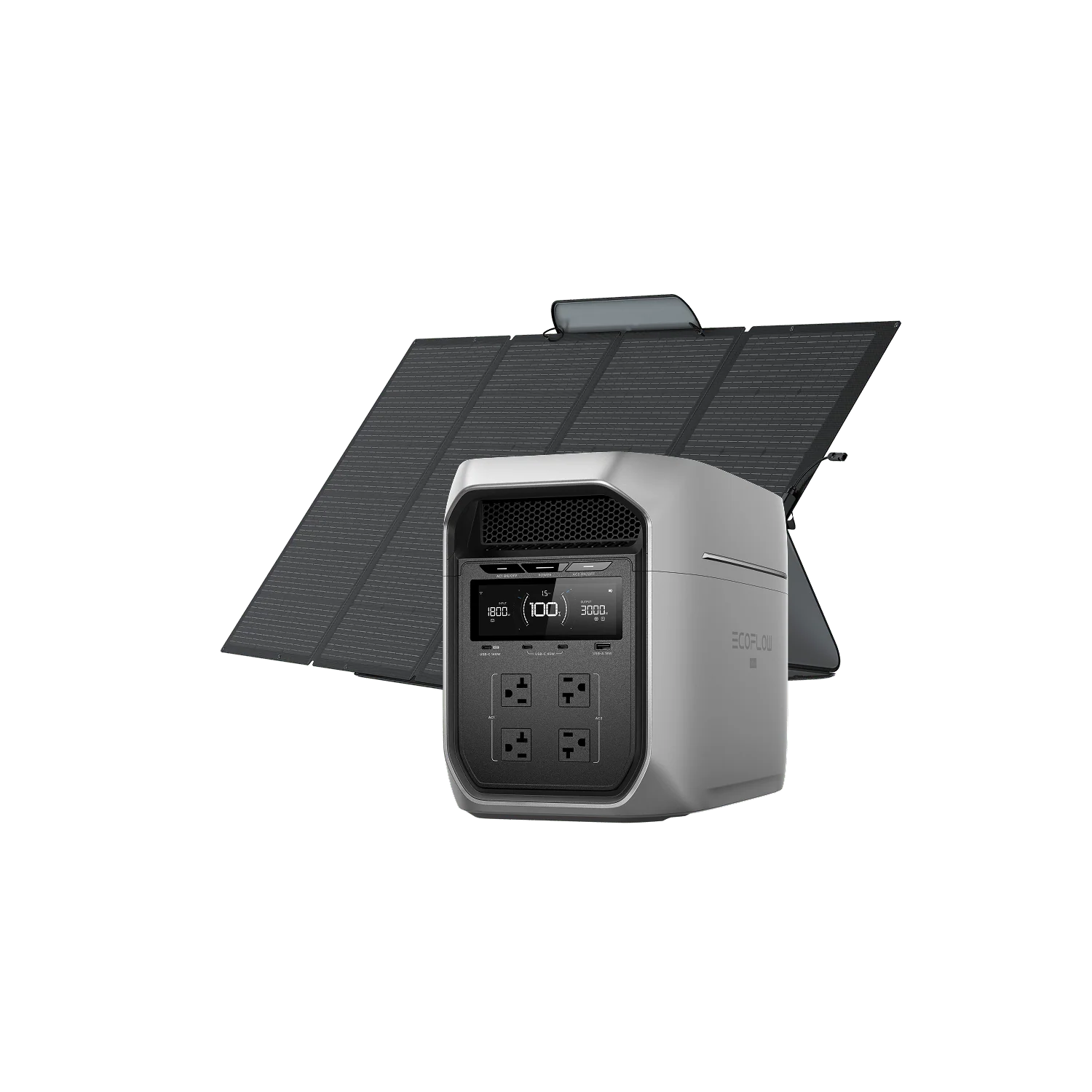
Battery power stations offer clean, quiet energy without the need for fuel. These units are ideal for events where the noise and fumes of generators would ruin the atmosphere. The EcoFlow DELTA 3 Max Plus + 400W Solar Panel provides a 2,048Wh base capacity with expandability up to 10,000Wh.
The 400W Solar Panels extend battery runtime and speed up renewable charging. These units work best for daytime events with predictable weather and moderate energy needs. Cloud cover can significantly reduce output, so battery backup is advised.
Gas generators offer unlimited runtime as long as you have fuel. They deliver high output and rugged reliability, but are accompanied by lots of noise and harmful fumes.
Run Power Safely Outdoors: Cords, GFCI, and Smart Layout
Only use extension cords rated for outdoor use, and ensure they’re equipped to handle your load without overheating.
Never connect multiple cords together or run them across walkways where they can create tripping hazards. Tape them to the ground using gaffer tape or run them through cord protectors.
Ground Fault Circuit Interrupter (GFCI) protection is non-negotiable for outdoor events — it detects current leaks and shuts off electrical power in milliseconds, preventing electrocution. Implement GFCI outlets, extension cords, and adapters.
Test them before the event by pressing the “test” button and confirming they trip, then press “reset.”
Connections should be kept dry. Use weatherproof covers, wrap exposed plugs with electrical tape, lift cords off wet ground, and coil excess cable to prevent water pooling. Move battery units under cover once rainy weather looms.
Run cables along fences behind stages or under tables rather than across walkways, and mark them with bright tape for easy spotting after dark. Position power sources upwind of guest areas to keep exhaust and noise away, and keep high-draw devices nearby to minimize cable length.
Monitor setups throughout the event to uphold safety standards. Check battery levels, listen for generator issues, and watch for tripped breakers to address problems before they cascade into power failures.
EcoFlow Setups That Scale From Small Gatherings to Event-Size Power
EcoFlow offers a range of portable power stations that cover the power needs for different scenarios.
For small gatherings, the EcoFlow DELTA 3 Plus + 220W Solar Panel bundle holds a 1,024Wh base capacity with solar panel-charging capabilities for extended runtime. This setup can support string lights, a small sound system, a beverage cooler, and phone charging for several hours.
Medium-sized events benefit from the EcoFlow DELTA 3 Max Plus Solar Generator + 400W Solar Panel with a 2,048Wh capacity and 3000W output. This unit can power full DJ setups, food warmers, projectors, stage lighting, and more for 4-6 hours, and even longer with extra batteries.
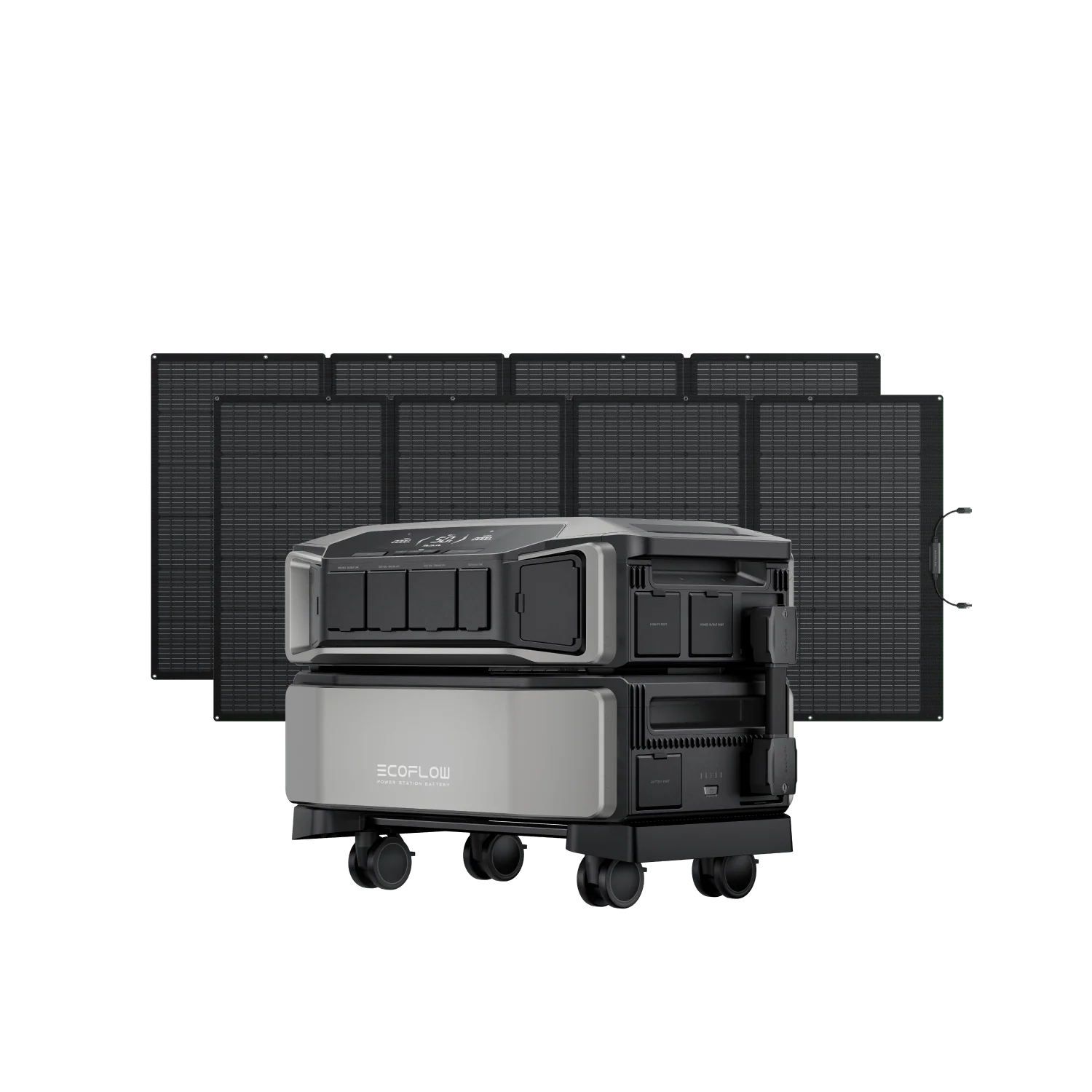
For large events and festivals, the EcoFlow DELTA Pro Ultra + 2×400W Solar Panels delivers a high-capacity, scalable solution. Designed for serious power needs, it can run commercial refrigeration, catering equipment, and multiple sound systems, while solar input helps extend runtime throughout the event.
Frequently Asked Questions
How Do I Figure Out What Size Portable Power Station I Need for an Outdoor Event?
Take inventory of every device needed for the event, noting its wattage and runtime. Calculate the total watt-hours needed and add a 25% buffer for unexpected power needs. Ensure the power station’s output exceeds the highest simultaneous load plus startup surge.
How Far Should a Generator Be From People and Buildings at an Outdoor Event?
Generators should be at least 20 feet from occupied spaces to reduce noise and fume exposure. Position generators upwind and away from guests and never run them indoors, as they emit carbon monoxide, which is odorless and deadly.
Can Solar Panels Keep My Event Powered All Day?
With clear, sunny skies, solar panels can power moderate loads all day. However, they work best when paired with a power station, using the sun to extend runtime rather than relying on it exclusively.
Stay Powered, Keep the Schedule, and Make the Event Feel Effortless
Outdoor events succeed when the power stays on. Ensuring the behind-the-scenes power concerns stay hidden is essential to a memorable night. Build a power plan by taking inventory of power demands and calculating capacity.
Choose the right source for your budget and monitor everything in real time.
The EcoFlow DELTA series offers expandable energy solutions and app monitoring so you can build the perfect setup for your event.
For press requests or interview opportunities, reach out to our media team
media.na@ecoflow.com