Keep Your Christmas Inflatables Standing All Day and Night
- Why Christmas Inflatables Keep Falling Over at Night
- How Much Electricity Do Christmas Inflatables Use?
- Outdoor Power Supply Without Messy Cables
- How Long Will a Portable Power Station Run Your Inflatables?
- One Big Power Station or Multiple Small Ones?
- Smart Layout Tips for a Clean, Festive Front Yard
- Prevent Inflatables from Freezing to the Ground
- Make Holiday Decorations Shine
- FAQs
Thinking about decking out your entryway with inflatables this Christmas? They're cute, festive, and an instant mood-booster—until the wind picks up. Suddenly, your cheerful snowman is face-down in the bushes, and your reindeer is doing backflips across the yard. So, how do you keep them standing tall all season long? It comes down to two things: a rock-solid support system and a smart layout plan.
Why Christmas Inflatables Keep Falling Over at Night
Many homeowners assume that if their christmas lawn decorations collapse, it must be a broken fan or a fuse issue. While equipment failure happens, the most common culprits are actually environmental and electrical setup errors. Understanding why your display fails is the first step toward fixing it.
The Hidden Impact of Temperature Drops
Inflatables rely on air pressure. According to basic physics, as the temperature drops significantly at night, the air inside your inflatable contracts. If your fan is underpowered or the fabric is slightly porous (which happens as they age), the internal pressure decreases, causing the character to "nod off" or buckle at the waist. This is most common in tall figures like giraffes or 12-foot skeletons repurposed for Christmas.
The Extension Cord Trap
Running multiple long extension cords across your yard causes voltage drop. By the time the electricity travels 100 feet from your porch outlet to the curb, the voltage may have dipped enough that the fan runs slower than its rated speed. A slow fan cannot fight gravity or the weight of evening dew/frost.
Moisture Weight
Nighttime brings dew, frost, and sometimes snow. A layer of moisture adds surprising weight to the nylon fabric. If your power delivery is weak (due to the voltage drop mentioned above), the fan cannot generate enough static pressure to lift this extra wet weight, leaving your decoration sagging.
How Much Electricity Do Christmas Inflatables Use?
To keep your outdoor christmas decorations standing 24/7, you need to understand the energy math. It is easy to underestimate the consumption of these devices because they look like simple toys, but the blower fans run continuously.
Typical Power Consumption Rates
Most residential inflatables use a centrifugal blower fan and internal LED lights.
Small Inflatables (4ft): Typically draw 40–60 Watts.
Medium Inflatables (6-8ft): Typically draw 80–120 Watts.
Giant Inflatables (10ft+): Can draw 150–200 Watts or utilize dual fans.
The 24-Hour Consumption Calculation
If you plan to keep a standard 8-foot Santa (approx. 100W) running all day and night to avoid the "deflated pile" look, the math adds up quickly:
100 Watts × 24 Hours = 2,400 Watt-hours (2.4 kWh) per day.
If you have a display with four or five such figures, you are looking at roughly 10 kWh of usage daily. This is why relying on a single outdoor outlet with a splitter often trips breakers—the total amperage exceeds what a standard household circuit (often shared with living room lights) can handle.
Outdoor Power Supply Without Messy Cables
The "Pro" move for a clean, safe display is to stop running orange extension cords across the lawn entirely. Instead, move the power source to the decoration.
The Wireless Solution
Using a portable outdoor power supply allows you to place the energy source directly behind or inside the display grouping. This eliminates the voltage drop caused by long cables and removes the ugly "web" of wires that ruins the look of your yard during the day.
Why Portable Power Stations Win Over Extension Cords
Safety: No cables across the sidewalk for delivery drivers or carolers to trip over.
Aesthetics: You can take photos of your yard without orange lines cutting through the snow.
Reliability: A dedicated power station provides pure sine wave electricity, ensuring the fan runs at maximum RPM to keep the figure rigid, regardless of what is happening with your home's main breaker.
Weatherproofing the Setup: While the power station itself shouldn't sit in the snow, it is much easier to place a compact unit inside a weather-resistant box or a ventilated fake rock cover near the inflatable than to waterproof 100 feet of connections.
How Long Will a Portable Power Station Run Your Inflatables?
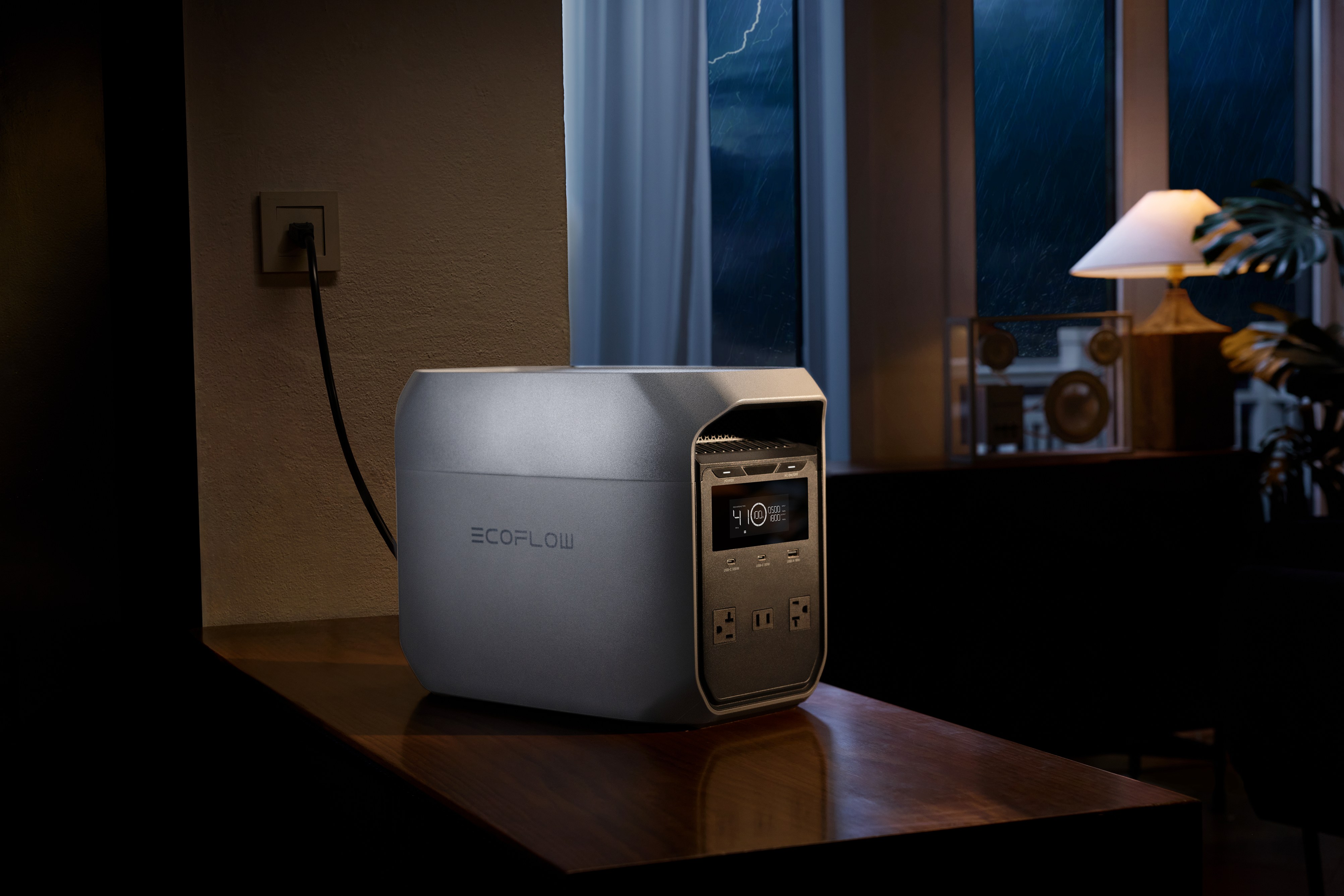
If you decide to cut the cord and use outdoor power, capacity is king. You need a unit that matches your runtime goals. This is where the EcoFlow DELTA 3 Series shines, specifically designed to handle sustained loads like these.
Runtime Estimates Based on Capacity
Let’s assume you are powering a "Feature Scene" consisting of one large Snowman and two smaller reindeer, totaling roughly 200 Watts of continuous draw.
Scenario A: The Evening Show (5:00 PM – 11:00 PM)
Duration: 6 Hours
Required Energy: 200W × 6h = 1,200Wh.
Recommended Solution: EcoFlow DELTA 3 Classic. With 1024Wh capacity, it handles a slightly smaller load perfectly, or you can top it up quickly. For the full 1200Wh need, the Classic gets you very close (approx 5 hours of runtime for this heavy load), or easily covers a single large inflatable (100W) for 10+ hours.
Scenario B: All Day and Night (24 Hours)
Duration: 24 Hours
Required Energy: 200W × 24h = 4,800Wh.
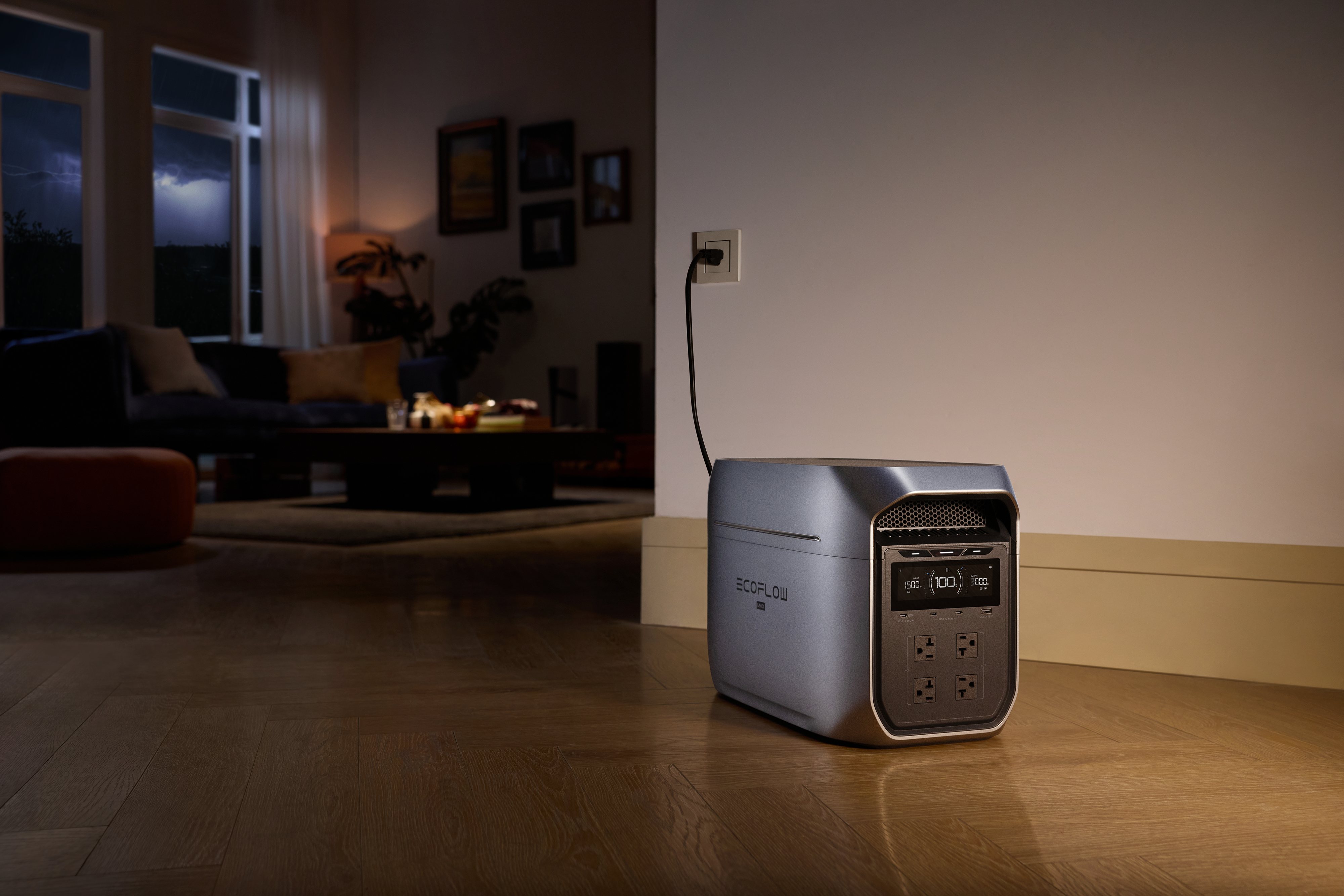
Recommended Solution: EcoFlow DELTA 3 Max. This unit starts with a massive 2048Wh capacity. While it won't run a massive scene for 24 hours on one charge, its expandability allows you to add extra batteries. More importantly, its fast charging speed means you can bring it inside, charge it from 0-80% in roughly an hour, and have it back out before the figures fully deflate.
Strategic Power Management
To maximize your outdoor power supply runtime without sacrificing the "standing" look:
The "Low" Period: If your inflatable has a zipper, slightly unzip it during the day to reduce strain on the fabric if you turn it off, but if powering wirelessly, consider a timer that shuts off the unit at 2 AM when traffic is zero.
Smart Monitoring: The EcoFlow app allows you to see exactly how much power your inflatable is pulling. You might find that Snowman only pulls 80W, giving you significantly more runtime than estimated.
One Big Power Station or Multiple Small Ones?
When planning your christmas lawn decorations, you face a logistical choice: do you create a central power hub or distributed power islands?
The "Power Island" Approach (Multiple Small Units)
If you have decorations scattered far apart—one by the mailbox, one on the porch, and one under the big oak tree—running cables between them defeats the purpose of wireless power.
Pros: Absolutely zero wires crossing the grass. Total freedom of placement.
Cons: You must manage/recharge multiple units.
Verdict: This is best if you have isolated "feature" pieces.
The "Central Hub" Approach (One Large Unit)
If you create a "scene" (e.g., Santa’s Workshop) where all figures are clustered within a 10-foot radius.
Pros: You only manage one device (like the EcoFlow DELTA 3 Max). The high capacity (2kWh) handles the surge startup of multiple fans simultaneously without faulting.
Cons: Short cables are visible within the cluster (easily hidden by "snow" blankets).
Verdict: This is generally the most efficient method for serious decorators. The Delta 3 Max's 2600W output can easily handle heaters, music speakers, and the inflatables simultaneously.
Smart Layout Tips for a Clean, Festive Front Yard
Hide the Hardware
The biggest advantage of using a portable power station is that it doesn't need to be tethered to the house.
The "Present" Box: Take a plastic storage bin, cut ventilation holes, and wrap it like a Christmas gift. Place the power station inside. It blends perfectly into the scene while protecting the unit from direct snow.
The Shadow Trick: Place the power unit directly behind the largest inflatable. Since the fan is usually at the back/bottom, the power cord travel distance is inches, not feet.
Managing Tension
Stake your inflatables after they are fully inflated. However, ensure there is slack in the power cable connecting to your station. If the wind blows the inflatable, you don't want it pulling the power station over.
Prevent Inflatables from Freezing to the Ground
A major reason users want to keep inflatables standing 24/7 is the "freeze-down" effect. When you deflate a figure at night, the fabric lays on the grass. If the temperature drops or it rains/snows, the fabric freezes to the lawn. When the timer turns on the next day, the fan struggles to rip the fabric off the ice, often tearing the material or burning out the motor.
The Pallet Method
If you must turn them off, do not let them hit the grass. Place a small wooden pallet or a plastic tarp underneath the base. Better yet, build a small platform.
The Low-Power Hack
This is where the EcoFlow DELTA 3 Series offers a unique advantage. If you don't want full inflation but want to prevent freezing, some advanced users employ a voltage controller (dimmer) to run the fan at half-speed—just enough to keep the fabric off the ground but not fully erect.
Note: Check your inflatable's manual to ensure the motor supports variable voltage.
Alternatively, simply rely on the massive capacity of the DELTA 3 Max. With over 2kWh of energy, you can leave the fans running on full power through the coldest parts of the night (2 AM – 7 AM) to prevent ice formation, ensuring your display is greeting commuters bright and early.
Make Holiday Decorations Shine
Keeping your outdoor christmas decorations upright and glowing requires reliable energy. By moving away from restrictive extension cords and utilizing a robust outdoor power solution like the EcoFlow DELTA 3 Series, you gain the freedom to place decorations anywhere and the capacity to keep them standing through the long winter nights. Whether you choose the agile Delta 3 Classic or the powerhouse Delta 3 Max, reliable portable power ensures your holiday display remains the envy of the neighborhood.
FAQs
Q1: Why do Christmas inflatables for the outdoors keep falling down at night?
When the temperature drops at night, inflatables often deflate because the air pressure inside the nylon fabric decreases. Also, heavy frost or dew makes the nylon heavier, which a weak or underpowered fan can't handle. Voltage drops from long, thin extension cords can also reduce the fan's power, which means it can't maintain the pressure needed to support the weight of the moisture.
Q2: How do I figure out how much power I'll need to keep inflatables running all day and night?
To calculate the total power consumption, multiply the fan's wattage by 24 hours. For instance, a 100-watt fan uses 2,400 watt-hours (or 2.4 kWh) when running for 24 hours. When using a portable power station, you need one that can provide this capacity or more, or else you will have to plan for recharging cycles.
Q3: How long can I use a portable power station to power my Christmas inflatables?
The battery size and the inflatable's wattage affect the runtime. For example, a 1,024 Wh EcoFlow DELTA 3 Classic can power a typical 100 W inflatable for about 8 to 10 hours. The larger EcoFlow DELTA 3 Max, which has a 2,048 Wh capacity, could power the same decoration for up to 20 hours. When you calculate runtime, always account for about 10% to 15% efficiency loss.
Q4: Can you leave inflatables on all the time?
In most cases, yes, as long as the fan is designed for continuous use and isn't blocked by debris or snow. But running them continuously costs more in electricity and wears out the motor faster. Extension cords also pose risks, such as making people more likely to trip or creating electrical shorts from wet connections in the yard. These risks can be reduced by using a portable power station instead.
For press requests or interview opportunities, reach out to our media team
media.na@ecoflow.com