How to Size a Generator for a House: The Complete 2026 Guide
- Why Does Generator Sizing Matter?
- How Do You Calculate Your Home's Power Needs?
- What Size Generator Do You Need for Different Home Sizes?
- What Appliances Draw the Most Power During an Outage?
- How Do You Choose the Right Generator for Your Situation?
- Frequently Asked Questions
- Reliable, Scalable, Cost-Effective Backup Power
When power outages hit unexpectedly, having the right generator in your home makes all the difference. But sizing your backup power source incorrectly can cause serious problems, from not having enough power to overloading the system.
This guide breaks down how to calculate the size of your home generator so you can select the right backup solution.
Why Does Generator Sizing Matter?
Choosing the right generator isn’t just about keeping the lights on. It’s a critical safety calculation that you don’t want to get wrong.
Whether you opt for a fuel-powered generator or a battery-based system like the EcoFlow DELTA Pro Ultra X, which can scale to cover whole-home loads, the sizing calculation still applies. An undersized system leaves critical appliances unprotected; an oversized one wastes money and, in fuel-based units, causes mechanical problems.
Choose a generator that’s too small, and overloading becomes a problem. High-demand appliances like the refrigerator use a burst of power when they attempt to cycle on, and an undersized generator could trip its circuit breakers. Electrical fluctuations can also damage modern electronics like laptops.
Using an oversized generator leads to inefficiencies. Diesel-based generators experience wet stacking, which is when they have a light load and unburnt fuel accumulates in the exhaust system, degrading engine performance. Fuel-based generators also consume more gasoline, propane, or diesel than they need, leading to bloated costs.
As such, finding the right size is key for safe, balanced, and efficient operation.

How Do You Calculate Your Home's Power Needs?
Calculating your home’s power requirements accurately means understanding the difference between starting watts and running watts.
Starting Watts: The brief, high-energy surge a device needs to kick-start a motor or compressor from a dead stop.
Running Watts: The continuous electrical power an appliance requires to remain operational after its startup phase.
To calculate how many watts you need for your home:
List all essential devices that you need to power during a blackout.
Find out the wattage ratings, which are usually located on the data tag on every device. Note down the specifications.
Add up the running wattage of all the items to determine the continuous operational load.
Identify the appliance with the highest starting wattage, which will probably be the well pump or central air conditioner.
Do not add all the starting wattages together because appliances don’t all cycle on at the exact same time. Instead, add the highest starting surge to your continuous running total.
Finally, add a safety buffer of about 15% to 20% to account for minor calculation errors. This also means the generator doesn’t need to operate at 100% capacity, which could help extend its lifespan.
What Size Generator Do You Need for Different Home Sizes?
While using an exact load calculation is the best choice, structural square footage provides a good introductory baseline to estimate the size of generator you need to run your home.
Small Home or Apartment
For a property under 1,200 square feet, a capacity of 3,000 to 5,000 watts is generally considered sufficient to maintain essential baselines. This is enough for general equipment, but it won’t support heavier 240-volt electrical equipment, such as central HVAC units.
Medium Home
For a typical suburban house of about 2,000 square feet, you’ll need between 5,000 and 12,500 watts to support the main essentials, like a refrigerator and sump pump, as well as additional items like the television and microwave.
Large Home
Homes over 2,500 square feet will need 12,500 to 25,000 watts or more for a whole-home backup. This size can power multiple central air conditioning zones, deep well pumps, and high-amperage equipment like electric vehicle (EV) charging stations.
What Appliances Draw the Most Power During an Outage?
The appliances that draw the most power are mechanical appliances with electric motors, heating elements, or cooling compressors.
These include the following devices, which are paired with the typical running watts you can expect each to use:
Electric Clothes Dryer – 5,400 running watts
Electric Water Heater – 4,500 running watts
Central Air Conditioner (3-Ton) – 3,000 to 3,500 running watts
Well Pump (1/2 to 1 HP) – 1,000 to 1,500 running watts
Microwave – 1,000 to 1,500 running watts
Sump Pump (1/2 HP) – 800 to 1,050 running watts
How Do You Choose the Right Generator for Your Situation?
When you’re selecting a backup system, you have to think beyond raw wattage because you will need to balance your lifestyle, location, and local infrastructure.
Open-frame portable generators are affordable, but they’re very noisy and can’t be operated inside, and you’ll also need to handle fuel reserves. Enclosed inverter generators are quieter, but they also need to run outdoors because of carbon monoxide emissions.
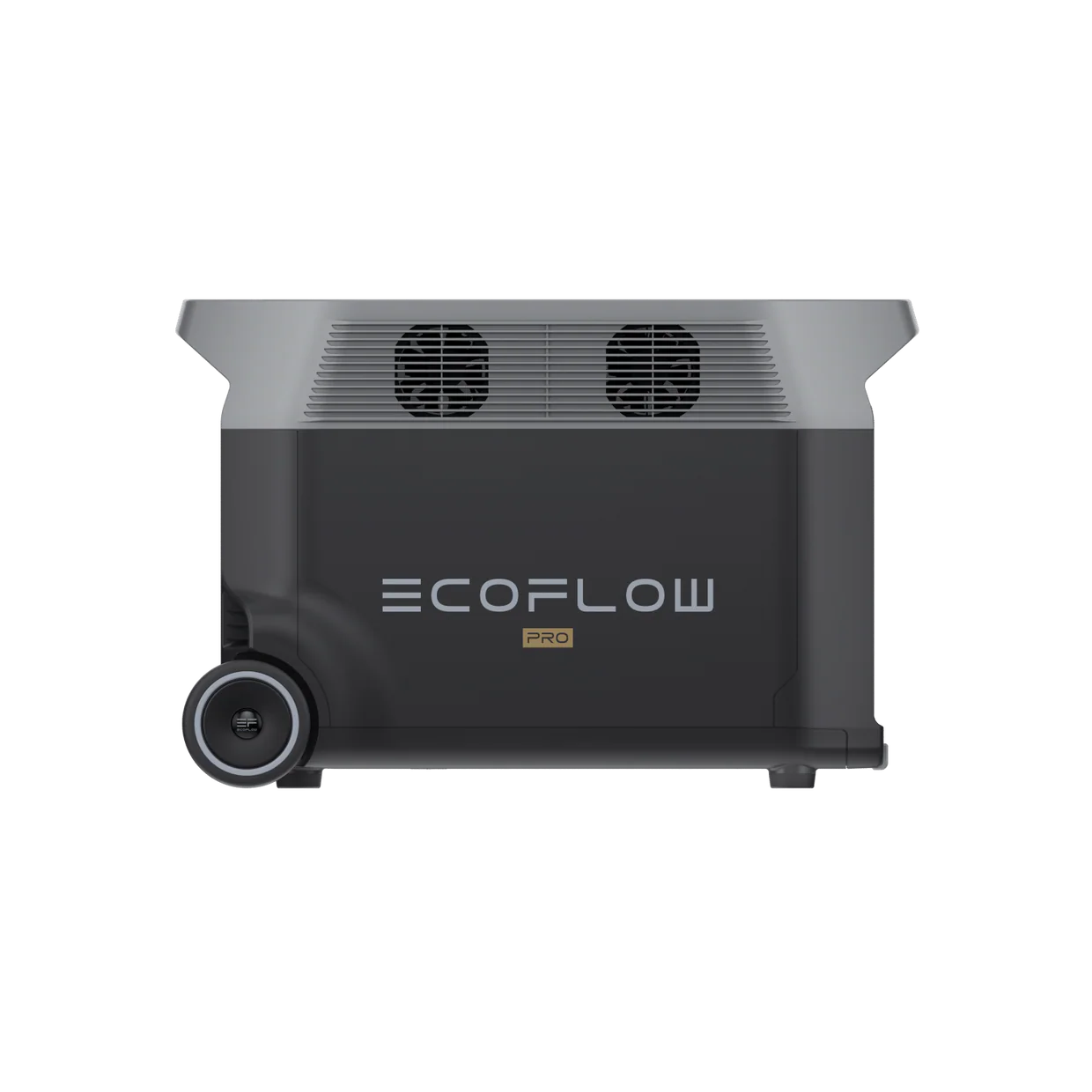
Portable power stations take a different approach. The EcoFlow DELTA Pro, for example, delivers 3,600W of AC output with a 3.6–25 kWh capacity, which is enough to cover the mid-range load calculations most medium-sized homes require. It runs silently, produces no emissions, and can be paired with solar panels to recharge without grid access.
The right option for you depends on your budget, your home, and the type of generator that suits your needs. However, electric options have become increasingly popular because they are silent, safe to use, and don’t produce emissions.
Frequently Asked Questions
Is a Battery Backup System Better Than a Generator for Home Use?
For most homeowners, yes. Battery backup systems are silent, emit zero greenhouse gas emissions, can be used safely indoors, and deliver near-instantaneous power transfer so that devices like computers don’t experience disruptive resets.
How Big of a Generator Do I Need to Run a 2,000 Sq Ft House?
For a standard 2,000-square-foot home, powering essentials like lighting, refrigeration, and a few small devices typically requires 5,000 to 7,500 watts. But to run a central air conditioning system or a well pump, you'll need significantly more. Most 2,000 sq ft homes require between 10,000 and 20,000 watts for whole-home coverage including HVAC.
Reliable, Scalable, Cost-Effective Backup Power
Sizing your backup system correctly means reliable power when you need it, and no overloads when you don't. While mechanical generators were once considered the only option, advanced battery storage is now a superior choice.
For a clean, silent, and reliable alternative to fossil-fuel options, explore a whole home backup power solution from EcoFlow. There are several models to cover different power needs, so you can power your home in confidence.
For press requests or interview opportunities, reach out to our media team
media.na@ecoflow.com