How Many Watts Does a Ceiling Fan Use?
- What Is a Ceiling Fan, and How Does It Work?
- How Many Watts Does a Ceiling Fan Use?
- What Factors Affect Ceiling Fan Wattage?
- How Do You Calculate Ceiling Fan Energy Costs?
- How Do Ceiling Fans Compare to Air Conditioning?
- How Can You Keep a Ceiling Fan Running During a Power Outage?
- Frequently Asked Questions
- Backup Power Keeps Your Ceiling Fan Running When the Grid Goes Down
Ceiling fans are one of the most energy-efficient ways to make a room feel cooler, using a fraction of the energy that air conditioning does. How many watts your fan draws depends on its size, motor type, speed setting, and whether it has a light kit. Here's what affects ceiling fan wattage, how to calculate what yours costs to run, and how fans compare to air conditioning.
What Is a Ceiling Fan, and How Does It Work?
A ceiling fan is a mounted appliance with rotating blades that circulates air within a room to create a cooling breeze. Rather than lowering the actual room temperature, your fan uses the wind chill effect, moving air across your skin to accelerate evaporation and make you feel cooler.
A small electric motor, mounted in the housing at the ceiling, drives the blades, while a separate switch or remote controls fan speed and, on many models, a light. Because a fan only needs to power a motor rather than a full refrigeration cycle, it draws much less electricity than a central air conditioner or window unit doing the same cooling job in a room. That low draw means even a small portable power station can comfortably keep your fan running for hours.
How Many Watts Does a Ceiling Fan Use?
Most household ceiling fans use between 15 and 100 watts, depending on their size, speed, and motor type, with standard models averaging around 50–75 watts.
The most efficient ENERGY STAR certified fans, many of which use DC or brushless motors, are up to 44% more efficient than conventional models, with some drawing as little as 10 to 15 watts. Adding a light kit increases total consumption further, particularly with older incandescent bulbs.
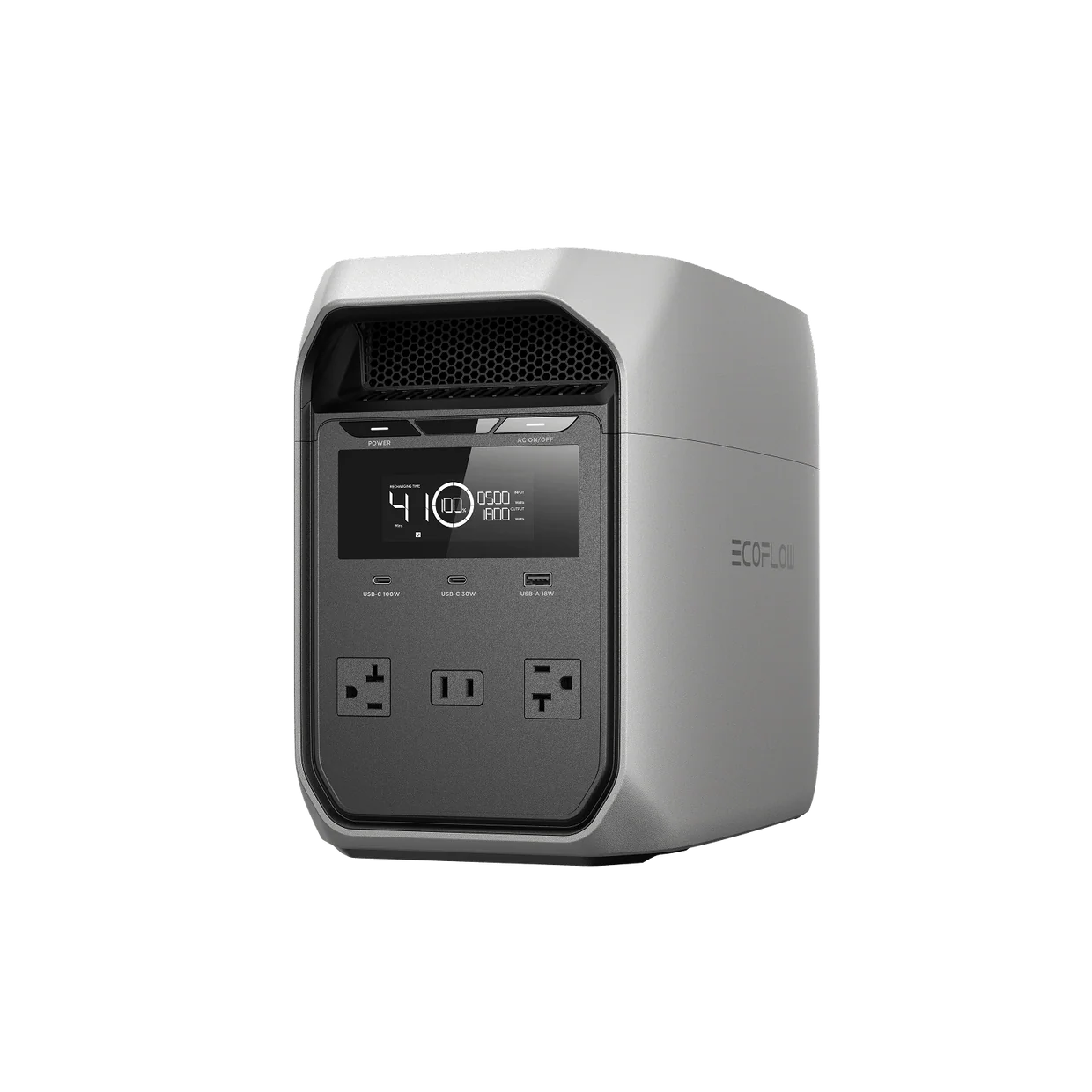
For scale, the EcoFlow DELTA 3 Classic holds a 1,024Wh capacity that can keep a 75W fan running for more than 8 hours a day.
What Factors Affect Ceiling Fan Wattage?
Fan Size
Larger blades require more energy to spin, though a bigger fan isn't always the higher-wattage option; efficient design matters as much as size. Ceiling fan blade spans typically run 29 to 54 inches, with 52-inch fans being the most common size.
In the same comparison of ceiling fan models cited above, the largest fans (56 to 84 inches) averaged around 35 watts on high speed (a reminder that checking a specific model's rated wattage is more reliable than estimating from blade span alone).
Motor Type: AC vs. DC
Motor type is the single most important factor in ceiling fan energy use. Traditional AC motors connect directly to your home’s alternating current, making them simple and inexpensive, but typically draw 50 to 100 watts and offer only about three speed settings. DC motors use a built-in converter and magnets to draw as little as 15 to 35 watts and typically offer finer speed control.
Fan Speed Setting
Ceiling fan wattage increases proportionally with its speed, with low speed consuming roughly 30% less electricity than high speed. High speeds demand more power to overcome air resistance and spin the motor faster.
Light Kits
Many ceiling fans include an integrated light fixture, and depending on the bulb type, this can add anywhere from a few watts to well over 100 watts on top of the fan’s own power draw. Upgrading to LED bulbs in a fan’s light kit is a simple way to keep total wattage low without giving up built-in lighting.
How Do You Calculate Ceiling Fan Energy Costs?
To estimate your ceiling fan’s running cost, multiply the fan’s wattage by the number of hours it runs a day, then divide by 1,000 to convert to kilowatt-hours. Multiply the kWh by your electricity rate to find the cost of running your fan per day.
How Do Ceiling Fans Compare to Air Conditioning?
Ceiling fans are significantly cheaper to run than air conditioning, but they cool people rather than spaces, so the two aren’t a like-for-like substitute in every situation. In fact, real savings occur when they are used together.
Running a fan alongside your AC allows you to raise the thermostat by several degrees without losing comfort, which can cut cooling costs by a substantial amount.
How Can You Keep a Ceiling Fan Running During a Power Outage?
Because ceiling fans draw so little power, they’re one of the easiest appliances to keep running during a power outage. Portable power stations or a whole home backup power solution can run a standard fan for many hours, and pairing a fan with solar panels and a battery can provide cooling that doesn’t depend on grid power at all.
Frequently Asked Questions
How Many Watts Is a Ceiling Fan with Lights?
A ceiling fan with lights uses more power than the fan alone, and the added draw depends heavily on the bulb type. Incandescent bulbs pull noticeably more wattage than LEDs for the same brightness, so a fan with an older incandescent fixture will run considerably higher than the same fan fitted with LED bulbs.
Do Ceiling Fans Use More Electricity Than Air Conditioners?
No. Ceiling fans use only a fraction of the electricity an air conditioner requires, since a fan just powers a motor rather than running a full refrigeration cycle. A fan cools people, not the room itself, so it works best alongside air conditioning rather than as a full replacement.
Can a Portable Power Station Run a Ceiling Fan?
Yes. Since most ceiling fans only draw 15 to 100 watts, even a small portable power station can run one for many hours on a single charge. That makes fans one of the easiest appliances to keep operating during a power outage, whether you're waiting out a storm or riding through a longer grid disruption.
Do DC Motor Ceiling Fans Really Save Energy?
Yes, DC motor fans use significantly less electricity than AC motor fans at the same airflow, largely because DC motors convert more of their energy into blade movement rather than losing it as heat.
Backup Power Keeps Your Ceiling Fan Running When the Grid Goes Down
Ceiling fans are one of the most efficient cooling tools in any home, typically using less than 100 watts depending on motor type, size, and speed setting. They use a fraction of what air conditioning requires, but work best when used alongside AC. Because of their modest power draw, you can keep one running during a power outage without much trouble.
Keep your home cool when the grid goes down with EcoFlow. The EcoFlow DELTA 3 Classic can keep your fans running for several hours while powering other essentials at the same time.
For press requests or interview opportunities, reach out to our media team
media.na@ecoflow.com