How Does a Heat Pump Work in Winter? Troubleshooting Ice Buildup and Fixes
- What Happens When a Heat Pump Operates in Winter
- Can a Heat Pump Actually Freeze Up in Winter?
- Best Practices and Settings for Winter Performance
- What Causes a Heat Pump to Freeze Up
- Why Temporary Power Matters in Extreme Conditions
- How to Fix a Heat Pump Freezing Up in Winter
- Protect Your Home Heating This Winter
- FAQ
Can a heat pump freeze up? The short answer is yes, but it is not always a sign of failure. In fact, seeing a light layer of white frost on your outdoor unit is often a sign that the system is operating exactly as designed. However, if your unit looks like an igloo encased in thick ice, you have a problem that needs immediate attention.
What Happens When a Heat Pump Operates in Winter
To understand why ice forms, we first need to look at how does a heat pump work in winter. Unlike a furnace that burns fuel to create heat, a heat pump moves heat from one place to another. Even in freezing temperatures, there is thermal energy in the outdoor air. The heat pump absorbs this energy through the outdoor coil and transfers it indoors.
The Science of Condensation
As the heat pump extracts heat from the outdoor air, the temperature of the outdoor coil drops below the temperature of the surrounding air. Naturally, moisture in the air condenses on this cold surface. When the outdoor temperature is below freezing, that condensation turns into frost. This is a standard physical reaction, similar to frost forming on a car windshield.
The Defrost Cycle
Engineers anticipate this frost accumulation. That is why modern systems are equipped with a defrost mode. When sensors detect ice buildup, the system temporarily reverses itself. It switches to cooling mode—pulling a small amount of heat from your home to warm up the outdoor coil and melt the ice. You might see steam rising from the unit during this process; this is normal and indicates the system is doing its job.
Can a Heat Pump Actually Freeze Up in Winter?
While frost is a byproduct of operation, a heat pump iced up completely is a different issue. You need to distinguish between a functional defrost cycle and a system that is struggling to breathe. If the ice blocks air from passing through the fins, the efficiency drops to zero, and the compressor risks damage.
Here is how to identify the difference between normal operation and a problem:
- Normal Frost: You see a thin white layer on the coils. The copper lines might have a bit of frost. The unit runs a defrost cycle every 30 to 90 minutes, and the frost melts away completely within 10 to 15 minutes.
- Problematic Ice: The entire unit is covered in a thick sheet of ice. The defrost cycle runs, but the ice does not melt. You notice ice building up on the top of the unit or the fan blades. The system is making strange clanking or grinding noises.
- Airflow Blockage: Snow has drifted against the unit, or freezing rain has coated the grille, preventing the fan from moving air. This external blockage forces the system to work harder, accelerating internal freezing.
If the ice remains for several hours despite the unit running, the system is frozen up and requires intervention.
Best Practices and Settings for Winter Performance
Homeowners often ask about the best temperature for heat pump in winter to avoid these issues. The most efficient way to run a heat pump is to find a comfortable temperature and leave it there. Constant adjustments can actually increase the risk of freezing because the system has to work harder to recover lost heat.
The following table outlines how different settings affect your system’s stability and risk of freezing:
| Setting Strategy | Impact on Heat Pump | Recommendation |
| "Set it and Forget it" | Allows the system to run steady, low-energy cycles. The defrost cycle works most effectively here. | Highly Recommended. Set your thermostat to around 68°F-70°F and leave it. |
| Deep Night Setbacks | Dropping the temperature significantly at night (e.g., to 60°F) forces the unit to run at maximum power in the morning to recover. | Avoid. High-intensity recovery runs in the cold morning increase frost accumulation. |
| Emergency Heat (Aux) | Bypasses the heat pump compressor entirely and uses electric strips or a furnace. | Use Sparingly. Only use this if the heat pump is actually frozen solid or broken. |
| Fan "On" vs. "Auto" | "On" keeps air moving constantly; "Auto" runs only with heat. | Use Auto. Running the fan constantly can sometimes blow cold air during defrost cycles. |
Consistency helps the system manage its own internal temperature and defrost timing effectively.
What Causes a Heat Pump to Freeze Up
If you are maintaining a steady temperature but still seeing heavy ice, you likely have a mechanical or environmental issue. Understanding what causes heat pump to freeze up is the first step toward a solution. It is rarely just "too cold"; it is usually a combination of cold weather and a system inefficiency.
- Restricted Airflow: This is the most common culprit. If air cannot flow over the coils, the heat exchange fails, and the coil temperature plummets, turning condensation into ice instantly. This can be caused by dirty filters, leaves piled around the unit, or snowdrifts.
- Low Refrigerant Levels: If your system has a leak, the pressure drops. Lower pressure means lower temperatures in the coils. This can cause the coil to freeze even when the outdoor temperature isn't that low.
- Faulty Defrost Controls: If the sensors, timer, or control board governing the defrost cycle fail, the unit will never switch to defrost mode. It will continue to run in heating mode until it becomes a solid block of ice.
- Malfunctioning Reversing Valve: This valve physically switches the flow of refrigerant. If it gets stuck in heating mode, the system cannot reverse to melt the ice.
- Settling or Sinking: If the concrete pad under your unit has sunk, meltwater might not drain away properly. It can pool at the bottom of the unit and refreeze, gradually building a glacier from the bottom up.

Why Temporary Power Matters in Extreme Conditions
Winter storms often bring a double threat: freezing temperatures and power grid instability. A heat pump relies entirely on electricity to run its compressor, fans, and crucial defrost cycles. If the power goes out during a snowstorm, your heat pump stops immediately. Without the active defrost cycle, any existing moisture freezes solid, and snow accumulation can bury the idle unit.
When power eventually returns, a frozen heat pump may struggle to restart or could be damaged by trying to operate while encased in ice. This is where a robust home backup solution becomes essential for protecting your HVAC investment.
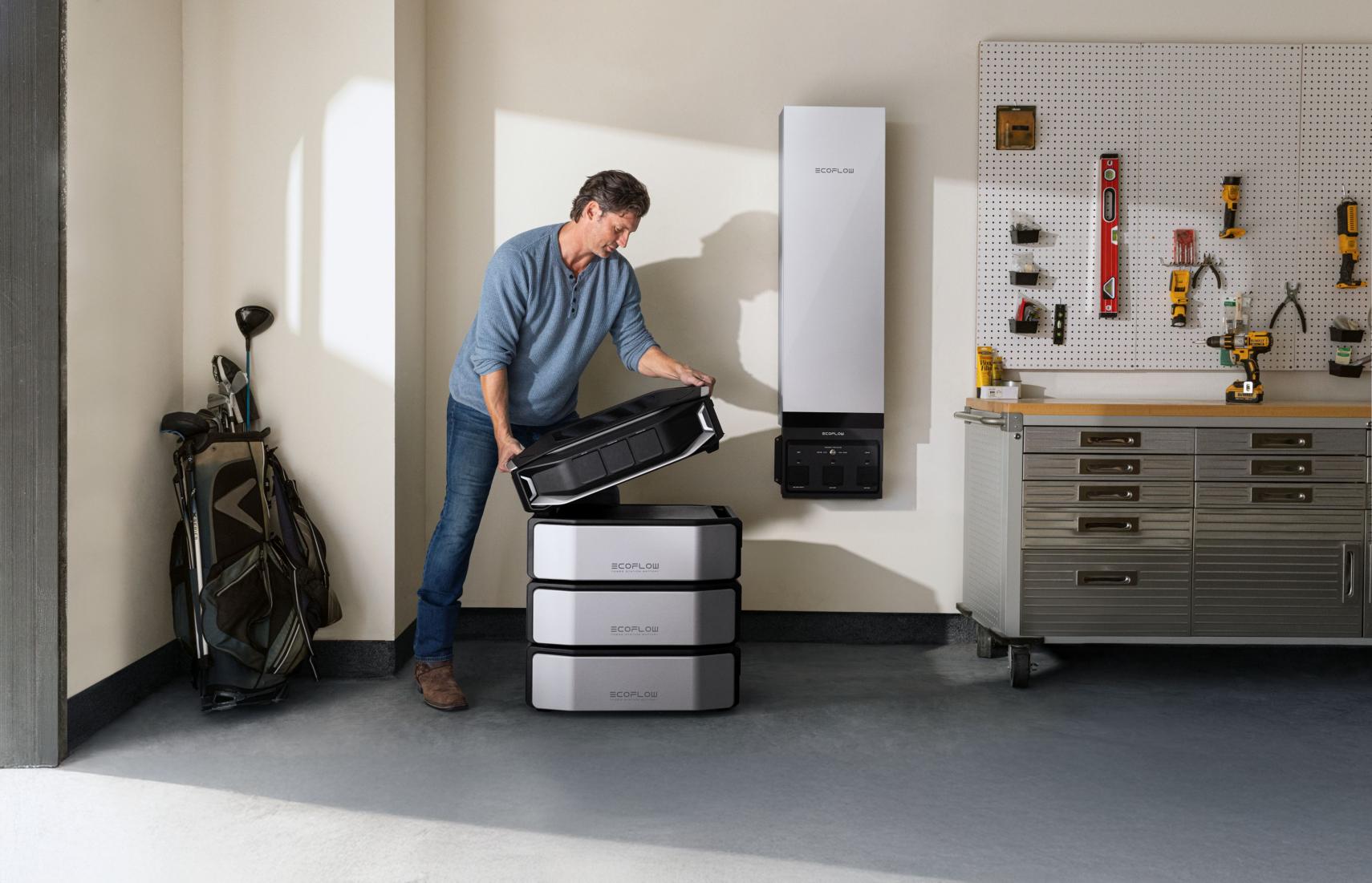
The EcoFlow DELTA Pro Ultra X offers a reliable safeguard for these scenarios. This is not just a battery; it is a high-capacity power station capable of running heavy-duty 240V appliances like your central air and heat pump. With a scalable output of 12kW to 36kW, it can easily handle the significant surge power required to start a heat pump compressor.
By integrating the DELTA Pro Ultra X into your home circuit, you ensure that your heating system continues to operate seamlessly, even when the grid fails. This keeps the defrost cycles running on schedule, preventing severe ice buildup that could damage the unit. Its 20ms auto-switchover means your system barely notices the grid failure, maintaining a warm home and a healthy heat pump throughout the storm.
How to Fix a Heat Pump Freezing Up in Winter
If you have identified that your system is truly frozen—not just frosted—you need to act to prevent compressor damage. Here is how to fix heat pump freezing up in winter safely.
Clear the Area Around the Outdoor Unit
Go outside and inspect the unit. Remove any snow drifts, fallen leaves, or debris that might be blocking the airflow. If there is ice on the top or sides, do not use sharp objects like ice picks or chisels. The copper coils are delicate and easily punctured. Instead, use a soft broom to brush away snow.
Check or Replace Filters
A clogged air filter inside your home restricts airflow through the entire system, including the outdoor unit. Check your furnace or air handler filter. If it is grey and clogged, replace it immediately. Restoring proper airflow often raises the system temperature enough to stop the freezing.
Run the Fan to Melt Light Ice
If the ice is relatively thin, you can help the unit manually. Go to your thermostat and switch the system from "Heat" to "Fan Only." This stops the compressor (which creates the cold) but keeps the indoor fan blowing warmer air from your house over the indoor coil. While this doesn't directly heat the outdoor unit, giving the system a break can sometimes allow ambient melting if the outdoor temperature isn't too severe.
Call a Professional
If the unit is encased in thick ice, or if you have changed the filter and the problem persists, shut the system off to avoid burning out the compressor. Switch to your emergency backup heat (if available) and call an HVAC technician. They have the tools to check refrigerant levels and test the electrical sensors safely.
Protect Your Home Heating This Winter
Heat pumps are incredibly effective for winter heating, but they do require proper airflow and power to manage ice accumulation. While a bit of frost is just a sign the system is working, heavy ice indicates blocked air, mechanical issues, or power interruptions. Regular maintenance, keeping the unit clear of snow, and ensuring consistent power with a solution like EcoFlow can prevent costly repairs. Stay warm and keep an eye on your outdoor unit this winter.
FAQ
Q1: How cold is too cold for a heat pump to work?
It's surprising how strong heat pumps are these days. Most current units can still work well at -10°F or even lower, even though they lose some efficiency when it's cold. Older models might start struggling when temperatures drop below 25°F to 30°F. Even if it's really cold but not beyond what your unit can handle, your heat pump should still keep you warm. It may just have to run for longer to maintain the temperature.
Q2: Do I turn my heat pump to emergency heat in very cold weather?
Most of the time, no. Setting your heat pump to "Emergency Heat" shouldn't be done manually unless it's broken or frozen solid. Emergency heat uses electric resistance strips, which cost a lot more to run than the heat pump's compressor. When your heat pump can't keep up with the heating demand, these backup strips will kick in automatically for a short time. Switching to emergency heat manually will just make your energy bills skyrocket.
Q3: Why is my heat pump blowing cold air when it is freezing outside?
This usually means that your unit is in "defrost mode." It goes into cooling mode for a short time to melt the ice on the outdoor coils. To do this, it takes a little heat from your house and sends it to the outdoor unit. This process only takes 10 to 15 minutes most of the time. Something might be wrong if the air stays cold for longer than that or if the backup heat doesn't kick in to warm it up.
Q4: Can I pour hot water to melt ice on the outdoor unit?
It's not a good idea. Pouring hot water on a frozen unit might seem like a quick fix, but it could damage the metal coils or other parts through thermal shock. The water can also run off and freeze again at the base of the unit, creating a solid ice dam that blocks proper drainage. A safer way to do it is using lukewarm water from a garden hose, or even better, let the system defrost itself.
Q5: Should I cover my heat pump to prevent freezing?
No, you should never cover a heat pump that's running. A heat pump needs to pull in a lot of air to work properly. Unlike an air conditioner that sits idle all winter, your heat pump is actively working. When you put a cover on it, you restrict airflow. This can cause ice buildup right away and may even damage the compressor. If you're worried about heavy snow falling on it, you can install a snow shelter above the unit. Just make sure all four sides stay completely open for airflow.
For press requests or interview opportunities, reach out to our media team
media.na@ecoflow.com