The Glamping Economy: Why Americans Are Spending More to Sleep Under the Stars
- What Is the Glamping Economy? (Quick Overview for First-Time Readers)
- Why Americans Are Willing to Pay More for Glamping
- How Much Does Glamping Cost in the U.S.?
- Who Is Driving the Glamping Boom? Key Consumer Segments
- Is Glamping Worth It? How to Decide Before You Book
- The Future of the Glamping Economy in the U.S.
- Conclusion
- FAQs
Think of the last time you went camping. Did it involve a leaky tent, a cold sleeping bag, and a desperate search for a clean bathroom? For a growing number of Americans, those days are over. We are currently witnessing the massive rise of the Glamping Economy—a multi-billion dollar industry that blends the ruggedness of the great outdoors with the high-end comforts of a boutique hotel. In this article, we’ll break down what’s fueling this “glamorous camping” craze, why travelers are happy to pay premium prices for it, and how the shift toward high-tech, off-grid living is changing the way we explore the American wilderness.
What Is the Glamping Economy? (Quick Overview for First-Time Readers)
If you’ve seen a transparent dome nestled in the Utah desert or a luxury safari tent in the Great Smokies on your feed lately, you’ve seen the glamping economy in action. It’s more than just a trend; it’s a full-scale evolution of American travel.
The "glamping" label isn't just a buzzword anymore; in 2026, it’s a massive economic engine. If you've scrolled past a transparent dome in the Utah desert or a mirrored cabin in the Smokies, you’ve seen the industry in action. It’s no longer a niche trend for influencers, it's a full-scale evolution of how Americans spend their PTO.
What “Glamping” Really Means Today
Glamping is "shorthand for glamorous camping." It’s a travel style that allows you to experience nature without "roughing it." Today, that means staying in structures like yurts, A-frame cabins, or repurposed vintage Airstreams that feature real mattresses, climate control, and often, gourmet kitchens.
Glamping is shorthand for "glamorous camping," but the 2026 version is a far cry from just putting a rug in a tent. It’s a travel style that delivers the "wild" without the "rough."
Today’s glamping involves architectural statements like yurts with floor-to-ceiling windows, A-frame cabins, or vintage Airstreams gutted and rebuilt with marble countertops. Because these spaces redefine the outdoor experience, knowing what to pack for glamping becomes a matter of choosing personal luxuries that complement the high-end amenities, ensuring you enjoy the sunrise over the canyon from a high-thread-count mattress in total climate-controlled comfort.
How the Glamping Economy Has Grown in the U.S.
The U.S. glamping market has experienced significant growth over the past five years. Industry data from organizations such as IBISWorld and Outdoor Industry Association indicate a steady increase in demand for outdoor hospitality experiences, driven by consumer preferences for unique and experience-based travel. What started as a niche hobby has become a mainstream powerhouse, with the North American market expected to reach billions in revenue by the end of the decade. Major hospitality brands are now competing with local ranchers to offer "outdoor resorts."
The numbers are honestly staggering. According to recent industry reports, the U.S. glamping market is expected to hit over $3.8 billion by the end of 2026. What started as a few independent ranchers renting out tents has become a mainstream powerhouse.
The Big Brands Move In: This is the year the "big guys" went all-in. In 2025 and 2026, we saw massive moves like Marriott launching its "Outdoor Collection," Hilton partnering with AutoCamp, and Hyatt bringing Under Canvas into its loyalty program.
The New Standard: Because of this corporate influx, the bar for "outdoor hospitality" has been raised. It’s not just a tent in a field anymore; it’s a managed resort experience with concierge services and farm-to-table dining, just with canvas walls instead of drywall.
Glamping vs. Traditional Camping: Key Differences
While both get you outside, the difference lies in the logistics and the level of "roughing it" you're willing to endure. Here’s how they stack up:
While both get you outside, the difference in 2026 comes down to whether you want to "conquer" nature or just "visit" it. Traditional camping is a skills-based endurance test; glamping is a curated, high-end retreat where the only thing you have to pitch is which bottle of wine to open first. By integrating a portable power station into the setup, travelers can maintain this high-end experience even in the most remote corners, ensuring that drones are charged and gadgets remain live without ever relying on the site's limited infrastructure.
| Feature | Traditional Camping | Glamping (Luxury Camping) |
|---|---|---|
| Setup Time | 1–2 hours (Pitching tents, inflating pads) | Zero (Your "room" is ready upon arrival) |
| Sleeping Surface | Sleeping bag on a thin pad or air mattress | Real mattress with high-thread-count linens |
| Bathroom Situations | Digging a hole or using a shared pit toilet | Private ensuite bathroom or luxury bathhouse |
| Temperature Control | Whatever the weather dictates | Often includes AC, heaters, or wood stoves |
| Cooking & Food | Cooler with ice; cooking over a fire/propane | Kitchenette, Nespresso machine, or on-site chef |
| Power & Connectivity | Limited to your phone's battery | Reliable outlets and high-speed Wi-Fi |
| The "Vibe" | Rewarding, rugged, and budget-friendly | Relaxing, aesthetic, and "Instagram-ready" |
Why Americans Are Willing to Pay More for Glamping
Paying $400 a night for a tent might seem wild to a traditional backpacker, but the value in 2026 is found in the lack of hassle.
Comfort Meets Nature: The Rise of “Luxury Outdoors”
Americans are hunting for "soft adventure" in 2026. We want the visceral sunrise over the Grand Canyon, but the backache from a thin sleeping pad has lost its charm. Glamping bridges that gap, delivering the restorative power of the wilderness alongside the reliability of a Nespresso machine and 400-thread-count sheets. This movement is elevating camping for gourmet glamping by proving that high-end culinary comforts and rugged landscapes can coexist perfectly. It’s the outdoors, but strictly on your own terms.
Social Media Influence and Instagram-Worthy Experiences
A saggy nylon tent in the mud doesn’t exactly "pop" on a feed. Glamping sites are architectural eye-candy. Whether it’s a mirrored cabin reflecting the forest or a geodesic dome glowing under the Milky Way, these spots are designed to be shareable. For many travelers, the aesthetic journey carries as much weight as the physical one.
Post-Pandemic Travel Trends and Demand for Private Stays
The post-pandemic world changed how we view our downtime. We’ve become protective of our peace, and the thought of a crowded hotel lobby or a noisy cruise ship feels like another day at the office. Glamping offers a private sanctuary with built-in distance from other humans. You get the fresh air and isolation you crave in a managed environment, without the stress of deep-woods survivalism.
The Shift from “Stuff” to Experiences
Modern consumers, especially Millennials and Gen Z, consistently choose "events" over "items." They’d rather spend their paycheck on a three-day immersive stay in a treehouse than a new sofa. A glamping trip feels like a core memory, not just a place to crash for the night.
How Much Does Glamping Cost in the U.S.?
You might be surprised to find that glamping can sometimes cost more than a high-end Marriott. Here’s how the numbers break down.
Average Glamping Prices by Accommodation Type
Prices fluctuate based on how "Instagrammable" the spot is and how close you are to a National Park gateway.
Luxury Safari Tents: $150- $350/night. These are the entry point, usually featuring a real bed and a private deck, but sometimes with shared bathhouses.
Geodesic Domes: $250 - $600/night. These command a premium for the 360-degree views and stargazing ceilings.
Treehouses & Modern Cabins: $300 - $800/night. These are the heavy hitters of the industry, offering total seclusion and high-end design.
Glamping vs. Hotels vs. Airbnb: Price Comparison
In 2026, a standard hotel in a mid-sized city averages around $200/night, while an Airbnb might sit near $180 (before those notorious cleaning fees). However, if you're looking at prime real estate near Zion or Yellowstone, glamping sites regularly hit the $300-$500 range. The extra cash covers the "spa-like" details: outdoor copper tubs, private fire pits, and that "managed wilderness" vibe that a Marriott just can't replicate.
What You’re Really Paying For
The price tag covers the silence, the view, and those high-end touches like outdoor copper tubs or custom-built fire pits. But here’s the key: there is a hidden variable that can make or break your trip, and that’s Power.
Why Power Access Can Change the Real Cost of Glamping
The real cost of a glamping trip in 2026 is the price of your own comfort. In the U.S., a lot of travelers are realizing that a great experience depends on how much control you have over your gear. When you're tucked away near a National Park or in a remote canyon, the local grid is often sketchy or just non-existent.
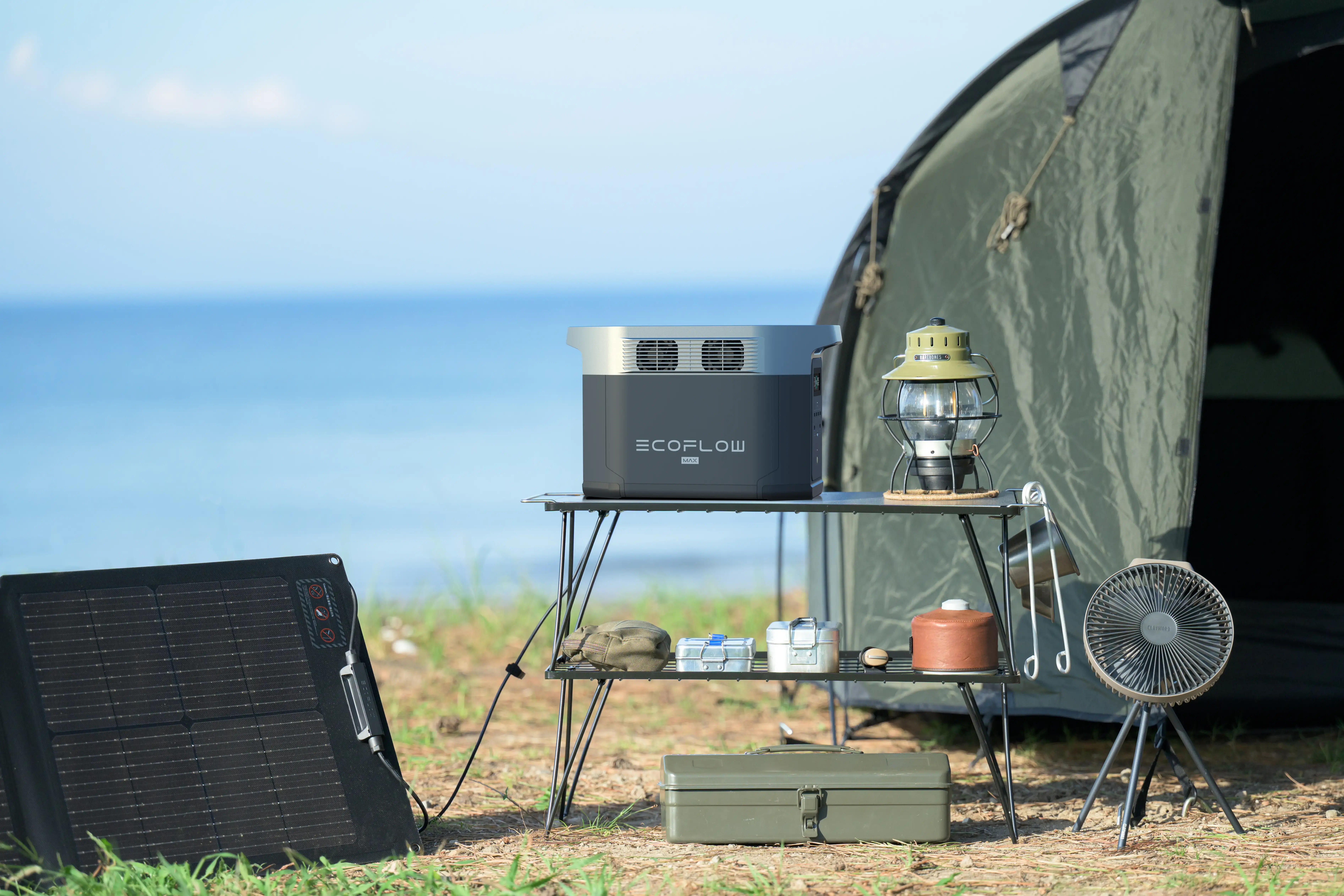
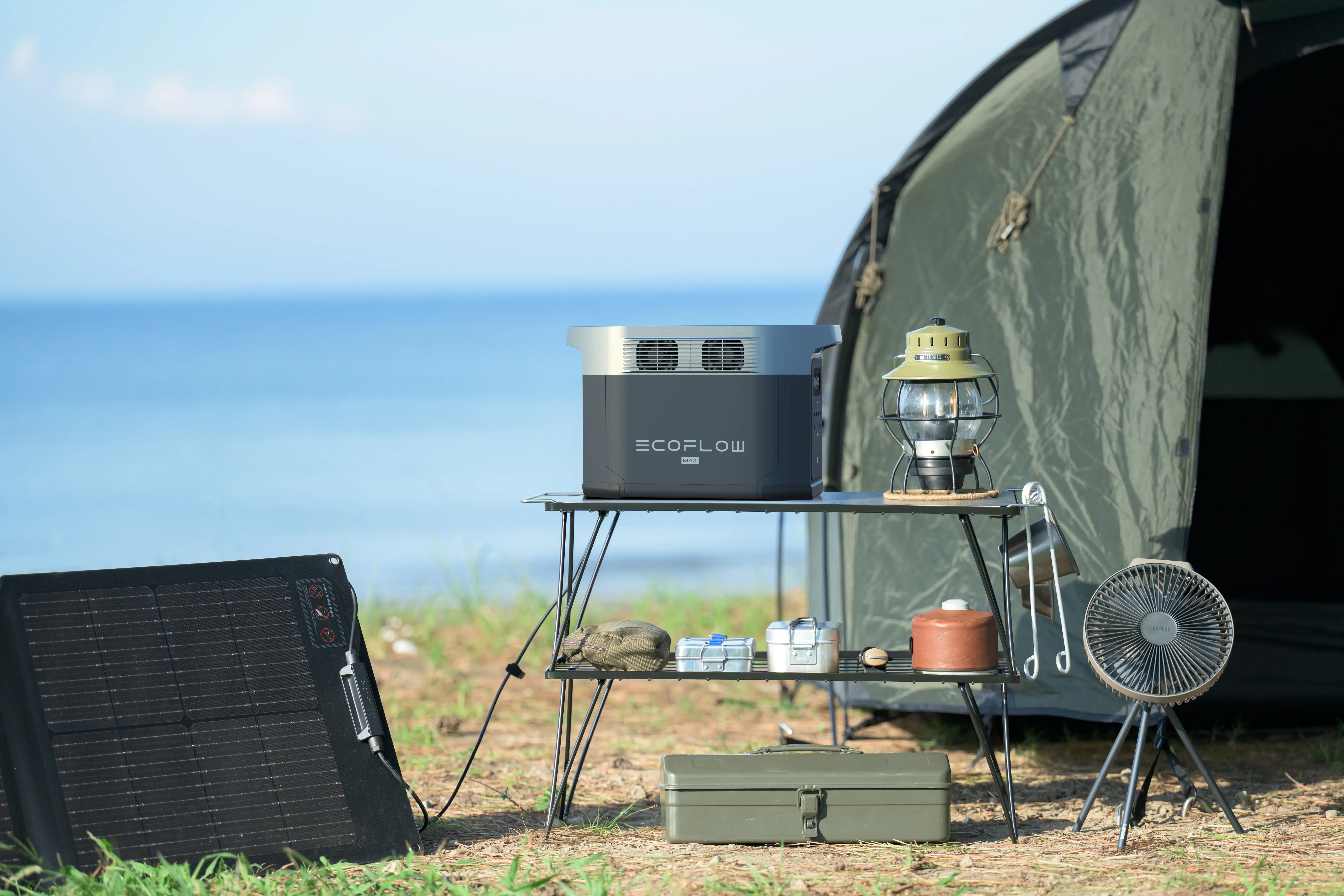
This is where having a reliable "power insurance policy" like the EcoFlow DELTA 2 Max Portable Power Station changes the entire weekend. With a beefy 2048Wh capacity and the ability to hit a fast charge in roughly 80 minutes, you can top it off at home before you even throw your bags in the truck.
It means you don't have to filter your search by "tents with outlets." You’re free to book that deep-wood cabin that’s $100 cheaper a night and still run your laptop, a high-end coffee maker, or a CPAP machine without a second thought. Another thing, if the camp’s solar system struggles during a cloudy stretch, your gear stays live. Bottom line: the real luxury in 2026 is the independence to power your life exactly where the view is best.
Who Is Driving the Glamping Boom? Key Consumer Segments
The "glamper" of 2026 isn't just one type of traveler. As the market heads toward a projected $4.5 billion in the U.S. alone this year, we’re seeing a diverse mix of people trading traditional hotels for something with a bit more soul.
Millennials and Gen Z: For these groups, travel is a "social currency." They prioritize aesthetic-driven stays, like geodesic domes or mirrored cabins, and spend an average of $266 per day, often choosing unique experiences over buying material "stuff."
Couples: Couples are seeking "Dark Sky" certified locations where they can stargaze from a private hot tub. It’s the ultimate "peace and quiet" play, removing the noise of hotel hallways and city lights.
Families: We’re seeing a huge rise in multi-generational bookings, where grandparents want a real bed and a flushing toilet, but the grandkids still want the campfire and s'mores experience.
Remote Workers: This group is purely tech-driven. They’ll only book if there’s high speed Wi-Fi, and many bring their own EcoFlow DELTA 2 Max as "workstation insurance" to run dual monitors and espresso machines without taxing a camp's limited grid.
Is Glamping Worth It? How to Decide Before You Book
Before you drop $500 on a weekend in a yurt, it’s worth asking what you’re actually trying to get out of the trip. In 2026, the price gap between "roughing it" and "glamming it" has never been wider.
When Glamping Is Worth the Price
It’s worth it if you want the emotional reset of the outdoors but have zero interest in buying, storing, and cleaning your own camping gear. It’s also perfect for special occasions like anniversaries.
The "Zero Gear" Factor: It’s the perfect play if you want the emotional reset of the outdoors but have zero interest in buying, storing, and cleaning $2,000 worth of camping gear.
Special Occasions: For anniversaries or "mini-moons," a geodesic dome with a stargazing ceiling is a legitimate core memory.
Accessibility: If you're traveling with someone who has mobility needs or just can't do the "sleeping on the ground" thing, glamping makes the wilderness inclusive.
When Traditional Camping or Hotels Might Be Better
Budget Realities: If you're on a tight string, traditional camping is still the king at $20-$40 a night.
Service Expectations: If you need a 24-hour concierge, an elevator, and a gym, a tent, no matter how fancy, is going to feel like a compromise. Stick to a boutique hotel.
Key Factors to Consider
The "Backyard" Test: Use Google Earth. Is this a truly remote site, or is it just a fancy tent in someone’s suburban backyard with a highway nearby?
The Seasonal "Survival" Check: A canvas tent in a Montana October can be brutal. Check specifically for energy efficient heat pumps or wood stoves. In 2026, "climate controlled" should be a standard search filter for luxury stays.
The Bathroom Walk: "Private bathroom" can be a tricky term. Verify if it’s an ensuite (inside your unit) or a "private stall" in a shared bathhouse 100 yards away. Trust me, at 3 a.m. in the rain, that distinction matters.
.webp)
.webp)
The Future of the Glamping Economy in the U.S.
The glamping industry isn't just a trend anymore, it’s a massive economic engine. As we move through 2026, the market is expected to hit nearly $3.8 billion in the U.S. alone, driven by a shift toward what experts are calling "regenerative luxury."
Eco-Friendly and Sustainable Glamping Developments
Travelers are now prioritizing the "planet" alongside the "pillow." We’re seeing a move away from one-off novelties toward long term, eco-friendly lifestyles.
Low-Impact Design: New sites are ditching concrete foundations for removable platforms and reclaimed materials like bamboo and cedar.
Regenerative Stays: The goal for 2026 isn't just "doing no harm", it’s leaving the land better than you found it. Sites that use composting systems and local re-wilding projects are seeing higher booking rates and a 20% increase in mid-week revenue from eco-conscious digital nomads.
Technology Integration (Smart Cabins, Off-Grid Power, etc.)
The biggest shift this year is the push for self sufficient luxury. Glampers are tired of "off-grid" meaning "out of power." Many are now opting to bring a dedicated solar battery setup to capture and store every ray of sunshine, ensuring that the luxury experience remains uninterrupted even in the most secluded locations.
The New Solar Standard: Portable solar is now a staple for the modern outdoorsman. EcoFlow Solar Panels have pushed conversion efficiency to an impressive 25% using N-TYPE TOPCon technology.
Seamless Independence: On a clear day, a foldable 220W Bifacial panel can keep your power station topped off in a few hours. This allows you to book cheaper, more remote sites that don't have electrical hookups without sacrificing your espresso machine or high-speed Wi-Fi. It’s a borderless travel experience where you carry your own utility company in your trunk.
Expansion of Luxury Outdoor Resorts Across the U.S.
Expect to see more "curated" nature. The big players are aggressive in 2026, expanding into almost every major scenic corridor in the country.
Under Canvas: They just opened their White Mountains location in New Hampshire this June, offering a high end basecamp for East Coast road trippers.
AutoCamp: They’re continuing to scale their Airstream-focused resorts, with new "Hill Country" spots in Texas and expansion across the Blue Ridge Mountains near Asheville.
The Hotel Alliance: In a massive 2026 move, World of Hyatt has fully integrated Under Canvas into its loyalty program, making "luxury tents" a standard option alongside skyscraper hotels.
Conclusion
The glamping economy is a testament to our desire to reconnect with nature, just strictly on our own terms. Whether you're a digital nomad hunting for a remote office or a family wanting a stress free weekend under the stars, the options in 2026 are better than they’ve ever been. Whether you're stargazing from a $600 geodesic dome or DIY-ing your own luxury setup at a state park, the goal for 2026 is independence. Having the power to run a high-end espresso machine and a dual-monitor setup from a picnic table means you don't have to choose between a "real life" and a "real view." You get both.
FAQs
1. Why is glamping so expensive in the U.S.?
It’s mostly a logistics tax. Building and maintaining a luxury suite, complete with climate control and high end plumbing, is significantly harder in a remote forest or a desert canyon than in a city.
2. Is glamping cheaper than a hotel or Airbnb?
Generally, no. In 2026, glamping has officially decoupled from "cheap travel." You’re often paying a premium for exclusive land access and 1-of-1 architecture.
3. Is glamping suitable for families with kids?
Yes, glamping is incredibly family-friendly because it offers the fun of the outdoors with the safety and convenience of a home. It’s much easier to manage toddlers in a cabin than in a tent.
4. What are the best states for glamping in the U.S.?
California, Montana, Utah, and Washington are currently the top states for glamping. These areas offer the dramatic landscapes (deserts, mountains, and coasts) that glamping structures are built to highlight.
5. Is glamping a year-round activity, even in winter?
Absolutely. In fact, winter glamping is one of the fastest-growing trends in the U.S. market. Most modern glamping structures are equipped with climate control, heated floors, or wood-burning stoves. The "cozy factor" of watching snow fall through a transparent dome while tucked under a heated blanket is a major draw.
For press requests or interview opportunities, reach out to our media team
media.na@ecoflow.com