AEP Power Outages by ZIP Code: Live Status, Causes & Fixes Today
American Electric Power serves more than five million customers across 11 states, but there is no single AEP outage map. Depending on where a home sits, the utility might operate as AEP Ohio, AEP Texas, Appalachian Power, or Indiana Michigan Power, and each of these operating companies runs its own outage tracking tool. That split explains why searching for an "AEP outage map" often leads to confusion instead of an answer. This guide walks through how to check AEP power outages by ZIP code no matter which subsidiary serves a specific address, explains why these outages happen in the first place, and covers what keeps a household running while restoration crews are still working.
What Is AEP and Which States Does It Cover?
American Electric Power, commonly shortened to AEP, is a multi-state utility holding company rather than a single operating utility. It owns and manages several regional electric companies, each with its own service territory, billing system, and outage reporting tool. This structure is fairly common among large US utilities, and it explains why general searches about power reliability sometimes turn up scattered or outdated information. Broader context on how outage tracking generally works across different states is covered in US power outage preparedness.


For search purposes, the AEP subsidiaries that matter most are:
AEP Ohio, serving central, northern, and southern Ohio, including Columbus
AEP Texas, covering the Texas coastal plain and parts of the Rio Grande Valley
Appalachian Power, serving Virginia, West Virginia, and parts of Tennessee
Indiana Michigan Power, serving northern Indiana and southwestern Michigan
Each of these companies runs a separate outage map, a separate customer service line, and in some cases a separate mobile app. A household in Columbus and a household in Corpus Christi are technically both AEP customers, but the two will never use the same tool to check on a blackout. That is the core reason there is no single, universal "AEP outage map" link, and it is also why the ZIP code entered into a search bar matters as much as the utility name itself.
How to Check AEP Power Outages by ZIP Code
Checking status by ZIP code follows a similar pattern across every AEP subsidiary, even though the exact page layout differs slightly from state to state. The general steps look like this:
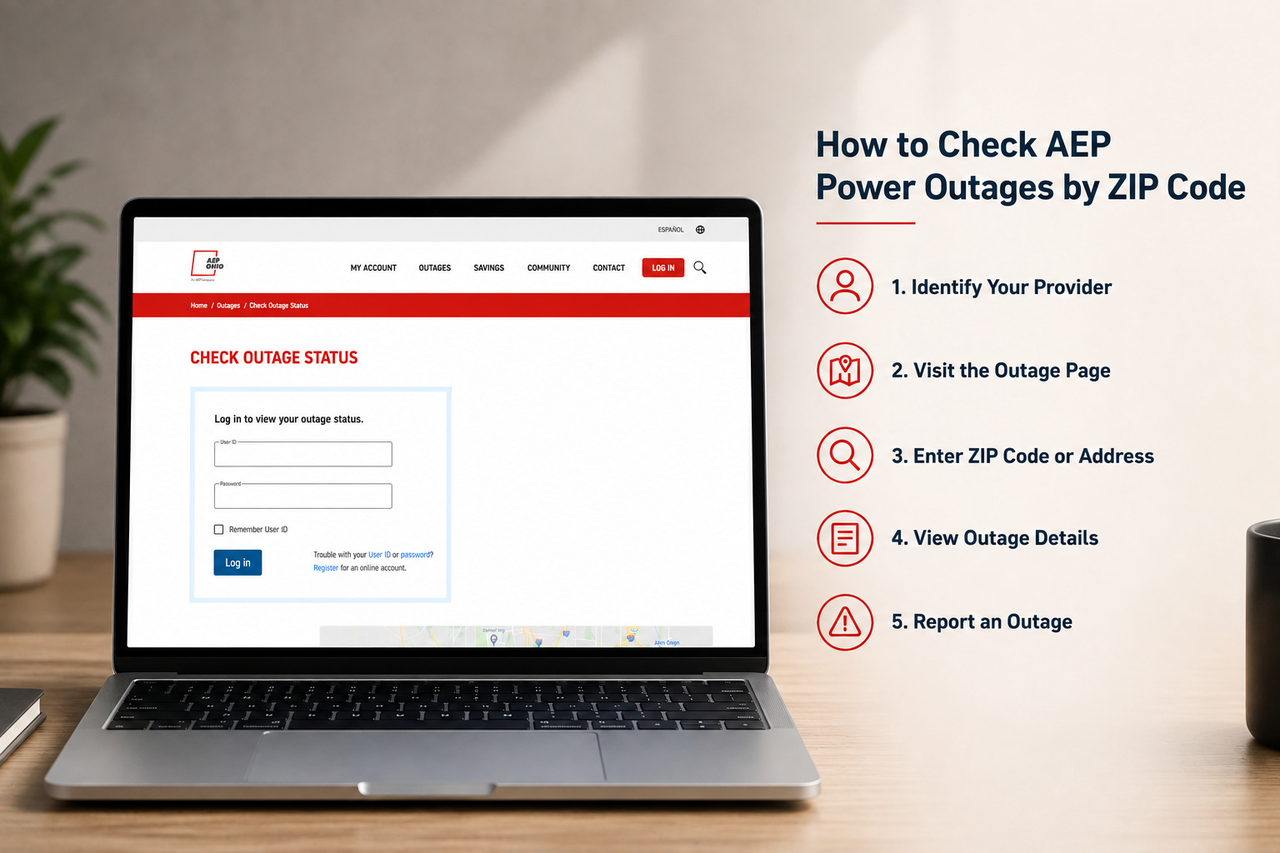
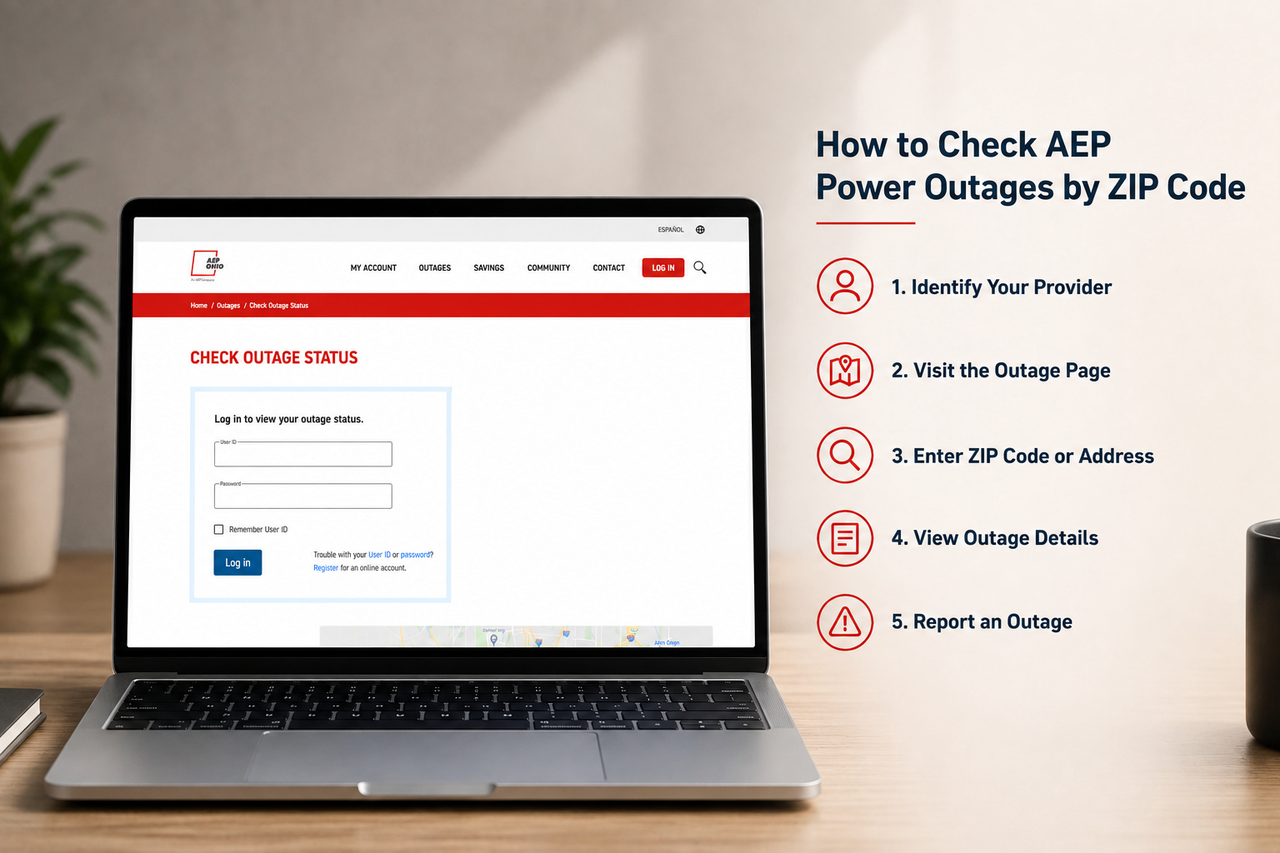
Identify which operating company serves the address (AEP Ohio, AEP Texas, Appalachian Power, or Indiana Michigan Power).
Visit that company's website and look for a link labeled "Outage Map" or "Check Outage Status," usually found in the top navigation or under a storm center section.
Enter the home ZIP code, or in some cases the full street address, into the search field. (Account must be logged in for AEP Ohio, AEP Texas, Appalachian Power, or Indiana Michigan Power)
Review the live map or status page, which typically shows whether an outage has been confirmed, how many nearby customers are affected, and an estimated restoration time if one has been calculated.
AEP Texas, for example, runs an outage status portal where a ZIP code search pulls up a color-coded map along with a running customer count for that area. Appalachian Power's live outage map works in a similar way, showing active outages as markers that can be clicked for more detail, including cause when known and current crew status.
Reporting an outage follows a nearly identical path. Every AEP subsidiary offers both a phone number for reporting and an online form, usually located on the same page as the outage map itself. Reporting matters even after a neighbor has already called it in, since some address-level issues, such as a downed line serving a single home, do not always register on the broader outage map until enough individual reports come in.
AEP Ohio Power Outages: What to Know
AEP Ohio maintains its own outage map, separate from the company's other territories, making it the primary tool for anyone searching for a current power outage Ohio aep by ZIP code across Columbus, Canton, or southern Ohio. The map refreshes automatically, typically every few minutes during active events, and breaks outages down by county and, in many cases, by neighborhood or circuit.
Common causes in AEP Ohio's territory tend to follow seasonal patterns. Summer thunderstorms and high air conditioning demand account for a large share of outages between June and August, while ice accumulation on lines is the more frequent culprit during winter months. Wind-driven tree contact with overhead lines is a factor in both seasons. More detail on how the AEP Ohio outage map refreshes and how to read it correctly is covered separately.
One detail worth noting: restoration estimates on AEP Ohio's map are just that, estimates, and they can shift as crews assess damage on the ground. A projected two-hour outage during a storm can stretch longer if a downed line turns out to be tangled with tree limbs, or if multiple crews are already dispatched elsewhere in the region. Checking back periodically rather than relying on a single early estimate tends to give a more accurate picture.
Why AEP Outages Happen (and How Long They Typically Last)
Power outages across AEP's territory generally trace back to a handful of causes, and understanding which one is likely at play can help set realistic expectations for restoration.
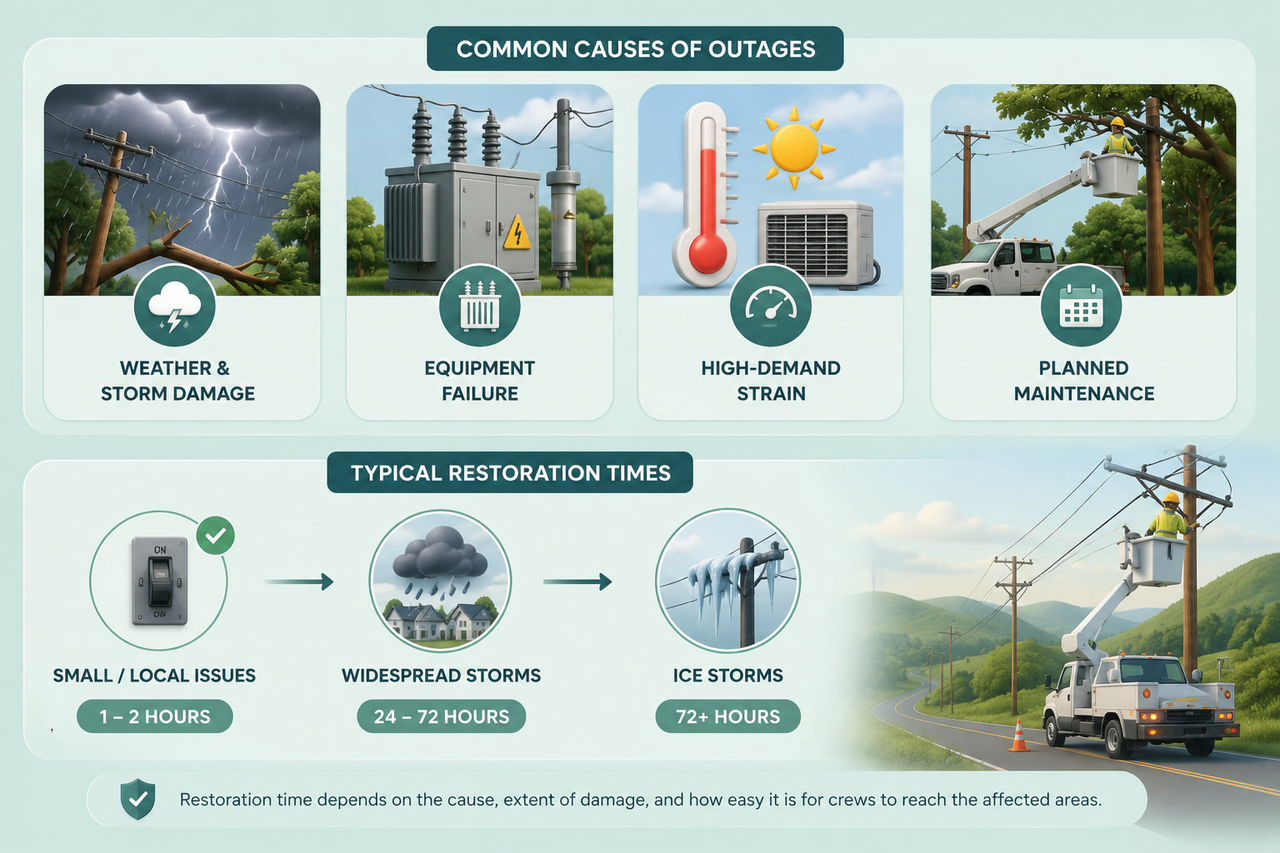
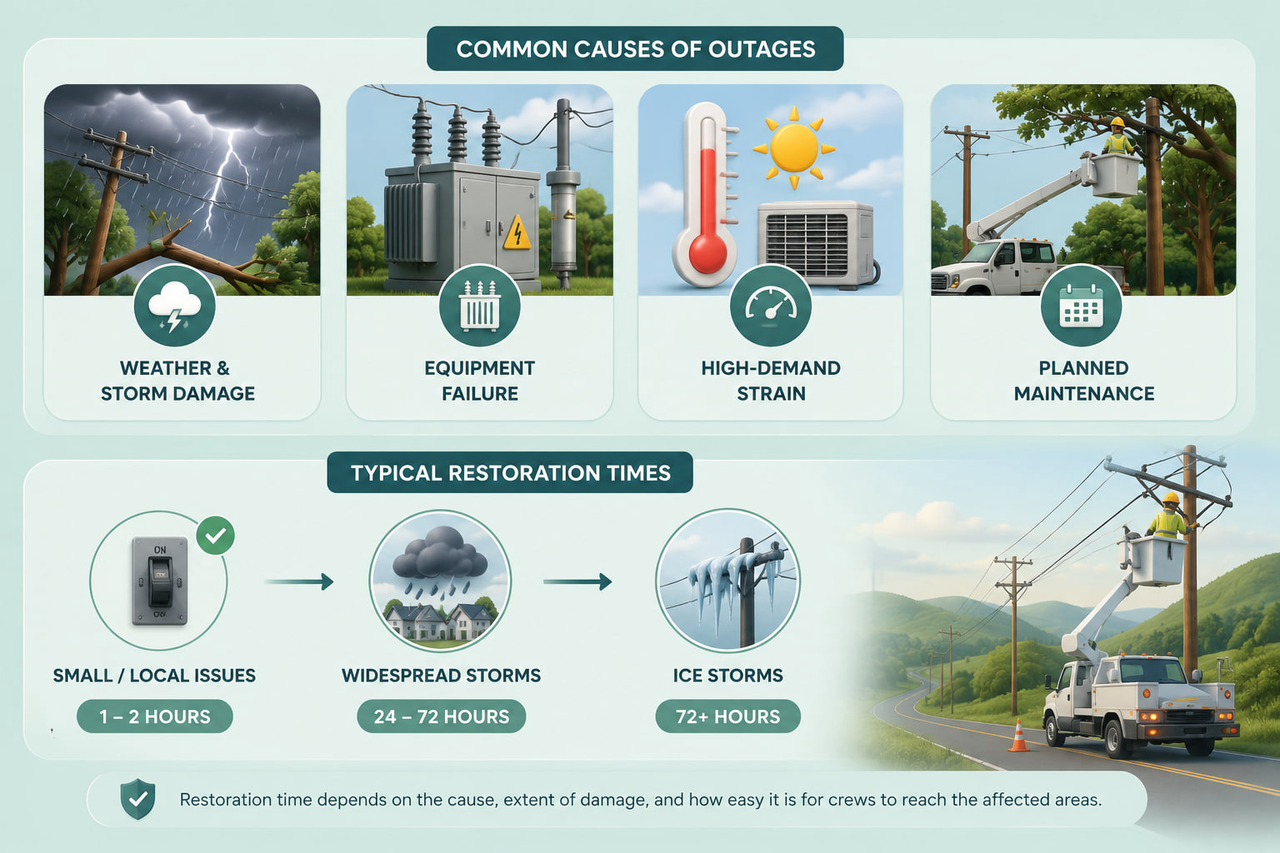
Weather and storm damage: High winds, lightning, and ice are the leading causes of unplanned outages, especially when tree limbs or entire trees come into contact with power lines
Equipment failure: Transformers, fuses, and other aging infrastructure can fail even on clear days, particularly in older neighborhoods where equipment has been in service for decades
High-demand strain: During extreme heat or cold, the grid carries more load than usual, and localized equipment can overheat or trip offline as a protective measure
Planned maintenance: Utilities schedule brief outages for line upgrades or tree trimming, usually with advance notice sent to affected customers
Restoration timelines vary considerably depending on the cause. A single tripped breaker from equipment strain might be resolved within an hour or two once a crew reaches the site. A widespread storm event, on the other hand, can knock out power to tens of thousands of customers at once, and in those cases restoration can take anywhere from 24 to 72 hours or longer, particularly in rural areas where crews have farther to travel and damage is harder to assess quickly. Ice storms tend to produce the longest average restoration windows of any weather event, since ice-damaged equipment often needs full replacement rather than a simple repair.
The Real Fix: Backup Power While You Wait
An outage map might say restoration could take several hours, or in a worst case, more than a day. During that stretch, the practical concern for most households is not the map itself but what keeps running in the meantime, specifically the refrigerator, a home Wi-Fi router, phone chargers, and possibly a fan or space heater depending on the season.
This is where a portable power station earns its place in an outage kit rather than staying in a closet. The EcoFlow DELTA 3 Plus is built for this kind of repeat, unpredictable use. Its capacity sits in the roughly 1 kWh range for the base unit, and it can be expanded with additional battery modules for households in areas where outages tend to run longer than a few hours. Recharge speed is another factor worth weighing during an active outage, since the unit can reach a substantial charge from a wall outlet in a short window. That matters when power comes back briefly before cutting out again, a pattern that shows up often during rolling storm damage.
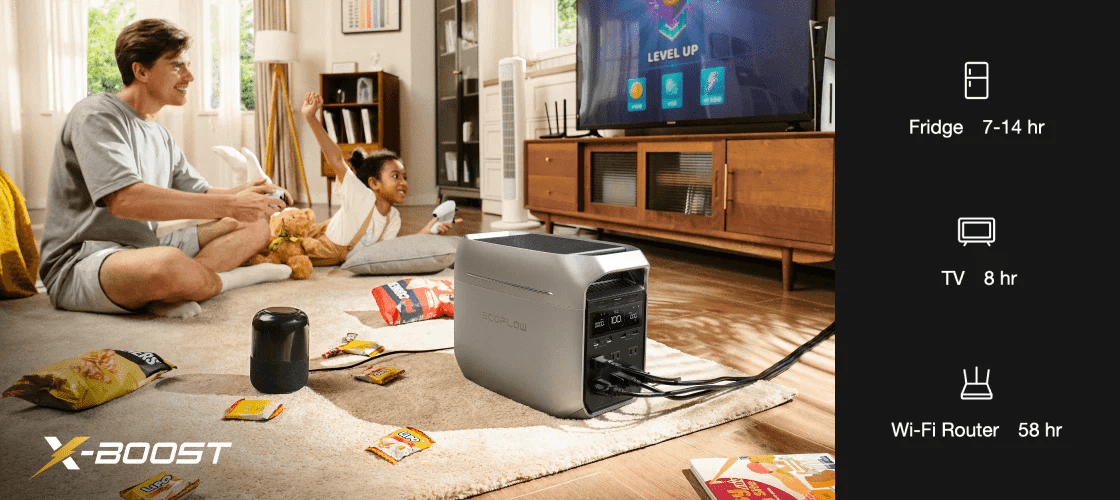
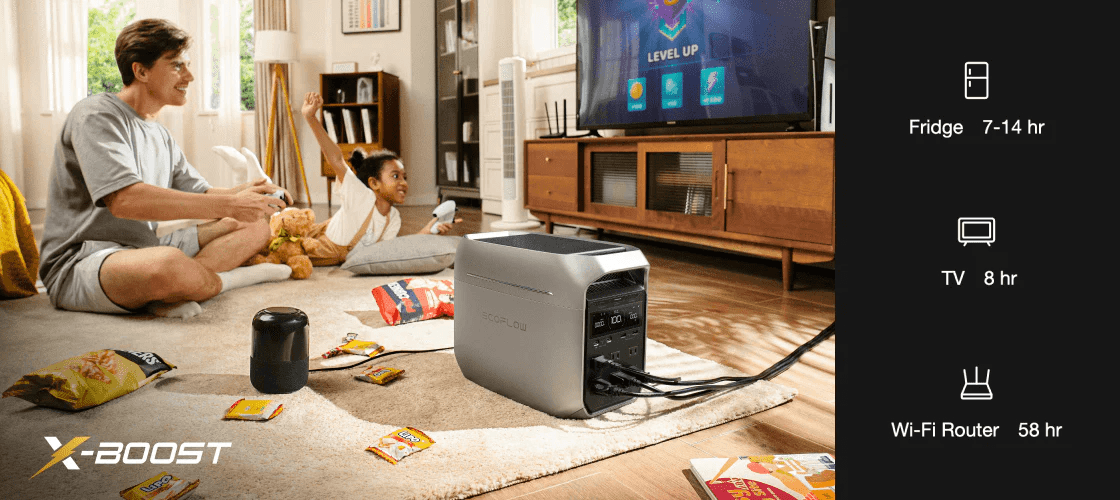
Durability also matters more than it might seem at first glance. A unit that only gets used once during an emergency is a different product than one built on LFP battery chemistry and designed to be charged, drained, and recharged repeatedly across multiple outage seasons without a noticeable drop in performance. For a household running a refrigerator, a router, and a handful of small devices during a multi-hour AEP outage, that combination of expandable capacity and fast recharging turns waiting out the map into something closer to staying functionally online while it updates. For households in AEP's territory that deal with outages more than once or twice a year, having something like the DELTA 3 Plus already charged tends to pay for itself in convenience alone.
DIY Ways to Prep for the Next Outage (No Purchase Needed)
Not every step toward outage readiness requires new equipment. Federal guidance on power outage safety, including food storage windows and generator placement, is outlined by Ready.gov, and a few of those same habits go a long way toward reducing how disruptive the next outage feels, whether it lasts twenty minutes or two days.
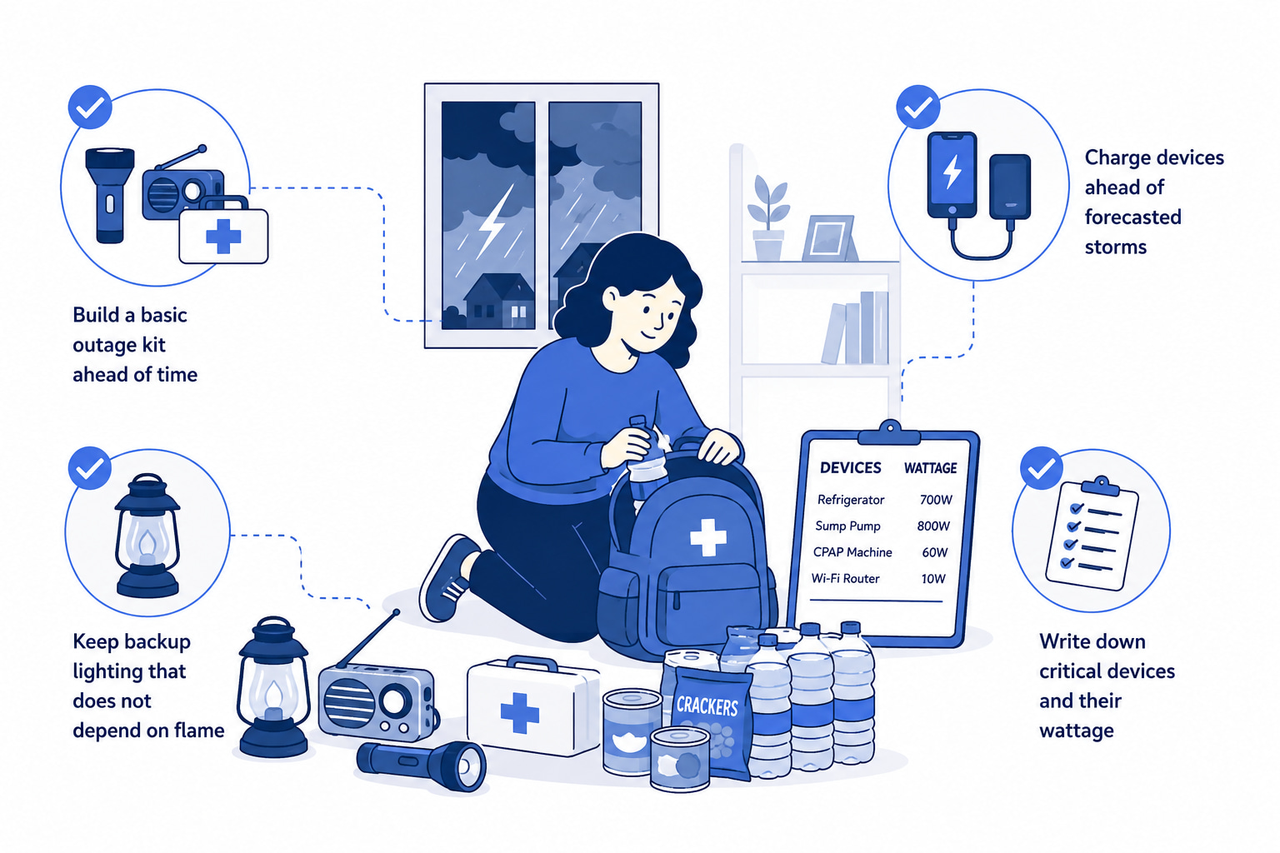
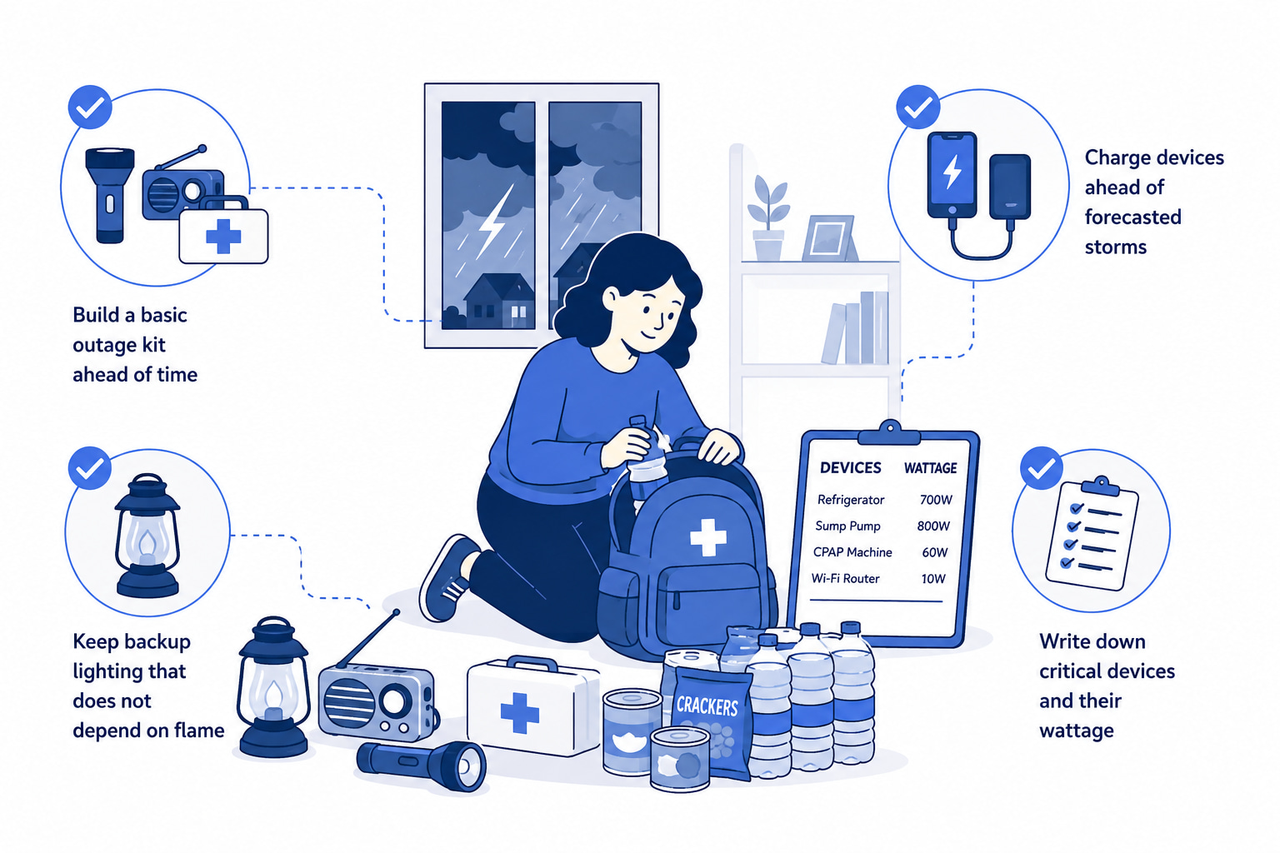
Build a basic outage kit ahead of time: Flashlights rather than candles, which carry fire risk, a battery-powered or hand-crank radio, a first-aid kit, and enough bottled water and shelf-stable food for at least three days
Charge devices ahead of forecasted storms: Phones, laptops, and any medical devices that rely on batteries should be topped off the evening before a storm is expected, since outages tied to severe weather often hit overnight
Keep backup lighting that does not depend on flame: Battery-powered lanterns or headlamps reduce fire risk compared to candles and free up hands for other tasks during a blackout
Write down critical devices and their wattage: Knowing which appliances draw the most power, such as a refrigerator, a sump pump, or a CPAP machine, makes it easier to prioritize what needs power first if capacity is limited, whether that capacity comes from a generator, a battery, or simply a decision about what to unplug
None of these steps require a large investment, but together they shrink the gap between the moment the power goes out and the point where a household actually feels prepared for it.
Conclusion
AEP power outages by ZIP code can be checked quickly once the right operating company site is identified, whether that means AEP Ohio, AEP Texas, Appalachian Power, or Indiana Michigan Power. Each subsidiary runs its own map and reporting tool, so knowing which one covers a given address is the first step toward a real answer rather than a generic search result.
Understanding why outages happen, from storm damage to equipment strain, helps set realistic expectations for how long restoration might take. Having a plan in place ahead of time, whether that means a stocked outage kit or a backup power source ready to go, turns an unpredictable wait into something far more manageable.
FAQs
How do I check AEP power outages by ZIP code today?
ZIP code lookups depend on which AEP subsidiary serves the address. AEP Ohio, AEP Texas, Appalachian Power, and Indiana Michigan Power each run separate outage maps, so the correct site depends on the state and utility name on the account.
Why is my AEP outage map not updating?
Outage maps refresh on a delay, often every few minutes during active storms, but a single address can lag behind the broader map if the outage has not yet been reported. Refreshing the page or reporting the outage directly usually resolves the gap.
How do I report an AEP outage?
Every AEP subsidiary offers a phone number and an online form for reporting outages, usually on the same page as the outage map. Reporting still matters even if a neighbor already called, since address-level issues do not always register automatically.
What's the fastest way to get power back during an AEP outage?
Restoration speed depends on crews and cannot be controlled from home, but running essentials on a backup power station, such as the DELTA 3 Plus, keeps a refrigerator and router functional while AEP works through repairs at its own pace.
For press requests or interview opportunities, reach out to our media team
media.na@ecoflow.com