Economy 7 Tariff 2026: Complete Guide for Lower Energy Bills
What is an Economy 7 tariff and how does it work?
An economy 7 tariff is a time-of-use electricity plan that charges two different rates: a lower price for seven off-peak hours overnight and a higher rate during the day. It is designed to balance electricity demand by encouraging households to use more power when the grid is quieter.
To use this system, homes need a smart meter or a dual-rate meter that records day and night usage separately. If you can shift high-energy tasks like heating water, charging an EV, or running appliances to off-peak hours, this tariff can significantly lower overall electricity costs. When paired with a home solar battery, off-peak electricity can be stored overnight and used during the day, reducing reliance on higher daytime rates and maximising savings.
Usage period | Time window (typical) | Electricity rate (indicative) | Best uses |
Off-peak (night) | 7 hours overnight (e.g., 12 am–7 am)* | 7–15 p/kWh | Charging a home solar battery, heating water, EV charging, running washing machines, or dishwashers |
Peak (daytime) | Remaining 17 hours | 25–35 p/kWh | Essential daytime use, lighting, electronics |
With a home solar battery | Stored overnight energy is used during the day | Blended lower cost | Powering appliances and heat pumps while avoiding peak daytime rates |
Typical off‑peak hours on Economy 7
Off-peak hours usually run for seven consecutive hours between around 11 pm and 8 am, depending on your supplier and region. In many parts of the UK, the cheaper rate commonly applies from midnight to 7 am. Exact timings can vary slightly, especially with smart meters or regional network settings. Checking your supplier's schedule is essential to ensure you're using electricity during the lowest-cost window.
What are the current Economy 7 rates?
Current Economy 7 tariff prices typically feature two unit rates: a cheaper off-peak rate overnight and a higher rate during the daytime. Night rates can be around 7–15 p per kWh, while day rates often sit around 25–35 p per kWh, though these figures vary by supplier, region, and contract type.
Standing charges also apply daily, regardless of usage, and price cap changes can influence both night and day costs over time. To find the best Economy 7 tariff UK for your home, compare unit rates and standing charges across suppliers, and ensure your usage patterns make nighttime rates worthwhile before switching.
Who benefits most from an Economy 7 tariff?
The best economy 7 electricity tariff isn't ideal for every household, but for some, it can significantly cut electricity costs. The key is being able to shift a large portion of energy use to cheaper overnight hours.
Homes with electric storage heaters
Properties that rely on electric storage heaters benefit greatly because these systems are designed to charge overnight using off-peak electricity. The stored heat is then released gradually during the day, reducing reliance on expensive daytime power. This makes the Economy 7 tariff particularly suitable for homes without gas heating.
Households with electric vehicles (EVs)
Charging an EV overnight can dramatically lower running costs under Economy 7 tariffs in the UK. Since EV charging requires substantial electricity, using the cheaper night rate can result in significant monthly savings compared to standard tariffs.
Homes with high night-time energy use
Households that regularly run appliances like washing machines, dishwashers, or immersion heaters overnight can maximise off-peak savings. The more electricity is shifted to the seven cheaper hours, the greater the financial benefit.
Properties with solar battery storage systems
Homes with battery storage can charge during off-peak hours and use stored energy during the day. This reduces exposure to higher daytime rates and improves overall energy efficiency, especially when combined with smart energy management systems.
Low daytime occupancy households
Homes that are empty during working hours naturally use less daytime electricity. This makes the higher day rate less impactful, allowing residents to benefit more from the lower overnight pricing.
How to make the most of Economy 7?
Making the most of an Economy 7 plan requires shifting as much electricity as possible to the cheaper overnight hours. With the right habits and smart technology, households can significantly reduce bills and improve energy efficiency. Here's how to maximise your savings effectively.
Run high-energy appliances overnight
Appliances like washing machines, dishwashers, and tumble dryers consume a large amount of electricity. Using delay timers or smart plugs to operate them during off-peak hours ensures you benefit from the lower night rate. Consistently shifting these loads can noticeably cut monthly costs.
Charge electric vehicles at night
EV charging is one of the biggest electricity expenses in many homes. Scheduling charging during the seven cheaper hours dramatically reduces per-mile driving costs compared to daytime rates. Most modern EV chargers allow automatic overnight scheduling for convenience.
Optimise heating and hot water systems
If you use electric storage heaters or immersion heaters, set them to heat only during off-peak hours. Proper timer configuration prevents accidental daytime energy use, which can quickly increase bills under an Economy 7 structure.
Track and adjust your energy usage
Installing a smart meter or energy monitor helps you understand exactly when electricity is being used. Reviewing your consumption patterns allows you to adjust routines and ensure the majority of your usage falls within the cheaper window.
Add home battery storage
Battery storage systems can charge overnight using cheaper electricity and supply power during the day. This reduces reliance on higher daytime rates and maximises the financial benefits of time-of-use tariffs.
Using stored energy and night tariffs for even bigger savings
An Economy 7 tariff in the UK becomes far more powerful when combined with solar panels and home battery storage. Instead of simply using cheaper night electricity, you can store it and deploy it during peak daytime hours, reducing grid reliance and shielding your home from higher rates. Pairing solar generation with EcoFlow STREAM systems takes this a step further, allowing you to store self-generated energy and maximise off-peak charging automatically through smart energy management.
Solution for larger households: 450W Rigid Solar Panel + STREAM Ultra X
The 450W Rigid Solar Panel + STREAM Ultra X bundle is designed for homes with higher everyday electricity demand that want powerful solar generation combined with advanced storage.
At the core of this setup is the STREAM Ultra X, an all-in-one home solar battery with an integrated inverter for seamless connection to both solar panels and the home grid. With a 3.84 kWh storage capacity and up to 1,200 W output, it is well-suited to supporting essential household loads such as refrigerators, lighting, TVs, home office equipment, washing machines, and other everyday appliances.
The system stores surplus solar energy generated during the day or low-cost off-peak electricity overnight, then automatically supplies power when grid prices are higher. By shifting electricity use away from peak-rate periods, households can reduce reliance on the grid, lower electricity bills, and make better use of their solar generation, particularly during evenings when demand is highest.
A major advantage is scalable distributed placement. STREAM systems support up to six batteries in parallel without stacking, meaning units can be installed in different areas of the home, garage, utility room, or living space, rather than stacked in one column like many competing systems. This provides flexible installation and expansion as your energy needs grow.
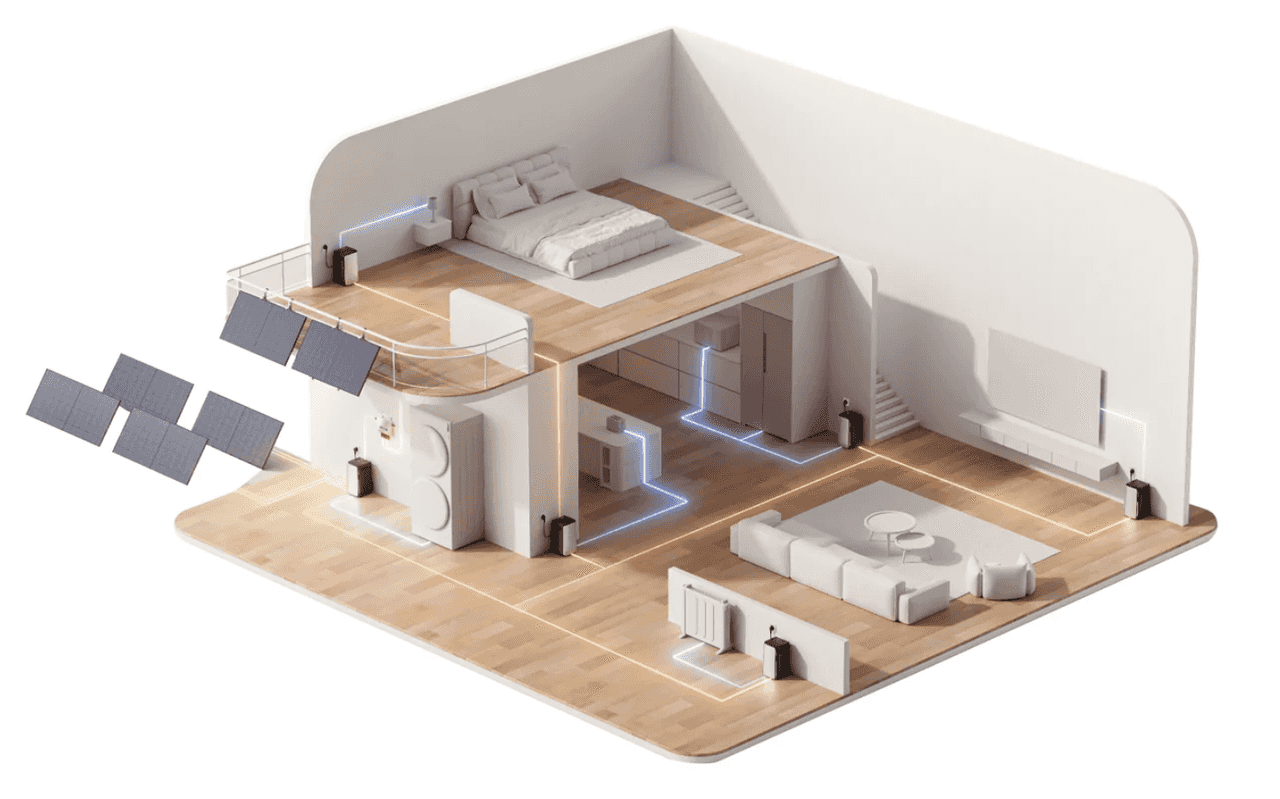
When paired with the EcoFlow app and AI-driven OASIS Home Energy Management System, the system monitors solar production, electricity prices, and home usage in real time. It automatically charges when energy is cheapest and discharges during peak periods, helping larger households maximise Economy 7 savings and increase energy independence.
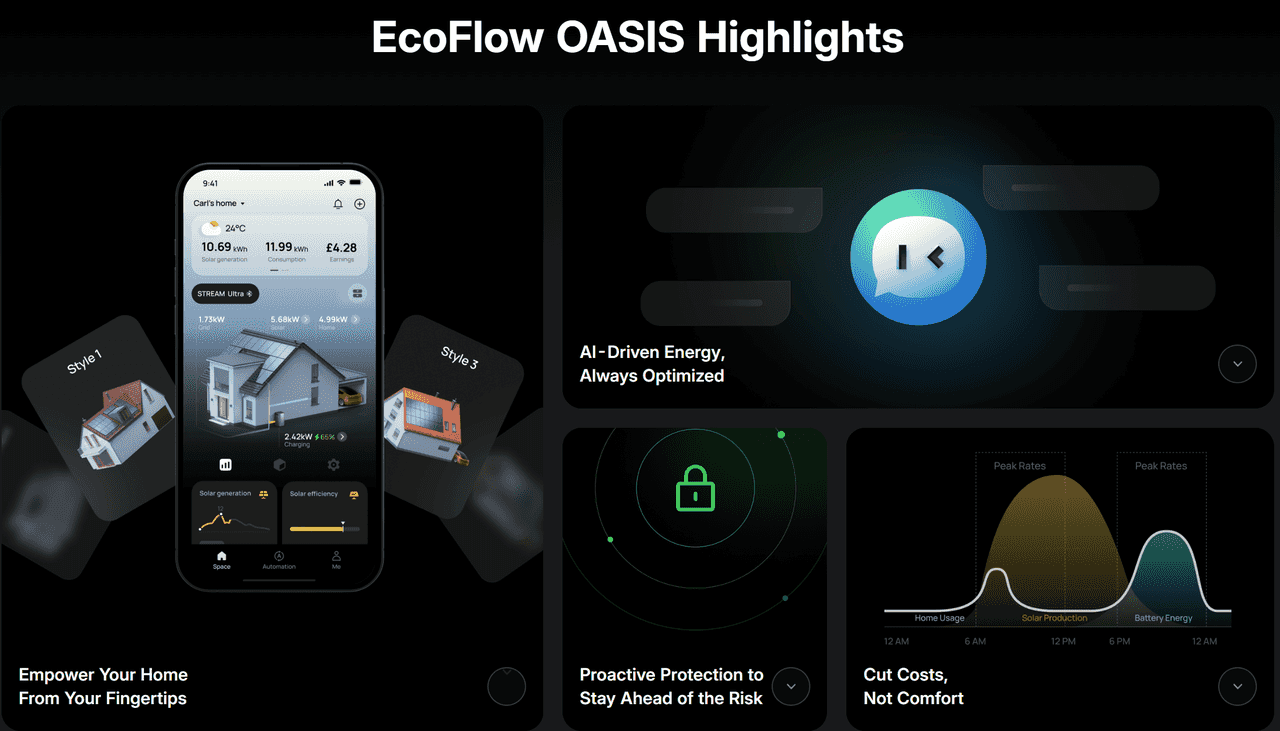
Solution for energy-intensive homes: 450W Rigid Solar Panel + STREAM AC Pro + STREAM Ultra
For households running multiple high-load appliances, the 450W Rigid Solar Panel + STREAM AC Pro + STREAM Ultra bundle delivers a complete solar generation and storage solution with a combined storage capacity of 3.84 kWh and a powerful 2,300W output. This capacity ensures reliable energy storage for daily essentials such as refrigerators, washing machines, dishwashers, ovens, and even space heaters or home office equipment.
The STREAM Ultra acts as the intelligent core battery with built-in inverter support, while the STREAM AC Pro expands both storage and AC output capacity. Like other STREAM systems, it supports the distributed installation of up to six units in parallel, a key competitive advantage that allows flexible placement throughout the home rather than vertical stacking.
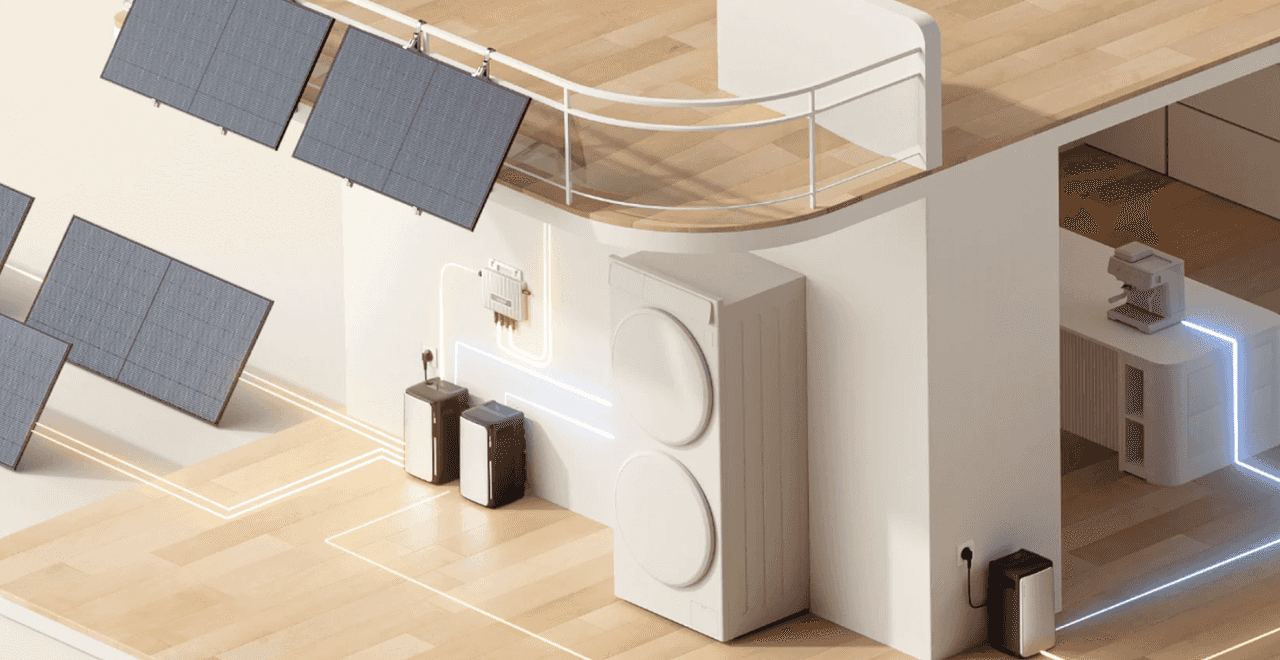
The 450W rigid solar panel maximises solar capture with up to 23% conversion efficiency and strong weather resistance, helping generate usable electricity even in overcast or low-light conditions. This improves battery charging speed and increases overall self-consumption. When solar production exceeds household demand, surplus energy is stored rather than exported, reducing reliance on grid electricity later in the day.
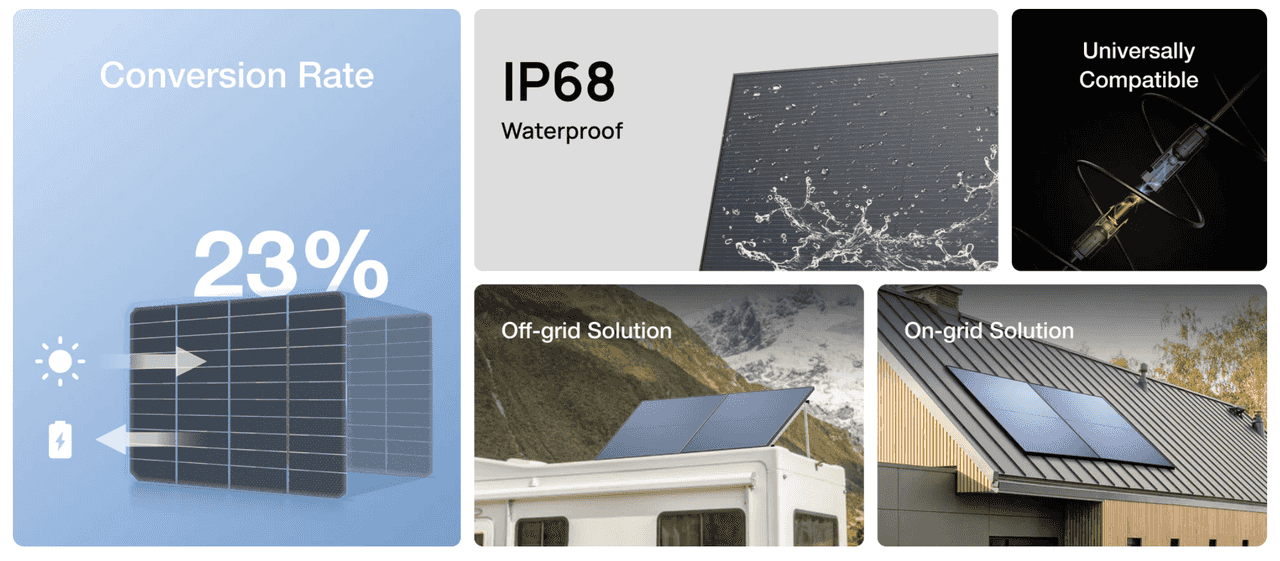
Integrated AI monitoring through the EcoFlow app ensures the batteries charge overnight on cheaper Economy 7 rates or during strong solar generation. Stored energy is then automatically used during peak daytime periods, helping energy-intensive households dramatically reduce grid dependence and potentially slash hundreds of pounds from annual electricity bills.
Do you need a smart meter for Economy 7?
You don't strictly have to install a smart meter to use an Economy 7 tariff, but you do need a dual-rate electricity meter that can record separate day and night usage. Traditional Economy 7 meters were installed specifically for this purpose, showing how much electricity was used during the cheaper off-peak hours versus the daytime.
Today, most suppliers fit smart meters instead of old two-rate meters because smart meters automatically track and send both day and night readings to your supplier. This ensures accurate billing and means you don't need to submit manual readings. A smart meter also lets you switch between time-of-use tariffs more easily, giving you flexibility to choose the most cost-effective plan as your needs evolve.
Smart meters pair especially well with home energy systems like EcoFlow STREAM storage solutions. When combined with solar panels and smart storage, a smart meter can help you make the most of the off-peak Economy 7 rates by directing low-cost or self-generated power to batteries at optimal times, further reducing reliance on the grid and cutting energy bills.
Should you switch from a single‑rate tariff to Economy 7?
Switching from a standard single-rate tariff to an Economy 7 tariff can make financial sense, but only if your electricity usage patterns align with the cheaper overnight hours. The key factor is whether you can shift a significant portion of your energy consumption to the seven off-peak hours.
When switching makes sense
If you use electric storage heaters, charge an EV overnight, or can regularly run appliances like washing machines and dishwashers at night, Economy 7 can reduce your overall electricity costs. Homes with battery storage systems can benefit even more by charging during cheap night rates and using stored power during expensive daytime periods. Generally, if at least 30–40% of your electricity use can be moved to off-peak hours, switching may lead to noticeable savings.
When it might not be worthwhile
If most of your electricity use happens during the day, for example, if you work from home or rely heavily on daytime electric heating, the higher daytime rate could outweigh any overnight savings. In such cases, a single-rate tariff may remain more cost-effective. It's important to review your past energy usage (available via smart meter data or bills) before making a decision.
Conclusion
An Economy 7 tariff can deliver real savings when your household can shift electricity use to cheaper overnight hours. Reviewing your energy habits and understanding day versus night rates is essential before switching.
For even greater financial and energy efficiency benefits, combining off-peak tariffs with solar and battery storage is a smart strategy. Systems like EcoFlow STREAM Ultra, STREAM Ultra X, and STREAM AC Pro allow you to store low-cost or solar energy and use it during peak-price periods. This maximises savings, reduces grid dependence, and helps future-proof your home's energy setup.
FAQS
Is Economy 7 still worth having?
Yes, Economy 7 tariffs in the UK can still be worthwhile if you can move a significant share of your electricity use to off-peak hours. Homes with storage heaters, EV chargers, or overnight appliance use tend to benefit most. However, if daytime usage is high, the higher peak rate may offset savings. Analysing your usage pattern is essential before switching.
Who has the cheapest Economy 7 tariff?
There is no single supplier that always offers the cheapest Economy 7 tariff in the UK, as prices vary by region and market conditions. Unit rates, standing charges, and contract types all affect overall cost. The smartest approach is to conduct an Economy 7 tariff comparison based on your postcode and estimated usage. Comparing both day and night rates ensures accurate cost evaluation.
What is the simple trick to cut your electric bill?
One of the most effective strategies is choosing the best tariff for Economy 7 based on your usage habits and shifting high-energy tasks to off-peak hours. Running appliances overnight, reducing standby power, and improving home efficiency all contribute to lower bills. Adding solar panels or battery storage can amplify savings further. Consistency in energy habits delivers the biggest long-term impact.