Solar Panel Wiring Diagram: Parallel vs. Series Guide with Canadian Code Notes
- What Are Series and Parallel Solar Panel Wiring Configurations?
- How Do Series and Parallel Wiring Affect Voltage and Current?
- What Do Series, Parallel, and Series-Parallel Wiring Diagrams Look Like?
- Should You Wire in Series or Parallel for Shading and Your Charge Controller?
- What Canadian Electrical Code Rules Apply to Solar Panel Wiring?
- How Does Cold Weather Affect Series String Voltage in Canada?
- How Do You Wire Panels in Series—Parallel for Larger Canadian Arrays?
- Frequently Asked Questions
- Correct Series and Parallel Wiring Keeps Canadian Solar Systems Safe and Code-Compliant
How you wire your solar panels is critical for maximizing output and safety, and understanding the difference between wiring in series and parallel helps you determine the best configuration for your setup. This article explores their differences, which one works best for your situation, and some Canadian electrical codes you should be aware of.
What Are Series and Parallel Solar Panel Wiring Configurations?
Wiring configurations are the electrical arrangements used to connect multiple solar panels (also called photovoltaics), and link them to charge controllers, inverters, and more.
Wiring photovoltaics in series involves linking them in a daisy-chain arrangement by connecting the positive terminal of one panel to the negative terminal of the next.
Parallel configurations involve connecting modules by joining all positive/negative terminals together in a single positive/negative lead using branch connectors or a combiner box.
How Do Series and Parallel Wiring Affect Voltage and Current?
Series Wiring: Voltage Adds, Current Stays Constant
Wiring in series causes the voltage of each panel to add cumulatively, increasing voltage while current remains constant.
Parallel Wiring: Current Adds, Voltage Stays Constant
Wiring in parallel maintains a constant voltage while the current of each panel is added cumulatively, raising the total current (amp) output.
What Do Series, Parallel, and Series-Parallel Wiring Diagrams Look Like?
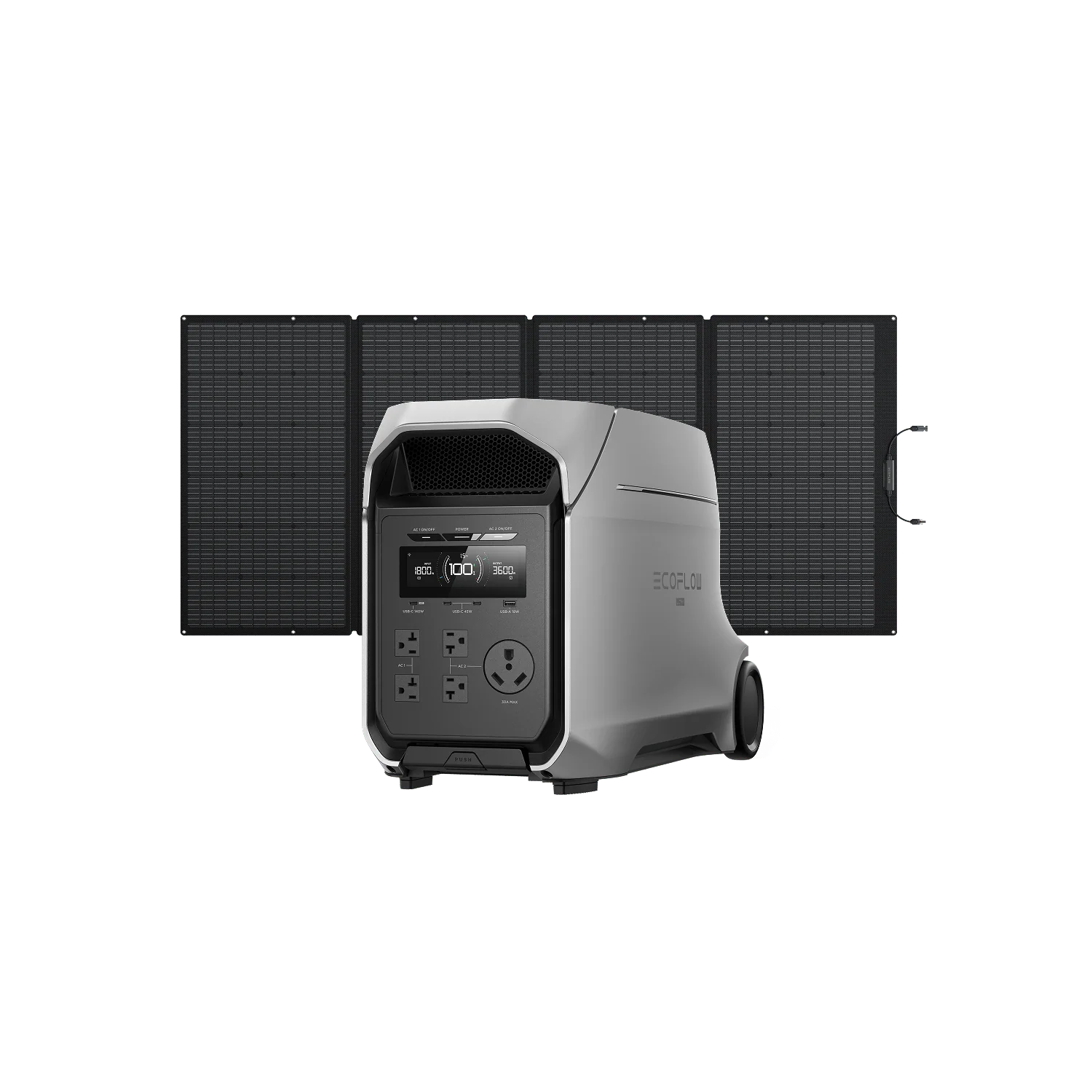
Wiring diagrams show how to connect your photovoltaics, charge controllers, inverters, and storage batteries into one working system. Products that bundle these components together, like the EcoFlow DELTA 3 Ultra Plus + 400W Solar Panel, cut down on the wiring you need to plan yourself.
Two-Panel Wiring Diagram
Two panels in series double the voltage as you connect the positive terminal of one to the negative of the next, while the positive and negative leads connect to the charge controller or inverter.
Two panels in parallel double the current when you connect both positive terminals together and both negative terminals together using an MC4 branch connector.
Three- and Four-Panel Wiring Diagram
Three panels in series are daisy-chained positive to negative in a single string, which triples the voltage.
Three panels in parallel connect all three positive (and negative) leads to a branch connector or combiner box, tripling current.
Four panels are often split into a hybrid series-parallel system with two separate strings of panels in series. You then join the positive/negative output leads of both strings in parallel, doubling system voltage and current.
Should You Wire in Series or Parallel for Shading and Your Charge Controller?
Choosing between wiring in parallel or series depends on your situation. Parallel is more costly because the higher current requires thicker wires for safety. However, it works best in partial shade since shading one panel has little effect on the output of others. It also works with older PWM charge controllers.
Series is cheaper because higher-voltage strings lose less power over long runs, allowing you to use thinner, less expensive wires. These work best with MPPT charge controllers, but shading a single panel significantly reduces the output of the rest.
What Canadian Electrical Code Rules Apply to Solar Panel Wiring?
Section 64 of the Canadian Electrical Code (CEC), Part I, governs photovoltaic installations, but provincial rules may vary.
Rapid Shutdown Requirements Under Rule 64-218
Rule 64–218 mandates a readily accessible rapid shutdown switch for rooftop arrays to protect firefighters and emergency responders from high-voltage hazards.
DC Arc-Fault Protection Under Rule 64-216
DC arc faults caused by loose wires and corroded terminals may start electrical fires. This rule mandates that all arrays with a system voltage of 80V DC or more must have DC arc-fault circuit protection.
Disconnect and Labelling Requirements
The CEC requires high-visibility warning labels and a dedicated shutoff to isolate the array from other components for safe system servicing.
How Does Cold Weather Affect Series String Voltage in Canada?
As temperatures drop below the panel’s 25°C (77°F) rated test condition, the total voltage of series configurations rises because photovoltaic voltage output climbs as the panels get colder.
Under Rule 64-202, installers must calculate the maximum string voltage using either a flat 125% multiplier on the panel's rated open-circuit voltage (a 25% safety margin that accounts for temperatures as low as -40°C) or the manufacturer's specific temperature coefficient paired with the coldest expected temperature at the install site, ensuring voltage stays below the equipment's maximum allowable input.
How Do You Wire Panels in Series—Parallel for Larger Canadian Arrays?
Large arrays are best installed in a series-parallel configuration where you connect two or more individual panels into series strings before connecting the strings in parallel.
Under Rule 64-214, the CEC requires individual string fuses once the combined short-circuit current from your parallel strings exceed your conductor or equipment ampacity, which is commonly the case once three or more strings are combined.
Finally, energy generated is directed into an inverter or batteries, and how you wire multiple batteries in series or parallel affects your system’s overall voltage and capacity.
Frequently Asked Questions
Can You Mix Series and Parallel Wiring in the Same Solar Array?
Yes, large arrays in particular are best configured with both series and parallel wiring in the same array. Essentially, you connect multiple panels in series to form a string, and then combine multiple strings in parallel.
Does Cold Weather Increase or Decrease Solar Panel Voltage?
Cold weather increases solar panel voltage because photovoltaics operate more efficiently in cold weather. System designers use the module’s temperature coefficient and the minimum expected temperature to calculate the maximum voltage to ensure safe installation.
Do You Need a Licensed Electrician to Wire Solar Panels in Canada?
Whether you need an electrician depends on the system. Any system tied into household electrical panels or electrical grids requires a licensed electrician. However, most small off-grid setups and plug-and-play portable systems don’t.
What Happens if Solar Panels Are Wired Incorrectly?
Reversing polarities can blow fuses or fry circuits. Wiring too many in series (overvoltage) can damage the inverter or charge controller, while undervoltage can result in the inverter failing to work or the battery failing to charge. Over-current can result in heat build-up and electrical fires.
Correct Series and Parallel Wiring Keeps Canadian Solar Systems Safe and Code-Compliant
Calculating your total voltage (series) is crucial to keeping system voltage from exceeding the system's capabilities, while calculating your total current (parallel) is essential for determining the safety of your wiring — both of which also keep your setup aligned with CEC requirements like rapid shutdown and arc-fault protection.
The EcoFlow DELTA 3 Ultra Plus + 400W Solar Panel offers a straightforward solution with most of the necessary components (charge controllers, inverters, and storage batteries) already built in.