Home Solar Array Installation: What to Know Before You Start
Even a roof that spends part of the year under snow can carry a home solar array that offsets part of its grid electricity use. Whether the numbers work depends on the roof’s condition and exposure, how many panels the house needs, and what the installation costs once electrical work is included. The sections below cover sizing, installation costs in Canada, permits, and battery backup.
What Is a Home Solar Array and How Does It Work?
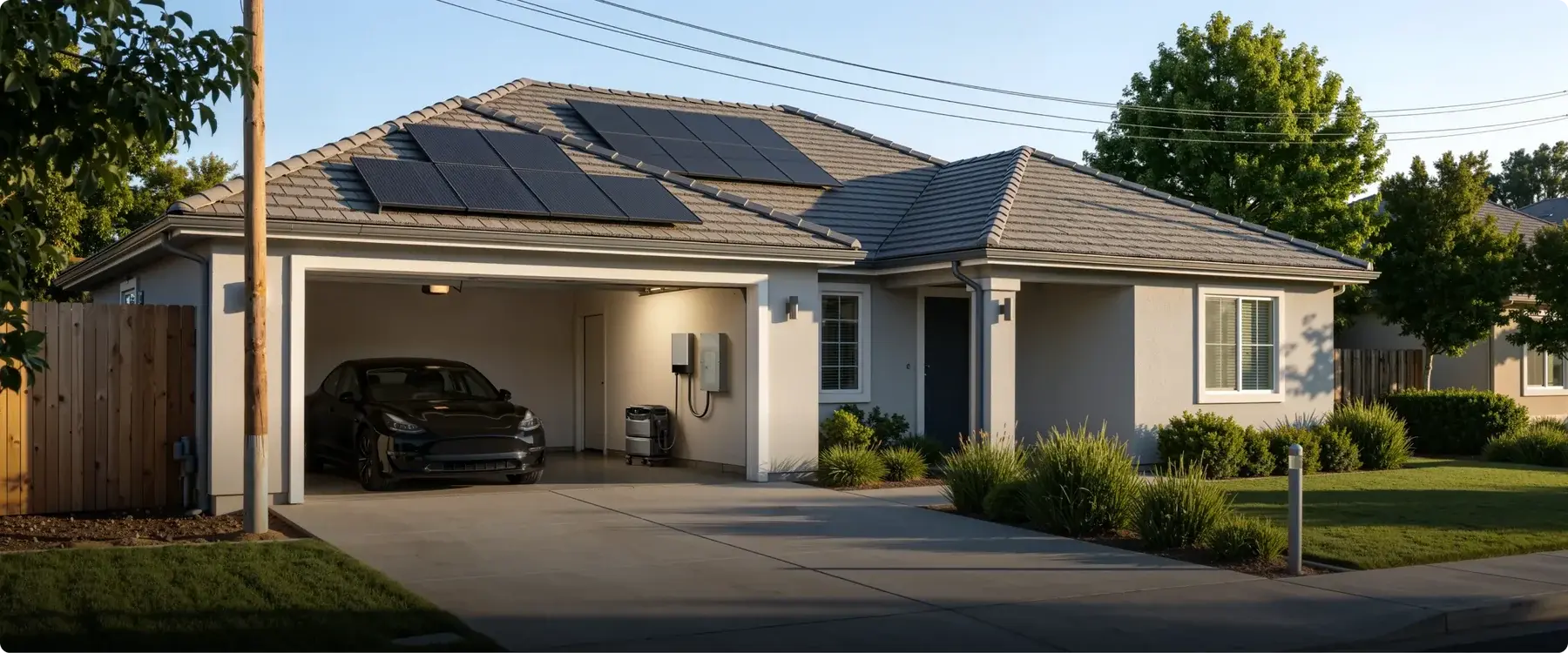
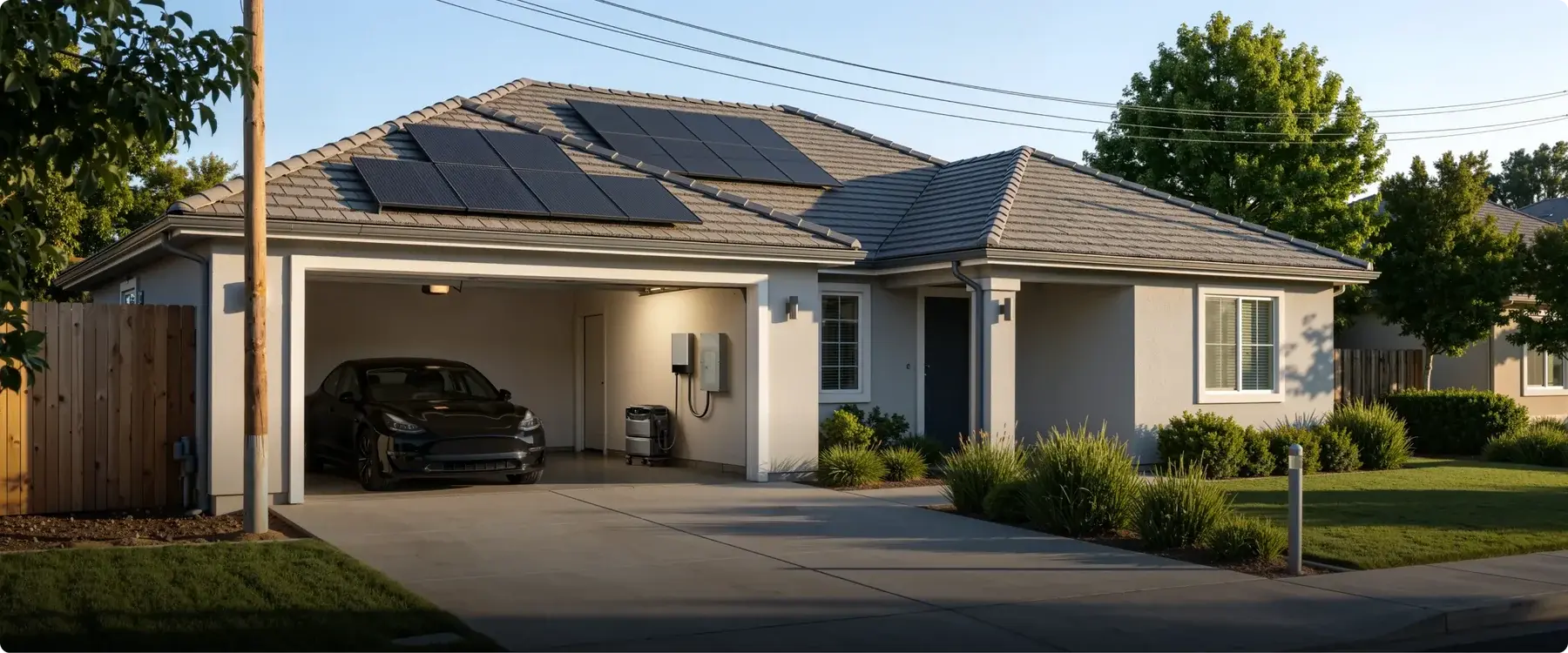
Home solar arrays use panels as one group to convert sunlight into electricity the house can use. What happens to that power next is the other half of the picture, and for most Canadian homes the answer is a grid-tied system: it feeds the house first, then sends any surplus back to the grid where the utility allows it. The parts doing that work are worth knowing by name before you read a quote.
The Main Components of a Solar Array
Four pieces of hardware turn a roof into a working system.
Photovoltaic (PV) Panels: Each solar panel contains silicon cells that capture sunlight and produce direct current (DC) electricity.
Inverters (String, Microinverters, or Optimizers): A solar array inverter converts DC electricity into the 120 V/240 V alternating current (AC) used by North American homes.
Racking & Mounting Hardware: Heavy-duty, corrosion-resistant aluminum rails and roof flashing, engineered to stand up to severe Canadian wind and heavy snow loads.
Bi-Directional Utility Meter: Installed by your local utility, it tracks both what you draw from the grid and what you send back.
Compare Grid-Tied and Off-Grid Solar Systems
The choice comes down to how you live, where the house is, and how much you still want to rely on the local utility. For selected off-grid loads, a solar generator can combine solar charging with stored power in one system.
Feature | Grid-Tied System | Off-Grid System |
Grid Connection | Connected to the utility grid | Independent of the grid |
Battery Storage | Optional | Required |
During Outages | Shuts down unless battery backup is added | Runs on stored energy |
Upfront Cost | Generally lower | Generally higher |
Best For | Urban and suburban homes | Remote cabins and cottages |
How Solar Panels Generate Electricity for Your Home
Sunlight arrives as photons, and when one hits the semiconductor in a solar cell it knocks an electron loose — enough of those add up to a current. The inverter then converts that DC into the AC your home runs on, and the breaker panel sends it to whatever is drawing power at the time, such as the heat pump, the fridge, and the lights. What the house does not use runs back through the bi-directional meter to the grid, and your utility credits it against your bill under its net metering program.
How Do You Choose the Right Solar Array Size?
Two numbers set the size: what the house uses over a year, and what a kilowatt of panels produces where you live. A solar array calculator can provide an initial estimate, but a site assessment should account for shading, roof orientation, and system losses.
Calculate Your Annual Household Electricity Use
Pull out the past 12 months of electricity bills and read all twelve, not one bad February. Canadian homes draw a lot more power through the sub-zero months and again at the height of summer cooling, so a system sized off any single bill will miss the mark. An average Canadian detached home consumes between 9,000 kWh and 11,500 kWh annually. Add up your monthly kilowatt-hour totals, and that sum is the baseline the whole design hangs on.
Estimate Solar Panel Output in Your Region
Where the house sits has a lot to do with what the panels produce, because the sun is not spread evenly across the country:
Southern Alberta & Saskatchewan: Outstanding solar resource, producing roughly 1,200 to 1,350 kWh per kW installed each year.
Southern Ontario & Quebec: Moderate, reliable production at approximately 1,100 to 1,200 kWh per kW installed each year.
Coastal British Columbia & Atlantic Canada: Systems in cloudier microclimates often produce between 950 and 1,100 kWh per kW installed each year, which means a slightly larger array to hit the same annual target.
Match System Capacity to Your Energy Needs
With both numbers in hand, sizing the system is one line of arithmetic: annual consumption divided by what a kilowatt produces where you live.
System Size (kW) = Annual Electricity Consumption (kWh) ÷ Expected Annual Solar Yield (kWh/kW/year)
For a Calgary household using 10,000 kWh a year, an expected yield of 1,250 kWh per installed kW gives a system size of roughly 8 kW, about 20 panels rated at 400 W each.
The solar yield estimate should already account for system losses, from inverter efficiency and wiring to shading and panel orientation. For a location-specific estimate, use Natural Resources Canada's photovoltaic potential maps or a site-specific solar assessment.
How Much Does Home Solar Array Installation Cost in Canada?
Installed residential solar in Canada runs about $2.50 to $3.20 per watt, which puts a 10 kW system at roughly $25,000 to $32,000 before incentives. The final quote turns on the equipment, the roof layout, and whatever electrical upgrades the house needs. What you actually pay depends on which provincial rebates you can claim.
Compare Costs by System Size and Equipment
Installers price by the watt, before any rebates, and installed prices by system size typically fall in these ranges:
System Size | Estimated Panel Count | Gross Turnkey Cost (CAD) | Typical Annual Output |
5 kW | 12 – 13 panels | $13,500 – $16,500 | 5,500 – 6,500 kWh |
7.5 kW | 18 – 20 panels | $19,500 – $24,000 | 8,250 – 9,750 kWh |
10 kW | 24 – 26 panels | $25,000 – $32,000 | 11,000 – 13,000 kWh |
Solar panel specifications such as cell type, efficiency, dimensions, and appearance affect equipment pricing. Installations using premium all-black panels or high-end microinverters from brands such as Enphase tend to cost more, as do those on complex, multi-pitch metal roofs.
Account for Installation and Electrical Upgrades
A per-watt quote usually covers the array itself, not upgrades to the house’s electrical service or roof. Older bungalows and split-levels across Canada often still run on 100-amp service, and an 8 kW to 10 kW solar inverter on a 100-amp panel frequently exceeds the busbar limits set by the Canadian Electrical Code (CEC). Upgrading to a 200-amp panel and meter base generally adds $2,500 to $4,500 to the job. The roof is the other thing to sort out first. If your asphalt shingles are more than 15 years old, replace them before the panels go on, because removing and reinstalling the array for a roof replacement later adds a lot to the cost.
Check Provincial Incentives and Financing Options
Rebates and financing options vary across the country, so find out what is available in your province before you price the job.
Alberta: The Clean Energy Improvement Program (CEIP) offers property-based financing, though only in municipalities that have opted in.
Provincial Programs: Some provinces and utilities offer solar incentives or net metering arrangements, with eligibility set by local rules.
Federal Programs: The Canada Greener Homes Grant closed to new applications in February 2024, and October 1, 2025, was the last day to apply for the Canada Greener Homes Loan.


How Do You Prepare for Home Solar Array Installation?
Most of the work that protects you happens before a panel goes up. Planning a solar panel installation design includes collecting quotes, reviewing warranties, and confirming which permits apply where you live. Battery backup belongs in that same conversation and is easier to plan at the design stage.
Compare Quotes from Qualified Solar Installers
Get at least three quotes, and compare more than the bottom line. Every contractor should carry appropriate liability and workers’ compensation insurance, and should use electricians licensed in your province. Then line the quotes up item by item, comparing the equipment, the install cost, the roof assessment, and the warranties, and checking whether permits and grid connection paperwork are included.
Review Equipment Warranties and Installation Requirements
Two warranties apply to the hardware, and they cover different things. Product warranties on panels and inverters typically run 12 to 25 years, covering the equipment itself, while performance warranties usually guarantee 80% to 85% of rated output after 25 years. Installers may also offer 5 to 10 years of workmanship coverage for installation defects and roof leaks. Read the terms and the exclusions before signing.
Plan Home Backup Power Alongside Solar Installation
A standard grid-tied array shuts down when the grid does, and that is a safety requirement rather than a design flaw. If you want essential appliances to keep running, consider adding battery backup as part of the same installation.
The EcoFlow TITAN 5000 Classic Whole-Home Backup Power paired with the 120V Smart Home Panel 10 is a dependable, modular way to keep essential 120 V loads running, such as the kitchen refrigerator, dedicated lighting circuits, Wi-Fi routers, and home office gear. Its integrated 5 kWh battery expands to 30 kWh, so storage scales to what the household needs in an outage. Through the Smart Home Panel 10, the system routes backup power to pre-selected circuits automatically, with no extension cords to run and nothing to unplug in the dark.
For households that need to run several power-hungry appliances at once during an extended outage, the EcoFlow TITAN 5000 Plus Whole-Home Backup Power paired with the 120/240V Smart Home Panel 10 offers more headroom. The Plus delivers 7.2 kW of battery output, and with compatible solar feeding in, combined battery and PV output reaches up to 10 kW. Maximum solar input is 8 kW. It suits Canadian households that want to use more of their own rooftop generation while keeping critical loads covered.
Before choosing a system, work out what has to keep running and what it needs: voltage, running wattage, and startup draw. The Smart Home Panel 10 must be installed by a qualified electrician in accordance with local electrical codes.
Confirm Permits, Inspections and Grid Connection Steps
Depending on your province and municipality, a solar installation may require a building permit, an electrical inspection, and utility interconnection approval. The technical submissions and inspection scheduling should be your installer’s job, including the back-and-forth with authorities such as Ontario’s Electrical Safety Authority (ESA) or Technical Safety BC. Nothing goes live until the utility approves it.
Conclusion
A home solar array can be a worthwhile investment in Canada when the roof suits the project, household electricity use supports the economics, and applicable local incentives improve the numbers. Before committing, compare several installer quotes and ask for an annual production estimate based on the property. If outages are part of the goal, discuss compatible battery storage during system design so selected essential appliances can remain available when the grid is down.
FAQs
Can Solar Panels Cause Roof Leaks?
No, not when the job is done properly. Qualified technicians mount panels on engineered brackets, secure them to the structural rafters with lag bolts, and seal every penetration with exterior-grade flashing and waterproof sealant. Reputable installers back that work with a multi-year roof penetration warranty.
How Long Does It Typically Take to Install Solar?
The work on your house is the short part: one to three days on the roof and at the electrical panel. From signing the contract to final utility interconnection, the whole thing usually takes 6 to 12 weeks, because municipal permits and utility approvals move at their own pace.
Can It Get Too Cold for Solar Panels to Work?
Solar panels do not stop working in freezing temperatures. Silicon semiconductors are actually more efficient in sub-zero cold than in sweltering summer heat. As long as sunlight reaches the glass with nothing in the way, panels keep producing clean electricity even on the coldest days of the year.
How Long Do Solar Panels Last in Canada?
Residential panels last 25 to 30 years or more. Most tier-1 manufacturers back that with a 25-year performance warranty, guaranteeing the panels still deliver at least 80% to 85% of their original rated output after a quarter-century of exposure to the elements.