Can You Sleep in Your Car Overnight in Canada?
Yes, you can physically sleep in your car in Canada, as there is no federal law strictly prohibiting it, but legality depends entirely on where you park. You cannot simply pull over on any street or highway shoulder to spend the night. Most municipalities have bylaws restricting street parking hours, and private properties require explicit permission. To stay legally, you must choose designated areas like campgrounds, specific rest stops, or Crown land.
Overnight Parking Rules in Canada
While the act of sleeping in a car is not a crime, the location you choose often dictates if you will receive a knock on the window or a fine.
Legality of Sleeping in Your Car
Canada does not have a blanket ban on vehicle sleeping. The Criminal Code does not forbid you from napping in the driver's seat. Problems arise when your choice of location violates local property laws or traffic laws.
Municipal Bylaws: Most cities, including Vancouver, Toronto, and Montreal, enforce strict overnight parking bans on city streets to allow for cleaning, snow removal, or traffic flow. These bans often apply even if you are inside the vehicle.
Private Property: Sleeping in a mall or grocery store lot without consent constitutes trespassing. Security guards have the authority to ask you to leave immediately.
Care or Control: This is a critical legal concept in Canada. If you have consumed alcohol or drugs and decide to sleep it off in your car, you can still be charged with Impaired Driving. Police may determine you have "care or control" of the vehicle if you are in the driver's seat or have easy access to the keys, even if the engine is off.
Municipal Bylaws & Street Parking
Local rules vary significantly between provinces and cities. You must look for specific signage on every block.
Time Limits: Many unmetered streets have a hidden 3-hour or 4-hour parking limit that applies 24/7, even if no signs are present.
Seasonal Bans: In winter, many Canadian towns strictly prohibit on-street parking overnight to facilitate snowplows. These bans are aggressively enforced.
Permit Zones: Residential areas often require a permit displayed on the dashboard. Visitor passes are sometimes available, but they rarely permit sleeping in the vehicle.
Always verify local parking bylaws before assuming a quiet residential street is safe. If you see a sign prohibiting "camping" or "overnighting," move on to avoid a ticket.
Where You Can Park Overnight
Finding a safe, legal spot requires preparation. Canada offers a mix of paid infrastructure and vast public lands where vehicle sleeping is permitted.
Campgrounds and Recreation Sites
The most straightforward option is a registered campground. Parks Canada and provincial park systems (like BC Parks or Ontario Parks) offer thousands of sites.
Pros: Legal, safe, access to washrooms and showers.
Cons: Costs money (usually $25-$50/night), requires reservations in peak season.
Note: Some campgrounds have "overflow" lots for late arrivals which allow parking overnight for a reduced fee.
Crown Land (Public Land)
Roughly 89% of Canada is Crown Land. In many general-use areas, Canadian residents can camp for free for up to 14 or 21 days (depending on the province) at a single site.
Access: Common in Northern Ontario and British Columbia.
Rules: You must follow "Leave No Trace" principles.
Vehicle Types: Best suited for vehicles with higher clearance as access roads are often unpaved logging roads.
Highway Rest Areas & Pullouts
Provincial transportation ministries manage rest areas. Policies differ by province.
British Columbia: Many rest areas allow overnight stays for fatigue management, provided you do not set up tents or campfires.
Ontario (ONroute): Generally limits stays to 4 hours to prevent camping, though enforcement varies if you are clearly just resting for safety.
Signage: Always read the specific signs at the entrance. "No Overnight Camping" usually means you cannot stay the night, whereas "No Tent Camping" might allow sleeping in your vehicle.
Store & Business Parking Lots
Large retailers and 24-hour businesses have historically been friendly to travellers, but policies are tightening.
Walmart: While famous for allowing RVs, many Canadian locations now ban it due to local ordinances or abuse of the privilege. Always ask the store manager.
Casinos: Many casinos offer free overnight lots to attract patrons. You usually need to register your licence plate with security inside.
Truck Stops: Flying J and Pilot often allow passenger cars to park but prioritize commercial truckers. It can be noisy and bright.
Summary: Your best options for legal peace of mind are paid campgrounds or remote Crown land. Business lots are convenient but require permission every single time.
How to Find Overnight Parking Near You
Relying on luck to find a spot often leads to stress or fines. Modern tools and observational skills can help you locate overnight parking near me quickly and accurately.
Use Parking & Camping Apps
Crowd-sourced applications are essential for current information. Users update these platforms daily with reports on closures, enforcement levels, and noise.
| App Name | Best Use Case | Features |
| iOverlander | The gold standard for free/wild spots. | Detailed reviews, GPS coordinates, warnings about police checks. |
| Park4Night | Great for urban and semi-urban spots. | Photos of parking spots, height restriction warnings. |
| AllStays | Finding official amenities. | Filters for Walmarts, casinos, and truck stops with verified policies. |
Check Local Signage
Apps can be wrong; signs are the law. When you arrive at a potential spot:
Look for Arrows: Parking signs often have arrows indicating where the zone starts and ends. Ensure your vehicle is completely within the allowed zone.
Read the Fine Print: Look for "No Parking 2 AM - 6 AM" or strictly "No Overnight Camping."
Private Property Signs: "Customer Parking Only" implies you must leave after doing business. "Tow Away Zone" warnings should be taken seriously.
Ask Businesses Directly
If you plan to stay in a commercial lot, walking inside to ask customer service is the safest approach.
Be Polite: Ask, "I am passing through; is it okay if I rest in the back of the lot for one night?"
Buy Something: Making a small purchase shows goodwill.
Follow Instructions: If they say park under the light or near the perimeter, do exactly that.
Tip: Conducting a search for legitimate spots before you get tired prevents bad decision-making late at night.
Tips for Sleeping in Your Car Safely
Sleeping in a vehicle presents unique challenges regarding temperature, power, and personal security. A few strategic adjustments can turn a cramped car seat into a comfortable bedroom.
Choose Safe Locations
Trust your instincts. If a location feels wrong, leave.
Lighting: Park under a streetlamp for security, or in a dark corner for sleep—know your preference. Well-lit areas generally deter break-ins.
Orientation: Park nose-out. This allows you to drive away quickly if you feel threatened or unsafe.
Level Ground: Sleeping on an incline disrupts blood flow and comfort. Use levelling blocks or find a flat section of the lot.
Weather & Comfort
Canadian nights drop in temperature drastically, even in summer.
Ventilation: Crack a window slightly to prevent condensation buildup and keep air fresh. Rain guards (window deflectors) allow you to do this without letting rain or snow in.
Insulation: Use window covers or reflective shades. They provide privacy and trap heat inside the cabin.
Layering: A sleeping bag rated for 0°C is better than blankets, as it traps body heat more effectively.
Stay Powered
Modern car camping relies on electronics, from phones for maps to electric coolers for food. However, charging these via your car's 12V socket (cigarette lighter) risks draining your starter battery, leaving you stranded in the morning.
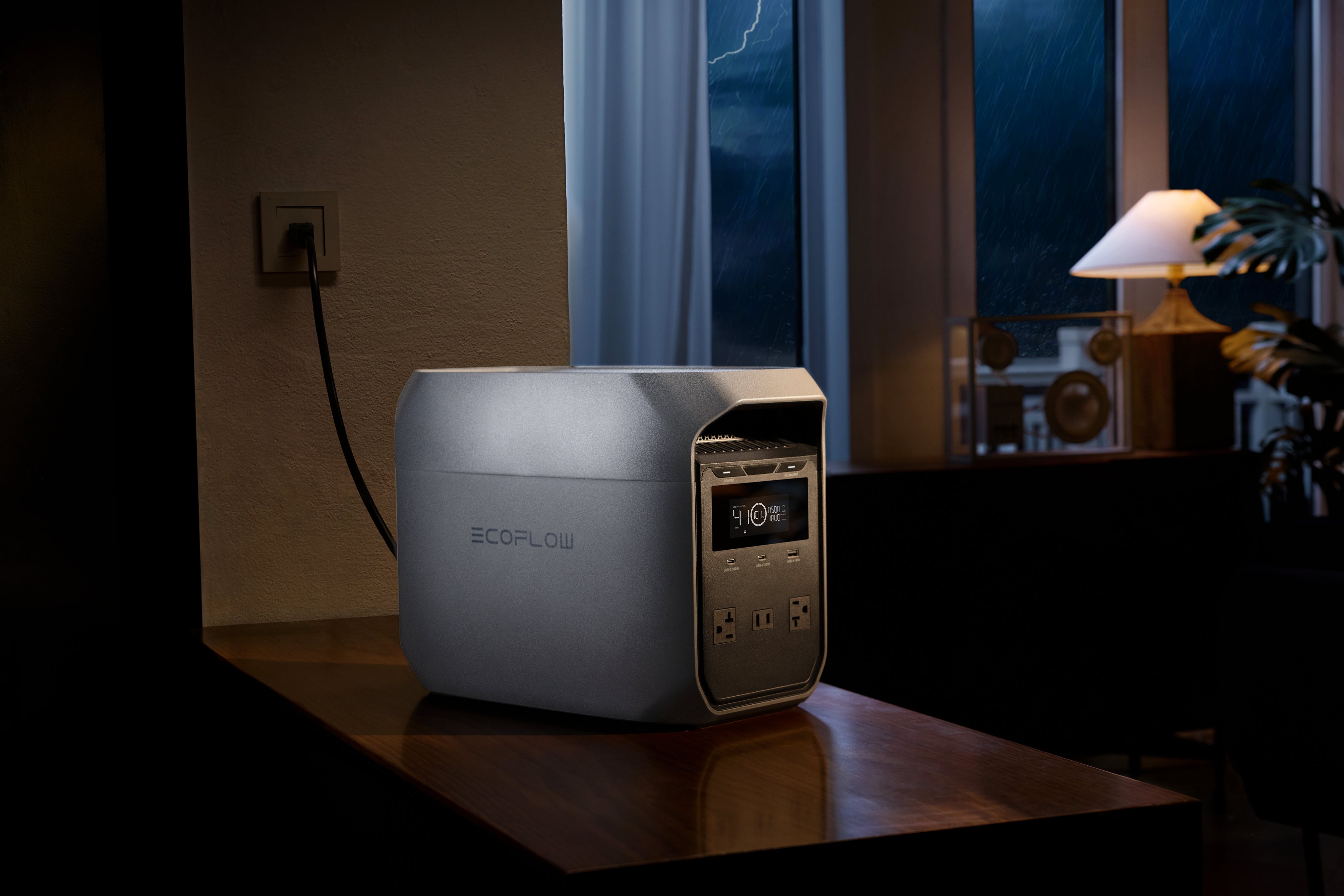
The EcoFlow Delta 3 Classic solves this energy anxiety. It acts as a robust, independent power hub for your vehicle. With a 1024Wh capacity, you can run essential devices like electric coolers, laptops, and ventilation fans all night without touching your car's battery.
What makes the Delta 3 Classic particularly suited for sleeping in a car is its silence. It operates at a whisper-quiet 30dB, ensuring your sleep isn't disturbed by hums or fan noises. If you need to cook a quick breakfast, the 1800W output (with X-Boost up to 2600W) handles high-draw appliances easily. Plus, if you forget to charge it at home, you can top it up from 0 to 80% in just 45 minutes while you stop for coffee or groceries. It keeps you connected and comfortable while completely protecting your vehicle’s engine reliability.
Avoid Driving-Related Risks
To protect yourself from legal misunderstandings regarding "Care or Control":
Stow Keys: Do not keep keys in the ignition or your pocket while sleeping. Lock them in the glove box or put them in your bag in the back seat.
Driver's Seat: Never sleep in the driver's seat. Move to the passenger side or the back seats. This physically demonstrates you are using the vehicle as accommodation, not transportation, at that moment.
Travel Smart, Sleep Safe
Sleeping in your car in Canada is a viable way to travel if you navigate the local rules and respect private property. By utilizing resources like Crown land maps and campground apps, and ensuring you have reliable gear like the EcoFlow Delta 3 Classic to keep your devices running, you can explore the country safely and comfortably. Always read the signs, ask for permission when in doubt, and leave your parking spot cleaner than you found it.
FAQs
Q1: Can I legally sleep in my car at an ONroute service centre?
Technically, ONroute service centres in Ontario limit parking to four hours to discourage camping. However, the primary goal is safety. If you are too tired to drive, security will generally allow you to sleep to ensure you don't drive fatigued. It is not a place to set up for a multi-night stay, but resting for a single night to restore alertness is usually tolerated.
Q2: What is the difference between "No Parking" and "No Camping" signs?
"No Parking" means you cannot leave your vehicle there at all during the specified hours; if you are there, you can be ticketed or towed. "No Camping" usually prohibits setting up tents, outdoor cooking, or expanding your footprint outside the vehicle. You might be allowed to park and sleep inside your car in a "No Camping" zone, but you should look for clarifying bylaws to be sure.
Q3: Is stealth camping legal in Canadian cities?
Stealth camping—sleeping in a vehicle on a city street without being noticed—is generally a violation of municipal bylaws regarding overnight occupation of a vehicle or time limits. While many people do it by keeping a low profile and arriving late/leaving early, it is technically an infraction in most major cities and carries the risk of fines or being told to move by police.
Q4: Do I need a permit to camp on Crown Land?
For Canadian residents, camping on Crown Land is typically free and does not require a permit for stays up to 14 or 21 days (depending on the province) at one location. However, non-residents of Canada may require a paid camping permit to stay on Crown Land in certain provinces like Ontario and British Columbia. Always check the specific provincial Ministry of Natural Resources website for the region you are visiting.
Q5: Can I get a DUI for sleeping in my car if I have the keys?
Yes. If you are over the legal alcohol limit and are found inside your vehicle, police can charge you with having "care or control," even if the engine is off. To minimize this risk, you must prove you had no intention of driving. This typically involves sleeping in the back seat and storing the keys in a location that is not immediately accessible, like the trunk or a locked glovebox.