How to Power Ice Fishing Electronics: Sonar, GPS, Cameras & Phones
- Ice Fishing Electronics Explained: What Anglers Commonly Use
- Common Ice Fishing Electronics and Their Power Needs
- Cold Weather and Batteries: Why Ice Fishing Is Different
- How Ice Fishing Electronics Work Together in the Field
- Why Portable Power Stations Make Sense for Ice Fishing
- Using Solar and Supplemental Charging in Winter Conditions
- Power Planning Tips for a Full Day on the Ice
- Frequently Asked Questions
- Powering Smarter Ice Fishing Adventures
Ice fishing is a fantastic way to enjoy the great outdoors during the winter. And these days, there are lots of devices that can enhance your ice fishing experience, from sonar units to your smartphone.
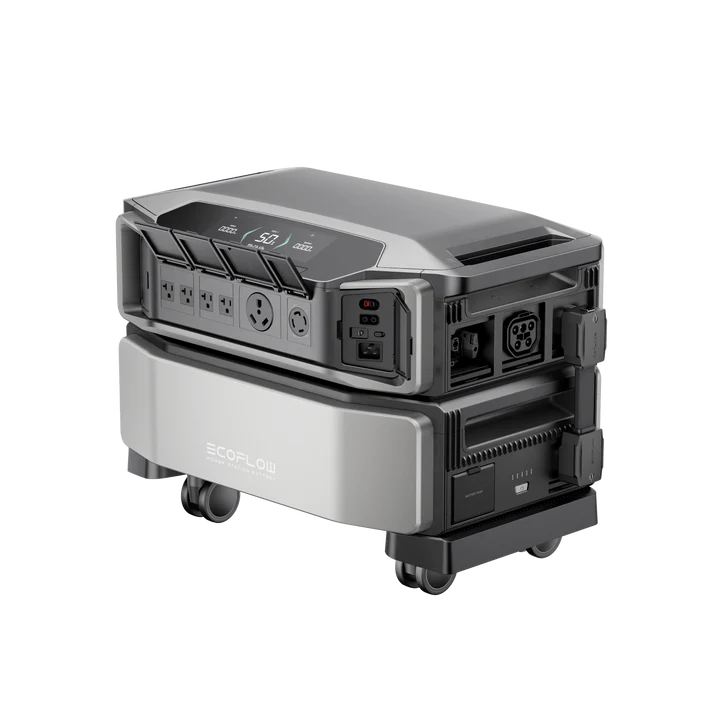
But cold weather can do a number on batteries. Let's take a look at how a portable power station like the EcoFlow DELTA Pro Ultra can keep your electronics charged so you can enjoy a day on the ice without interruption.
Ice Fishing Electronics Explained: What Anglers Commonly Use
These days, devices can make your ice fishing trip much more productive and pleasant.
Fish finders and sonar units to help you find fish under the ice.
GPS units to help mark productive spots.
Underwater cameras to observe fish behaviour.
Smartphones for weather updates, mapping apps, and emergency contact.
LED shelter lighting.
Possibly even small heaters.
Even though these devices don't draw much on their own, together, they create a real demand for reliable power.
Common Ice Fishing Electronics and Their Power Needs
Device | Typical Power Draw (Watts) | Typical Amp Draw (at 12V) | Notes/Examples |
Portable sonar/fish finder | 3–36W (0.25–3A) | 0.25–3A | Basic 4" screen (e.g., Garmin Striker 4): 0.23–0.8A. Advanced 5–7" with GPS: 0.65–0.9A or 2–3A peak. |
Underwater camera systems | 5–20W continuous (idle much higher without sleep mode) | 0.4–1.7A | Time-lapse/action cams: High idle draw unless hibernating (e.g., 1200Wh over days drops to 186Wh with power-saving). Runtime: hours to days on a 10Ah battery. |
Handheld GPS unit | 1–5W (0.1–0.4A continuous) | 0.03–0.4A (peaks to 2A) | Sleep: <17mAh; active tracking: 34mAh avg, up to 240mAh with accessories. |
Smartphone charging | 5–20W | 0.4–1.7A (at 12V) | Standard: 5W slow. Fast USB-C/PD: 12–20W (e.g., 5V/2.4A or 9V/2A). |
LED lighting (boating) | 5–10W per bulb/fixture | 0.4–0.8A | 80% less than incandescent (e.g., 50W halogen = 10W LED). Deck/cabin lights: low draw for hours on small batteries. |
Cold Weather and Batteries: Why Ice Fishing Is Different
An important factor to keep in mind is how cold weather affects batteries.
The cold slows the chemical reactions inside batteries. In subzero conditions, a lead-acid battery can lose 30 to 50% of usable capacity. Standard lithium-ion batteries are more resistant to the cold but also exhibit reduced performance at temperatures below zero.
How Ice Fishing Electronics Work Together in the Field
In the field, you're not going to use these devices one at a time. Often, you'll be combining different devices, and this means an even bigger drain on batteries. For example, you might run:
Sonar continuously, to track fish under the hole.
Underwater camera occasionally to check lures.
GPS occasionally to find safe travel routes.
Smartphone for monitoring weather or communicating.
Lighting continuously, or only during some hours, depending on natural light levels.
All this means fluctuating demand. For example, you might hit your peak draw when charging a phone while using sonar with the lights on. At other times, you might only be using the sonar.
Why Portable Power Stations Make Sense for Ice Fishing
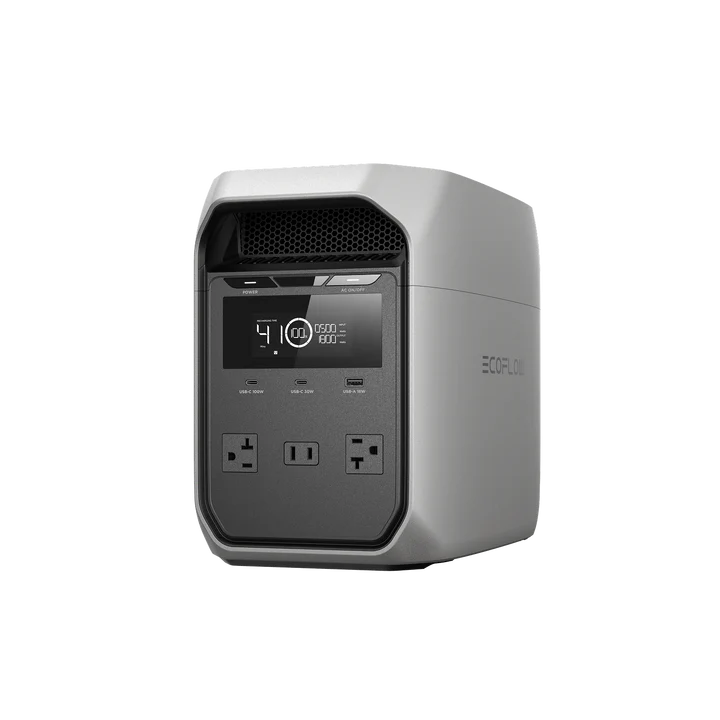
A portable power station, like the EcoFlow DELTA 3 Classic, can give you several advantages over smaller battery packs:
High-capacity. Why carry multiple tolerable batteries when a single power station can give you 1000Wh (or more, if you opt for the robust EcoFlow DELTA Pro Ultra)?
Multiple outlets. A good portable power station will have AC outlets, USB ports, and 12-volt outputs so you can operate different devices.
Better battery management systems reduce the risk of over-discharge or improper charging, even in cold weather.
Easier set up. Having a single centralized power station means you can always find it when you need it.
Using Solar and Supplemental Charging in Winter Conditions
Solar panels can provide useful charging even in the winter, especially when paired with a portable power station, such as the EcoFlow DELTA Pro Ultra. Bright winter days with reflective snow mean you can generate power and top up a portable power station while you fish.
Remember, though, that snow cover can block output, so you'll need to clean your panels regularly. Shorter daylight hours also mean less power than you would get in the summer.
To maximise solar charging during the winter, you should:
Position panels toward the low sun
Clear snow from panels
Use panels rated for cold conditions
Solar power works best as a supplement, keeping your power station topped up. On a multi-day trip, it can help you keep everything powered for longer. You can even get creative with solutions like the EcoFlow Solar-Powered Hat that can charge your phone.
Power Planning Tips for a Full Day on the Ice
To avoid your devices going dead in the middle of your trip, follow these steps:
Calculate your power needs. Multiply your device's wattage by the expected hours of use to see what you will need.
Increase your power estimate by 20-30% to account for reduced battery efficiency in cold weather.
Keep batteries insulated and away from the ice.
Lower screen brightness on your devices.
Charge all devices fully before leaving home.
Bring backup cables.
Monitor usage and keep an eye on battery capacity.
Frequently Asked Questions
Do Solar Panels Work in Ice and Snow?
Yes, they do. However, reduced sun means reduced solar panel output. Remember to clear snow and ice from panels immediately.
How Do I Power My Fish Finder?
Most fish finders run on 12V power from small lithium or lead-acid batteries. Depending on what your fishfinder draws, you can run it for a whole day or multiple days.
How Cold Is Too Cold for a Lithium Battery?
Lithium batteries can discharge in temperatures down to -4°F/-20 °C. However, the charging range is higher at 32°F (0°C). It's even higher for long-term storage: 59°F (15°C). In other words, while you can use a lithium battery to power your devices in very cold temperatures, you may not be able to charge it. And if you keep your battery cold for too long, it may lose its charge.
Powering Smarter Ice Fishing Adventures
Electronic devices can greatly improve your ice fishing experience. But only if they work. A portable power station like the EcoFlow DELTA Pro Ultra can help you keep everything charged while you're out on the ice. Just like a whole-home generator, these powerful batteries can become the heart of your electrical systems wherever you are.