How Long Does It Take to RV Across Canada?
- RV Travel Time Across Canada: Route Segments and Real Drive Hours
- How to Prepare for a Long Road Trip: Essential Pre-Departure Checks
- How to Plan an RV Trip Across Canada: Building a Day-By-Day Itinerary
- Seasonal Timing and Its Impact on RV Trip Duration Across Canada
- Plan Your RV Road Trip Across Canada With Accurate Time Estimates
- Frequently Asked Questions
Quick Answer Summary
Fast transit (no sightseeing): ~14–21 driving days (theoretical minimum)
Balanced road trip (most travellers): 4–6 weeks
Leisure + national parks + detours: 6–8+ weeks
Total driving time (coast to coast): ~90–110 hours (estimated RV pacing)
Typical daily distance: 300–450 km per day (planning assumption)
Travel time can increase significantly due to weather, mountain terrain, ferry schedules, and campground availability, especially in British Columbia, Northern Ontario, and Atlantic Canada.
Most travellers spend 2 to 8 weeks on a coast-to-coast RV road trip across Canada, depending on how much sightseeing they plan along the way. The drive from Victoria, BC to St. John's, NL covers roughly 7,800 km along the Trans-Canada Highway, although most RV travellers end up covering more distance through side trips, ferry crossings, and campground detours. Before setting out, it helps to understand how long each section takes to drive, how to prepare your RV, and which seasons make the trip easier or much harder.
Data Sources & Estimation Methodology
Travel times and distances in this guide are based on a combination of official transportation data, ferry operator schedules, and standardized RV travel assumptions.
Ferry durations are referenced from Marine Atlantic published schedules (North Sydney–Port aux Basques and seasonal Argentia routes).
Route distances are based on the Trans-Canada Highway corridor between Victoria, BC and St. John's, NL as mapped via provincial highway systems.
Driving time estimates use a standard RV cruising assumption of 300–450 km per day, reflecting mixed highway speeds, fuel stops, and setup time.
Total driving-hour estimates are derived from aggregated segment timing across each provincial section.
Where exact figures are not available, values are presented as planning estimates based on typical RV travel conditions, not guaranteed travel times.
RV Travel Time Across Canada: Route Segments and Real Drive Hours
Crossing Canada by RV involves long stretches of highway, changing weather conditions, and major differences in driving pace between regions. While some sections can be covered quickly, others — especially through the Rockies or Northern Ontario — often take longer than travellers expect. Breaking the route into manageable segments helps create more realistic driving days and leaves room for unexpected stops along the way.
British Columbia to Alberta: Mountain Passes and Reduced Speed
The drive from Victoria, BC to Calgary covers roughly 1,150 to 1,300 km once ferry crossings and Vancouver-area traffic are included. RV travel through the Rockies is significantly slower than standard car estimates, especially along Rogers Pass and other mountain sections of the Trans-Canada Highway. Steep grades, construction zones, and weather changes often reduce speeds to around 60 to 80 km/h for larger rigs.
Most RV travellers should expect at least 16 to 20 hours of total driving time across this segment rather than attempting it in a short two-day push. Heavier payloads, trailers, and long motorhomes can slow climbs even further, making conservative daily mileage important early in the trip.
The Prairie Provinces: Saskatchewan and Manitoba Flat Driving
Calgary to Winnipeg spans roughly 1,300 km of relatively flat highway through Alberta, Saskatchewan, and Manitoba. Compared with the mountain sections farther west, this portion of the Trans-Canada is easier for maintaining steady highway speeds, and many RVs comfortably cruise between 90 and 100 km/h in good weather conditions.
The biggest challenge across the Prairies is not terrain but wind. Strong crosswinds regularly affect southern Saskatchewan and Manitoba, especially for taller trailers and Class A motorhomes. Windy conditions can noticeably reduce fuel economy and make long driving days more tiring than expected.
Ontario to Quebec: Population Density and Urban Slowdowns
The route from Winnipeg to Quebec City stretches more than 2,400 km and includes some of the longest driving days of the entire cross-country journey. Northern Ontario is often considered the most time-consuming section because Highway 17 follows winding terrain around Lake Superior rather than straight prairie highway.
Fuel stations, food stops, and cell service can become limited along some stretches of northern Ontario, so RV travellers should avoid letting fuel levels run too low. Traffic delays also become more common approaching the Greater Toronto Area and Montreal, where congestion can easily add extra time during peak travel periods. Within Quebec, most RV travellers stay on Autoroute 20, which is generally easier to navigate than older urban corridors.
Atlantic Canada: Ferry Crossings and Coastal Mileage
From Quebec City, the Trans-Canada Highway continues through New Brunswick and Nova Scotia before reaching the ferry terminal at North Sydney, NS. The Marine Atlantic crossing from North Sydney to Port aux Basques, NL typically takes around 7 hours, although weather and loading conditions can sometimes extend travel time.
After arriving in Newfoundland, travellers still face roughly 900 km of additional driving to reach St. John's. While the Trans-Canada Highway across Newfoundland is generally straightforward, fuel stops and cell service can become sparse in some areas, particularly outside larger towns. Many RV travellers also add side trips through Cape Breton Island, the Cabot Trail, or Prince Edward Island, which can easily extend the schedule by several extra days.
Total pure driving time for an uninterrupted coast-to-coast RV trip is roughly 90 to 110 hours behind the wheel, spread across all segments. Realistically, travellers should budget a minimum of 14 driving days just for transit, before any sightseeing is added.
How to Prepare for a Long Road Trip: Essential Pre-Departure Checks
Mechanical problems, tyre issues, and poor route preparation are among the most common reasons RV travellers experience delays on cross-Canada trips. Completing the following checks at least two weeks before departure eliminates the most common preventable delays.
Inspect tyre tread depth and sidewall condition on all wheels, including the spare, because tyre failures on remote Highway 17 or TCH Newfoundland can mean a 3 to 5 hour wait for roadside assistance.
Service the engine, transmission fluid, and brake system to manufacturer specifications, since RV gross vehicle weight ratings are often stressed on mountain descents in BC and Alberta.
Calculate fresh-water tank capacity against the distance between serviced campgrounds, as some Northern Ontario and Newfoundland segments have 200+ km gaps between dump and fill stations.
Verify that all propane appliances, smoke detectors, and carbon monoxide alarms are functional before crossing into remote regions where emergency services response times exceed 45 minutes or even longer.
Assemble a paper-map backup for every province, because cellular dead zones cover an estimated 30% of the Trans-Canada Highway corridor outside major urban centres.
Pre-book campground reservations for July and August at least 60 to 90 days in advance, as sites in Cape Breton, Banff, and Gros Morne fill within hours of opening their booking windows.
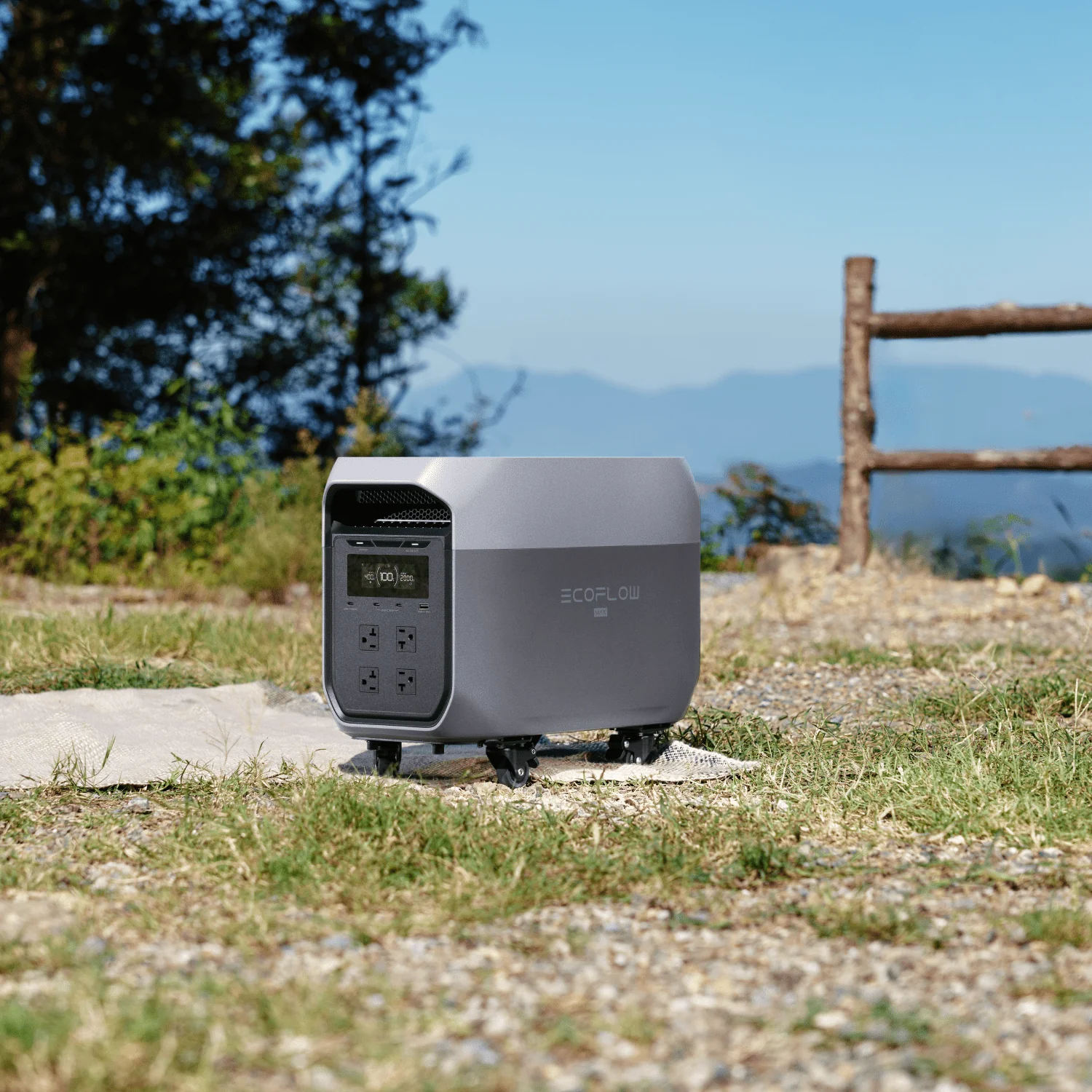
For travellers who want reliable off-grid power in those remote no-service stretches, the EcoFlow DELTA 3 Max Plus (2048Wh) + 500W Solar Panel is a capable option. It delivers 3000W continuous output (6000W surge) with X-Boost support for appliances up to 3800W, charges to 80% in 43 minutes via generator, scales from 2 to 10kWh, and lets you prioritise circuits through an app.
Thorough pre-departure preparation cuts the risk of mechanical delays that most commonly add 1 to 3 unplanned days to a cross-Canada itinerary. Once mechanical readiness is confirmed, the next priority is building a realistic daily schedule.
How to Plan an RV Trip Across Canada: Building a Day-By-Day Itinerary
Planning a cross-Canada RV trip becomes much easier if you break the route into manageable driving days, rest stops, and sightseeing windows. Follow these steps sequentially to build a schedule that reflects your actual pace preference.
Set your total trip length first: decide whether you are planning a fast transit trip (2 to 3 weeks), a balanced cross-country journey (4 to 6 weeks), or a slower exploration-focused trip (6 weeks or longer), because every downstream decision depends on this single number.
Divide the route into realistic driving days. Many experienced RV travellers aim for roughly 300 to 450 km per day, although mountain roads, traffic, construction, and weather can reduce that number significantly in regions like British Columbia or northern Ontario.
Identify longer stretches with limited services, particularly through northern Ontario and parts of Newfoundland. Fuel stations, dump stations, grocery stores, and campgrounds may be spaced far apart in remote areas, so these sections often require more careful planning.
Add buffer days throughout the trip instead of scheduling continuous driving. Many RV travellers build in at least one lighter or non-driving day every few days to account for weather delays, fatigue, laundry, vehicle checks, or unexpected sightseeing stops.
Check campground operating seasons before finalising the route. In many parts of Canada, especially Atlantic Canada and the Rockies, provincial and national park campgrounds operate mainly between late spring and early autumn. Popular summer reservations may also book out months in advance.
Keep a printed version of the itinerary along with campground addresses, ferry reservations, and emergency contacts. Cellular coverage can become unreliable outside major highway corridors, making offline backup information useful during longer remote stretches.
A six-step planning process produces an itinerary with defined daily targets, built-in buffer days, and documented emergency contact information. With a solid schedule in place, the next decision, which is when to go, has an equally large impact on trip duration.
Seasonal Timing and Its Impact on RV Trip Duration Across Canada
Departure season changes total RV travel time across Canada by as many as 10 to 14 days because of weather delays, road closures, campground availability, and ferry schedule reductions. The table below compares the four seasonal windows across five key planning dimensions.
Season / Window | Road and Weather Conditions | Campground Availability | Estimated Trip Overhead Added | Best Fit Traveller |
|---|---|---|---|---|
Late Spring (May to June) | Mountain passes clear by mid-May; some campgrounds still opening; cool but stable temperatures across prairies | Moderate: 70 to 80% of campgrounds open by June 1 | 2 to 4 extra days for closures and shoulder-season ferry schedules | Travellers who want fewer crowds and manageable weather |
Summer (July to August) | Optimal road conditions nationwide; highest wildfire smoke risk in BC and Alberta in late July | Highest demand: popular sites book out 60 to 90 days ahead | 1 to 2 extra days for campground search if unbooked; no weather delays typical | First-time cross-Canada RV travellers needing maximum infrastructure |
Early Autumn (September to October) | Excellent visibility and temperatures; early snowfall possible in Rockies after October 1 | Rapidly decreasing: 40% of campgrounds close by October 15 | 3 to 5 extra days if a mountain snowstorm forces a pass closure or detour | Experienced RV travellers comfortable with route flexibility |
Winter (November to March) | Multiple mountain pass closures; Highway 1 through Rogers Pass subject to avalanche control closures | Less than 20% of campgrounds operational; most require electrical hookups not universally available | 7 to 14 extra days minimum; some segments impassable for large RVs | Not recommended for a coast-to-coast RV road trip unless the RV is fully winterised |
July through early September offers the shortest predictable trip duration, while autumn departures require 3 to 5 days of extra buffer and winter travel is impractical for most RV configurations. Locking in your season early is the single highest-impact scheduling decision you will make.
Plan Your RV Road Trip Across Canada With Accurate Time Estimates
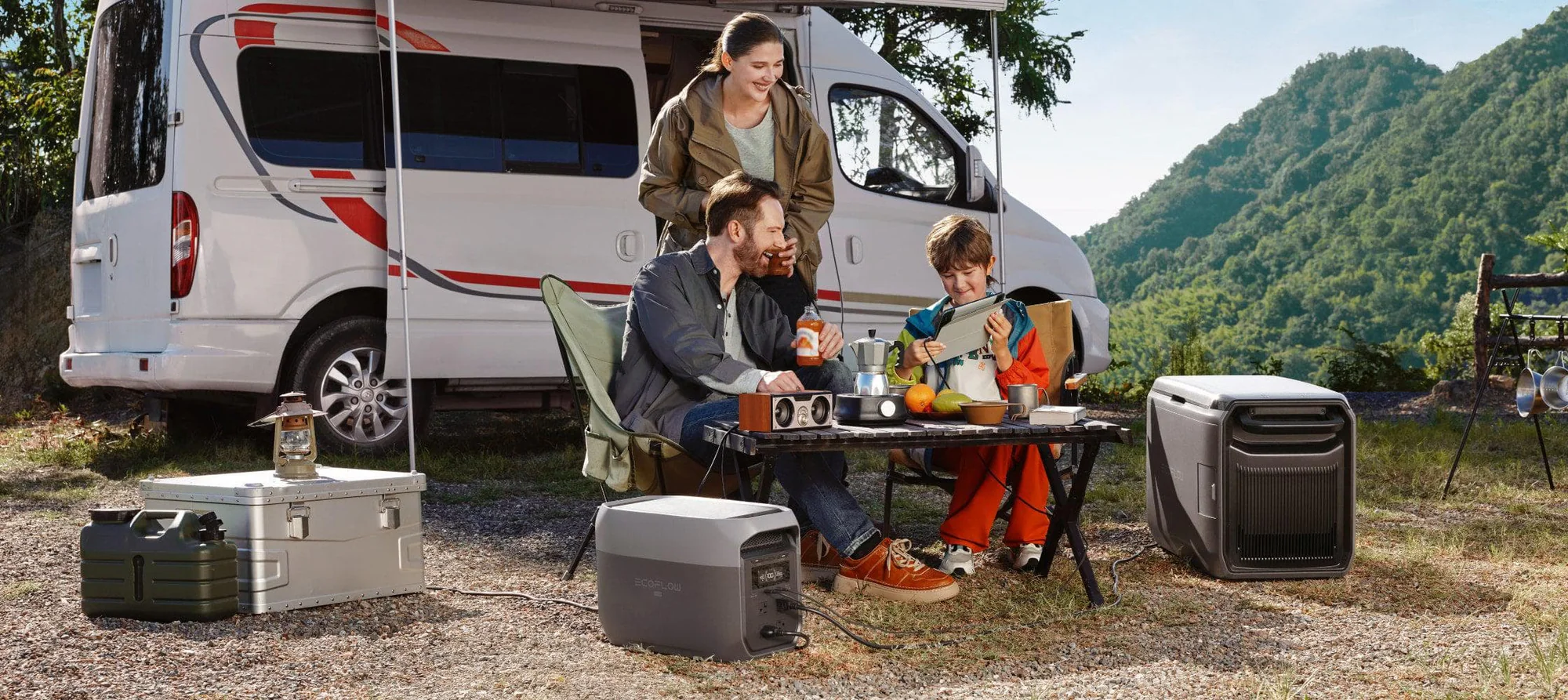
A coast-to-coast RV trip across Canada typically requires at least 2 to 3 weeks for a fast transit-style journey, but most travellers prefer 4 to 8 weeks for a balanced experience with sightseeing and rest days. Use the segment distances and 300 to 450 km daily limits in this article to map your own day-by-day itinerary. For dependable off-grid power on remote legs, the EcoFlow DELTA 3 Max Plus with a 500W solar panel is worth considering.
Frequently Asked Questions
Q1. What Is the Best Time of Year for an RV Trip Across Canada?
The most reliable window is late June through early September, when mountain passes are fully open, ferry schedules are stable, and most campgrounds are operating.
July–August: Best infrastructure but highest demand for campgrounds
June & September: Fewer crowds and still generally stable road conditions
Spring/fall shoulder seasons: More flexibility needed due to occasional closures or reduced services
Choosing the right season can affect your overall itinerary by several days due to weather and campground availability differences.
Q2. Can You RV Across Canada in Under Two Weeks?
It is possible, but only as a pure transit-style road trip with minimal stops. In this case, drivers would need to cover 600–800 km per day, which is demanding in an RV due to fatigue, terrain variation, and fuel stops.
Q3. Why Does the Newfoundland Ferry Add So Much Time to a Cross-Canada RV Trip?
The Marine Atlantic ferry between North Sydney (Nova Scotia) and Port aux Basques (Newfoundland) typically takes about 6–7 hours one way, but total time impact is often greater due to scheduling constraints.
Because departures may be limited during peak periods, a missed sailing can add up to an additional 24 hours or more of waiting time. After arrival, travellers still face roughly 900 km of driving across Newfoundland before reaching St. John's, which adds another 1–2 days of travel time depending on pacing and stops.
Together, the ferry crossing and island driving often add 2 to 4 days to a cross-country itinerary.
Q4. How Long Does It Take to Drive Through Ontario Alone in an RV?
Ontario is one of the most time-consuming provinces due to its scale and road structure. The main Trans-Canada route across Ontario spans roughly 1,800–2,400 km, depending on detours.
At a realistic RV pace of 350–450 km per day, this translates to about 5 to 7 driving days minimum.
Northern Ontario, particularly Highway 17 around Lake Superior, is slower due to winding terrain, limited services, and long fuel gaps. In contrast, southern Ontario sections near major cities may add delays due to traffic congestion.
Important Safety & Travel Disclaimer
This article is intended for general informational and planning purposes only. Driving an RV across Canada involves long-distance travel through remote regions, mountainous terrain, and areas with limited cell service and emergency response coverage.
Travel times, road conditions, ferry schedules, and campground availability can change due to weather, construction, seasonal closures, or local regulations. Always verify real-time conditions with official transportation authorities and park services before departure.
RV travel may involve fatigue, mechanical risks, and weather-related hazards. This guide is not a substitute for professional driving instruction, mechanical inspection, emergency planning, or medical advice.
In case of emergency, always contact local emergency services (such as 911 in Canada) and follow official safety instructions.