RV Camping in Canada: The Ultimate Guide to Exploring Off-the-Grid
- Why RV Camping Is the Best Way to Explore Canada
- The Essentials of Off-the-Grid RV Camping in Canada
- Best Off-Grid RV Camping Locations Across Canadian Provinces
- How to Plan an Off-Grid RV Trip in Canada
- The Biggest Off-Grid RV Challenge: Running Out of Power in Remote Canada
- Why Traditional RV Power Setups Often Fail Off-Grid
- Essential Power Solutions for Off-Grid RV Camping
- Costs and Safety Tips for RV Camping in Canada
- Conclusion
- FAQ
Canada is a 10-million-square-kilometre playground of jagged peaks and mirror-like lakes, and there’s no better way to soak it in than from the driver’s seat of a motorhome. From the misty Vancouver Island coast to the rolling Maritimes, an RV gives you a front-row seat to the world’s wildest landscapes. But the real magic doesn’t lay at the crowded, $80-a-night campgrounds; it’s found when you leave the hookups behind. In the following sections, we’ll break down the mechanics of boondocking, the legal “must-knows” of Crown Land, and how to keep your furnace running when the temperature drops, because a dead battery in the middle of a Yukon night is a mistake you only make once.
Why RV Camping Is the Best Way to Explore Canada
If you try to see Canada by plane or hotel, you’re basically just hopping between gift shops. Having your “home on wheels” means you own your schedule. Want to stay an extra day at that hidden spot in Muskoka because the loons are particularly vocal? Go for it. Feel like chasing a late-season aurora in the Rockies? Just start the engine. Given the massive gaps between our major hubs, driving from Winnipeg to Calgary is a solid 13-hour haul of nothing but prairie, having your kitchen and bed with you is just more than a luxury. It is also the only way to actually immerse yourself in the wilderness without feeling like you’re on a forced march. It’s total freedom, provided you know how to handle the “unplugged” part of the journey.
The Essentials of Off-the-Grid RV Camping in Canada
Stepping off the beaten path requires more than just a sense of adventure; you need a solid handle on how Canadian wilderness camping actually works. In 2026, the rules have tightened up as more people head for the hills, so winging it is not a great strategy anymore.
Understanding Boondocking vs. Crown Land Camping
In the Canadian RV community, we tend to use these terms interchangeably, but they aren’t the same thing.
Boondocking: This is essentially “civilized” off-grid camping. Think of parking in a Walmart lot in Thunder Bay or staying at a designated unserviced site in a Provincial Park. You have no water, sewer, or power hookups, but you’re still in an established “spot.”
Crown Land Camping: This is the real deal. You’re staying on public land managed by the government, often deep in the backcountry via a logging road. There are no neighbors, no pit toilets, and usually zero cell service. It’s a much more remote, “wild” experience that requires you to be 100% self-sufficient. While Crown Land is the focus here, many travelers starting their journey from the south often research the best 10 RV resorts in California to compare luxury amenities versus the ruggedness of the North.
Crucial Rules & Regulations: Where Can You Legally Stay?
Legalities vary wildly depending on which provincial border you just crossed. Generally, you cannot simply pull over on the shoulder of the Trans-Canada Highway or sleep in a National Park pullout. Parks Canada is strict about this; overnighting is only allowed in designated campsites. If you try to “stealth camp” in Banff, expect a knock on the window and a heavy fine. When planning a year-round itinerary, finding recommended top places to camp with RV in Canada for each season—like Jasper for winter or Pacific Rim for summer—ensures you have a safe, legal home base.
Most Crown Land allows for “dispersed camping,” but you’ve got to follow the 30-metre rule: stay at least 30 metres away from water sources to protect the environment. In 2026, many regions are pushing for even larger buffers. Also, the “Leave No Trace” principle is a baseline, it’s how we keep these places from being shut down for good.
Permits and Fees: What’s Free and What’s Not?
Alberta: If you’re random camping along the Eastern Slopes of the Rockies, you now need a Public Lands Camping Pass. It’s about $30 for an annual pass per person, and the rangers do check.
Ontario: Residents can stay for free up to 21 days (the longest limit in Canada!), but non-residents need a specific permit that costs roughly $10/night.
National Parks: Keep an eye out for the Canada Strong Pass. In the summer of 2026 (June 19 to September 7), the government is offering free admission to all national parks and a 25% discount on camping fees. It’s a huge win if you can snag a reservation, but for the rugged backcountry, the best spots are still the ones that don’t have a price tag at all.
Best Off-Grid RV Camping Locations Across Canadian Provinces
Every province serves up a different flavor of wilderness, whether you’re chasing salty Atlantic breezes or thin alpine air. In 2026, the secret is getting at least two hours away from any major city center, that’s where the “no-neighbor” magic actually happens.
British Columbia – Coastal Routes and Forest Camping
BC is basically the holy grail for boondockers. The province is crisscrossed with Forestry Service Roads (FSRs) that lead to “Rec Sites.” These aren’t your typical campgrounds; many are just a few gravel pads tucked beside a turquoise lake or hidden in the shadows of the Coast Mountains. Here’s the key: check your tire pressure before heading up an FSR. These roads are active logging routes, and they can be brutal on a standard RV suspension. But the payoff, waking up to a view of the Garibaldi range with zero highway noise, is worth every bump.
Alberta – Rocky Mountains and Crown Land Access
While the Banff and Jasper corridors are locked down tight with regulations, the Public Land Use Zones (PLUZ) are where the locals go. Specifically, the area along the David Thompson Highway (Hwy 11) offers mountain views that rival the national parks without the $50-a-night price tag or the crowds. You can find massive gravel flats along the North Saskatchewan River that are perfect for larger rigs.
Ontario – Lakes and Provincial Park Alternatives
Northern Ontario is dominated by the Canadian Shield, ancient granite, windswept pines, and more lakes than you could name in a lifetime. If you want to escape the “weekend warrior” traffic from Toronto, get past Sudbury. Moving away from the Highway 400 corridor allows you to find secluded spots along the North Shore of Lake Superior. The terrain is rugged, and the cell service is spotty at best, but sitting on a warm granite slab watching the sunset over Superior is a quintessential Canadian experience.
Quebec and Atlantic Canada – Scenic and Quiet Routes
The Gaspé Peninsula in Quebec and the rocky shores of Newfoundland offer some of the most dramatic views in the world. People in the Maritimes are famous for their hospitality, often letting respectful RVers stay in unique spots, but true off grid sites are a bit more “tucked away.” In 2026, Newfoundland’s Bonavista Peninsula became a favorite for those seeking quiet cliffside spots. You’ll need to do some local scouting and maybe chat with a few fishermen, but finding a spot where you can see whales breaching from your dinette window is the ultimate reward.
How to Plan an Off-Grid RV Trip in Canada
Success in the wild comes down to preparation. Canada’s geography is as unforgiving as it is beautiful, and by 2026, the “winging it” approach is a recipe for a very expensive tow truck bill.
Choosing the Right Route Across Provinces
Your route depends entirely on your rig’s “personality.”
Class B Campervans: These are the kings of the coast. You’ll handle the winding Cabot Trail in Nova Scotia or the tight turns of BC’s Sunshine Coast without breaking a sweat.
Class A and Large Fifth Wheels: Stick to the wider gravel arteries. While you might see a “shortcut” on Google Maps through the Alberta foothills, those roads often turn into “washboards” that can shake your cabinets off the walls. Stick to the well-traveled routes in the West and check for height clearances if you’re heading into the tunnel-heavy regions of the Kootenays.
Best Time to Travel in Canada
The “sweet spot” for hitting the road is June through September, but the timing is more nuanced than just looking at a thermometer. July and August offer the best weather for swimming in Lake Huron or hiking in the Selkirks, but you’re also fighting for every square inch of space against the “summer rush.”
Early birds heading out in June get the best wildlife sightings, but high altitude Forestry Service Roads (FSRs) in BC and the Rockies often stay closed until mid-month due to deep mud and lingering snowmelt. On the flip side, September is beautiful because the bugs finally die off and the crowds vanish, but it’s a bit of a gamble. In 2026, we’ve already seen how fast the Atlantic and the Rockies can pivot from a sunny afternoon to a heavy, rig-trapping snowstorm. If you’re traveling into the shoulder season, keep the winterization gear handy, nothing ruins a trip like a frozen water line in a remote PLUZ.
Fuel, Food, and Supply Planning in Remote Areas
In 2026, fuel prices in remote hubs like Whitehorse or Thunder Bay are averaging around $1.85/L, so budget for a bit of “sticker shock.” When you’re heading into Northern BC or the Yukon, the half-tank rule is your bible: never let your needle drop below half. Grocery stores become sparse once you leave major hubs like Calgary or Halifax. Stock up on non-perishables and bulk water. Also remember that many small town “general stores” in rural Quebec or the Maritimes still close early or don’t open at all on Sundays, so don’t bank on a late-night supply run when you’re low on milk or eggs.
Useful Apps and Tools for RV Travellers
Don’t rely on a single source to find a place to sleep. My “must-have” digital toolkit includes iOverlander for finding those “I can’t believe this is legal” cliffside spots and Ontario 511 or DriveBC for real-time road closures. If you’re serious about free camping, you also need the official provincial Crown Land Maps. In Ontario, specifically, the CLUPA (Crown Land Use Policy Atlas) is the only way to be 100% sure you aren’t accidentally trespassing on a private mining claim or a restricted “Green Zone.”
The Biggest Off-Grid RV Challenge: Running Out of Power in Remote Canada
The ultimate buzzkill for any backcountry adventure is that sinking feeling when you flip a switch and nothing happens. In 2026, the stakes for energy are higher than they used to be. We aren’t just trying to keep a single lightbulb flickering; we’re trying to run mobile offices and keep high-tech gear alive in places where the nearest outlet is a six-hour drive away.
Why Power Access Is Limited in Canada’s Wilderness
Once you pull out of a managed campground, you’re officially on your own. There are no “shore power” pedestals hidden in the pine needles. Unlike the wide-open deserts of the American Southwest where the sun hits your panels for 12 hours straight, Canada’s wilderness is dense. Whether you’re tucked into the rainforests of Vancouver Island or the thick Boreal forests of Northern Ontario, heavy tree cover can slash your solar intake by 70% in an afternoon.
What Happens If You Lose Power (Real Risks)
Losing power in the bush is about a lot more than just sitting in the dark. It means your water pump dies, leaving you with no way to wash dishes or flush the toilet. Even worse, most RV furnaces, even the propane ones, require 12V power to run the ignition and the blower fan. If your battery banks hit zero on a -5°C night in the Rockies, your “cozy” motorhome effectively becomes a metal freezer. In remote stretches of the Yukon, a dead battery also cuts off your ability to charge satellite messengers or Starlink terminals, turning a peaceful escape into a stressful survival situation pretty fast. Keeping a dedicated portable power station as a separate emergency backup ensures that even if your rig’s main system fails, your communication and heating controls stay online.
Why Energy Planning Is More Critical Than You Think
The modern RVer carries a massive “tech load.” Between laptops for remote work, Starlink for staying connected, and high-draw kitchen gadgets like air fryers or espresso machines, our power needs have tripled. Without a robust energy strategy, you’re basically on a countdown clock from the moment you park. Truth is: if you want to stay in the wild for more than a night or two, you need to stop thinking about power as an “extra” and start treating it as a primary resource, right alongside your fuel and water.
Why Traditional RV Power Setups Often Fail Off-Grid
Most stock RVs are designed for “weekend warriors” who rarely leave the safety of a powered campsite. In 2026, those standard setups are becoming a bottleneck for anyone serious about off-grid travel. If you’re planning to head into the BC interior or spend a week in a Northern Ontario PLUZ, you’re going to run into three major walls pretty fast.
Limited RV Battery Capacity
Standard deep-cycle lead-acid batteries, the kind that come factory-installed, are a bit of a letdown. You might see a “100Ah” label on the case, but the reality is you can only use about 50% of that before the voltage drops so low your appliances stop working. If you drain them past that halfway point, you’re literally killing the battery’s lifespan. Under the load of a modern 2026 tech kit, think Starlink, a couple of laptops, and maybe an induction cooktop, that “50% usable” capacity vanishes in hours. You’re left with a heavy, bulky box of lead that just can’t keep up with the way we live now.
Generator Downsides (Noise, Fuel, Restrictions)
Back in the day, a gas generator was the go-to solution, but the world has moved on. For one, they’re loud and heavy, and hauling extra gasoline inside a storage bay is a fire hazard I’m not comfortable with. More importantly, the rules have tightened up significantly. In 2026, most Canadian Provincial Parks, including heavy hitters like Algonquin and Alberta Parks, will have strict generator hours, often restricted to just a few hours in the morning and evening. Some “backcountry” zones have banned them entirely to preserve the silence. If you rely on a generator for your furnace fan at 3:00 AM, you’re either going to be freezing or facing a very unhappy park ranger.
Cold Weather Performance Issues in Canada
Up here, “summer” nights can still dip toward freezing, especially in the Rockies or the Maritimes. This is where traditional batteries really fall apart. Cold temperatures slow down chemical reactions, meaning your lead-acid battery might only give you half its rated energy when the mercury hits zero. It’s a cruel irony: the colder it gets, the more power your furnace fan needs, yet that’s exactly when your battery is at its weakest. If you’re using older tech, you aren’t just losing efficiency; you’re losing the ability to stay warm when it matters most.
Essential Power Solutions for Off-Grid RV Camping
To actually enjoy the ruggedness of the North, you need a power setup that’s as tough as the Canadian Shield. In 2026, the strategy has shifted from “bringing enough batteries” to “bringing an intelligent energy hub.”
Tiered Power Solutions: Choose Based on Your Travel Style
Everyone’s version of “off-grid” looks different. Whether you’re a weekend warrior in the Kawarthas or a full time digital nomad in the Yukon, your power needs will dictate how long you can actually stay out there.
Scenario A: The Weekend Explorer
Planning a cross-province run through Northern Ontario, rural Quebec, or the Atlantic provinces involves more than just packing extra snacks. Out there, power is a finite resource. On these remote routes, finding a charging station or a serviced campsite is about as likely as spotting a Sasquatch, and being low on juice can seriously mess with your pace, or your safety.
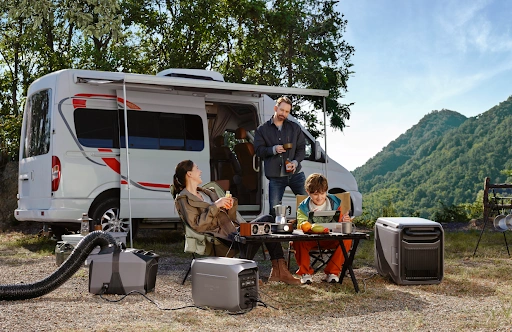
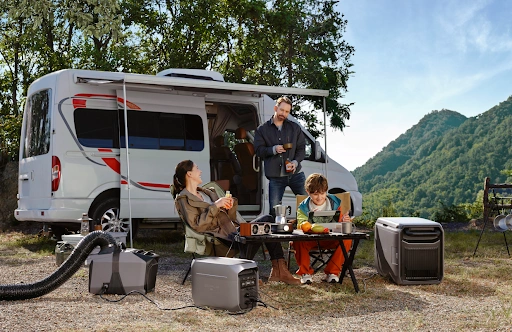
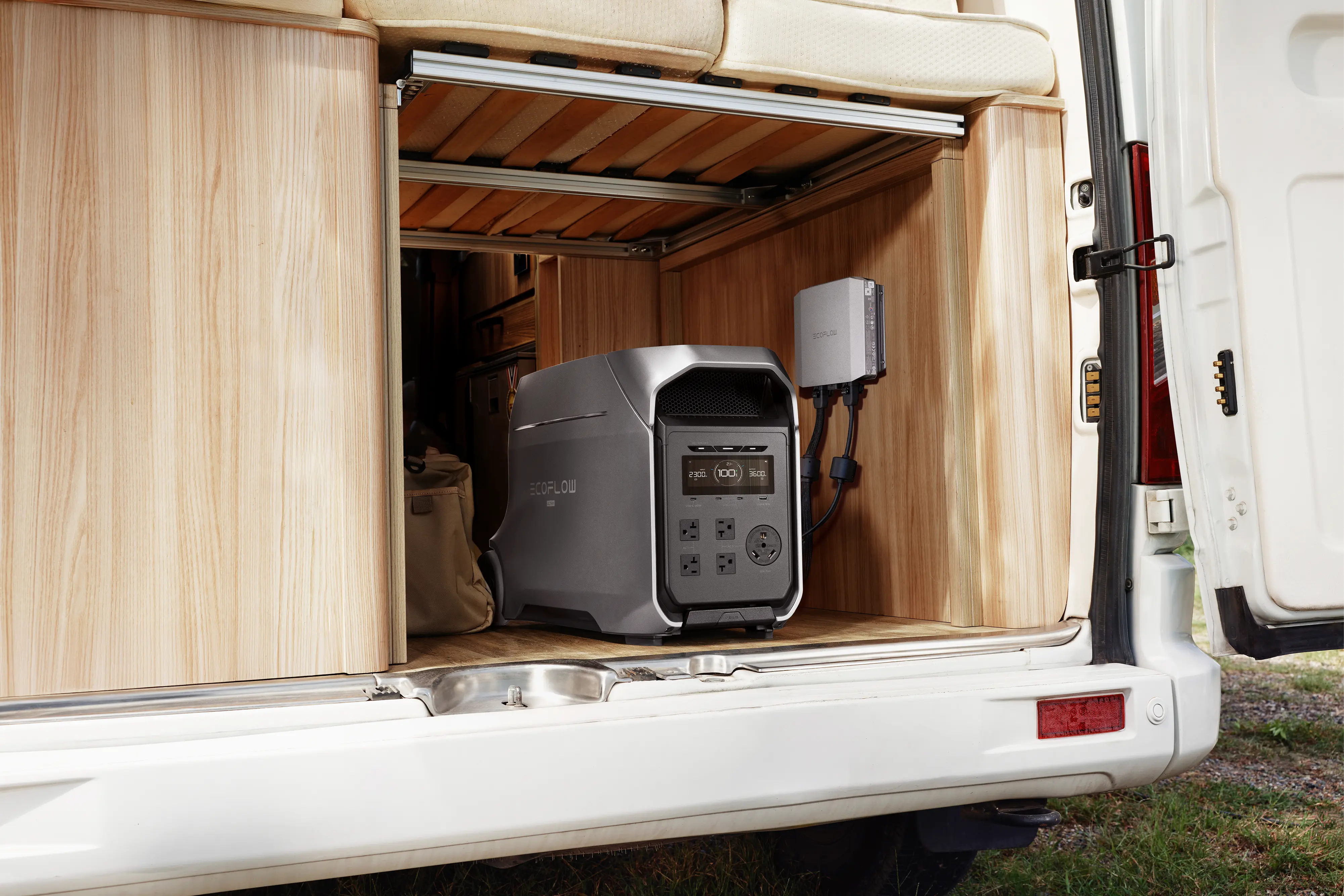
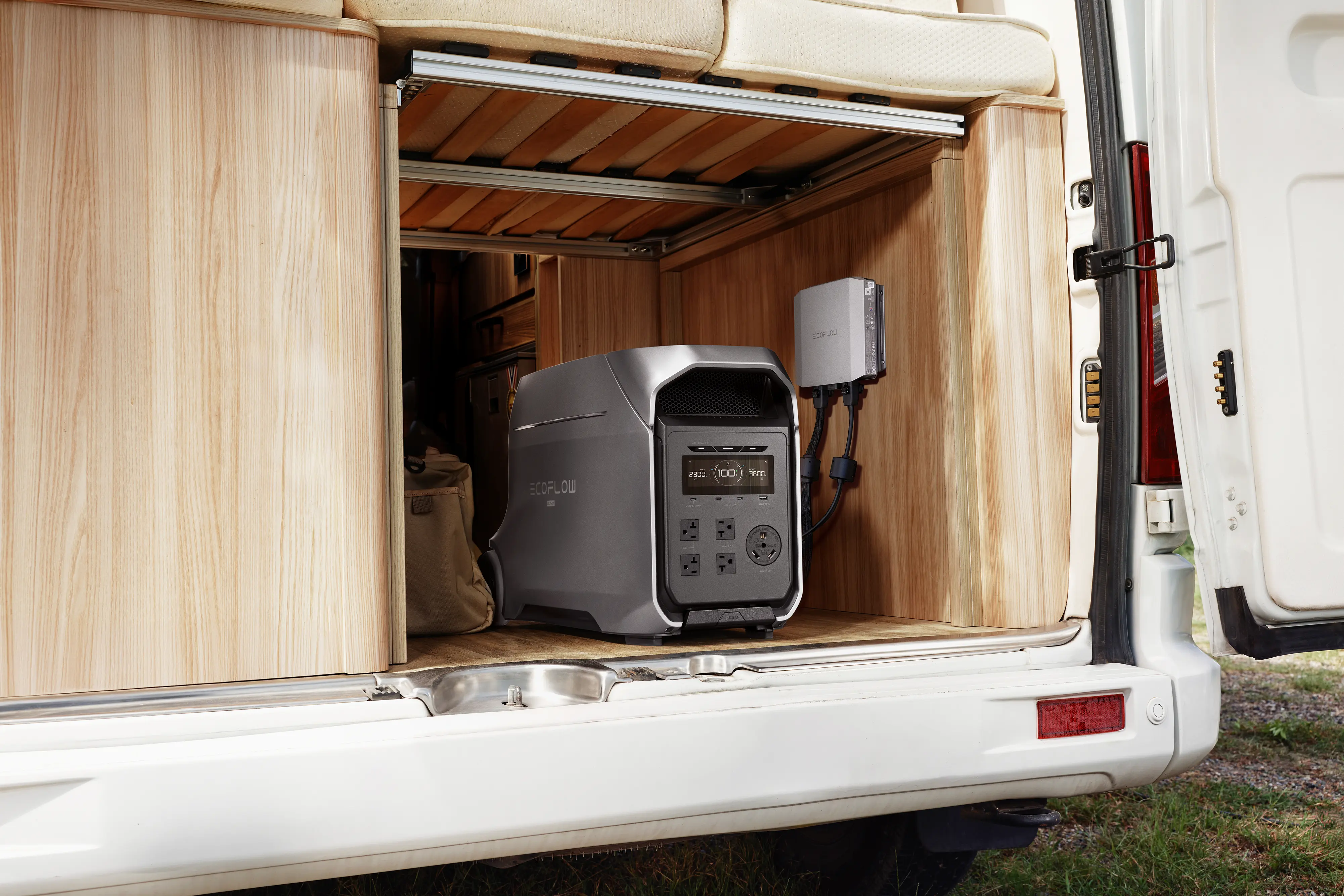
Because of this, more Canadian RVers are tossing a portable power station into the gear list before heading out. A unit like the EcoFlow DELTA 3 Max Plus Portable Power Station (2048Wh) hits that sweet spot between being actually luggable and having enough muscle to be useful. It packs a 2048Wh capacity, which is plenty for keeping a portable fridge cold, charging your drones, and keeping your Starlink terminal alive for days of remote work. The best part? If you do run it down, it hits an 80% charge in about 47 minutes with generator charging. For the folks who aren’t looking for “extreme” survival but still want to keep the lights on and the Wi-Fi stable in the middle of the bush, this kind of lightweight insurance is a no-brainer.
Scenario B: The Full-Time Boondocker
In the deep Canadian wilderness, power should not be a luxury; it should be the baseline for whether or not you’re having a good time. This is especially true in the thick BC forests or the high-altitude pockets of the Rockies where the mercury can plummet the second the sun drops. You need energy for the “invisible” stuff, like the ignition fan of your diesel heater or an electric blanket to take the edge off a frost-covered morning.
Standard “power bank” units usually choke when you try to run high-wattage gear like induction cooktops or that first-thing-in-the-morning coffee maker. This is why seasoned boondockers have moved toward heavy-hitters like the EcoFlow DELTA 3 Ultra Plus Portable Power Station (3072Wh). With a massive 3600W output (and a 7200W surge), you aren’t forced to choose between running the AC to clear out the afternoon heat or brewing a fresh pot of coffee. Here’s the deal: its low temperature discharge performance means it stays reliable during those crisp -10°C Western Canadian nights. For the digital nomad or the long-term traveler, this level of power is the foundation for actually living on Crown Land rather than just “camping” on it.
Solar Integration: Harnessing the Northern Sun
Solar panels are a massive game changer for anyone trying to stay out indefinitely without a plug. By setting up portable panels during the day, you’re silently topping off your batteries and extending your trip without the headache of a generator. In 2026, technology has caught up to our climate. High efficiency bifacial panels, which catch direct sun from the sky and reflected light from the ground, are perfect for the North. Here’s the kicker: panels actually run roughly 10% more efficiently in the cold because lower temperatures reduce electrical resistance in the cells. A crisp, sunny February afternoon in the Rockies can sometimes out-produce a sweltering July day in the Muskokas.
Water Storage and Filtration Systems
Carry more water than you think you need. While Canada has roughly two million lakes, you can’t just dip a cup in and hope for the best. For long-term stays, a gravity-fed filtration system or a UV purifier is a lifesaver. It allows you to safely draw from freshwater sources instead of burning fuel to drive two hours back to a town with a fill station. Just remember that if you’re camping in the shoulder season, keep your filters inside the heated RV at night; if the water inside a ceramic filter freezes, it’ll crack the element and ruin the unit.
Heating and Cold Weather Preparation
Invest in a high quality sleeping bag and ensure your RV’s plumbing is insulated. If you’re camping when the mercury drops, a reliable power source to run your furnace fan is your best friend against the Canadian frost. Another thing to consider is your heat source. Many modern RVers are moving toward diesel heaters (like a Webasto unit) because they sip fuel directly from your vehicle’s tank and use significantly less electricity than a standard propane furnace. Regardless of your setup, you need to prevent “cold bridges.” Simple additions like thermal curtains and vent pillows can keep your heat from escaping through the thin spots in your rig’s armor.
Costs and Safety Tips for RV Camping in Canada
Budgeting and safety are the final pieces of the puzzle. It’s one thing to find the perfect spot; it’s another to make sure you can actually afford the fuel to get there and stay safe once the cell signal drops to zero.
Typical Costs of RV Travel in Canada
Expect to spend a fair bit on fuel. Gas and diesel prices in Canada are consistently higher than across the border, often hovering around $1.85/L in remote hubs like Whitehorse or Thunder Bay. You can offset this by choosing free Crown Land spots over the $60-a-night private campgrounds that are becoming the norm this year.
Free vs. Paid Camping Options
Free options like Crown Land offer total solitude but zero amenities. You are 100% responsible for every drop of water and every watt of power you use. On the other hand, Provincial Parks offer comforts like hot showers and fire pits, but in 2026, they require booking months in advance. Popular spots like Algonquin or Banff often sell out the second the reservation window opens, so if you haven’t booked, you’re likely headed for the bush.
Wildlife and Weather Safety Tips
Canada is “Bear Country.” Always store your food in bear-proof containers or locked tight inside the RV, never leave a cooler on a picnic table while you’re out hiking. Be mindful of moose on the roads at dusk, especially in Newfoundland or Northern Ontario; they’re surprisingly hard to see until they’re right in your headlights. Also, always check the weather for sudden mountain storms. A sunny afternoon in the Rockies can turn into a localized blizzard in about twenty minutes.
Driving and Emergency Preparedness
Cell service is basically non-existent once you leave the main highway arteries in the Rockies or the North. Carry a satellite messenger like a Garmin inReach and a full-sized spare tire. If you’re heading deep into the woods, it’s also worth carrying a basic recovery kit. Those Forestry Service Roads (FSRs) can turn from hard-packed gravel to a muddy mess in a single afternoon rainstorm, and a tow truck in the middle of nowhere will cost you more than your entire gear list combined.
Conclusion
Embracing the off grid RV lifestyle in Canada is about more than just dodging a $60 campsite fee, it is also about total immersion. Whether you’re parked on a cliffside in Newfoundland or tucked into a BC forest, a successful trip hinges on that balance between raw adventure and serious preparation. By respecting local regulations and locking down a reliable power strategy, you turn your rig into a true backcountry sanctuary.
The Canadian wilderness is vast, unforgiving, and breathtaking all at once. With the right gear and a bit of grit, you can explore the furthest reaches of the Great White North with absolute confidence. What actually matters is: don’t wait for the “perfect” setup to start exploring. Pack your bags, charge your batteries, and hit the road, the ultimate off-grid experience is waiting just past the next horizon.
FAQ
1. Can non-Canadians camp on Crown land?
Generally, yes, but there are some hoops to jump through. Non-residents usually need a Non-Resident Crown Land Camping Permit, which costs about $10 per night. Some provinces, like Ontario, have “Green Zones” where non-resident camping is strictly banned to protect the local environment. Always check the provincial Ministry of Natural Resources (MNRF) maps before you drive six hours into the bush.
2. Is it free to camp on Crown land in Ontario?
For Canadian residents and permanent residents, it’s free to camp on most Crown land for up to 21 days in one spot. For everyone else, you’ll need that permit I mentioned above. Crucially, non-residents are currently prohibited from camping on Crown land in specific regulated areas in Northern Ontario. Use the Ontario Crown Land Use Policy Atlas to make sure your spot is legal.
3. Is RV camping safe in remote areas?
It’s very safe as long as you aren’t reckless. Being “safe” in the Canadian wild means having a plan for wildlife (bear spray is a must), a way to communicate without cell service (like a satellite messenger), and a power source that won’t die at 2:00 AM.
4. Which province is the most RV friendly?
Alberta and BC usually take the crown. Their massive networks of Forestry Service Roads and Public Land Use Zones make it incredibly easy to find stunning, free spots. Plus, the mountain scenery is hard to beat.
5. Can you live in an RV full-time in Canada?
You can, but the “Great White North” name is no joke. Wintering in an RV is a massive challenge once the temperature stays below -20°C for weeks. Most full timers either migrate to the milder climate of Vancouver Island or spend serious money on “four-season” winterization and high capacity heating systems.