Portable Power Station for Gas Furnace: What Size Do You Need?
A gas furnace needs two things, and gas is only one of them. Natural gas furnace or propane makes the flame, but everything that turns it into warm rooms runs on electricity, from the blower and ignition system to the control board and safety components. Cut the power and the furnace stops with fuel still in the line.
A portable power station can cover that gap if four things line up: output, surge, stored energy and a connection the furnace can use. This guide goes through what a furnace draws, what size that points you to, how many hours you’ll actually get and how to connect it safely.
Why Use a Portable Power Station for a Gas Furnace?
A portable power station can support a compatible gas furnace during an outage when output, surge capacity and the connection method match the furnace. It provides stored electricity indoors without fuel-engine exhaust, while runtime still depends on load and available capacity.
Why Gas Furnaces Still Need Electricity
A modern forced-air gas furnace uses electricity for its control board, ignition system, inducer and blower motors. During an outage, loss of power stops the safe operating sequence even when fuel remains available. In regions exposed to freezing rain, furnace backup during ice storm outages also requires safe connections, verified electrical loads and enough stored energy for the expected heating cycle.
Which Furnace Components Use Electricity
Each part draws at a different point in the heating call.
Inducer Draft Motor: Pulls combustion gases out of the heat exchanger and up the vent before the burners light.
Electronic Igniter / Spark Module: Stands in for the old pilot light. Depending on the furnace, it lights the gas with a hot glowing surface or a spark, and neither one happens without current.
Main Blower Motor: Moves warm air over the heat exchanger and into the ductwork, and it's usually the biggest power draw in the cabinet.
Control Board & Thermostat Circuit: Monitors the thermostat, flame sensor, pressure switches and high-limit switch. Questions about how long does a gas furnace last concern equipment condition and maintenance; backup sizing depends on the electrical load during operation.
How Much Power Does a Gas Furnace Use?
Furnace draw is not constant, and a power station must handle both running wattage and the short startup surge. Verify the furnace nameplate and measured demand instead of relying only on general ranges.
Typical Furnace Running Power
Most residential forced-air gas furnaces draw somewhere between 300W and 600W once they’re running, and this guide’s examples use 400W as the typical load, while high-capacity units can reach 800W.
Furnace Startup Power Requirements
The moment an electric motor spins up from a standstill, it draws a burst of current, which is what people mean by inrush or surge wattage. A blower motor rated at 400W continuous can jump toward 1,200W to 1,800W for a fraction of a second. The power station has to handle that inductive surge, or its internal circuit protection trips and the furnace is left with nothing.
How Blower Motors Affect Power Demand
Motor type sets the shape of the load, but airflow and static pressure move it too.
Motor Architecture | Running Power (Watts) | Inrush Surge Factor | Typical Operational Characteristic |
Permanent Split Capacitor (PSC) | 400W – 800W | 3x to 5x running load | Simple design found in older standard-efficiency units; higher continuous electric load. |
Electronically Commutated (ECM) | 100W – 400W | Soft-start (< 2x running load) | High-efficiency variable-speed motor; ramp-up avoids heavy electrical spikes. |
A home with an ECM blower asks much less of the battery and uses far fewer watt-hours over a long outage.
What Size Portable Power Station Does a Gas Furnace Need?
It comes down to two things: the inverter has to put out enough to start the furnace and keep it going, and the battery has to hold out as long as you need.
Choose the Right Continuous Output
Look for at least 1,000W to 1,500W of pure sine wave continuous output from the inverter. Pure sine wave isn’t a nice-to-have, because a control board or an electronically commutated motor is full of sensitive electronics that will buzz or overheat on modified sine wave power, and either one can trip a fault and lock the board out.
Allow Enough Startup Power
Match both the peak rating and how long the unit can hold that peak to what the furnace needs on startup. Not every furnace needs a 2,000 W to 3,000 W surge rating. Plenty of single-furnace setups land in the 2,000 W class anyway, once the inducer, igniter and blower come on one after the other.
Match Battery Capacity to Furnace Demand
Pick a capacity that matches how long you need the furnace to run. Real-world runtime moves with the rated continuous wattage, what the motor needs to start, the duty cycle and whatever else you've got plugged in. Size the battery on the steady-state rating alone and the number you get won't survive a real outage.
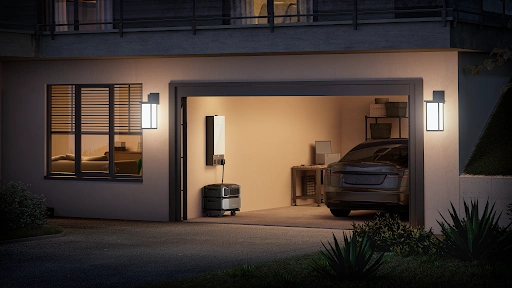
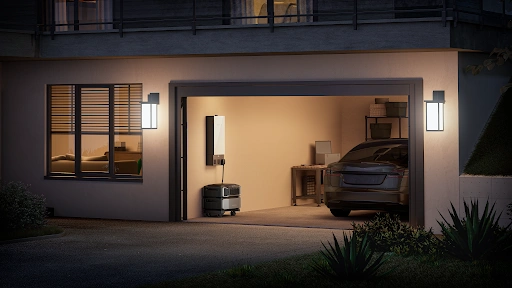
For a balance of portability and stored energy, the EcoFlow DELTA 3 Max Plus Portable Power Station (2048Wh) provides 2,048Wh of capacity. It may support a compatible gas furnace and selected smaller loads when its continuous output, surge capability and connection method match the equipment. Estimate runtime from measured demand, duty cycle, conversion losses and other connected devices.
For a longer outage plan, the EcoFlow DELTA Pro Ultra Whole-Home Backup Power offers scalable storage for compatible household loads. Furnace support depends on the measured running demand, startup behaviour, connection method, other active circuits and available capacity. Size the system from verified loads and expected outage duration, and have permanent electrical work reviewed by a licensed contractor.
How Long Can a Portable Power Station Run a Gas Furnace?
Hours on battery depend on usable capacity, furnace demand, inverter losses, other connected loads and duty cycle. Capacity, continuous output, startup surge, temperature and load planning together determine how long a home backup battery lasts during outages. The arithmetic below is a starting point rather than a guarantee.
Calculate Furnace Runtime From Watt-Hours
A realistic battery estimate starts with continuous active runtime, then factors in your furnace's operating cycle to give you total outage coverage.
Step 1: Continuous Active Runtime
These examples assume 85% conversion efficiency, but the energy you actually get moves with load, temperature and state of charge.
Continuous Runtime (hours) = Battery Capacity (Wh) × 0.85 ÷ Furnace Running Power (W)
1,000Wh battery running a typical 400W furnace load:
1,000 × 0.85 ÷ 400 ≈ 2.1 hours of continuous blower operation2,048Wh battery running a typical 400W furnace load:
2,048 × 0.85 ÷ 400 ≈ 4.3 hours of continuous blower operation
Step 2: Real-World Heating Span
A furnace rarely runs continuously unless it's extremely cold or the house is poorly insulated. Through a typical winter a properly sized furnace runs about 15 to 20 minutes out of every hour, which is a duty cycle of roughly 25% to 33%. Your own cycling will differ, so time a few heating calls on a cold night and use that.
To estimate total heating time:
Real-World Heating Span (hours) = Continuous Runtime ÷ Duty Cycle
At a 33% duty cycle:
A 1,000Wh battery provides approximately 2.1 ÷ 0.33 ≈ 6.4 hours of intermittent heating.
A 2,048Wh battery provides approximately 4.3 ÷ 0.33 ≈ 13 hours of intermittent heating.
Estimate Runtime in Cold Weather
Cold increases furnace cycling and reduces lithium-ion battery performance, but no universal 60% to 80% winter duty cycle applies. Keep the power station inside its specified temperature range, which in practice means keeping it in the living space, and estimate from the cycles and loads you have actually measured.


How to Connect a Portable Power Station to a Gas Furnace
How you connect depends on the furnace wiring and how the backup source handles grounding and neutral. Backfeeding has to be impossible, and the equipment instructions and local electrical rules have to be met.
Check the Furnace Electrical Requirements
Most Canadian homes feed the furnace 120 V at 60 Hz single-phase, and plenty of furnaces sit on their own 15 A breaker. The nameplate full-load rating usually falls somewhere between 6 A and 12 A, though it varies. Open the blower compartment and read the metal data plate before you buy any connection gear.
Choose the Correct Connection Method
Ungrounded cords, cheater plugs, bare ends and any hookup that can energize utility lines are out of the question. Use approved equipment rated for the circuit and matched to both the furnace and the power station.
Single-Circuit Transfer Switch
A dedicated 15A manual switch mounted near the furnace takes the furnace circuit off utility power before it moves to backup, which is what makes backfeeding impossible. The furnace then plugs into the power station through a grounded extension cord.
Plug-and-Receptacle Conversion
Some places allow a hardwired furnace to be switched over to a grounded cord-and-receptacle connection for backup power. Canadian rules can require permanently installed forced-air heating equipment to stay hardwired to its own branch circuit, and those requirements vary by province and municipality. Check with the electrical authority or a licensed electrician first.
When to Use a Licensed Electrician
Permanent wiring changes, transfer equipment and dedicated inlets should be reviewed and installed by a licensed electrical contractor under the rules that apply in your province or municipality. Approved transfer equipment prevents backfeeding and helps protect occupants, utility workers, equipment warranties and insurance coverage.
Conclusion
A portable power station will carry a compatible gas furnace through an outage when the output covers the running load and the startup hit, and the connection passes inspection.
Check the nameplate, manual, blower type, running draw and startup behaviour, then choose output and usable capacity to match. For a hardwired furnace, have a licensed electrical contractor install the transfer equipment before you need it. What you're buying isn't watt-hours. It's the familiar hum of the blower, the floor register warming your ankles, the thermostat nobody thinks about. Worth getting right in October, in daylight, while the hydro is still on.
FAQ
Is It Cheaper to Run a Gas Furnace or Electric Furnace?
Operating cost depends on provincial electricity and gas rates, furnace efficiency, home heat loss and weather. A high-efficiency natural gas furnace may cost less to operate in some regions, while a cold-climate heat pump can be competitive under other rate and temperature conditions.
How to Get a Gas Furnace to Work Without Electricity?
A modern gas furnace can’t run on gas alone, because its safety valves, control board and blower motor all depend on the 120 V supply. Off-grid you need an external backup source, either a pure sine wave portable power station or an inverter generator, and it has to come in through a dedicated transfer switch.
What Happens to a Gas Furnace When the Power Goes Out?
The magnetic gas valves de-energize and close the moment the power fails, and that’s the safety system doing its job rather than anything breaking. Combustion stops and the blower winds down, and the furnace sits idle until AC power is safely restored to the control circuitry.
Can a Portable Power Station Run a Furnace During a Power Outage?
Yes, a portable power station can run a gas furnace. It needs clean pure sine wave AC, enough headroom for the blower’s startup surge, and a connection through an approved transfer switch or generator inlet.
Can a Portable Power Station Charge a Small Fridge and Small Heater?
A power station runs these appliances rather than charging them, and a mid-to-large unit can handle a small fridge and a small space heater if you watch the combined continuous wattage. A compact fridge draws roughly 50W–100W once it’s running, with brief startup spikes, while even a small electric space heater pulls 750W to 1,500W the whole time it’s on, which empties the battery fast.