Ontario Hunting and Fishing Guide: Top Spots, Regulations and Essential Tips
- Where Are the Best Places for Hunting and Fishing in Ontario?
- What Are the Hunting and Fishing Regulations in Ontario?
- What Should You Know About Hunting and Fishing in Ontario in Fall?
- What Should You Bring for an Ontario Hunting or Fishing Trip?
- Safety Tips to Follow When Hunting and Fishing in Ontario
- Prepare for Wildlife Encounters and Changing Trail Conditions
- Conclusion
- FAQ
Two hunters out in Ontario in the same week can be after different animals. Down south and through the central counties, it’s whitetails and wild turkey, while up north it’s moose and remote lake fishing. This guide covers the regions worth knowing, the rules that keep you legal, and what fall does to fish and game. Then it turns to the practical side: gear worth packing and the safety habits that matter past the last cell tower.
Where Are the Best Places for Hunting and Fishing in Ontario?
Ontario covers more than a million square kilometres, and the country changes under you as you head north, from farmland and hardwood to rock and spruce, and on to subarctic brush. Picking a region comes down to what you’re after and how far off the pavement you’re willing to go. For hunting in Ontario, choose a region that matches your target species and access plan.
Northern Ontario
Up north the map empties out into boreal forest and lake systems that run for hundreds of kilometres, where the targets are moose, black bear, and grouse, plus walleye, northern pike, and lake trout. Lake of the Woods, Lac Seul, Nipigon, and the Chapleau area are the names that come up. Trips run from logging-road access to fly-in outposts and Crown land camps, and services are thin once you’re in. A long track after a moose can put a lot of country between you and the truck. At a vehicle-accessible basecamp, a power station can recharge navigation devices and camp lighting when grid outlets are unavailable.
Algonquin and Central Ontario
Central Ontario is where easy access meets Canadian Shield country: rock, pine, and water everywhere. Around Parry Sound, the Haliburton Highlands, the French River, and the areas surrounding Algonquin Provincial Park, you’ll find deer, wild turkey, ruffed grouse, smallmouth bass, lake trout, and muskellunge. Canoe routes, public launches, and established camps mean less time getting in and more time hunting or fishing. Check your Wildlife Management Unit’s rules before you head out, since the seasons change across them. If your canoe route includes an overnight stay beyond serviced camps, use a backcountry camping checklist to plan shelter, water treatment, navigation, and emergency gear.
Great Lakes and Southwestern Ontario
The lower Great Lakes and southwestern Ontario mix farmland, hardwood woodlots, wetlands, and big open-water fisheries. Long Point, Lake St. Clair, the Bay of Quinte, and the Bruce Peninsula all give up waterfowl, walleye, yellow perch, and smallmouth bass. Hunting here often means private farmland and the marsh beside it, so permission becomes part of the planning, while the fishing runs from sheltered bays to open-water trolling. Sort out access before the boat goes in the water.


What Are the Hunting and Fishing Regulations in Ontario?
Ontario regulates hunting and fishing with licences, management zones, seasons, catch or harvest limits, and different rules for each species. Those rules also change from place to place, so check whatever applies to the WMU, FMZ, or stretch of water you’re headed to. Ontario hunting and fishing license requirements cover separate hunting and fishing privileges; an Outdoors Card alone does not replace the licences or tags required for your activity.
Hunting Licences, Seasons and Wildlife Management Units
Most hunters need a valid Outdoors Card plus the licence that matches what they’re after, and some big-game hunting comes with tag or allocation requirements on top. Ontario is split into Wildlife Management Units, and season dates, harvest rules, permitted hunting methods, and tag requirements can all be different one unit over. Read the rules for your unit rather than trusting province-wide dates. Consult the 2026 Ontario hunting regulations and the official hunting summary for your species and WMU.
Fishing Licences, Catch Limits and Size Limits
Most anglers who need a licence pair an Outdoors Card with either a Sport Fishing Licence or a Conservation Fishing Licence. The two don’t carry the same catch and possession limits. Fisheries Management Zones cover seasons, species limits, size restrictions, and what tackle you’re allowed to use. Individual waters can add slot sizes or gear rules. A slot means fish of a certain length have to go back, so check the FMZ first and then the exceptions for that lake. Check the official fishing licence rules for age, residency, one-day licence, and other exemptions.
Local Regulations for Specific Lakes, Rivers and Parks
One lake, river, spawning area, park, or protected area can come with rules that don’t match the wider WMU or FMZ. Seasonal fish sanctuaries, outright fishing closures, hunting restrictions, and limits on motorized access all live at this level. Check the regulations for that place before you go, not once you’re standing at the launch.
| Management Layer | Regulatory Scope | Key Hunter/Angler Takeaway |
|---|---|---|
| Outdoors Card | Provincial identification credential | Required for most hunting and fishing licences |
| WMU (Wildlife Management Unit) | Terrestrial game zones | Determines seasons, hunting methods, harvest rules, and tag requirements |
| FMZ (Fisheries Management Zone) | Aquatic management boundaries | Governs seasons, catch and possession limits, and size restrictions |
| Local Exceptions | Specific lakes, rivers, bays, and parks | May add seasonal closures, sanctuaries, or other special rules |
What Should You Know About Hunting and Fishing in Ontario in Fall?
No stretch of the year beats fall in Ontario’s woods and on its waters, when the hardwoods turn, the water cools off, fish feed hard ahead of winter, and game starts moving. If your fall basecamp uses a solar panel for charging, plan for shorter daylight and variable sunlight, and bring another charging option.
Fall Hunting Seasons and Species to Check
Frost on the ground at first light is what most hunters build their season around.
Moose and Bear: Early fall brings the moose rut across the north, along with late black bear hunts over berry ridges and feeding areas.
Upland Birds: Grouse opening dates vary by species and WMU; many begin in September, and both the northern Crown roads and young aspen clearcuts are worth walking. Ruffed and spruce grouse make fine table fare and ask very little of your pack.
White-Tailed Deer: Opening dates vary by WMU, weapon, and residency; some bow seasons begin in September. Use the annual species tables rather than a province-wide October or November start date.
Migratory Waterfowl: Dabbling and diving ducks keep moving south along the Atlantic and Mississippi flyways in waves, with hunting opportunities depending on species, district, and conditions. Confirm open seasons and the required federal permit, habitat stamp, and Ontario small game licence before hunting.
Fall Fishing Conditions by Species and Region
When the water cools off, feeding patterns vary by species and lake; check local open seasons before targeting fish.
Walleye: Once the lake turns over and the thermocline breaks down, the fish slide off deep structure onto shallow reefs and rocky points at dusk to ambush schools of baitfish.
Smallmouth Bass: Bronzebacks bunch up over deep humps and rocky ledges in 20 to 40 feet of water. Heavy jigs, drop-shot rigs, and blade baits all get it done down there.
Muskellunge: Late-fall muskie opportunities vary by waterbody, conditions, and open season; trophy catches are never guaranteed. Ask the muskie crowd and they'll give you one answer, trolling oversized crankbaits along the edges of dying weedbeds.

What Should You Bring for an Ontario Hunting or Fishing Trip?
For trips into remote Ontario, six things outrank everything else: navigation, communication, power, food storage, weather protection, and emergency supplies.
Navigation and Communication Essentials
In central and northern Ontario, cell coverage can be limited away from main travel routes; check coverage before departure.
Satellite Messengers: A Garmin inReach or ZOLEO can support SOS and check-ins where cellular service is unavailable, subject to an active service plan, battery power, and suitable satellite reception.
Redundant Mapping: Carry a handheld GPS loaded with Crown land ownership layers, and back it up with waterproof topographic maps and a compass. Screens crack and batteries quit.
Power for Lighting, Cameras and Outdoor Electronics
Daylight goes fast in an Ontario fall—check local sunset times and plan to return before darkness. By then the headlamps, radios, GPS units, thermal trail cameras, and camera batteries all want a charge.
Running a vehicle engine or listening to a noisy gas generator can disrupt the quiet of a backcountry site. A portable power station like the EcoFlow DELTA 3 Classic solves this problem by serving as a quiet, high-output centralized power hub. It powers camp floodlights, recharges essential navigation electronics, and keeps camera batteries ready for morning action without generating fumes; fan noise may still be audible.
Keeping Food and Drinks Fresh on Longer Trips
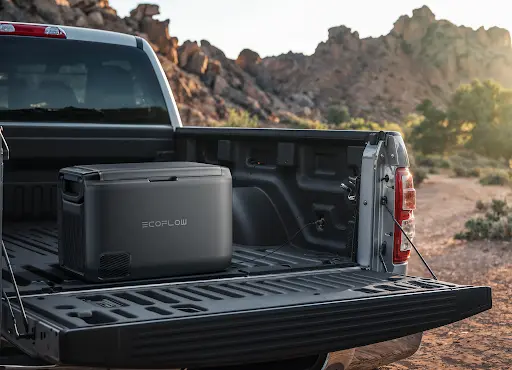
Longer trips down logging roads or up a river system tend to come apart at the cooler lid. The bacon ends up floating in cold water, game cuts start to spoil, and somebody drives into town mid-trip for ice.
A purpose-built portable compressor refrigerator-freezer provides controlled cooling within its operating limits. The EcoFlow GLACIER Classic Portable Fridge Freezer delivers reliable temperature management for fresh groceries, drinks, and field-prepped meat on extended outings. Running directly off DC power or a dedicated battery, it reduces the messy reliance on bags of ice and supports multi-day food storage when adequate power and safe temperatures are maintained. Follow Health Canada's outdoor food safety guidance: keep perishable food at or below 4°C, check with a thermometer, and separate raw meat from ready-to-eat food.
Safety Tips to Follow When Hunting and Fishing in Ontario
Remote wilderness travel carries real risks, and out here they show up together: the weather turns, the footing gets worse, and help is hours away.
Check Weather, Fire Conditions and Local Advisories
Ontario fall weather can swing from warm afternoon sunshine to freezing rain or gale-force winds within hours.
Marine Forecasts: Big Shield lakes kick up a short, nasty chop fast once the wind comes up. Check the marine forecast before launching a small aluminum boat.
Fire Warnings: Check Ontario's current fire restrictions before you go. During a Restricted Fire Zone, outdoor fires are restricted, with specific legal exceptions. A permitted portable gas or liquid-fuel stove must be easy to shut off and at least 1 metre from naturally occurring flammable material. Follow the official outdoor fire restrictions and local rules.
Follow Firearm and Fishing Gear Safety Practices
Around boats, blinds, and field stands, these routines have to be automatic.
Hunter Orange Mandate
During a gun season for deer, moose, or elk, licensed hunters must wear hunter orange, including small-game and bow hunters. Exceptions cover double-crested cormorants and migratory game birds other than woodcock. Bear hunters outside those gun seasons must also wear orange except in a tree stand. The garment must provide at least 400 square inches of solid orange above the waist, visible from all sides; head-cover requirements differ. Check the official hunter orange requirements.
Boat Stability and Water Safety
Carry a Canadian-approved, properly sized PFD or lifejacket for each person aboard, and wear it: cold-water immersion can cause cold shock. Follow Transport Canada’s flotation-device guidance. In rough water, tie down heavy tackle, fuel cans, and gear cases so the centre of gravity stays low and the load stays balanced.
Firearm Transport
Firearms stay completely unloaded in or on any motorized conveyance, whether that’s a truck, an ATV, a snowmobile, or a motorboat. In areas usually inhabited by wildlife, between half an hour after sunset and half an hour before sunrise, firearms must also be unloaded and encased on all six sides, subject to applicable exceptions. In provincial parks, firearms may not be used or displayed unless hunting is permitted there.
Prepare for Wildlife Encounters and Changing Trail Conditions
Black bears, moose, and timber wolves live in the northern bush, and sooner or later you'll meet one of them.
Bear Protocol: Keep camp food, fish scraps, and harvested game well away from the tents you sleep in. Bear spray belongs on your belt where you can reach it, not buried at the bottom of your pack. Plan how to store food when camping, including sealed containers, separation from sleeping areas, and proper disposal of food waste.
Trail Obstacles: Saturated fall ground and beaver activity wash out remote logging bridges and trail routes most years. If you're running an ATV or truck, pack a manual come-along, recovery straps, a hand axe, and a folding saw.
Plan for Injuries, Emergencies and Limited Cell Service
Emergency response runs on a much longer clock in remote Ontario, especially where poor road access and no cell coverage overlap.
Trauma Preparedness: Pack a real trauma kit with pressure bandages, clotting agents, a tourniquet, and splints. A box of Band-Aids from the drugstore isn't going to do it.
File a Float or Trip Plan: Leave a written plan with somebody you trust, covering your vehicle make, the WMUs you intend to hunt, GPS coordinates, and the boat. Give them a firm deadline too, so they know when to start calling if you don't check in.
Conclusion
By October the light goes thin and the summer crowds are gone from the bush, but the rules don’t ease off with them: one Wildlife Management Unit’s season can have nothing to do with the unit beside it, so read up on your WMU, FMZ, lake, or river before you load the truck. Where the road runs out and the cell service runs out with it, plot your line, carry navigation and communication gear you trust, and expect weather that can go from still and blue to sleet while a pot of coffee boils. Get those right and staying legal, safe, and comfortable mostly takes care of itself.
FAQ
What Can Be Hunted Year Round in Ontario?
Red fox and skunk have year-round seasons in many central and southern Ontario Wildlife Management Units. Even with those species, you still need an active Outdoors Card and a valid small game licence.
When Does Deer Hunting Season Start in Ontario, Canada?
Ontario has no single deer-season opening date. Some bow seasons start in September; dates depend on WMU, weapon, and residency. Bow, muzzleloader, and centrefire rifle dates differ between the northern, central, and southern units, so read your WMU’s table in the annual hunting summary.
What Are the Requirements for Non-residents to Hunt in Ontario?
Non-residents need an Outdoors Card, Ontario-recognized hunter accreditation on file, and the required non-resident licences and tags. Non-resident black bear hunters must contract a licensed bear operator and obtain and carry a validation certificate. Non-resident moose hunting requires a tourist outfitter, or eligible party hunting on an Ontario-resident immediate relative’s allocation tag during an open non-resident season. Confirm the current species rules before booking.
What Happens if You Get Caught Fishing in Ontario Without a Licence?
If a fishing licence is required and you fish without it, you may receive a ticket or face prosecution. Penalties depend on the offence and circumstances; items related to an offence may be seized. Deemed licences and other exemptions mean that not every angler must purchase a licence.