Lake House Power: Reliable Energy for Your Waterfront Escape
- Why Are Lake Houses More Vulnerable to Power Outages?
- Why Are Traditional Generators Risky on a Waterfront Property?
- What Are Your Backup Power Options for a Lake House?
- How Do Solar and Battery Backup Keep a Lake House Running Safely?
- What Should You Power First During a Lake House Outage?
- Frequently Asked Questions
- Reliable Backup Power Keeps Your Waterfront Escape Safe and Comfortable
A lake house is the perfect place to escape the hustle and bustle of urban life and connect with nature. But waterfront living has challenges that you don’t find in the city. When severe weather hits, remote lakeside utility grids in Canada can be the first to fail and the last to be restored.
In this guide, we’ll look at how to make sure you can keep your lakeside retreat comfortable by taking a modern approach to backup power.
Why Are Lake Houses More Vulnerable to Power Outages?
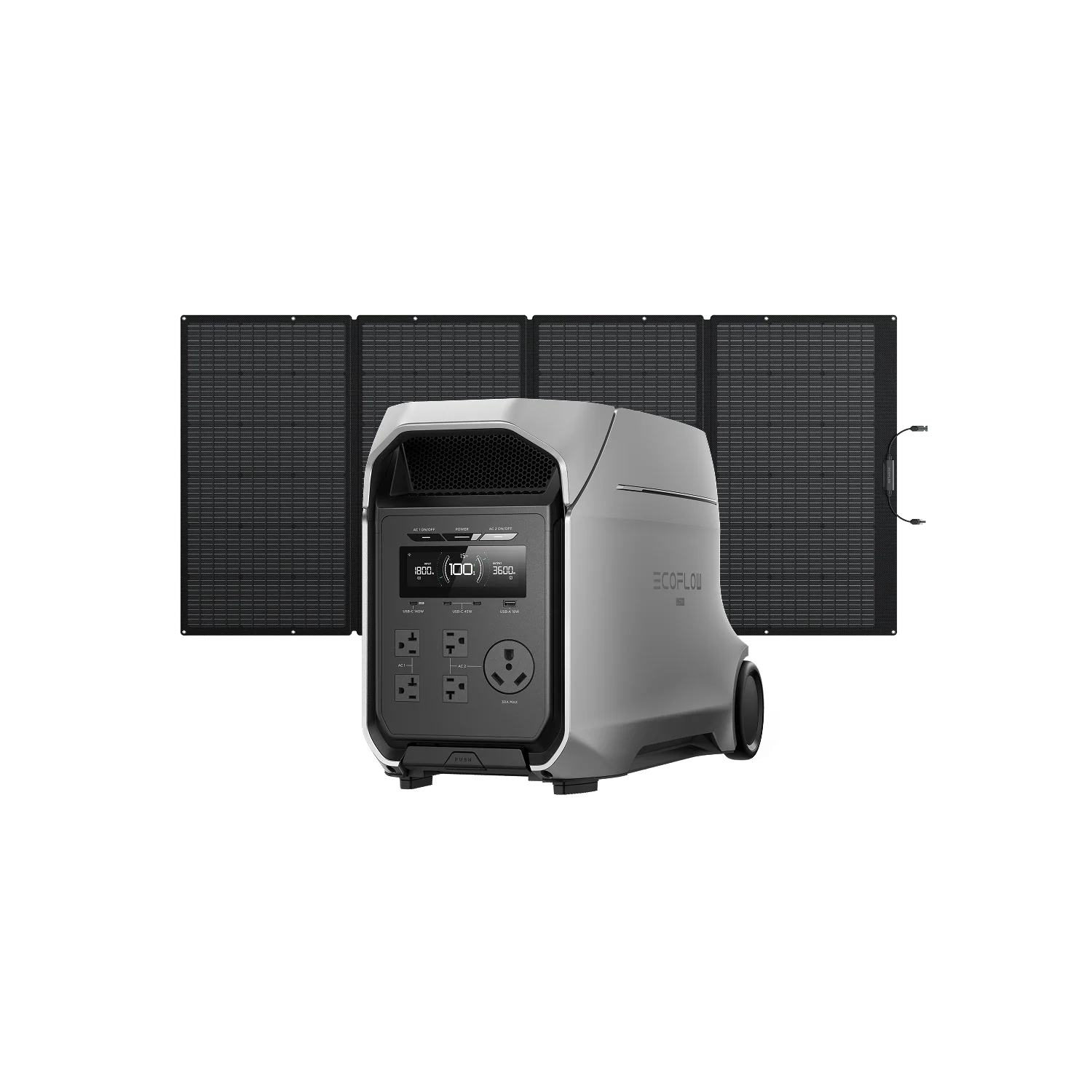
Lakeside properties are often more susceptible to grid failures because of their geographical isolation, along with their exposure to microclimates. That kind of unpredictability is exactly why a battery-based backup like the EcoFlow DELTA 3 Ultra Plus + 400W Solar Panel is worth having on hand; it's ready the moment the grid goes down, with no fuel or startup delay.
Waterfront properties are often positioned at the terminal ends of utility distribution lines, and these lines pass through rugged terrain and forested areas. When a storm hits, one fallen branch can sever power to the whole community.
Water bodies also have their own localized weather patterns, with fog, winds, and thunderstorms often being more intense. Powerful gusts of wind can easily uproot trees in saturated soil, damaging overhead power cables.
Also, utility crews prioritize the densely populated urban areas before more remote areas, so lake houses can remain without power for many days or even weeks.
Why Are Traditional Generators Risky on a Waterfront Property?
Traditional fuel-powered generators used to be the default response for a rural power outage, but they are not ideal. For a start, running an internal combustion engine is noisy, destroying the very peace that makes a lakeside retreat so enjoyable.
The greater problem is that storing flammable liquids next to water poses an ecological hazard. Even a minor spill of diesel or gasoline can contaminate the lake, violating environmental protection laws.
Outdoor gas generators are also not suited to the humid conditions that are typical next to lakes. Moisture and damp air cause corrosion of components and spark plugs, which can lead to equipment failure.
What Are Your Backup Power Options for a Lake House?
If you want to develop a more resilient strategy to stay powered up, you need to look at other options.
Standby Generators
These generators are permanently installed in your lakehouse property and connect to the home automation panel. They run on natural gas or propane from external tanks and have a high power output. As soon as a blackout hits, they turn on, so you’re never out of power.
However, the hardware is expensive, you need to get them professionally installed, they require regular maintenance, and where gasoline or diesel is used, there is also the fuel leak risk as mentioned above.
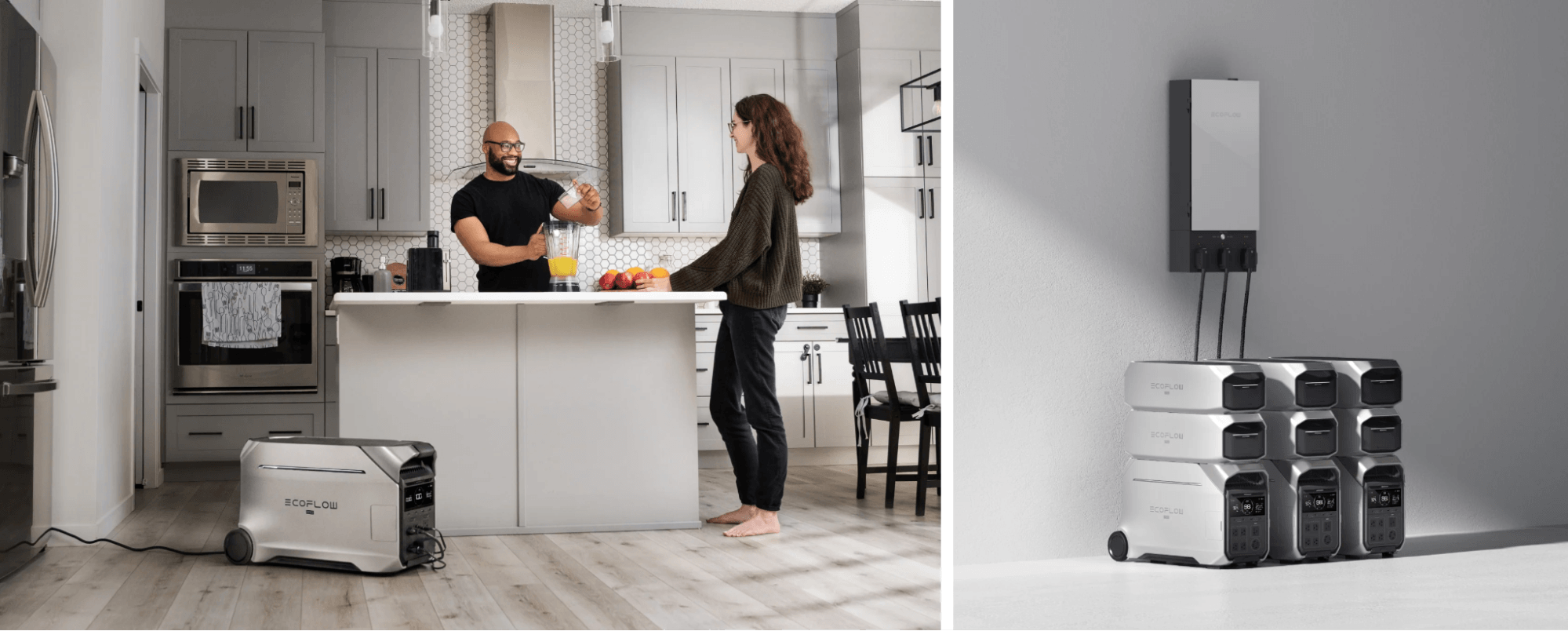
If you want that same always-on, whole-home level of coverage without the installation costs, permits, or fuel risk, a high-capacity portable unit like the EcoFlow DELTA Pro 3 is worth considering instead. It delivers up to 4,000W of continuous output (6,000W with X-Boost) and can expand up to 48kWh with additional batteries, giving you standby-generator-level backup that plugs in rather than getting installed.
Portable Power Stations
Portable power stations use lithium battery chemistry to store power and then deliver clean and silent electricity to your home. They are compact, can be stored safely indoors away from the humid conditions outdoors, and don’t produce any carbon monoxide emissions.
You can even take yours with you in the car when visiting your lake home, making them one of the best power options for tiny houses.
Solar and Battery Systems
Many battery storage systems can be combined with photovoltaic solar panels so you can generate your own electricity for a fully self-sustaining option.
You can then deploy the energy whenever you need it, such as overnight or when an outage occurs. Some panels are portable, so you can set them up when you arrive. With a high-capacity battery, you can store enough energy to power all your appliances.
Some whole house solar systems can provide you with all the power you need. For example, the EcoFlow DELTA 3 Ultra Plus + 400W Solar Panel bundle pairs a 3072Wh battery, expandable up to 11kWh, with portable solar charging, giving you a self-sustaining setup that can scale as your power needs grow.
How Do Solar and Battery Backup Keep a Lake House Running Safely?
Battery storage combined with solar power can keep a lake house or tiny house running safely without you having to worry about noise, fossil fuels, or dangerous fumes.
Clean and silent, they can be used indoors without spoiling the natural peace of the area. There is no need to change the oil or clean the carburettor, and they can stay operational even if the property is empty for months.
You can use yours to keep the sump pump working so that the basement stays dry during rainstorms, and there is no risk of fuel leaking into the water and causing environmental problems.
What Should You Power First During a Lake House Outage?
If the power goes out, and you need to prioritize the appliances you will use first, think about your personal safety and charge up any medical equipment you need.
You may also want to power up the sump pump to prevent water from causing problems during heavy rainfall or rising water levels.
Communication is another priority, so charge the Wi-Fi router, phones, and emergency radios so you can stay in contact with emergency services and monitor local updates.
Food preservation is also key, so keep your fridge and freezer powered up.
If you have ventilation fans and dehumidifiers, turning these on can help when humidity levels rise to prevent mould from growing.
Frequently Asked Questions
Are Portable Generators Safe to Use Near Water?
Traditional fuel-powered portable generators are not ideal for use near open water or in damp environments where rain exposure and lake fog can cause electrical shocks and short-circuit the internal components. Battery-powered stations can be used indoors, where they are protected from the elements, making them a safer option.
Do You Need a Permit to Install Backup Power at a Lake House?
This depends on the system you want to use and the local municipal bylaws. For permanent standby gas generators or roof solar panels, you will need permits from your provincial authority. For portable power stations, you don’t require permits or installation.
Can Solar Power a Lake House Full-Time?
Yes, if you have enough solar panels and a battery system with enough capacity, you can easily power a lake house. It will depend on how much power you need, but it’s entirely achievable.
Reliable Backup Power Keeps Your Waterfront Escape Safe and Comfortable
You can protect your lakeside sanctuary against outages by using a suitable off-grid option like a portable power station or solar-powered generator. This can help you enjoy the peace and serenity in comfort, even when the grid goes down.
Don’t wait for a blackout to hit before considering your options. Whether you need a portable option like the EcoFlow DELTA 3 Ultra Plus + 400W Solar Panel bundle for weekend visits or a higher-capacity system like the EcoFlow DELTA Pro 3 for full-time living, EcoFlow has options that scale with how you actually use your lake house.