Home Battery Backup in Canada: Costs, Benefits, and the Best Systems for 2026
- Why Canadian Homes Are Adding Battery Backup in 2026
- Home Battery Backup Basics: What It Is and How It Works
- How Much a Home Battery Backup Costs in Canada
- How to Choose the Best Home Battery Backup System for Your Needs
- EcoFlow Home Backup Options to Consider for 2026
- Frequently Asked Questions
- Reliable, Future-Ready Backup Power for Canadian Homes
As outages become more common, especially due to storm-driven events, and energy costs slowly rise, there's a strong case to invest in a home battery system.
The home battery market is already mature in 2026, with more affordable batteries and advanced technologies available. Provincial incentives can help bring down costs even more. Expandability also lowers the barrier to entry, allowing homeowners to add more capacity to their systems as home energy needs grow.
Here’s what you should know about home battery backup in Canada, including average costs, the biggest benefits, and the leading systems available in Canada today.
Why Canadian Homes Are Adding Battery Backup in 2026
Climate-driven storms have increased grid disruption. In 2024, British Columbia set a record for the number of customers who experienced a weather-related power outage. In 2022 in Ontario, 1.1 million customers were left without power due to a derecho. These are just a few examples of the reasons driving Canadian homeowners to invest in their own battery backups.
The adoption of time-of-use (TOU) rate structures throughout Canada also positions homeowners well for savings benefits by charging and drawing energy during off-peak hours.
When energy costs as little as 8.7 cents per kWh at night but as much as 18 cents per kWh during peak periods, there’s an opportunity for $800–1,800 in annual savings for some households. There are several other benefits of installing a home power system worth factoring in before you decide.
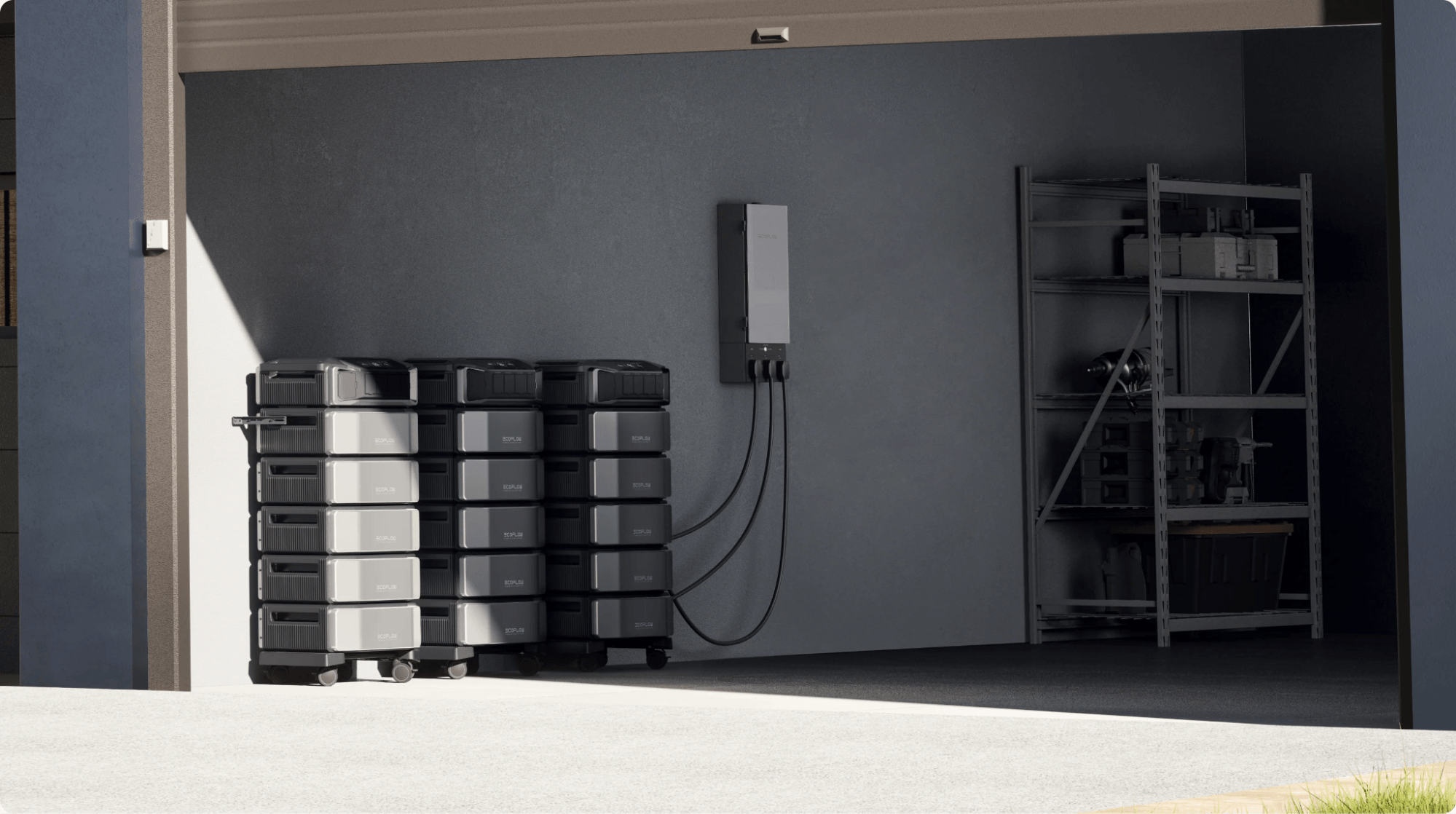
Installing something like the EcoFlow DELTA Pro Ultra Whole-Home Backup Power Unit is ideal for Canadian conditions. It’s built with LFP battery chemistry, which can maintain stable voltage output even in sub-freezing temperatures. It’s also scalable up to 90kWh capacity, so you can add extra batteries as needed.
Home Battery Backup Basics: What It Is and How It Works
Home battery capacity (kWh) tells you how long the battery can run. Power or output (kW) determines what you can run simultaneously.
If your only goal is to power essential loads like the fridge, lights, and Wi-Fi, you'll typically draw 700–900 watts. A 13.5 kWh battery can cover those loads for roughly 12-plus hours without solar recharging.
Switchover speed on quality systems is under 20 milliseconds, which is fast enough, so most appliances and electronics don't register the transition.
If you opt for a whole-home backup power solution, it should be able to handle all of your circuits, whereas a smaller portable unit can cover individual loads or a few essential circuits, depending on its capacity.
How Much a Home Battery Backup Costs in Canada
Initial equipment: Ranging from $1,500–$10,000 CAD, depending on capacity and brand.
Installation costs: labour, permits, and electrical panel upgrades can add $4,000–12,000 to the total.
Variables that may increase cost: Local labour rates, installer availability, solar pairing (cheaper without solar, but you lose the capability to recharge without grid power), and electrical panel upgrades.
Provincial or utility incentive programs like Ontario’s Home Renovation Savings Program (HRSP) or BC Hydro’s credit and solar rebate can help bring down total costs.
How to Choose the Best Home Battery Backup System for Your Needs
Your first decision is whether you want essential load coverage or whole home coverage. An essential load system can handle your priority circuits at around 10–15 kWh, but whole home systems will require higher capacity and output.
Next, consider expandability. You could start with a smaller modular system at a lower capacity and add batteries as your budget or needs grow, without replacing the base unit and starting over. Most of EcoFlow’s options are expandable.
You should also evaluate the benefits of combining solar with portable power solutions in Canada. Solar-ready systems with high PV input can recharge from rooftop solar during an outage to extend your runtime significantly.
Check to see if the options you’re considering have smart app control. EcoFlow’s app empowers your time-of-use schedule and remote monitoring so you can actively manage your energy.
EcoFlow Home Backup Options to Consider for 2026
EcoFlow has several options worth considering for a 2026 home backup investment. The EcoFlow DELTA 3 Ultra Plus Portable Power Station (3072Wh) can power your fridge, lights, and Wi-Fi from its base 3kWh capacity, and it’s expandable to 11kWh if your needs grow. Its 10ms auto-switch means the transition from grid to backup happens faster than any appliance can register.
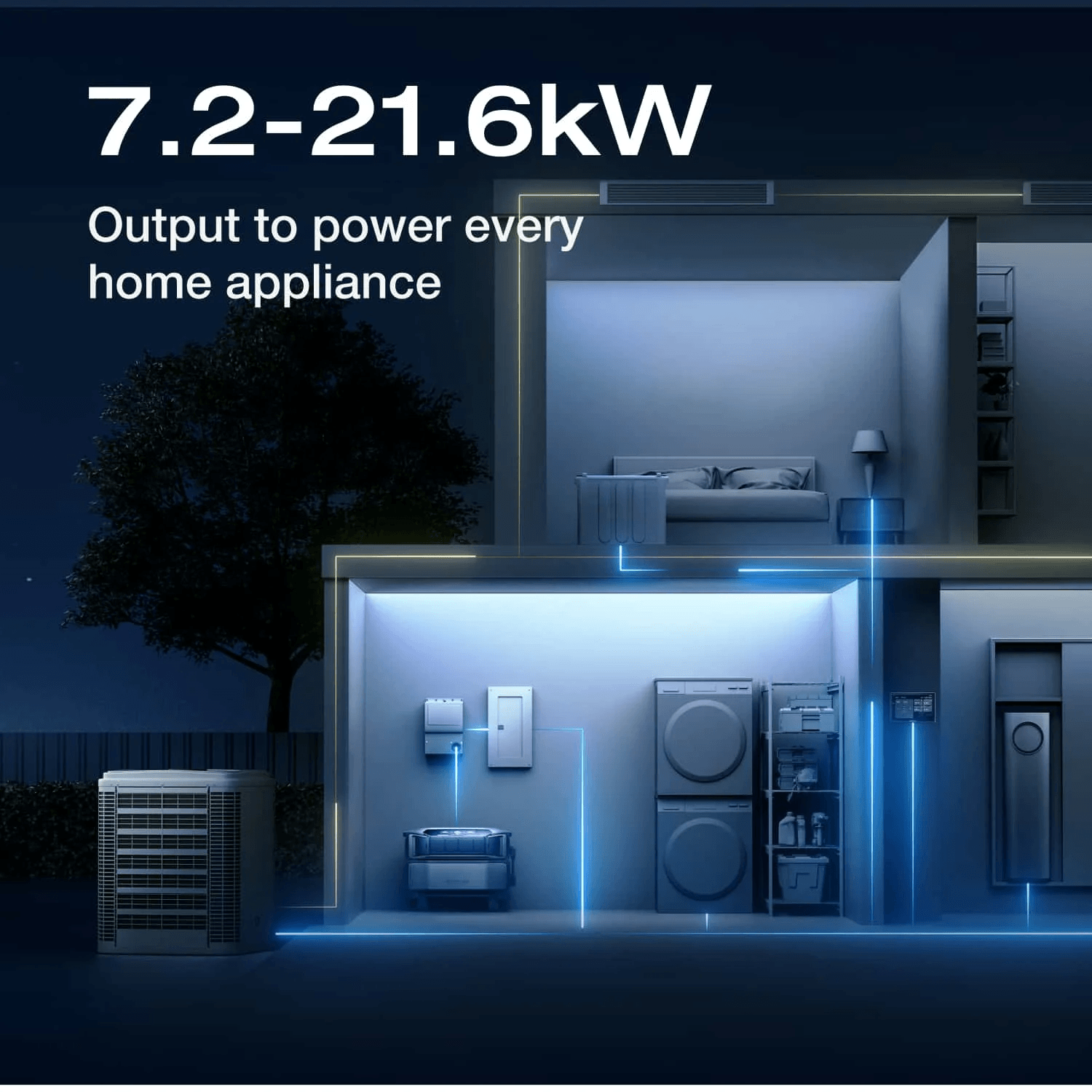
If you’d rather upgrade to whole-home coverage, that's when the EcoFlow DELTA Pro Ultra Whole-Home Backup Power is ideal. With 7.2kW of output per inverter, it can handle heavy loads like EV charging and HVAC simultaneously, not just essentials.
Frequently Asked Questions
How Much Does a Home Battery Backup Cost in Canada in 2026?
The total cost for an installed home battery backup system can range from $4,000–$20,000 CAD. It’s a wide range that depends on system size, brand, installation costs (labour, permits, upgrades, etc.). Provincial, local, or utility incentive programs can help bring down the cost.
What Rebates or Financing Programs Can Reduce the Cost of Battery Backup?
Currently active rebate programs include the Ontario HRSP (up to $5k for battery, $12k with solar), BC Hydro battery rebate (up to $5k), and the Efficiency Manitoba solar rebate ($0.50/W up to $5k). The federal grant and loan programs are closed, so provincial/municipal programs are the primary option.
How Many kWh Do I Need to Run Essentials During an Outage?
To run essential loads (refrigerator, Wi-Fi, phone charging, furnace fan), you will typically draw 700–900W, so a 10–13kWh system can run them for 12+ hours without additional solar coverage or recharging. Whole-home backup requires around 20kWh or more.
Reliable, Future-Ready Backup Power for Canadian Homes
Home battery backup used to be an early-adopter purchase. But today, it's a practical resilience tool that can help you ride out power outages, use TOU rate structures to your advantage, and reinforce your energy independence.
For a solution that can scale with your household, EcoFlow’s battery-powered whole-home generators allow you to start with a single inverter and expand capacity as your budget (or energy use) allows. Integrating it with solar then turns the system into a year-round energy asset.