RVing in Canada vs. the United States: Which Is Better for Camping for RVs?
- Rules of the Road: Regulations and Border Logistics for RV Canada Travel
- Best Places to Camp With RV: Canadian Parks vs. US Campgrounds
- The Real Cost of Camping in an RV: Canada vs. the US Breakdown
- Landscapes and Seasonal Windows: When and Where to Camp for RVs
- Choosing the Right RV Camping Destination for Your Style
- Bonus: If You Choose RV Travel to the US
- FAQs
Quick answer: Choose Canada if your priority is lower campground costs, national and provincial park scenery, Crown land access, and a quieter wilderness experience. Choose the United States if you want a longer RV season, more full-hookup campgrounds, and winter-friendly destinations in the Sun Belt.
Canadian RV owners face the same fork in the road: explore the country's own parks or cross the border south. Camping for RVs - overnight or extended travel in a self-contained vehicle on designated or dispersed sites - offers distinct advantages in each country. We compare costs, landscapes, regulations, and campground quality across both to help you decide where your rig belongs this season.
Rules of the Road: Regulations and Border Logistics for RV Canada Travel
Canadian and US RV trips can look similar on the map, but the paperwork is not the same. Before crossing the border, Canadian RVers should confirm vehicle documents, insurance coverage, food and pet rules, and route-specific restrictions through official sources.
Check Vehicle Size and Route Rules Before You Leave
RV size rules vary by province, state, road type, bridge, tunnel, and ferry route. Do not rely on a single “Canada-wide” or “US-wide” number. For example, Ontario’s vehicle dimension rules refer to a 23-metre limit for certain vehicle combinations under Ontario Regulation 413/05, but that does not automatically cover every route, vehicle class, or towing setup.
For BC ferry travel, propane rules deserve special attention. BC Ferries states that RV propane valves and pilot lights must be closed and tagged, and it also sets limits for propane cylinders carried by recreational vehicles in its dangerous goods guidance. If your route includes ferries, tunnels, mountain passes, or secondary highways, check the operator or provincial transportation website before departure.
Crossing Into the US With an RV
Canadian citizens visiting the United States can usually stay for up to six months without a visitor visa, but the permitted stay is still determined at entry. Government of Canada travel advice says Canadian visitors must declare their intended stay when entering the United States, and exceptions may apply depending on travel purpose or admissibility. Check Travel.gc.ca’s United States travel advice before planning a long RV trip.
For land-border travel, keep passports, vehicle registration, proof of insurance, campground reservations, and return-intent documents easy to access. CBP also provides an online way to apply for or retrieve an I-94 arrival/departure record, which may be relevant for some visitors and longer stays.
Food, plants, animals, firewood, and agricultural products can trigger border delays or seizure if they are not declared correctly. CBSA states that travellers must declare food, plant, animal, and related products when entering Canada, and some items may be restricted or prohibited. Check CBSA’s guidance on what visitors can bring into Canada and its food, plant, and animal import rules before packing your RV pantry.
Travelling With Dogs
Do not assume old pet-travel rules still apply. For dogs entering or returning to the United States, CDC currently requires a CDC Dog Import Form receipt for each dog. Dogs coming from dog rabies-free or low-risk countries must still meet CDC requirements, including appearing healthy, having a microchip, and being at least six months old. Requirements can change based on where the dog has been during the previous six months, so check the CDC dog import page before each trip.
Confirm Insurance Before Crossing the Border
Many US states require auto insurance and proof of insurance, and requirements vary by state. Government of Canada travel advice recommends checking state motor vehicle departments for specific insurance rules. Do not assume your Canadian policy automatically covers every US state, every length of trip, every driver, or every RV towing setup.
Ask your broker or insurer these questions before departure: Does my policy cover travel in every US state on my route? How long does coverage last outside Canada? Are the RV, tow vehicle, trailer, and additional drivers all covered? Do I need a non-resident insurance card or extra liability coverage?
State minimums can also change. For example, California DMV lists minimum liability requirements of $30,000 for injury or death to one person, $60,000 for injury or death to more than one person, and $15,000 for property damage. Maine’s Bureau of Insurance lists $50,000 per person, $100,000 per accident for bodily injury, and $25,000 for property damage. These examples show why RVers should verify the rules for each state on their actual route.
Best Places to Camp With RV: Canadian Parks vs. US Campgrounds
Finding the right places to camp with RV depends on what kind of experience you prioritize - raw wilderness, full hookups, or iconic scenery. This table compares the two countries across six decision-relevant dimensions so Canadian RVers can set realistic expectations before booking.
| Dimension | Camping for RVs in Canada | Camping for RVs in the US |
| National/Federal Park Network | Parks Canada operates 48 national parks; reservations via a centralized federal system opening each spring | National Park Service manages 63 national parks; recreation.gov handles reservations with release windows up to 6 months ahead |
| Provincial/State Park Volume | Approximately 1,000 provincial parks across 10 provinces; many offer electrical hookups and full-service sites | Approximately 6,600 state parks nationwide; hookup availability and quality vary widely by state |
| Booking Lead Time | High-demand sites (Banff, Algonquin) fill within minutes of the reservation window opening | Yosemite, Zion, and Glacier campsites often sell out 6 months in advance; shoulder-season availability is much better |
| Site Fees (Approximate CAD) | $30–$50/night for electrical sites in provincial parks; Parks Canada national park sites run $28–$45 | $25–$60 USD/night at US national parks; state parks range $15–$55 USD |
| Wilderness/Backcountry Access | Crown land camping is free and broadly legal in most provinces with few restrictions | Dispersed camping on BLM and national forest land is free but requires familiarity with local fire and permit rules |
| Cell/Wi-Fi Coverage on Sites | Limited in remote parks; some provincial parks now offer paid Wi-Fi at service buildings | Many US state parks and private campgrounds offer full-hookup sites with Wi-Fi; coverage remains sparse in national parks |
Canada's Crown land access and lower site fees give budget-conscious RVers a clear advantage, while the US offers sheer volume and a wider hookup infrastructure. The best places to camp with RV ultimately depend on whether you prefer untouched boreal wilderness or a denser network of serviced sites.
The Real Cost of Camping in an RV: Canada vs. the US Breakdown
Camping in an RV involves costs well beyond nightly site fees, and the totals shift significantly depending on which side of the border you travel. The following points cover the most impactful budget variables Canadian RVers should calculate before committing to a US trip.
Fuel costs run 15–25% higher in Canada on average, but US trips add substantial mileage that can offset Canadian pump prices on long routes south.
The Canadian dollar's exchange rate against the USD directly inflates every US campground fee, restaurant stop, and dump station charge by roughly 25–35% at typical recent rates.
Dump station fees at US campgrounds average $10–$20 USD per use for non-guests, while many Canadian provincial parks include dump access in the nightly site fee.
US private campgrounds frequently charge add-on fees for extra vehicles, additional guests, and firewood that are far less common in Canadian park systems.
Annual pass options reduce per-night costs dramatically: Parks Canada's Discovery Pass covers national park entry for a household, while the US America the Beautiful Pass covers entry fees but not camping fees at most national park sites.
US campgrounds in popular tourist corridors apply peak-season pricing that can push full-hookup rates above $70 USD per night, a cost rarely seen at Canadian provincial parks.
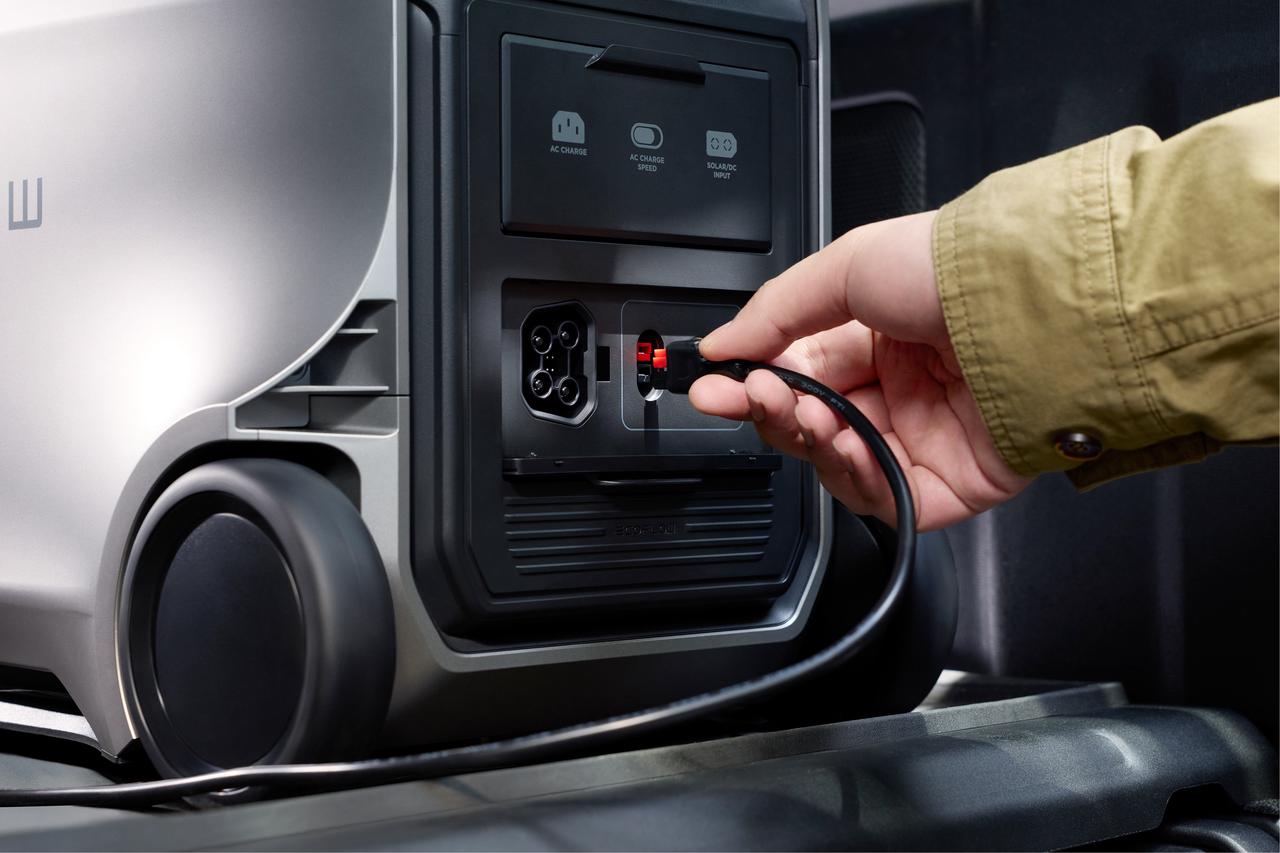
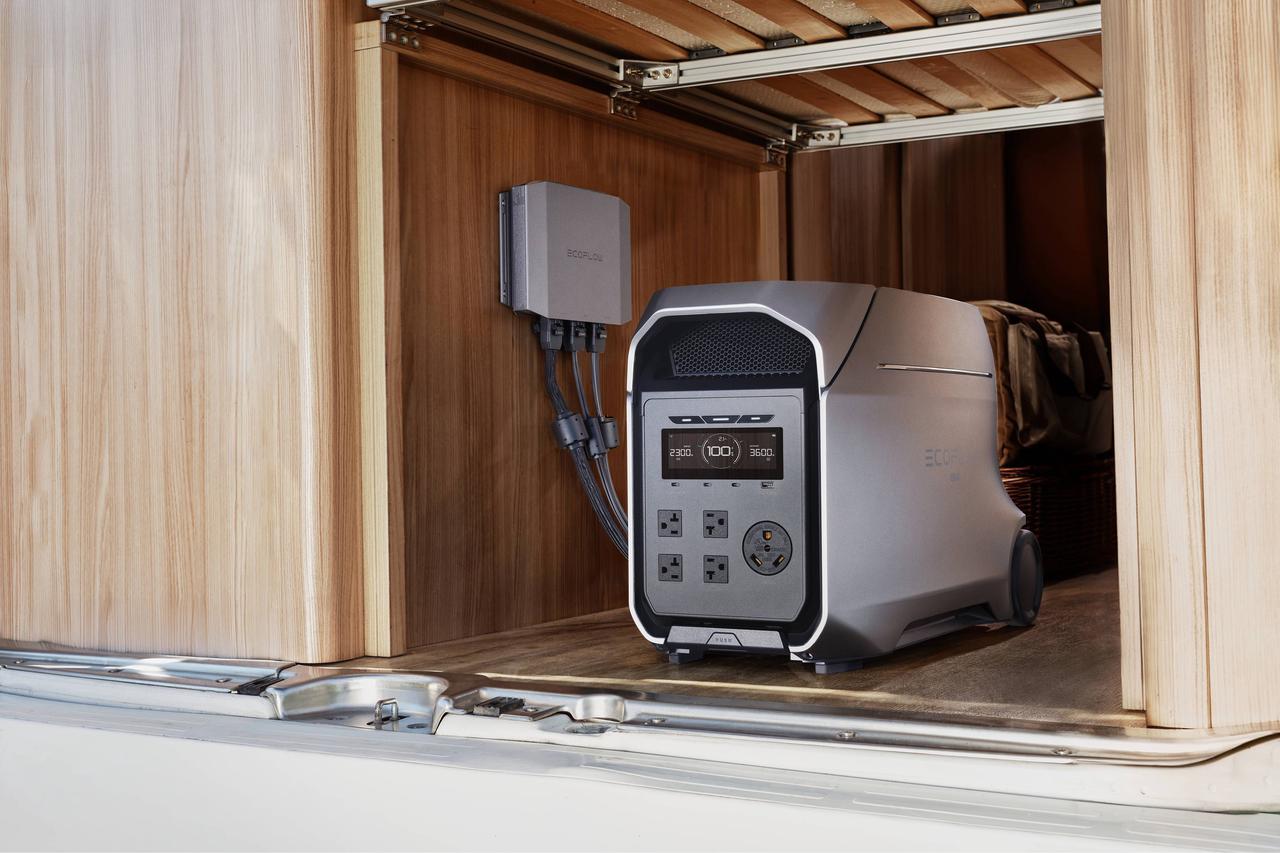
For extended off-grid or shoulder-season travel where hookups are unavailable, power independence matters significantly. The EcoFlow DELTA 3 Ultra Plus paired with 400W Solar Panels is worth considering: it delivers 3,600W of output (7,200W surge), charges from 0 to 80% in roughly 101 minutes of good sunlight, and runs quietly at under 25dB - enough to power electric frying pans, dryers, and other heavy-draw appliances without a noisy generator disturbing neighbouring sites.
The US offers more site options, but the true cost of camping in an RV there is consistently higher for Canadians once exchange rates and add-on fees are included. Budgeting realistically for these variables prevents the most common mid-trip financial surprises.
Landscapes and Seasonal Windows: When and Where to Camp for RVs
The geography and climate of Canada and the US create fundamentally different camping windows and scenery types for RV travellers. Choosing the right season and region for camping for RVs is as important as any logistical preparation.
Canada's RV Season: Short Windows, Spectacular Scenery
Canada's core RV season runs late May through early October in most provinces, with the Maritimes and BC's interior peaking in July and August. The Canadian Rockies - Banff, Jasper, and Kootenay - deliver alpine scenery unmatched anywhere else in the continental landmass, combining glacial lakes, wildlife corridors, and dramatic elevation changes within a single park system. Snowfall is possible even in late September at higher elevations, and many Parks Canada campgrounds close before Thanksgiving weekend in October. Travellers planning rv canada routes through the north should check road condition forecasts from provincial transportation ministries at least 48 hours before departure.
US RV Destinations: Year-Round Options and Regional Variety
The US Sun Belt - Arizona, New Mexico, Florida, and coastal California - enables year-round camping for RVs, making those regions consistently attractive to Canadian snowbirds from November through March. The Pacific Northwest and US Rockies mirror Canada's compressed summer window, while the Midwest and Northeast offer reliable spring and fall seasons with comfortable temperatures and reduced crowds. Florida's Gulf Coast state parks fill quickly from January onward with Canadian and northern US visitors, so reservations there should be secured by October at the latest.
Shoulder-Season Strategy for Cross-Border RVers
May and September are the optimal shoulder months for both countries: campgrounds run 40–60% less booked than in July, temperatures remain comfortable across most regions, and wildlife activity peaks in many national parks as animals move before and after summer. Booking 4–6 weeks ahead (rather than 6 months in advance) is feasible during shoulder season, giving travellers meaningful flexibility on destination and route adjustments without sacrificing site quality.
Canada delivers world-class summer wilderness camping for RVs with unmatched mountain and boreal scenery, while the US extends the viable season by three to four months through its southern regions. Matching your travel window to your preferred climate and landscape type is the single most effective trip-planning decision you can make.
Choosing the Right RV Camping Destination for Your Style
Canada wins on cost and wilderness access; the US wins on year-round availability and hookup infrastructure. Both reward preparation: border paperwork and insurance must be confirmed before any cross-border trip. Identify your priority - budget, season length, or scenery - and let that single variable drive your decision. Book shoulder-season dates for the best combination of availability and value, whichever country you choose.
Bonus: If You Choose RV Travel to the US
Have this checklist before a Canada–US RV trip and confirm each item with the official source or provider.
| Item to Check | Why It Matters | Where to Verify |
| Passport or approved travel document | Needed for border entry and identity verification | CBP, CBSA, Travel.gc.ca |
| Vehicle registration | Confirms ownership or authorized use of the RV, tow vehicle, or trailer | Provincial motor vehicle authority |
| Proof of insurance | US states may require proof of auto insurance | Your insurer and state DMV websites |
| Liability limits | Minimum coverage varies by state and may change | State motor vehicle or insurance department |
| Coverage duration outside Canada | Some policies limit how long coverage applies outside Canada | Your broker or insurer |
| Additional drivers | Not every driver may be covered automatically | Your broker or insurer |
| Tow vehicle and trailer coverage | RV, trailer, and tow vehicle may need separate confirmation | Your broker or insurer |
| I-94 record, if applicable | Longer stays or certain entries may require checking admission records | CBP I-94 website |
| Intended length of stay | Canadian visitors are usually allowed up to six months, but entry decisions are made at the border | Travel.gc.ca and CBP |
| Food, plants, meat, produce, and firewood | Restricted items can be seized or cause delays | CBSA, CBP, CFIA, USDA |
| Dog import documents | CDC rules require a Dog Import Form receipt and other conditions | CDC dog import guidance |
| Propane and fuel rules | Ferries and tunnels may restrict propane, fuel, or dangerous goods | Ferry operator or transportation authority |
| Campground reservation confirmation | Popular parks may require advance booking or timed entry | Parks Canada, Recreation.gov, park websites |
| Travel health insurance | Provincial health coverage may not cover all US medical costs | Travel insurer or Government of Canada travel advice |
| Emergency contacts | Useful for border issues, insurance claims, breakdowns, or medical events | Insurer, roadside assistance, consular contacts |
FAQs
Q1. How Do You Find Free Places to Camp With RV in Canada?
Free camping for RVs in Canada is widely available on Crown land in provinces including BC, Alberta, Ontario, and Quebec. Search provincial Crown land maps or forestry road guides to identify legal dispersed sites. Most require no reservation, charge no fee, and permit stays of 14–21 days depending on provincial rules.
Q2. What Is the Difference Between Full-Hookup and Dry Camping for RVs?
Full-hookup sites provide electrical, water, and sewer connections directly at the pad. Dry camping - also called boondocking - means no external connections; your RV relies entirely on its own tanks, battery bank, or onboard generator. Dry camping is common on Canadian Crown land and US BLM land, and costs nothing at legal dispersed sites.
Q3. Can You Drive an RV Canada Trip Year-Round Across All Provinces?
Not practically. Most provincial campgrounds close from October through May, and winter road conditions across northern Ontario, the Prairies, and BC mountain passes make RV travel genuinely hazardous. Year-round rv canada travel is feasible only in southern BC and parts of southern Ontario, where above-freezing temperatures are more consistent.
Q4. Why Are US Campsite Reservations So Hard to Get for Canadian RVers?
High domestic US demand fills top national park campsites within minutes of reservation windows opening, often six months in advance. Canadian travellers face the added challenge of coordinating bookings alongside exchange rate fluctuations and border logistics. Targeting state parks or travelling mid-week significantly improves site availability without sacrificing scenery quality.
Q5. How Long Can Canadians Stay in the US When Camping in an RV?
Canadians are typically admitted for up to 182 days (six months) per visit under the B-2 visitor classification, but the exact duration is set by the border officer at entry. Extended RV snowbird stays should include proof of Canadian residency, documentation of return intent, and adequate travel health insurance covering the full trip.
Disclaimer: This article is for general RV travel planning only. Border rules, vehicle regulations, insurance requirements, pet-entry rules, park reservations, and campground policies can change by country, province, state, ferry operator, and route. Before you travel, verify the latest requirements through official sources, including Travel.gc.ca United States travel advice, CBSA travel and border guidance, CBP I-94 information, CDC dog import rules, Parks Canada reservations, and Recreation.gov. You should also confirm coverage with your insurer, your RV rental company if applicable, and the campground or park authority before departure. The publisher is not responsible for legal, financial, insurance, or travel consequences arising from the use of this information.