BTU to kWh Converter: Formula, Calculator & Canadian Energy Bill Examples
- What Are BTU and kWh, and How Do They Relate?
- What Is the BTU to kWh Conversion Formula?
- How Do You Convert BTU to kWh for Common Household Appliances?
- How Do BTU and kWh Appear on a Canadian Energy Bill?
- How Can You Use BTU to kWh Conversions to Estimate Energy Costs?
- How Can BTU to kWh Conversions Help You Size a Solar or Battery Backup System?
- Frequently Asked Questions
- Converting BTU to kWh Helps Canadian Homeowners Understand and Manage Their Energy Costs
BTU and kWh are the two units that homeowners commonly see when comparing their appliance specs to their electricity bills each month. Things can get confusing when HVAC equipment is rated in BTU/h, but your utility bills only show kWh.
Understanding this conversion can help you size your backup system, estimate running costs, and read your bills correctly (and with confidence).
What Are BTU and kWh, and How Do They Relate?
British Thermal Unit (BTU) measures a fixed quantity of heat energy, whereas kWh measures the electrical energy delivered over time. They both describe the underlying energy quantity and sit on a fixed conversion scale, which is why appliance labels and utility meters can be reconciled directly between the two.
If you can understand that BTU is a measuring unit of energy, different from BTU/h (which is a rate), you'll prevent the most common mix-up when appliance shopping.
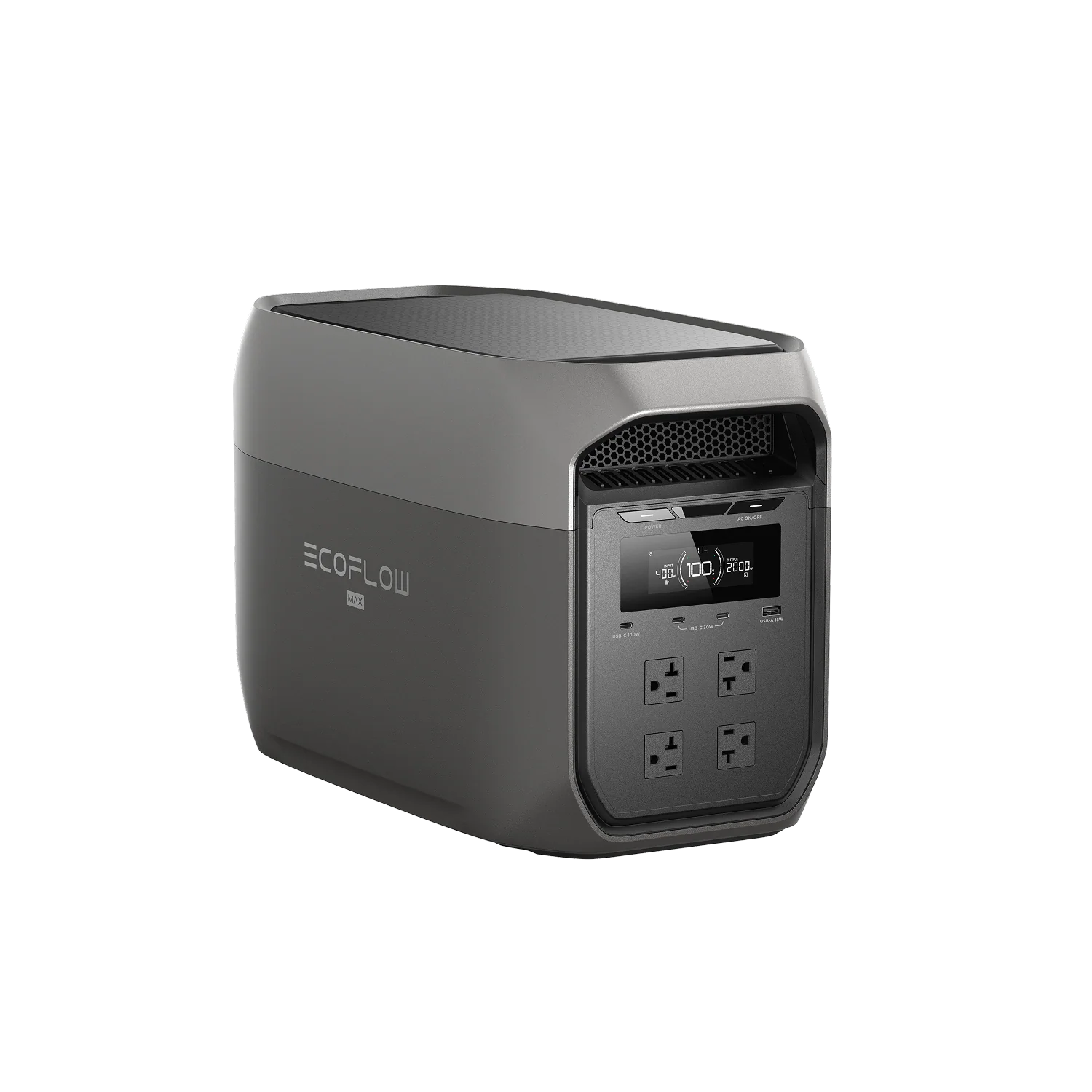
Once you convert an appliance's energy draw to kWh, that answer will show you whether a portable power station like the EcoFlow DELTA 3 Max can sustain it for the runtime needed during an outage. You can also determine how much energy that appliance is costing you on your bill.
What Is the BTU to kWh Conversion Formula?
The core formula is: 1 kWh = BTU / 3,413, so the reverse formula is BTU = kWh x 3413, which is helpful when you need to compare a device’s rated output back to your bill’s units.
For power ratings other than total energy, the same relationship holds as kW to BTU to watts. One kW = ~3413 BTU/h.
Rounding the number to 3412, rather than 3413, is common in consumer calculators and also allows a negligible error for household use.
How Do You Convert BTU to kWh for Common Household Appliances?
An appliance nameplate will either list the wattage or BTU/h. Converting both of them to the same unit is the only way to compare different products fairly.
Space Heaters and Portable Air Conditioners
A typical 1,500 W space heater draws about 5,120 BTU/h (1,500 x 3.412), running roughly 1.5 kWh per hour of continuous use.
Natural Resources Canada uses a rule of thumb of about 200 BTU/h of cooling capacity per square metre of living space when sizing a room air conditioner, so a portable AC's rated BTU/h will scale with the size of the room it's cooling, commonly translating to roughly 500 to 1,500 W of continuous draw depending on the EER rating.
Running a mid-size portable AC for 8 hours during the day can consume 4 to 8 kWh, which is a good benchmark when sizing your backup system for summer outages.
Water Heaters and Furnaces
Standard electric water tank heaters use 4,500 W elements (about 15,350 BTU/h). Manufacturers usually list a gas furnace's capacity in BTU/h, though the actual heat delivered depends on the AFUE efficiency rating that's stamped on the unit.
A 96% AFUE furnace delivers 96 BTU of usable heat for every 100 BTU of gas consumed, and the right output for your home depends on factors like square footage, insulation, and climate zone. A professional heat-loss calculation is the most reliable way to confirm the correct size.
Heat Pumps
Manufacturers rate heat pump capacity in tons or BTU/h, where one ton = 12,000 BTU/h. This is a different unit convention than furnaces or space heaters. The heating capacity drops as the outdoor temperature falls, so the rated number at standard conditions will overstate output during Canadian cold snaps.
How Do BTU and kWh Appear on a Canadian Energy Bill?
Utilities meter and bill Canadian electricity in kWh, at rates set through provincial regulation, not in BTU. Natural gas bills in several provinces are measured in gigajoules (GJ), though appliance BTU ratings still tie back to the same energy content. BTU is more common on equipment nameplates and technical spec sheets than on the bill itself.
How Can You Use BTU to kWh Conversions to Estimate Energy Costs?
Multiply your appliance's converted kWh draw by your local rate to get a rough daily or monthly operating cost. Provincial electricity cost per kWh varies widely, so check with your local provider to get the accurate figure before running the formulas.
How Can BTU to kWh Conversions Help You Size a Solar or Battery Backup System?
When you convert all of your essential appliances' BTU or wattage ratings to kWh, you'll get a combined daily energy budget to help size your backup system. That daily total determines how much battery capacity and how many solar generators and panels are needed to cover a given outage window.
If your energy budget covers your whole house rather than a handful of essential circuits, it's worth looking at whole-home backup power solutions built to handle that larger daily load.

Frequently Asked Questions
How Many BTU Are in One kWh?
One kWh equals approximately 3,412-3,413 BTU, which is the standard conversion factor used across HVAC and energy calculations. This fixed relationship applies regardless of the fuel source or appliance type, since both units measure the same underlying quantity of energy.
How Do You Convert kWh Back to BTU?
Multiply the kWh figure by 3,412 to get the equivalent BTU value. The reverse formula is most helpful when comparing an electric appliance's energy use against a gas appliance's BTU-rated input or output.
Why Do Canadian Energy Bills Show Both BTU and kWh Figures?
Canadian electricity bills use kWh because that is the regulated billing unit. BTU is more commonly found on gas appliance specs and equipment nameplates, but it’s this content of the natural gas bills that determine the appliance sizing and output.
How Do You Calculate the BTU Output Needed from a Portable Power Station?
Add up the wattage (or the BTU/h converted to W) of every appliance that needs to be powered, then multiply that by the expected hours of use to get the total kWh you need. Portable power stations are rated in Wh or kWh rather than BTU, so compare that total directly against the unit's rated capacity to confirm it can cover the full runtime.
Converting BTU to kWh Helps Canadian Homeowners Understand and Manage Their Energy Costs
The BTU to kWh conversion is critical for turning unfamiliar appliance specs into the same units that show up on your electricity bill. The key is the 3,412 factor that makes it possible to compare your heating equipment, cooling equipment, and electronics all on equal footing.
If you're sizing backup power for your home, convert your appliance loads to kWh as the starting point to match a system like the EcoFlow DELTA 3 Max to your household’s energy needs.