Measuring Unit of Energy: Understanding Your Canadian Electricity Bill (2026 Guide)
- Why Energy Units Matter for Your Electricity Bill in Canada
- What Is the Measuring Unit of Energy? (kWh Explained Simply)
- How kWh Translates to Real Household Energy Use
- How to Read and Understand Your Canadian Electricity Bill
- Factors That Influence Your Energy Usage in Canada
- How to Reduce kWh Usage and Lower Your Electricity Bill
- Conclusion
- FAQs
If you’ve ever stared at your monthly utility statement and felt like you were trying to decipher an ancient script, you aren’t alone. Between the shifting carbon tax rebates and the tiered pricing models used across the provinces, the modern Canadian electricity bill has become a complex document. In this guide, we’re stripping away the jargon to explain what a kilowatt-hour (kWh) actually is, why your bill spikes during a Prairies cold snap, and how to spot the habits that are quietly draining your bank account.
Why Energy Units Matter for Your Electricity Bill in Canada
Understanding the units on that bill is the first step toward financial relief.
Rising Electricity Costs and Bill Confusion
Whether you are in the heart of Toronto or the suburbs of Calgary, electricity rates have seen a steady climb. In 2026, many Canadians find the “Line Items” on their bills, ranging from transmission costs to the “Global Adjustment” in Ontario, utterly baffling. This confusion often leads to a feeling of powerlessness. But here’s the key: clarity starts with knowing exactly what is being measured. You aren’t just paying for “light”; you’re paying for a specific volume of work.
How Energy Measurement Directly Affects What You Pay
Every light you flip on or every extra minute the furnace runs adds a new line to an invisible running tally. Your utility provider is not just throwing darts at a board; they’re tracking the specific “work” performed by electricity in your home. Getting a handle on this measurement is the real secret to spotting which habits are bleeding you dry and where you can actually trim the fat.
What Is the Measuring Unit of Energy? (kWh Explained Simply)
While we often talk about “using power,” what we are actually tracking is the total amount of energy consumed over time.
What Is Energy in Everyday Terms
In simple terms, energy is the capacity to do work. In your house, “work” means keeping the beer cold in the fridge, heating water for your morning shower, or keeping the Wi-Fi router humming. It’s a tangible resource, even if you can’t see it flowing through the walls. Every time an appliance runs, it’s consuming a specific “volume” of that work.
Understanding Kilowatt-Hour (kWh)
To get a handle on your utility bill, you first need to define what you’re actually paying for. While “electricity” is the service being delivered to your home, the kilowatt-hour (kWh) is the actual product you are buying. Mastering how to calculate kWh usage for your home is the first step toward reclaiming control over these monthly expenses.
kW vs. kWh: Key Differences
People mix these up all the time, but the distinction is vital for your budget:
kW (Kilowatt): This is a measure of power (demand). It represents how much electricity a device needs to run at any given moment. Think of this as the speed of your car, how much fuel you’re pulling from the tank right now.
kWh (Kilowatt-hour): This is a measure of energy (consumption). It represents the total amount of power used over a specific period. Think of this as the distance traveled, the total amount of fuel you’ve burned through by the end of the trip.


How kWh Translates to Real Household Energy Use
Knowing the textbook definition is fine, but the real lightbulb moment happens when you start to see how that energy actually disappears in a Canadian kitchen or laundry room. It’s more than just numbers on a screen; rather it’s about understanding the “work” being done while you’re making coffee or finishing a deadline.
What 1 kWh Powers in Your Home
To put it into perspective, 1 kWh is more than just a number on a page; it also represents a specific amount of work your appliances can finish before the meter clicks over. Here is what that looks like in a typical Canadian household:
Modern Refrigerator: You can keep your groceries chilled for about 12 to 15 hours.
LED Television: You can binge-watch your favorite shows for roughly 10 hours straight.
Work Laptop: You can power through nearly two full days of remote work or meetings.
Electric Clothes Dryer: You get about 10 to 15 minutes of tumbling, barely enough to warm up a load of towels.
Portable Space Heater: You only get about 40 minutes of warmth, which is why these “supplemental” heaters are often the secret culprits behind a massive bill.
Typical Energy Consumption in Canadian Homes
The typical household in Canada burns through roughly 1,000 kWh every month. Of course, that number is more of a baseline than a rule; it fluctuates wildly depending on where you live and how you keep the place warm. In 2026, for instance, a household in Quebec or Manitoba might see the lowest prices, while those in Ontario or the Northwest Territories are facing much steeper monthly totals.
High-Usage Appliances to Watch
In many provinces, it’s not just about how much you use, but when you use it. For 2026, the strategy is shifting from “just turn it off” to “load shifting.” If you’re in Ontario, for example, the Ultra-Low Overnight (ULO) rate is a stand at only 3.9¢/kWh after 11 PM. But if you run those same appliances at 5 PM, you’re slapped with a massive 39.1¢/kWh “On-Peak” rate.
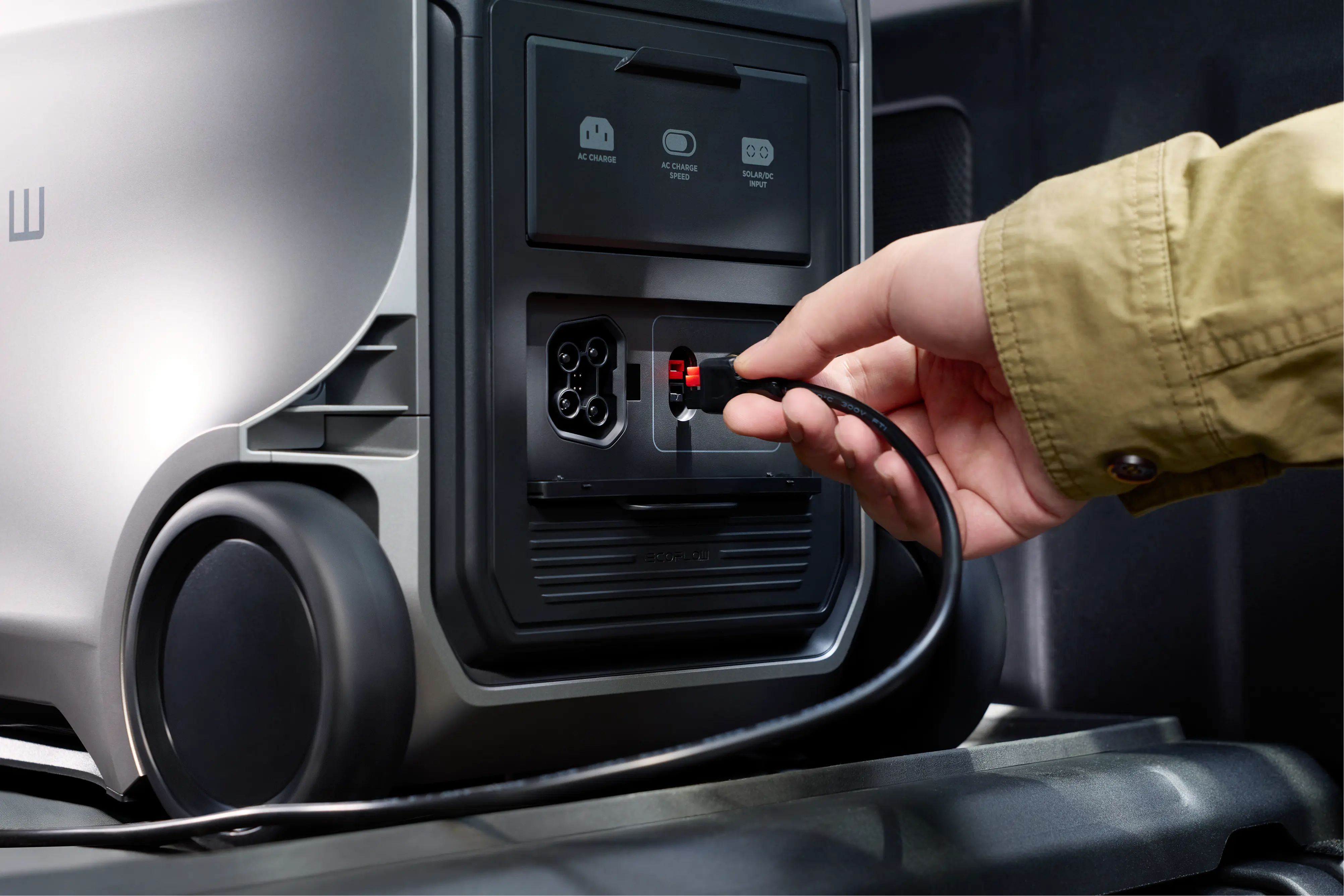
Here’s the key: many people are now using “plug-and-play” storage to beat the system. You can charge a unit like the EcoFlow Delta 3 Ultra Plus Portable Power Station (3072Wh) (which packs a 3,072Wh capacity) during those cheap overnight hours. Then, you use that “cheap” stored energy to power your fridge, laptop, or a heater during the expensive afternoon peak. It’s a smart move for renters or condo dwellers in Vancouver or Toronto who can’t install solar panels but still want to stop the “peak hour” drain on their bank accounts.
How to Read and Understand Your Canadian Electricity Bill
Once you get a handle on the units, looking at your actual statement stops feeling like a horror story and starts looking like a roadmap. It’s not just one big number; it’s a collection of charges that pay for everything from the actual electrons to the physical wires hanging over your street.
Key Components (Usage, Delivery, Fees)
Electricity Charge: This is the straightforward part, it’s the actual price of the kWh you consumed during the billing cycle.
Delivery/ Transmission: This one often stings because it’s the cost of moving power from a massive dam or nuclear plant to your front door. In some regions, the “delivery” can actually cost more than the power itself.
Regulatory / Global Adjustment Fees: Think of this as the “membership fee” for keeping the provincial grid stable. It covers the administrative and maintenance costs required to make sure the lights actually stay on. Note that for most residential customers, this charge doesn’t always appear as a separate line item; for some, this is bundled into the unit price you pay per kWh.
Time-of-Use vs. Tiered Pricing
Most Canadians are on one of two plans. Time-of-Use (TOU) charges based on the clock, in Ontario, 2026 “On-Peak” afternoons hit 20.3¢/kWh, while nights drop to 9.8¢/kWh. Tiered Pricing ignores the time and gives you a flat rate for a set block (like the first 1,000 kWh), jumping only after you cross that limit. It’s a great “set it and forget it” option if you hate checking the time before starting the dryer.
Common Hidden Charges Explained
Watch for the fine print that bloats your bill. Line Losses charge you for electricity that evaporates as heat before reaching your home, while Variable Delivery fees often scale up the more power you consume. Another thing to check is the 2026 infrastructure levies in provinces like Alberta, which can add significant costs regardless of how many lights you turn off. Bottom line? These sneaky secondary fees are often why your bill feels high even when your usage is low.
Factors That Influence Your Energy Usage in Canada
Geography and climate are the biggest players in how many kWh show up on your monthly statement. In Canada, we don’t just have weather; we have “bill-shifting seasons” that force your appliances to work in entirely different ways.
Seasonal Impact (Heating vs. Cooling)
The “January Spike” is a rite of passage for most Canadians. Since space heating is the single largest energy expense in the country, those -30°C nights mean your furnace blower or electric baseboards are running almost non-stop. Understanding why your summer electrical bill is spiking is equally important, as humidity in the south forces ac units into overdrive during the warmer months.
Home Efficiency and Appliance Choices
That ENERGY STAR rating on your appliances is definitely not just marketing fluff; but a direct indicator of your future Hydro bill. For 2026, new homes hit efficiency standards roughly 20% better than a decade ago, saving homeowners about $300 annually. If you’re in a heritage home with drafty windows, your heating system is basically trying to warm up the whole neighborhood. Another thing to check? Provincial rebates, provinces like Ontario and BC still offer incentives up to $200 to swap out old “energy-gulpers” for models that just sip power.
Regional Differences Across Provinces
Energy costs aren’t “one size fits all” across the Great White North. Quebec enjoys some of the lowest rates in the world, even with a 3% hike this April, thanks to their massive hydroelectric grid. Meanwhile, Saskatchewan just saw a 3.9% increase in February to maintain grid reliability. In Ontario, your price depends on your plan, with “On-Peak” rates hitting 20.3¢/kWh. Bottom line? Where you live dictates the “base price,” but how your home handles the weather dictates the volume.
How to Reduce kWh Usage and Lower Your Electricity Bill
Reducing your monthly kWh doesn’t mean you have to sit in the dark, shivering room. Instead, you just need to be more strategic with how your home eats power. In 2026, the game has shifted from simple “passive saving” to “active management.”
Simple Ways to Cut Energy Consumption
Start with the easy stuff. Switching to LEDs and sealing window drafts with weatherstripping are basics for a reason, they work. For those looking for flexibility, using a portable power station to handle smaller electronics can keep your main meter from ticking upward during peak times. Also, a programmable thermostat is essential. Dropping the heat by just 2°C or 3°C while you sleep can shave roughly 10% off your heating costs. Another thing? Use smart plugs to kill “phantom power” from electronics like gaming consoles that draw energy even when they’re “off.”
Smart Usage Habits (Off-Peak, Efficient Devices)
If you’re on a Time-of-Use (TOU) plan, the clock is your best friend. Running the dishwasher or laundry after 7 PM is the standard move, but for 2026, many Canadians are switching to “Ultra-Low Overnight” plans. In Ontario, for example, the overnight rate is a tiny 3.9¢/kWh. By simply waiting until 11 PM to start heavy appliances, you’re paying a fraction of the daytime price. For eco-conscious homeowners, integrating a solar generator into this routine can provide free, renewable power to further offset those high-noon costs.
Long-Term Solutions (Energy Monitoring & Upgrades)
For those looking to fundamentally slash their bills, swapping lightbulbs has its limits, especially during a brutal winter. The new “gold standard” is home energy storage.
A system like the EcoFlow DELTA Pro Ultra Whole-Home Backup Power allows for a “buy low, use high” strategy. You store energy during cheap overnight hours (or from solar) and discharge it during expensive “On-Peak” afternoon rushes. It’s a systematic way to lock in cost certainty. Plus, it doubles as a silent backup during ice storms, keeping your fridge and furnace blower running without the roar of a gas generator.
Conclusion
Understanding the measuring unit of energy is the “secret code” to mastering your household budget. By recognizing how kWh are calculated and how Canadian seasons, like those January cold snaps or July humidity spikes, impact your usage, you move from being a frustrated consumer to an empowered energy manager. Here’s the point: you aren’t stuck with whatever number appears on your bill. Whether it’s through simple habit shifts, choosing the right pricing plan, or adopting advanced storage systems like the EcoFlow DELTA series, you have the tools to take control. Moving toward “active energy management” is more than saving a few bucks; at the same time building a home that is resilient, cost effective, and ready for whatever the grid throws at it.
FAQs
1. What is a good monthly kWh usage in Canada?
A typical Canadian home burns through roughly 800 to 1,000 kWh every month. But look, that’s just a baseline. If you’re living in a place with electric baseboard heaters or a heat pump during a deep freeze, don’t be shocked to see that number skyrocket to 2,000 kWh or even higher in January.
2. Why is my electricity bill so high even with low usage?
This is the most frustrating part of the utility game. Often, it’s not about how many lights you left on, but the “fixed” costs. Delivery charges and regulatory fees can sometimes make up half your bill regardless of your consumption. Also, if you’re on a Time-of-Use plan, when you use power matters more than how much. Running a single load of laundry at 4 PM on a weekday can cost as much as three loads done after 7 PM.
3. How much does 1 kWh cost in Canada?
The price is all over the map. You’re looking at a range of roughly 7¢ to 19¢ CAD depending on where you’re standing. Quebec usually has the “cheap” seats thanks to massive hydro power, while Ontario and PEI are usually on the pricier end. Bottom line is: Your province’s energy mix, whether it’s wind, nuclear, or gas, dictates your starting price before the taxes even hit.
4. Is kWh the same across all provinces?
Yes, the kilowatt-hour (kWh) is the universal metric from the Yukon to Newfoundland. It’s the one thing all our utilities actually agree on. While the “measurement” stays the same, the extra fees and “global adjustments” vary so much it can feel like you’re living in different countries.