What Is an Atmospheric River, and Why Are They Becoming More Frequent?
The phrase “atmospheric river” is being used more frequently in the media, especially on the West Coast. But it’s not a new term, and atmospheric rivers have been around for a long time. Over the past decade, more research has been dedicated to understanding these weather patterns and their impact, leading to increased public awareness and discussion.
Recently, intense atmospheric rivers hit the Pacific Northwest and British Columbia, causing historic flooding and infrastructure damage. Keep reading to learn more about atmospheric rivers and flood risks, what the Pineapple Express is, and how to prepare ahead of this weather phenomenon.
Understanding Atmospheric Rivers
An atmospheric river is a concentrated, narrow band of water vapor in the atmosphere. In satellite imaging, these bands look similar to rivers, hence their name. They’re quite common in the western half of the United States during the winter, but can occur all over the world.
Key Characteristics
Origin and Transport: They form over warm oceans where evaporation is high, typically in the tropics. Strong winds carry the river towards the poles, and they flow in the direction of the wind.
Size: Can be over 1,000 miles long and 250 to 375 miles wide.
Significance: Atmospheric river events account for 30% to 50% of the annual precipitation in specific regions. This is especially true in the U.S. West Coast, the UK and Ireland, and the South American West Coast.
Impact: When the river reaches land, the water vapor is released as either a heavy rainstorm or snow. When the river moves over land, air rises, cools, and condenses, generating precipitation.
How Exactly Do Atmospheric Rivers Form
The process begins in the tropics, over warm ocean basins. In the tropics and subtropics, the sun shines more directly compared to higher latitudes, where sunlight hits at a slanted angle. This results in high sea surface temperatures, resulting in significant rates of water evaporation.
Moisture accumulates in the lower atmosphere, where strong mid-latitude winds carry it towards higher latitudes. Long-distance transport occurs when an extratropical cyclone interacts with the movement of moisture, further pushing it towards the poles. Within the extratropical cyclone, a stream of warm, moisture-rich air forms ahead of the cold front. This is known as a warm conveyor belt, and it functions like a fast-moving highway in the lower atmosphere.
As the subtropical cyclone develops, additional low-level winds form and accelerate the atmospheric river, causing it to move thousands of miles in just a few days.
Rating System
Similar to any storm system, atmospheric rivers have a rating system based on their severity. The extremity of this phenomenon comes from the volume of water it carries, which is directly proportional to the amount of precipitation that will fall when it reaches land.
An AR1 is a weak river and will primarily benefit from light rain that refills reservoirs and helps alleviate droughts. AR5 is the highest rank. It’s the most hazardous and will bring catastrophic flooding when it makes landfall. Once it makes landfall, it usually lasts from 24 to 72 hours.
Not all atmospheric rivers are dangerous. Ranks like AR1 and AR2 can be helpful when bringing light water loads. At AR4 and 5 levels, emergency preparations, such as sandbagging and evacuations, become critical.
The Pineapple Express Explained
The Pineapple Express is the most well-known atmospheric river. It starts in the tropical Pacific near Hawaii, then is driven by a southern branch of the polar jet stream to the West Coast of North America. The Pineapple Express isn’t always present. It’s more like a flash flood of the sky that forms when specific atmospheric conditions align.
The Pineapple Express typically occurs during mid-winter, when atmospheric water vapor is caught by the jet stream. Sometimes the jet stream doesn’t branch, so no Pineapple Express forms.
Flood Risks
Atmospheric rivers can bring significant flooding to the West Coast. Since a high volume of water is delivered to the area all at once, standard drainage systems become overwhelmed, leading to flooding.
During back-to-back atmospheric river events, the ground quickly becomes saturated. Water is no longer absorbed and instead will stay stagnant. The excess water will overfill creeks and streams, causing flooding. If you live near a slope or recent wildfire burn scar, be wary of landslides. Look for new cracks in the ground, tilted trees, or “creaking sounds” from the hill.
Drainage Preparation and Safety
Clear storm drains on your street with a rake or broom.
Extend downspouts so your gutters aren’t dumping water at the base of your house.
Sign up for emergency alerts for our area and monitor the National Weather Service.
Install a whole-home generator for power resilience during severe weather events.
Practice vertical evacuation. If you’re in a tall building, move to the highest floor.
Prepare an evacuation kit. Ahead of atmospheric rivers, evacuation orders can be given out. Have your evacuation kit prepared and ready to grab if you’re at risk of evacuation.
Atmospheric Rivers Are Becoming More Frequent In California
As global temperatures rise, the atmosphere can hold more water. This means that when an atmospheric river begins to form, more water is evaporated and funneled to the atmosphere, generating larger rivers. Since the temperature is higher, when the river makes landfall, it’s more likely to precipitate rain over snow. West Coasters have experienced higher-than-historical-average atmospheric rivers, with several AR4 and AR5 leading to significant damage.
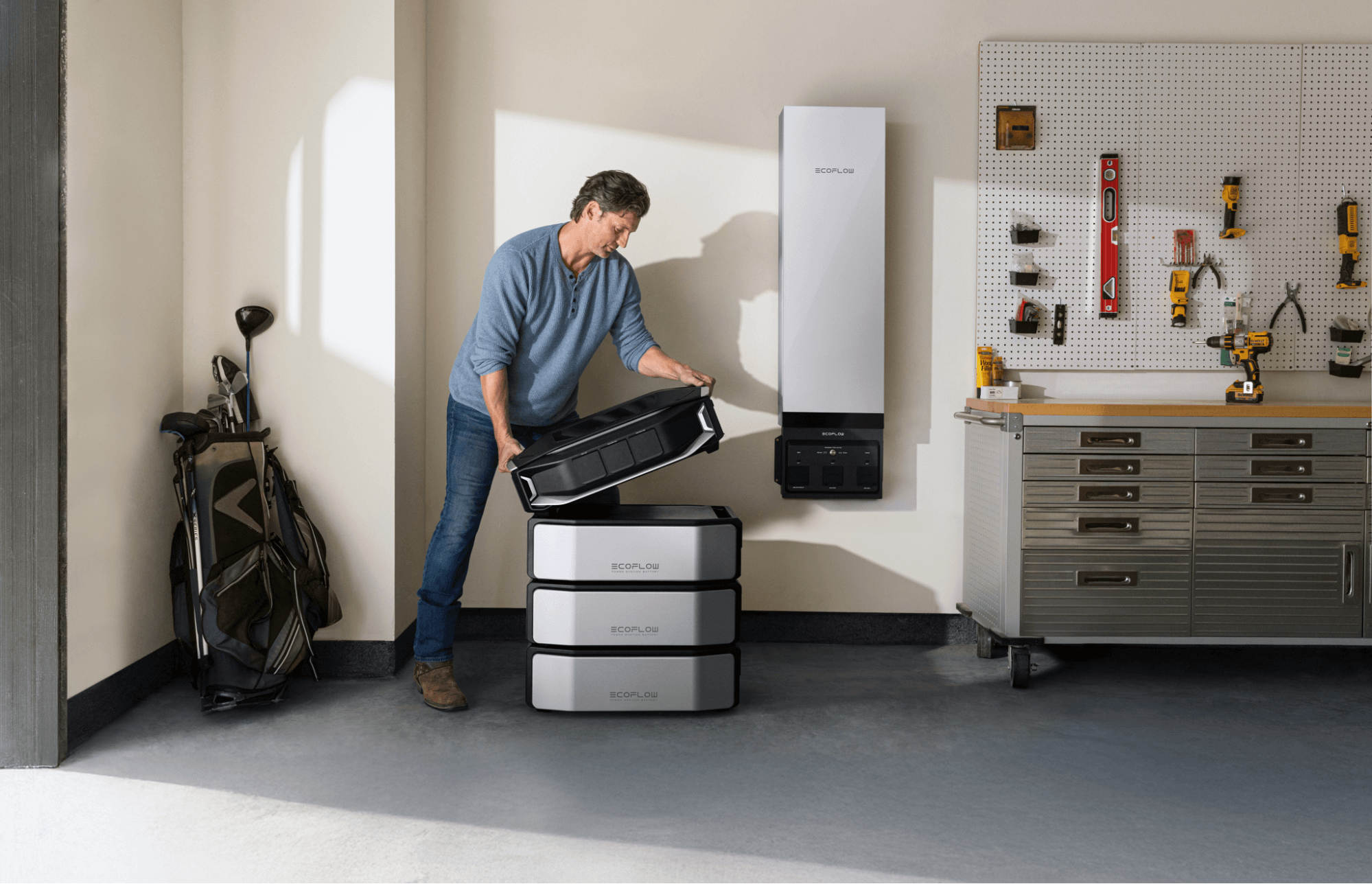
The next major Pineapple Express is expected to arrive on the West Coast from December 20 to 26, 2025, impacting the San Francisco Bay Area. Now is the time to prepare your drains and home for the potential of flooding. Follow along with local weather stations for the most up-to-date information in your area. Sign up for weather alert messages to be the first to know about threatening weather. Update your home’s safety and preparedness with fresh, organized supplies. Invest in reliable, backup electricity with the EcoFlow DELTA Pro Ultra X to stay connected and weather-aware during severe weather.
For press requests or interview opportunities, reach out to our media team
media.na@ecoflow.com