Solid-State Batteries: The Holy Grail of Energy Storage?
- What Is Solid-State Battery Technology?
- Benefits at a Glance: Higher Energy Density, Faster Charging, and Enhanced Safety
- Compare Solid-State Cells With Today’s Lithium-Ion Cells
- Current Challenges and Timelines for Mass Adoption
- Frequently Asked Questions
- Ready to Discover EcoFlow’s Portable Power Stations?
As solar, wind, and other renewable energy sources scale up across governments, businesses, and homes, energy storage demand remains a critical issue.
While batteries bridge energy generation and storage, efficiency gaps remain. Thankfully, battery technology is an ever-evolving field of research, and solid-state battery chemistry is becoming a reality.
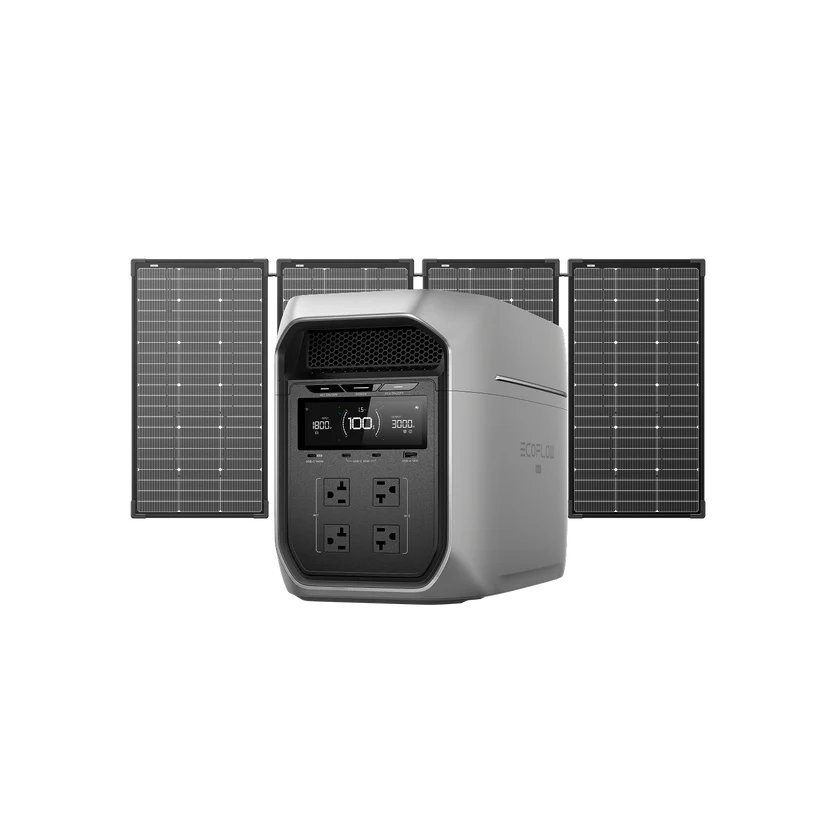
Keep reading to learn more about solid-state technology, how it addresses gaps in current lithium-ion cells, and what the future holds for this new type of energy storage. We’ll also discuss reliable backup power solutions like the EcoFlow DELTA 3 Max Series and the types of batteries used in portable power stations.
What Is Solid-State Battery Technology?
Solid-state battery technology replaces the liquid or gel electrolyte with a solid material.
In traditional lithium-ion cells, ions reversibly migrate between the cathode and anode through the electrolyte and separator.
Solid-state cells use a solid electrolyte, like ceramic, glass, or a solid polymer. It serves as the medium for ion migration and the separator, negating the need for liquid or gel entirely.
Benefits at a Glance: Higher Energy Density, Faster Charging, and Enhanced Safety
Maximizing Energy Density
Energy density (E) is determined by V (cell voltage) times Q (charge capacity). Energy density increases when charge (storage) capacity increases.
Traditional lithium-ion batteries use a graphite anode with a storage capacity of 372 mAh/g. Storage capacity is limited by the number of lithium ions that can fit between the graphite layers.
Solid-state batteries use a lithium metal anode with a storage capacity of 3,860 mAh/g. That’s a 10x increase.
Why does this change have a huge impact? During charging, lithium ions plate onto the metal sheet, piling up in a dense layer. With graphite, they have to look for a spot to sit, lowering the number of atoms that can be stored during charging.
Charging Speed
Solid-state batteries have exceptionally fast charging speeds. In lithium-ion cells, charging speed is purposely slowed to prevent lithium plating on the graphite anode instead of moving between the layers. Plating here leads to dendrites that puncture the separator and short out the battery. Fast charging also produces high temperatures that lithium-ion cells cannot tolerate without risking degradation.
In solid-state cells, the solid electrode slows dendrite formation and encourages uniform lithium plating. Higher currents can be applied for fast charging without risk of dendrite formation and thermal degradation.
Safety
The organic solvent used for battery electrolytes is highly volatile and flammable. If the battery overheats, thermal runaway becomes a risk. If the battery is damaged, this solvent can leak out into the surrounding area, creating a large fire hazard.
With solid-state, there’s no liquid to overheat or leak out. If it gets too hot, there is nothing to catch fire. The overheating threshold is also higher at 200°C (392°F) compared to 60°C (140°F) for traditional cells.
Lifetime
Lithium-ion batteries are usually replaced within 5 to 10 years. They degrade by chemical reactions in the electrolyte, electrode wear, and dendrite formation.
All of these problems are solved by the solid-state battery, which has reported lifetimes of up to 10,000 cycles, lasting consumers 10 to 15 years. As research continues, we could see lifetimes of 100+ years for these batteries.
Compare Solid-State Cells With Today’s Lithium-Ion Cells
Here’s a table to quickly compare the key differences between the two types of cells:
Spec | Lithium-Ion Cells | Solid-State Cells |
Electrolyte | Liquid or gel | Solid |
Anode | Graphite | Lithium metal |
Energy Density | 372 mAh/g | 3,860 mAh/g |
Time to 80% Charged | 30 - 60 minutes | 10 - 15 minutes |
Lifetime | 3,000 - 4,000 cycles (until capacity drops to 80%) | 5,000 - 10,000 cycles |
Safety | Flammable, thermal runaway risk | High thermal stability |
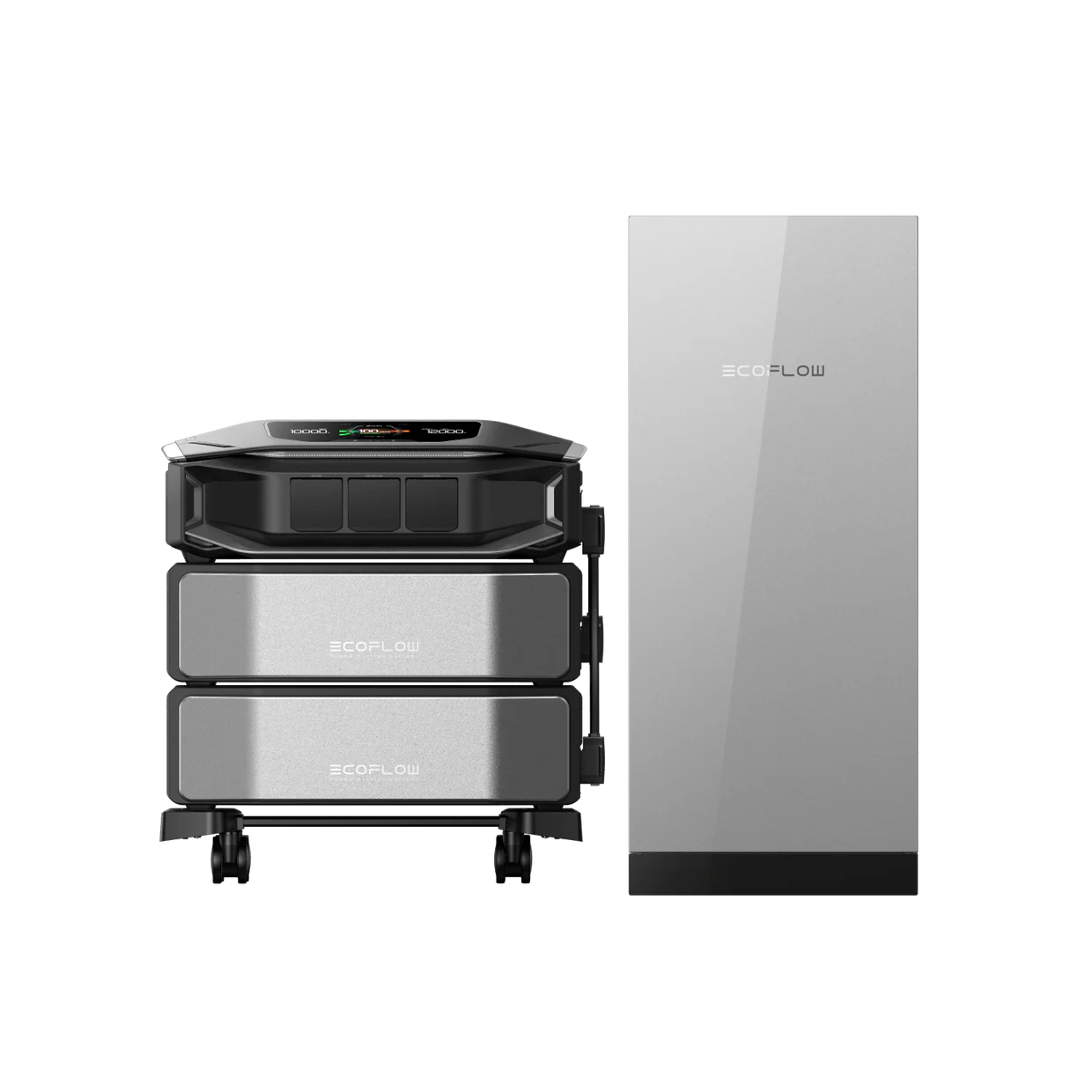
While lithium-ion cells may not compare as well to solid-state cells, the best off-grid, whole-home backup options, like an EcoFlow DELTA Pro Ultra X, still rely on lithium-ion chemistry.
Current Challenges and Timelines for Mass Adoption
Solid-state technology could be the next holy grail for batteries, but it is currently stuck at advanced development stages.
The largest hurdle in moving towards mass production is cost. Scaling from lab bench prototypes to large-scale factory production is complex. With fully solid components, interfaces must be precisely engineered to minimize contact resistance. Current production lines are designed for liquid-electrolyte cells and need to be redesigned.
Many manufacturers have announced production of pilot batteries, bringing commercial production closer. You can expect to see solid-state batteries rolling out on the market between 2027 and 2030, but mass adoption will depend on achieving economically viable manufacturing.
Frequently Asked Questions
What Is the Problem With Solid-State Batteries?
There are a few problems with solid-state batteries preventing their mass adoption. They’re currently expensive to manufacture, and scaling from a lab benchtop to mass production lines isn't straightforward. This contributes to interface issues that contribute to premature degradation and slow charging. These problems are expected to be resolved in the coming years.
Does Tesla Use Solid-State Batteries?
Tesla does not currently use solid-state batteries, and it hasn’t announced a transition to them either. Although Tesla has its own research labs working on future battery technologies, it hasn’t released any information on solid-state batteries. But that doesn’t mean they aren’t working on them behind the scenes.
Are Solid-State Batteries Better Than Lithium Batteries?
In general, solid-state batteries are considered superior to lithium-ion batteries. However, they aren’t commercially available. For now, lithium iron phosphate batteries are the best on the market. The reality is that solid-state batteries will be on the market soon and will outperform lithium-ion technology.
Ready to Discover EcoFlow’s Portable Power Stations?
Solid-state batteries functionally resemble lithium-ion batteries, except they forgo a liquid electrolyte in favor of a solid separator. This change in architecture enables higher energy density, faster charging speeds, longer lifetimes, and enhanced safety. As exciting as these benefits are, this new technology is still not ready for mass production. Scaling up production lines is expensive, and the technicalities are still being sorted out.
Lithium-iron phosphate chemistry remains a top performer in battery technology and is already on the market. Check out the EcoFlow DELTA 3 Max Series Portable Power Station for reliable, readily available, and affordable energy storage.
For press requests or interview opportunities, reach out to our media team
media.na@ecoflow.com