Sodium-Ion Batteries: The Salt-Based Alternative to Lithium?
- What Are Sodium-Ion Batteries and How Do They Work?
- Sodium-Ion vs. Lithium-Ion Batteries: Key Differences
- Safety, Thermal Stability, and Abuse Resistance
- Materials, Sustainability, and Environmental Impact
- Manufacturing Scale, Supply Chains, and Global Adoption
- Where Sodium-Ion Batteries Make the Most Sense Today
- Sodium-Ion Batteries and the Future of Off-Grid Power
- Frequently Asked Questions
- Final Thoughts: A Complementary Path Beyond Lithium
Lithium-ion batteries have held the top seat in battery chemistry for years now. They’re in your smartphone, electric vehicle, and power banks. But as global demand for energy storage continues to accelerate alongside the increase in renewable power options, lithium battery chemistry must confront its limitations.
Queue sodium-ion batteries, something to fill in the gaps of lithium-ion batteries. Keep reading to learn more about this new salt-based battery alternative, what makes it advantageous over lithium, and where it will play a pivotal role in the future of energy storage.
What Are Sodium-Ion Batteries and How Do They Work?
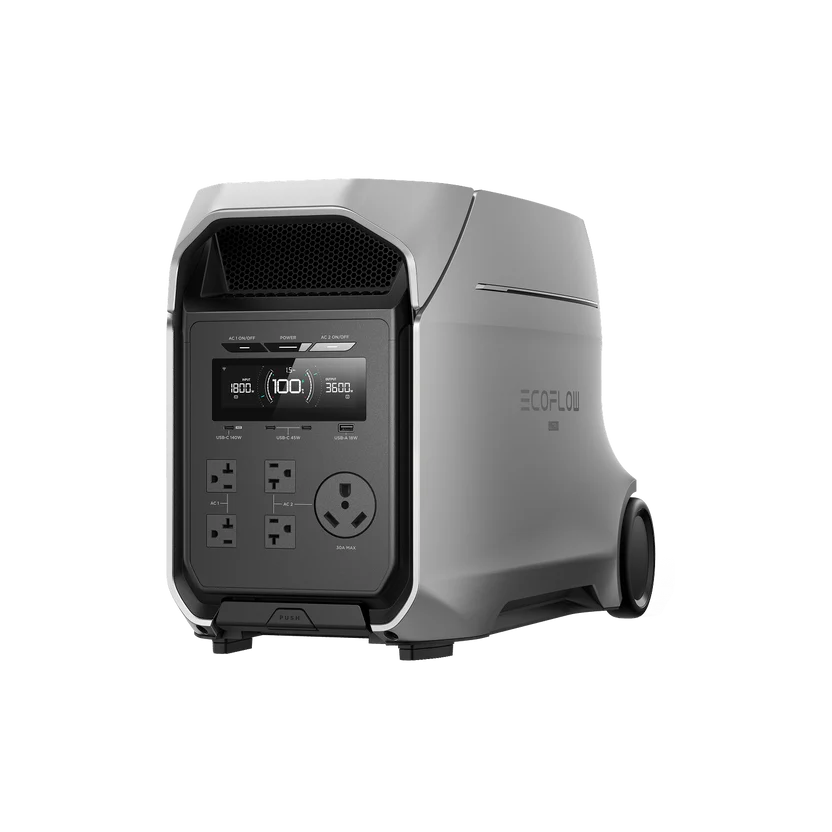
Sodium-ion batteries are rechargeable energy-storage systems that use sodium as the charge carrier. They’re functionally similar to the lithium-ion batteries used in EcoFlow portable power stations, but with sodium in place of lithium.
They operate through a reversible exchange of ions between a cathode and an anode.
During charging, an external power source drives sodium ions from the cathode to the anode. During discharge, ions move back to the cathode, releasing stored energy.
Sodium-Ion vs. Lithium-Ion Batteries: Key Differences
Swapping the salt from lithium to sodium is more than just a change of material. It impacts the fundamental properties of the battery.
Energy Density and Performance Trade-Offs
Sodium-ion batteries have lower energy density than lithium-ion batteries due to fundamental atomic and electrochemical differences between sodium and lithium.
Sodium atoms are about three times heavier than lithium (23 amu vs. 7 amu). They also have a larger ionic radius, limiting how densely sodium ions can pack onto the electrode surface during charging.
Electrochemically, lithium has a more negative standard reduction potential than sodium (-3.04 V vs. -2.71 V). This means it’s harder to oxidize sodium ions, and the overall cell voltage is lower. If the cell voltage is lower, you automatically have less total energy.
Altogether, sodium ions have a lower energy density than lithium ions. At the same battery capacity rating, sodium-based batteries will be heavier than lithium ones.
Cold-Weather Performance and Reliability
Where lithium-ion batteries struggle, sodium-ion batteries handle freezing temperatures with ease. In lithium-ion cells, cold conditions slow ion movement in the electrolyte, resulting in higher internal resistance, reduced capacity, lower power output, and slower charging speeds. Sodium-ion versions maintain their speeds even when the temperature drops.
They also perform with high cycle life, upwards of 10,000 cycles.
Safety, Thermal Stability, and Abuse Resistance
Sodium-ion batteries are naturally less prone to thermal runaway (battery fires) because the electrode materials are more thermally stable and operate at lower voltages. Low cell voltage might result in heavier units, but they have the benefit of higher trigger temperatures.
Sodium-ion batteries can withstand overcharging, whereas lithium-ion batteries will vent earlier as a safety measure to prevent explosions.
Materials, Sustainability, and Environmental Impact
It’s no secret that mining for lithium is expensive, environmentally unfriendly, and that deposits are rare. Sodium-ion is a greener alternative. It’s abundant, non-toxic, and sourcing it avoids the ethical and environmental issues that lithium currently faces. Sodium-ion cells use aluminum as the electrode material instead of copper, which is also easier and cheaper to source.
Manufacturing Scale, Supply Chains, and Global Adoption
Sodium-ion chemistry has existed for decades, but commercial momentum is now accelerating. As more companies and businesses seek sustainable, cost-effective alternatives to lithium-ion technology, sodium-ion is moving from labs to production floors.
One reason for this rapid scale-up is compatibility with existing lithium-ion manufacturing equipment. Companies can repurpose instead of rebuild, saving time and money. Sodium’s abundance reduces dependence on lithium-rich regions like the “Lithium Triangle” in South America. Broader availability of sodium enables more countries, including the U.S., to begin domestic battery manufacturing with supply-chain resilience.
Where Sodium-Ion Batteries Make the Most Sense Today
Sodium-ion batteries have a clear advantage for stationary energy storage, like home-backup power systems, where high energy density isn’t critical. As demand for stationary grid storage increases, sodium-ion batteries are entering the market at the right time. The science of sodium-ion has always been there, but there hasn’t been a dire need for it until now.
Don’t expect lithium-ion batteries to disappear, though. They remain the top choice when low weight and high energy density are essential, like in portable power stations.

Sodium-Ion Batteries and the Future of Off-Grid Power
In the U.S., there is a growing need for large-scale energy storage as reliance on solar and wind renewable energy generation increases. Sodium-ion is the key player in the next generation of long-duration storage systems. Many people are calling 2026 the breakthrough year for this salt battery, with a handful of companies beginning large-scale production.
Frequently Asked Questions
Will Sodium Batteries Replace Lithium Batteries?
Not entirely. Lithium remains the best option when high energy density and low weight are critical, such as in smartphones, laptops, and long-range electric vehicles. Sodium-ion batteries will compete with lithium ones for grid storage applications. Rather than replacing lithium entirely, sodium will complement it.
What Are the Downsides of Sodium-Ion Batteries?
The main drawback is lower energy density. Sodium atoms are heavier and larger, limiting how tightly they pack into the battery. As a result, sodium-based batteries are heavier and not ideal for portable electronics or long-range electric vehicles. They won’t replace lithium’s reign in those applications, but could be an alternative for grid storage.
What Is the Next Battery To Replace Lithium?
There’s not one battery designed to replace lithium. Emerging battery chemistries are proving to be complementary to lithium, not competitive. Sodium-ion chemistry is promising for large-scale storage. Solid-state lithium is still lithium, but a different battery architecture. Replacement isn’t the future for lithium; application refinement is.
Final Thoughts: A Complementary Path Beyond Lithium
Sodium-ion batteries resemble lithium-ion systems, but swapping lithium ions for sodium ions alters their fundamental properties. Sodium-ion batteries, with lower energy density, are better suited for grid-scale energy storage than portable uses. They also tolerate extreme temperatures and offer long cycle lifetimes, reinforcing stationary applications.
Lithium-ion isn’t going away. Its high energy density is essential for lightweight, portable battery needs. Rather than replace lithium, sodium-ion technology offers a complementary path forward. If you’re ready to start your journey toward energy independence by way of portable power, check out the EcoFlow DELTA Pro Ultra X for reliable, whole-home battery storage.
For press requests or interview opportunities, reach out to our media team
media.na@ecoflow.com